






Red Striped Chairs
Red striped chairs bring character and traditional pattern to a room, offering functional seating shaped by centuries of craftsmanship.
Red Striped Chairs
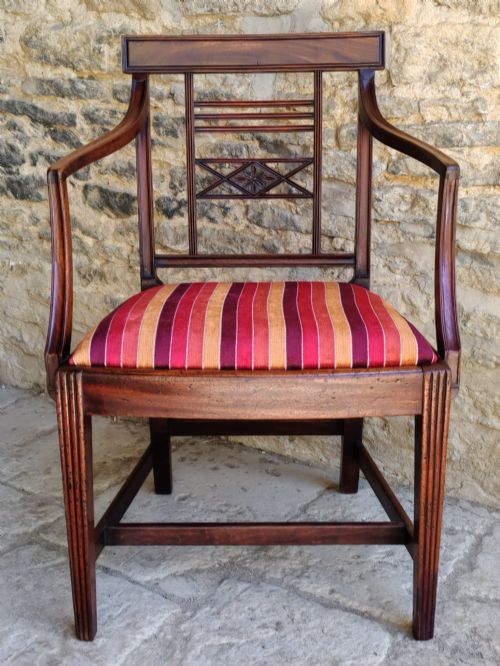
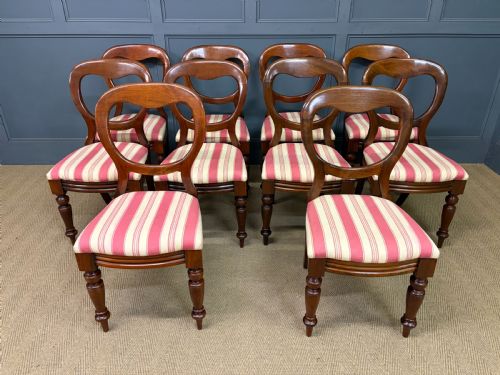
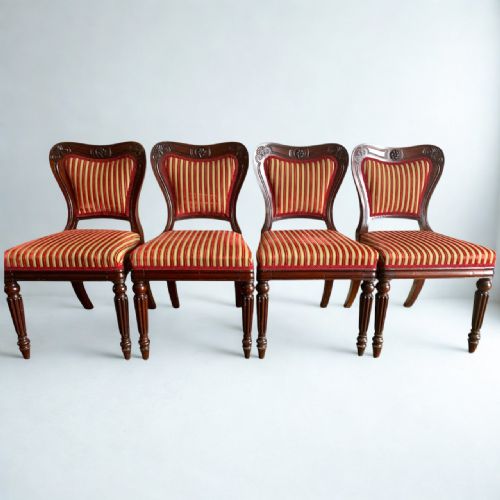
Red striped chairs encompass seating from the 18th century through to the Edwardian era, taking forms such as dining chairs, armchairs, and balloon-back side chairs. When searching for red striped chairs, buyers encounter pieces rooted in Georgian, Victorian, Regency, and French styles.
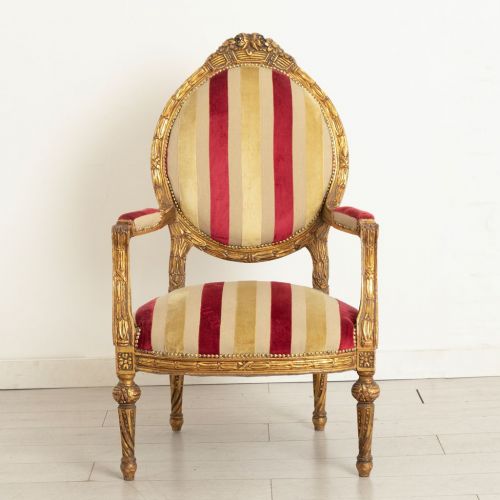
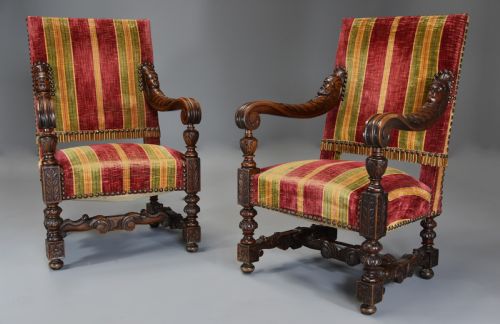
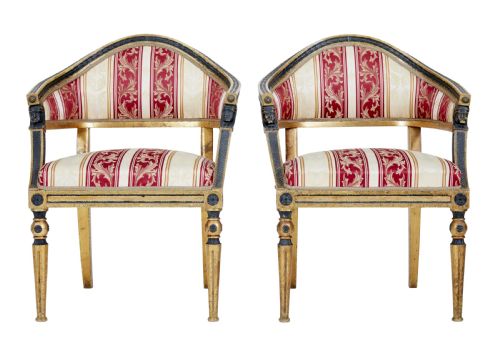
The selection ranges from single carvers and nursing chairs to large sets of dining chairs and pairs of giltwood armchairs. Most examples utilise traditional wooden frames paired with textile upholstery.
Makers and workshops from various European regions contributed to this group, producing both formal salon seating and robust dining furniture.
How they were made
Frames rely on hardwoods such as mahogany, walnut, oak, and rosewood, often shaped with carved details or giltwood finishes. Joinery techniques varied by period, from the clean lines of 18th century carvers to the scroll carving and cabriole legs seen on later 19th century designs.
Upholstery involves fabric and velvet textile applied over traditional stuffing and webbing. Brass elements sometimes accent the framework or castors on the heavier seating.
Even stately 18th-century armchairs occasionally show the small notch marks left by makers adjusting joinery joints by hand.
What varies in quality
Quality rests primarily in the execution of the timber frame, the depth and crispness of any hand-carved ornamentation, and the overall structural integrity of the piece. Sets that remain complete, such as groups of dining chairs or matching pairs, demonstrate a higher degree of original preservation.
The choice of materials also distinguishes the standard of manufacture, with dense hardwoods and layered gilt finishes separating standard production from finer salon seating.
The Red Striped Chairs Glossary
- Carver
- An armchair, typically designed to match a set of dining chairs and placed at the head of a table. These chairs often feature broader proportions and open arms.
- Balloon-back
- A chair style featuring a curved, oval-shaped backrest resembling the profile of a balloon. This form became particularly popular during the Victorian period.
- Fauteuil
- An open-arm armchair originating in France, characterised by exposed wooden framing and upholstered arm pads. They are typically associated with Louis XVI and baroque revival styles.
- Giltwood
- Timber that has been coated with a thin layer of gold leaf or gilt finish. This technique highlights decorative carvings on formal armchairs and salon pieces.
- Cabriole leg
- A furniture leg that curves outward and then tapers inward, finishing in a pad or scroll foot. The design echoes traditional animal leg shapes.
Red Striped Chairs: Frequently Asked Questions
How do I date a wooden chair?
Dating relies on examining the timber species, joinery methods, and characteristic stylistic details of the period. Subtle shifts in leg shapes and backrest designs help narrow down the decade of manufacture.
Comparing construction markers against known examples from the same era provides the most reliable timeline.
Can I mix dining chairs?
Mixing different chair styles is a common approach in interior design, provided the heights and wood tones share a visual connection. Pairing carvers at the table ends with simpler side chairs creates a balanced look.
Ensuring the seat heights align is essential for comfortable dining use.
How do I clean antique wood?
Maintenance involves dusting with a soft, dry cloth to prevent dirt accumulation on the carved surfaces. Avoid harsh chemical cleaners that can strip historical finishes and patinas.
Applying a traditional beeswax polish occasionally helps nourish and protect older timber.
What is a salon settee?
A salon settee is a two-seater upholstered bench designed for formal entertaining and conversation rooms. These pieces often feature decorative wooden frames and matching fabric upholstery.
They function as statement seating in larger hallways or drawing rooms.