
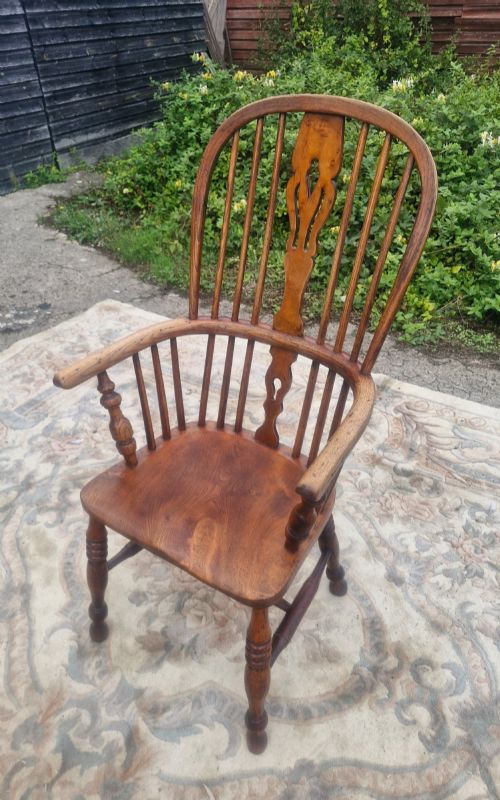

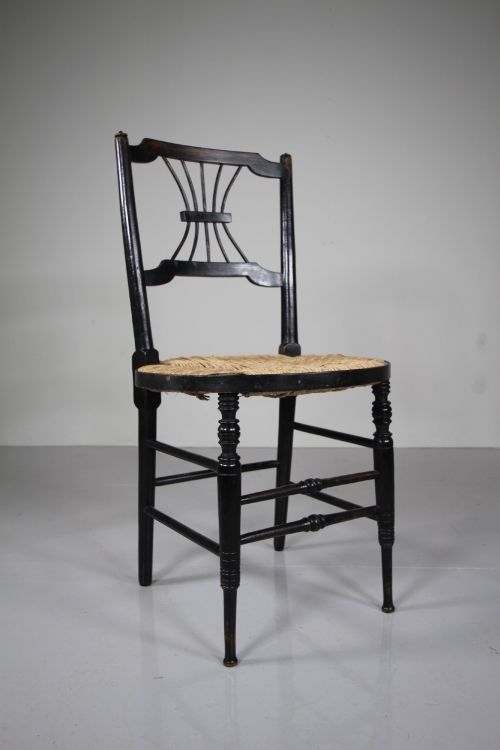


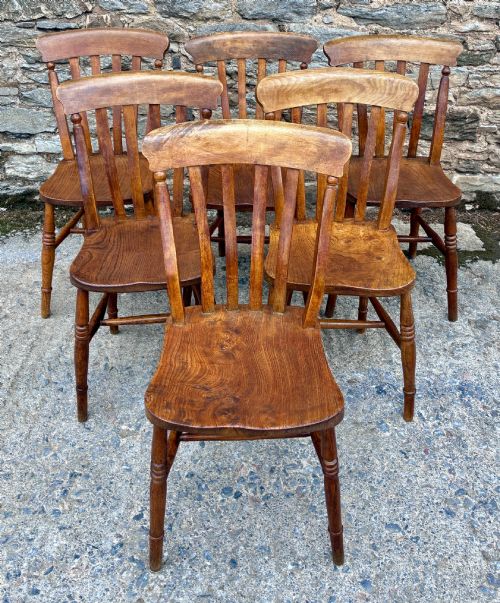
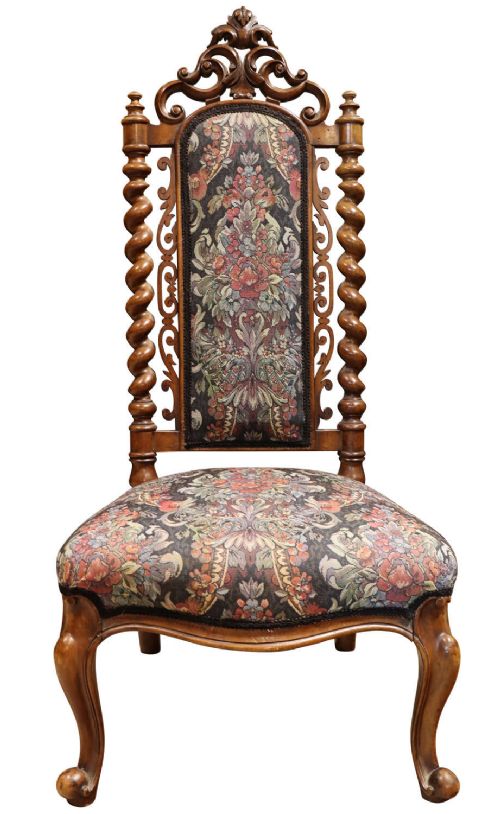
Victorian Dining Seating
Victorian dining seating brings together robust mahogany, walnut, and rosewood dining chairs designed for nineteenth-century rooms.
Understanding Victorian dining seating
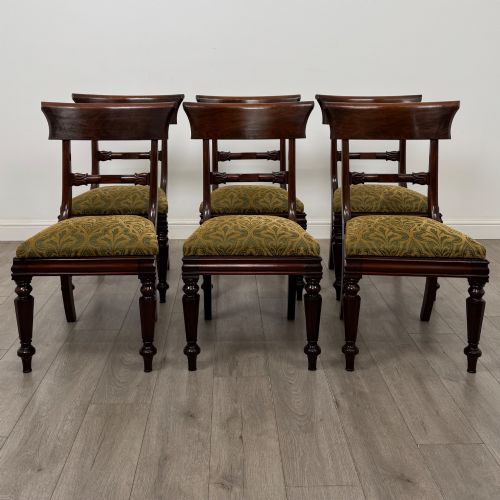
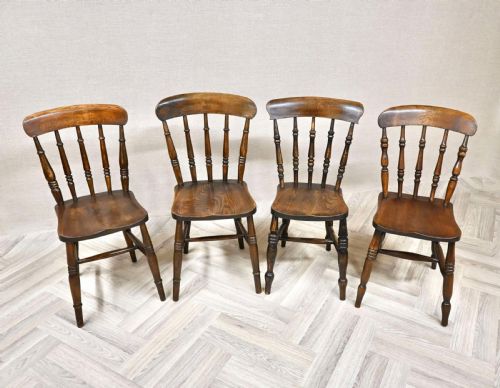
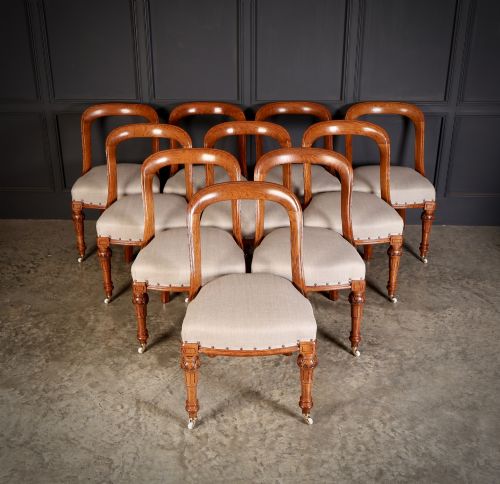
Victorian dining seating comprises dining chairs constructed in sets of various sizes, predominantly appearing as matched groups of four, six, or eight. These pieces serve as the practical foundation for period dining rooms, offering substantial timber frames and upholstered seats.
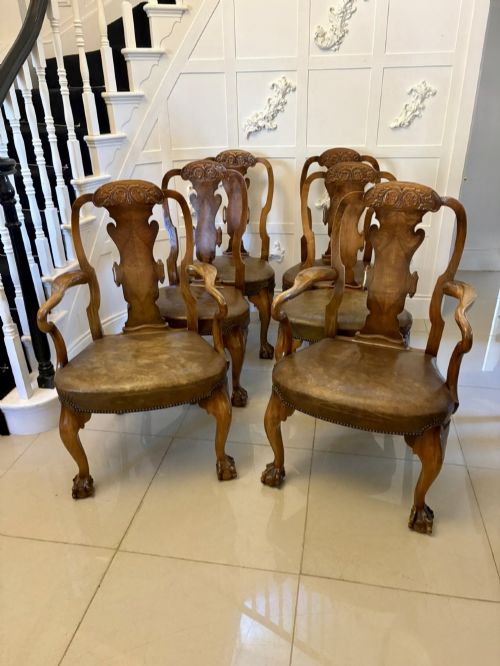
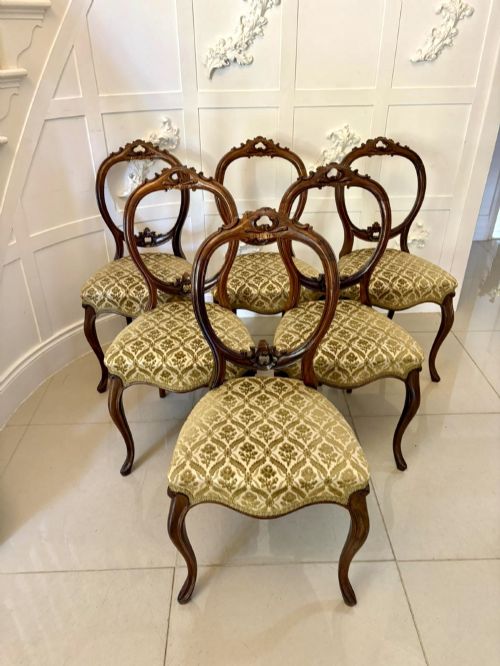
The styles range from early Victorian iterations to later interpretations including Chippendale Revival designs and characteristic balloon back forms. These variations reflect the shifting tastes across the period while maintaining a focus on dining utility.
Construction and materials
Makers utilised dense hardwoods such as mahogany, walnut, and rosewood to build sturdy chair frames capable of withstanding daily use. These timbers were frequently shaped into curved profiles, notably seen in the popular balloon back construction.
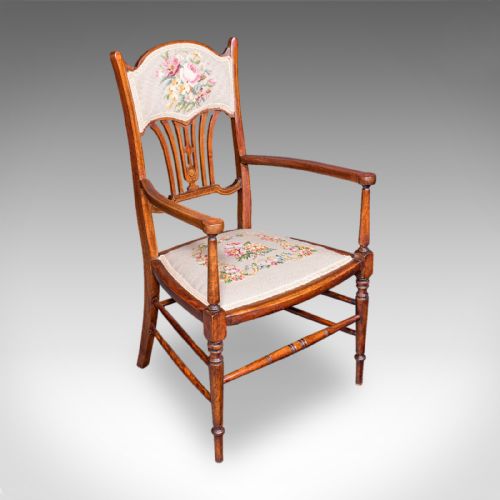
Upholstery formed an integral part of the manufacturing process, utilising fabric, textile, and tapestry seats. Original textiles and tapestry coverings survive on certain examples, providing a direct link to nineteenth-century interior aesthetics.
Retail Price Guide 2026
Typical UK retail prices for victorian dining seating, calculated from the Sellingantiques database of over a million retail prices indexed since 2003. This retail price guide relies exclusively on Sellingantiques data; no external sources or auction records are used, so the figures do not describe the wider market.
Listings feature mahogany, walnut, and rosewood alongside fabric, textile, and tapestry upholstery.
Judging quality
Quality in these dining chairs rests upon the selection and handling of the timber, where finely figured mahogany or rich rosewood elevates the visual presence of a set. The depth and precision of carved details on the woodwork further distinguish finer examples from plain production.
The integrity of the frame construction and the preservation of original elements, such as early tapestry or fabric seats, determine the standing of a set. Cohesion within larger sets ensures that timber grain and proportion align harmoniously across every chair.
The Victorian Dining Seating Glossary
- Balloon back
- A chair back shaped in a continuous curved oval resembling a balloon, characteristic of nineteenth-century seating design. This form provided ergonomic support while showcasing the grain of walnut or rosewood.
- Chippendale Revival
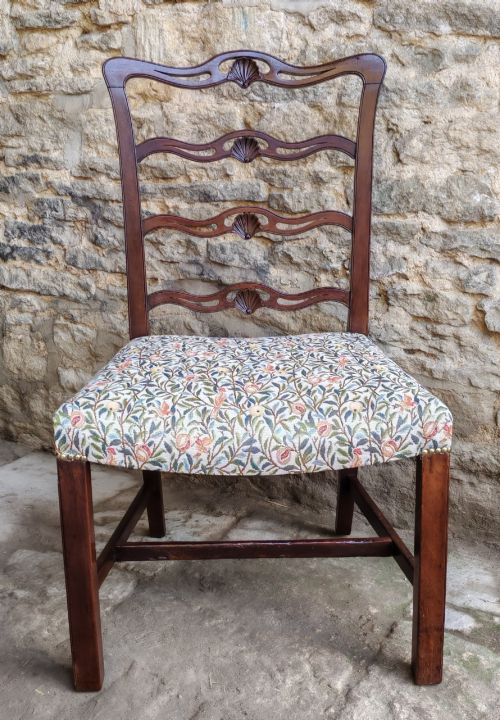
- A later style drawing inspiration from eighteenth-century motifs such as carved splats and elaborate top rails. Pieces of this type adapt earlier carved aesthetics for Victorian dining rooms.
- Mahogany
- A durable, reddish-brown tropical hardwood favoured for its stability and fine grain in dining furniture. It formed the structural backbone for many formal nineteenth-century seating sets.
- Rosewood
- A heavily grained, dark timber prized for its luxurious appearance in high-status Victorian dining chairs. Its distinctive figuring added rich visual texture to formal room settings.
- Tapestry
- A heavy, hand-woven or machine-woven textile utilised for durable seat upholstery. Surviving examples provide authentic period texture to dining chair pads.
Frequently Asked Questions
What sizes do these sets come in?
These dining chairs appear in structured sets ranging from four to eight pieces per group. Such configurations accommodated standard nineteenth-century dining arrangements.
Larger sets of six or eight pieces are frequently encountered, providing uniform seating for substantial dining tables.
Which woods are most common?
Mahogany, walnut, and rosewood dominate the material record for these nineteenth-century dining chairs. Each timber offered distinct structural qualities and surface grain.
Mahogany provides robust durability, whilst walnut and rosewood deliver rich, figured surfaces suited to formal dining spaces.
Are original fabric seats common?
Original textile and tapestry seat coverings survive on select pieces, offering authentic period detail. These materials reflect the interior schemes chosen by nineteenth-century households.
Many chairs have undergone reupholstery over time to maintain practical usability in contemporary dining environments.