

Antique Red Chairs
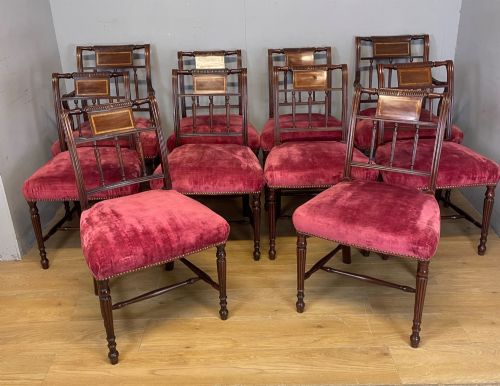
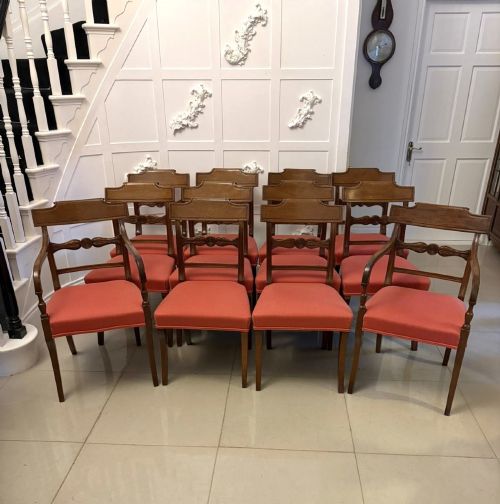
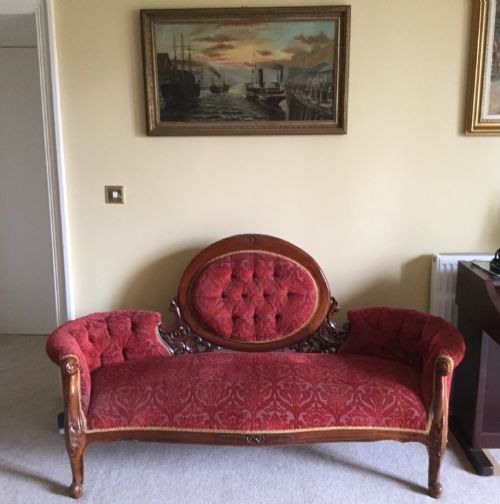
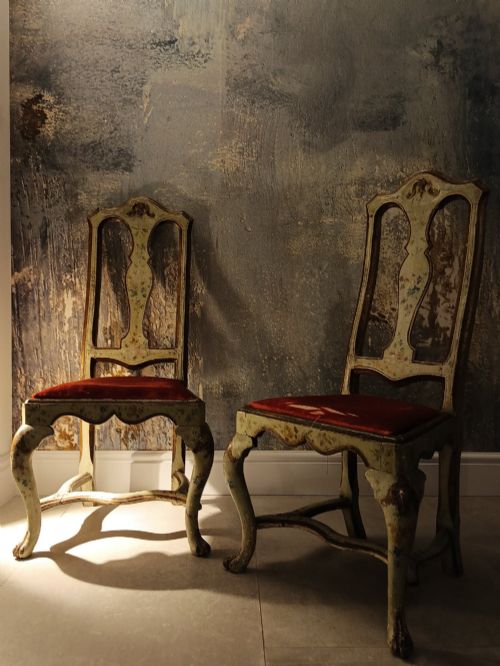
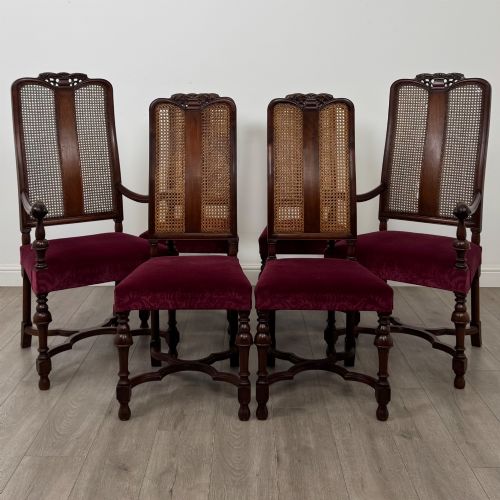
These antique red chairs bring rich colour and historic character to a room through diverse forms like library armchairs, dining sets, and salon seating.
Antique Red Chairs
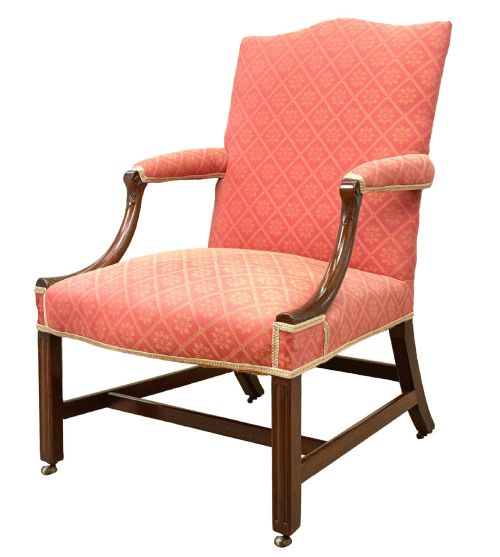
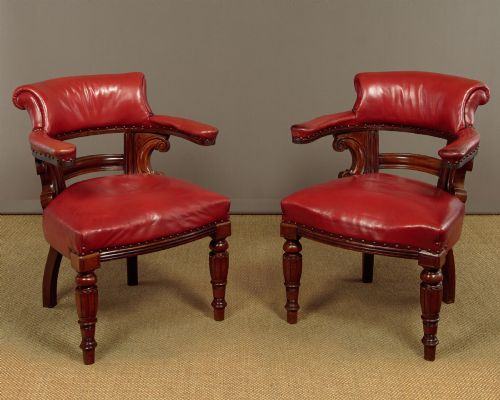
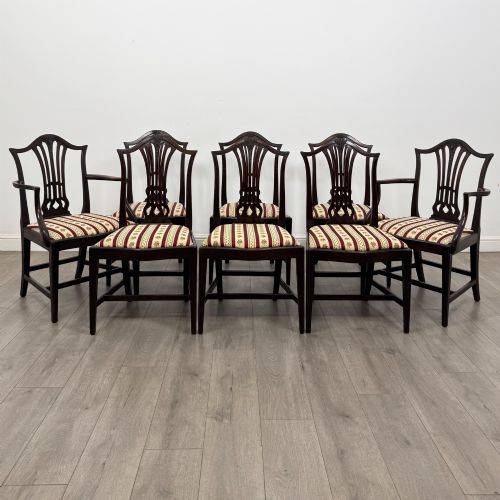
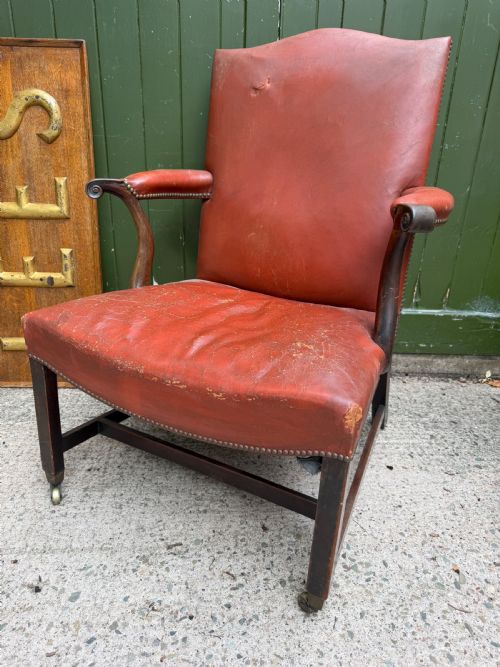
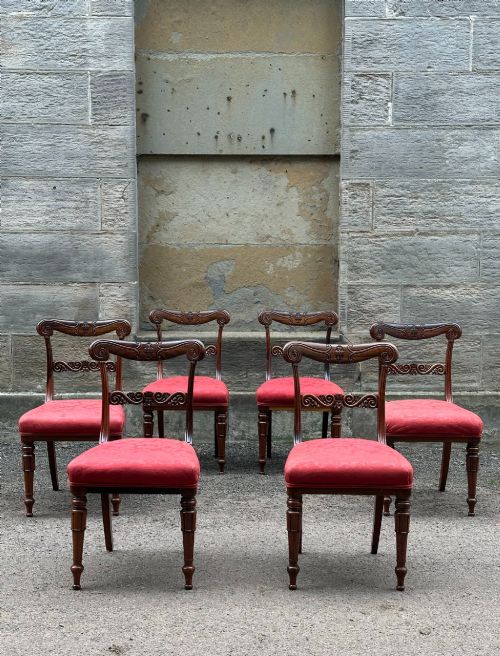
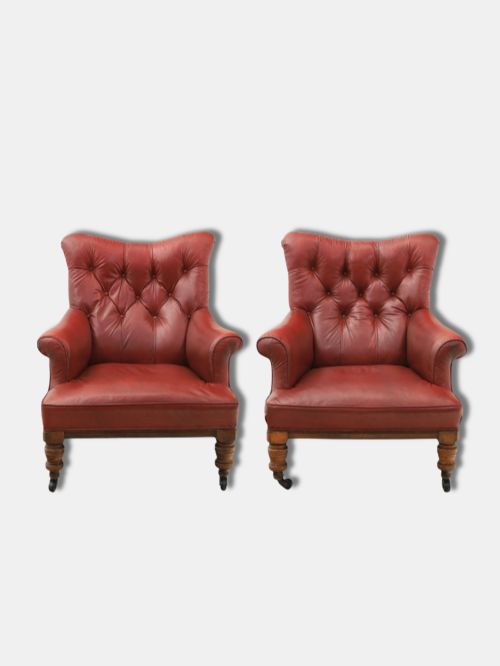
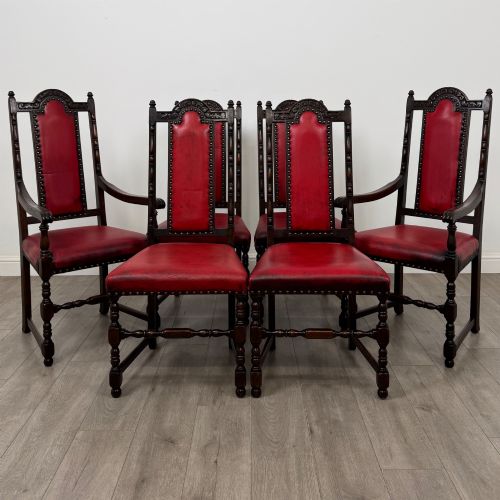
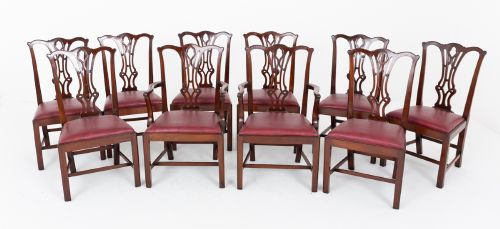
When searching for antique red chairs, a buyer encounters a wide variety of seating forms spanning several centuries of craftsmanship. The selection ranges from imposing library armchairs upholstered in oxblood leather to matched dining sets and intimate parlor seats.
The most common versions met on this page include Victorian mahogany dining chairs, Georgian library seats, and early twentieth-century club chairs. Woods such as mahogany, walnut, and oak form the structural foundations, paired with upholstery in leather, velvet, damask, or brocade.
Materials and construction methods
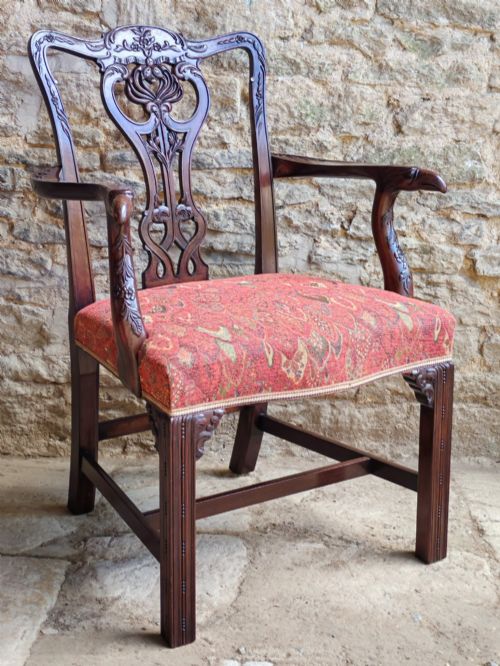
Frames are constructed predominantly from hardwoods like mahogany, walnut, and oak, joined through traditional mortise and tenon techniques or secured with brass fixings. Carved details, brass inlay, and giltwood finishes reflect the prevailing styles of the Georgian, Regency, and Victorian periods.
Upholstery relies on traditional stuffing materials housed beneath outer layers of leather, velvet, wool moquette, or brocade. Deep buttoning, brass nailing, and silk tassel trims complete the finish on library chairs and salon suites.
Seating forms span dining chairs, library armchairs, chaise longues, footstools, and club chairs from Georgian to Art Deco periods.
Evaluating the standard of execution
The distinction between standard examples and the top of the range rests on timber selection and the crispness of carved ornamentation. Figured mahogany, dense walnut, and well-preserved original surface patination elevate individual pieces above standard utility furniture.
Structural integrity and the retention of original upholstery materials or period-correct red leather dictate the desirability of seating. Uniformity across large sets of dining chairs and the precision of brass inlay further separate master workshops from provincial output.
Gillows·Howard and Sons·Alfred Allen of Birmingham·Shoolbred and Co·Epstein
The Antique Red Chairs Glossary
- Carver
- An armchair designed to match a set of dining chairs, typically positioned at the head of a table.
- Gainsborough chair
- A wide, open-framed armchair with padded armrests, originating in the mid-eighteenth century.
- Rexine
- A leathercloth material utilising a fabric base coated with nitrocellulose, popular on twentieth-century club chairs.
- Yokeback
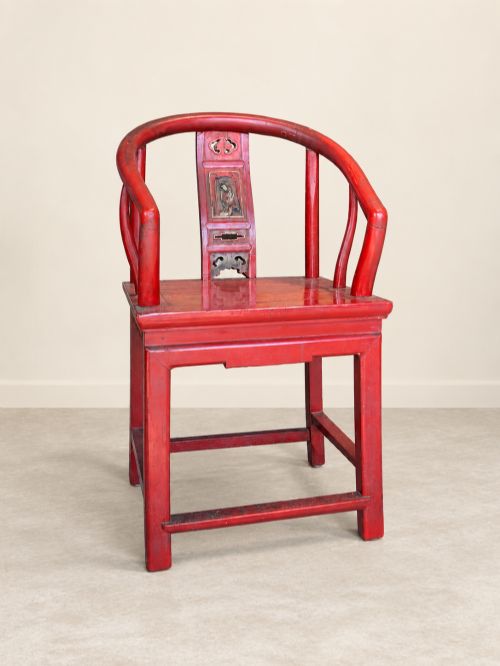
- A traditional Chinese chair style featuring a top rail curving outward like the yoke of an ox.
- Bergere
- An enclosed upholstered armchair with wooden framing and cane sides or back panels.
Antique Red Chairs: Frequently Asked Questions
How do I clean antique leather upholstery?
Wipe surfaces gently with a dry cloth to remove dust before applying a specialised leather conditioner to maintain suppleness.
Avoid chemical detergents and excessive moisture, which can degrade old finishes and dry out twentieth-century oxblood hide.
Can I use dining chairs daily?
Solid mahogany and oak dining chairs from the eighteenth and nineteenth centuries are constructed for robust daily use.
Check frame joints periodically to ensure stability remains firm under regular seating conditions.
How do I date a mahogany chair?
Examine the timber density, hand-cut joinery marks, and the tool traces left by the cabinetmaker beneath the seat rails.
Stylistic indicators such as shield backs, cabriole legs, or brass inlay help narrow the manufacture window to specific design eras.
Where should I place a library armchair?
Position large leather library chairs in studies, home offices, or spacious reception rooms where they serve as focal points.
Keep them away from direct sunlight and heat sources to prevent the red leather or wood finish from fading.