

Carved Wooden Seating
Carved wooden seating brings character to a room through solid oak, mahogany, and walnut shaped into chairs, benches, and settles.
Carved Wooden Seating
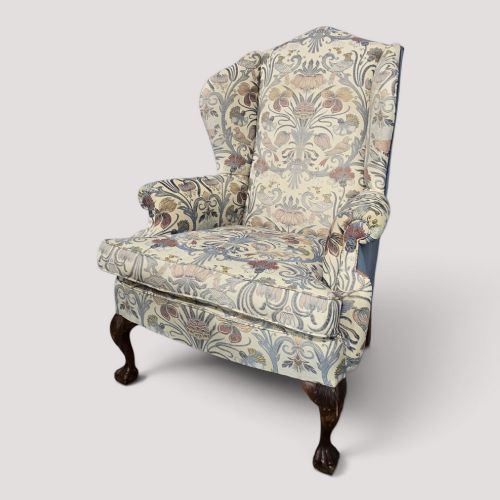
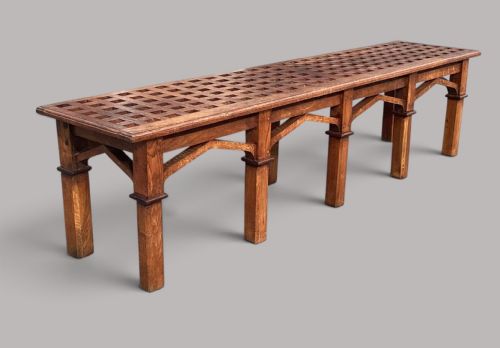
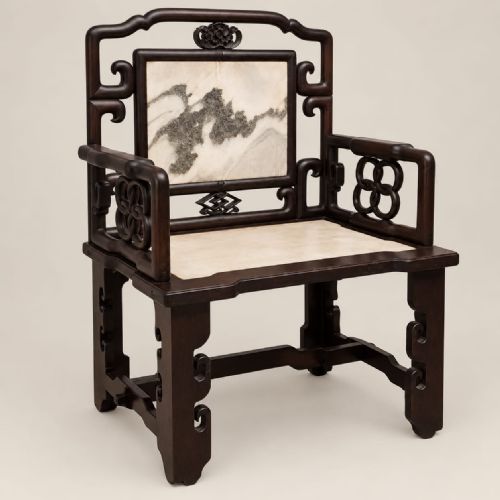
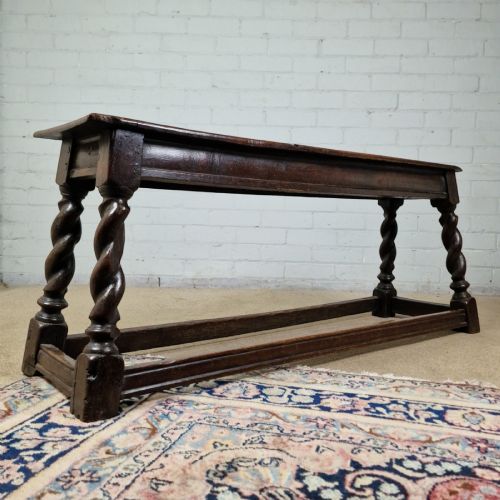
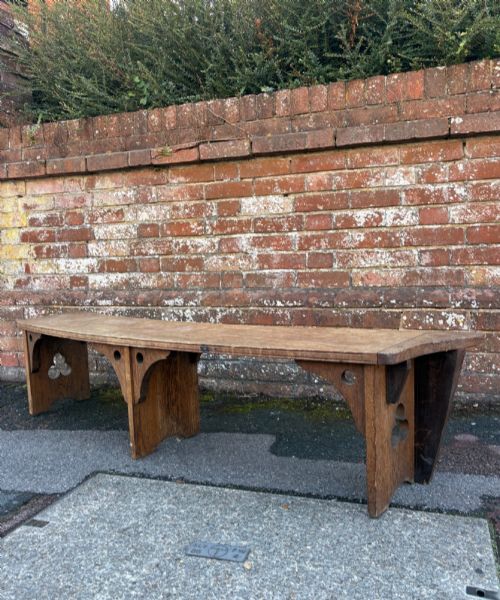
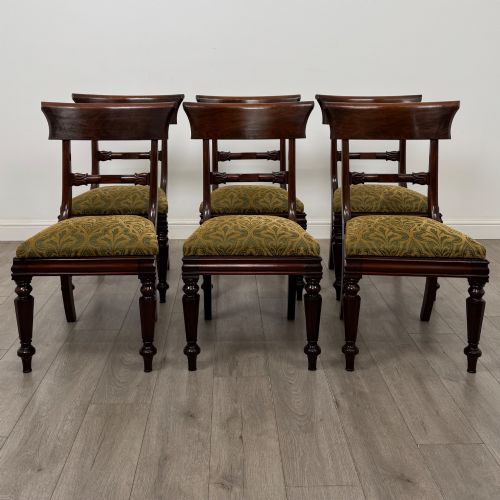
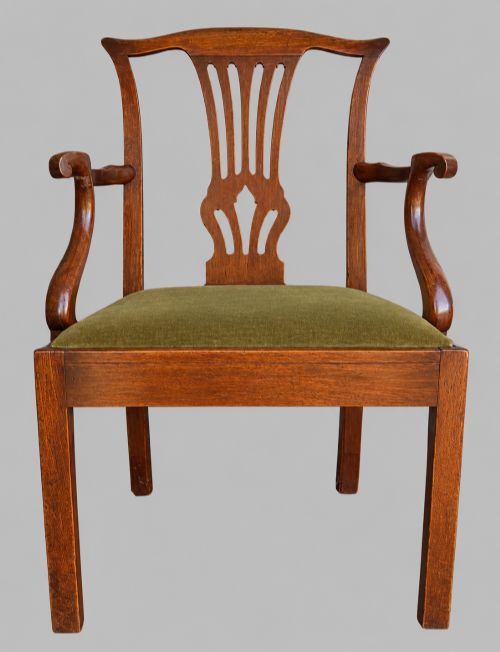
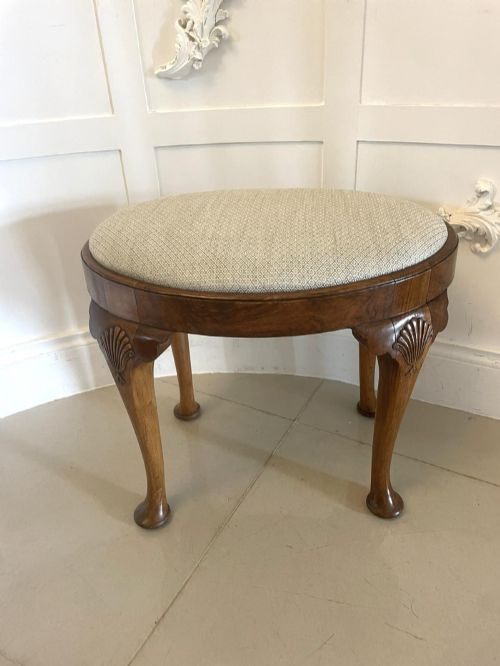
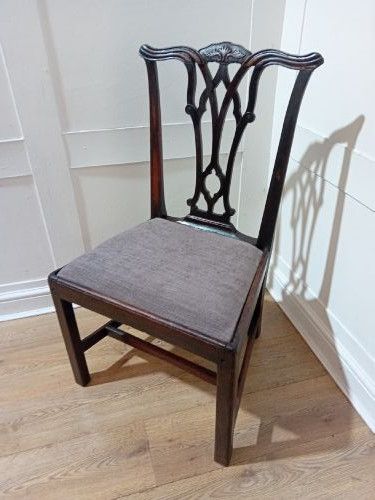
Carved wooden seating encompasses dining chairs, armchairs, hall chairs, benches, settles, and stools originating from the eighteenth and nineteenth centuries, alongside Edwardian and later nineteenth-century pieces. Buyers encounter forms ranging from Georgian mahogany dining chairs to Victorian oak hall benches and country settles.
The selection spans stylistic revivals including Jacobean, Gothic, and Rococo alongside regional vernacular pieces in elm, sycamore, and oak. Standard domestic seating shares space with specialist forms like window seats, library armchairs, and tavern stools.
Makers and workshops from the Georgian period through to the Arts and Crafts movement utilised traditional joinery to produce substantial seating. Pieces reflect both formal metropolitan design and rural vernacular craftsmanship.
Materials and construction
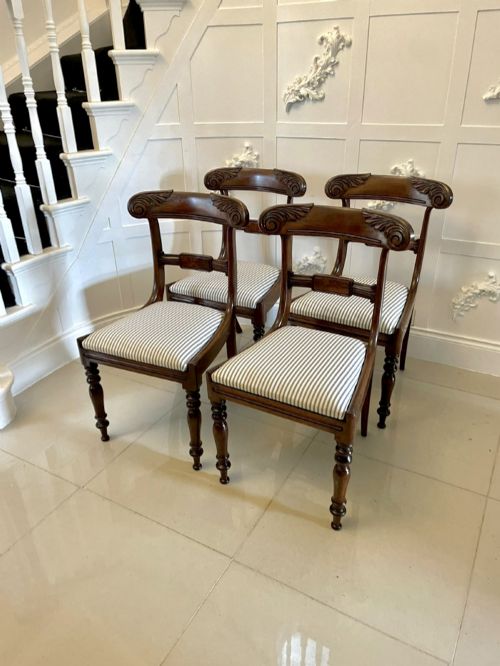
Makers relied primarily on native and imported hardwoods, selecting oak and mahogany for structural integrity, with walnut, elm, sycamore, and rosewood appearing across specific periods and regional traditions. Surface enrichment involved hand-carved detailing, brass inlay, and mother of pearl work.
Upholstered variants incorporate fabric, velvet, and silk applied over traditional webbing and stuffing methods. Frames utilise mortise and tenon joinery alongside turned supports and shaped crest rails.
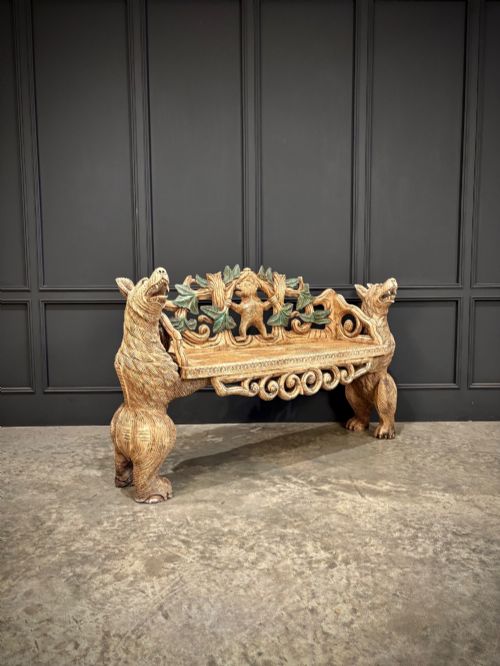
Object forms range from dining chairs and armchairs to window seats, settles, and Black Forest bear benches.
Assessing quality
Quality rests upon the crispness of the hand-carving and the selection of timber grain, where denser, well-figured mahogany or quarter-sawn oak elevates a piece. Superior examples maintain structural rigidity through sound original joinery rather than later reinforcement.
Proportion and restraint in ornament distinguish finer workshop production from plainer vernacular output. The integration of secondary woods and the preservation of original surface patination determine the standing of individual items.
The Carved Wooden Seating Glossary
- Settle
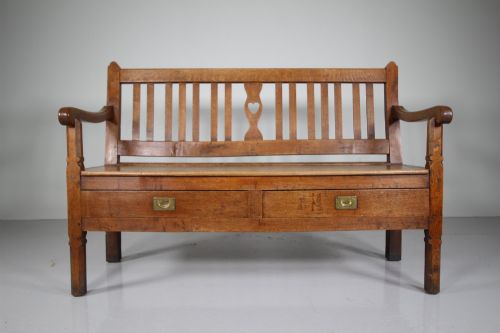
- A wooden bench with a high back, solid arms, and often a box base used for storage. These items typically stood in draughty hallways or beside hearths.
- Hall chair
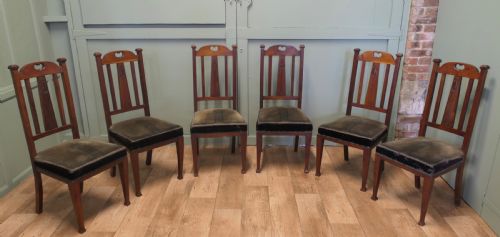
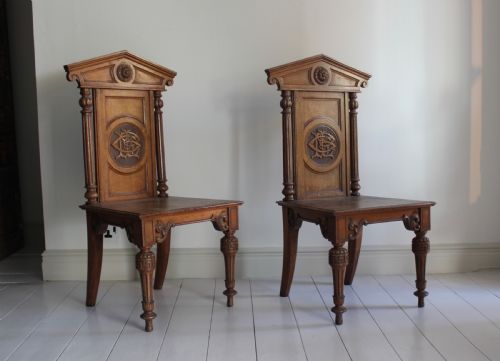
- A rigid wooden seat designed for an entrance hall, frequently featuring a carved shield or crest on the back. They prioritised architectural presence over comfort.
- Bar back
- A chair design featuring a horizontal shaped splat resembling the top rail of a Windsor chair or the curved rail of a tavern seat. This form appears frequently on nineteenth-century dining chairs.
- Trefoil
- A three-lobed decorative carving resembling clover leaves, common in Gothic Revival and Arts and Crafts ornament. It provides structural bracing as well as visual relief.
- Quarter-sawn
- A method of cutting logs radially to produce timber with prominent grain figuring and increased dimensional stability. This cut appears on better quality oak furniture.
Carved Wooden Seating: Frequently Asked Questions
How do I care for antique wooden seats?
Apply natural beeswax periodically to nourish the dry timber and maintain a soft protective sheen. Keep wooden seating away from direct heat sources and strong sunlight to prevent wood splitting and fading.
Check joints gently over time to ensure glue remains stable. Avoid harsh chemical cleaners that strip the historic surface patination.
Were hall chairs meant to be comfortable?
Hall chairs were constructed primarily for formal entrance spaces and brief use by visitors waiting to be announced. Their rigid wooden seats and upright backs reflected domestic etiquette rather than lounging.
Craftsmen focused on visual display through carved crests, panelled backs, and polished timber. Upholstery was omitted entirely on most examples to withstand heavy hallway traffic.
How do I identify a settle?
A settle is characterised by a high wooden back designed to block draughts, flanked by solid wooden arms. Many examples feature a hinged seat lifting to reveal a storage box beneath.
They stand longer than standard benches and often display carved panels or boarded construction. Eighteenth-century models generally show heavier timber framing than later Victorian revivals.