






Chinese Settle Bench
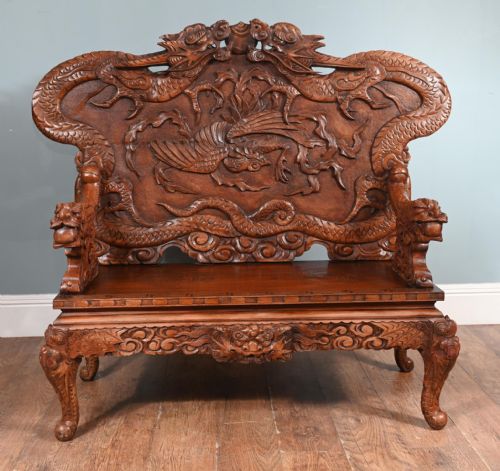
A chinese settle bench brings bold carved imagery and dense timber straight into a hallway or living space with immediate presence.
Chinese Settle Bench
A chinese settle bench is a substantial seating form typically encountered in heavy hardwood, rosewood, or lacquered finishes. These pieces function as hall benches, corner seats, or parts of larger dining suites originating from the nineteenth and early twentieth centuries.
The aesthetic encompasses traditional Chinese designs alongside Chinese Export work, spanning the Qing Dynasty and later interpretations. Forms include high-backed hall benches and carved wooden sofas designed to command a room.
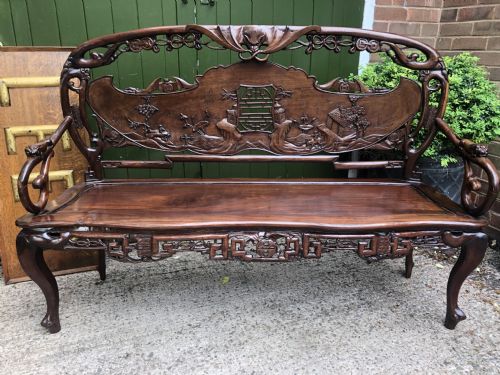
Makers utilised traditional joinery to construct these seating pieces, incorporating extensive relief carving depicting dragons, horses, and floral motifs. Surfaces frequently display polished timber grains or rich red lacquer coatings.
Materials and construction methods
Hardwoods and rosewood form the structural core of these benches, providing the weight and density necessary for large seating frames. Artisans carved intricate relief panels directly into the timber to depict dragons and traditional scenes.
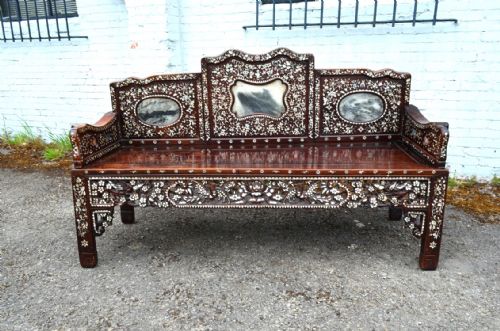
Surface decoration frequently involves cinnabar lacquer, bone inlay, and mother of pearl details set flush into the wood. These decorative layers transform structural seating into ornate decorative objects.
Several benches feature carved wooden horses, ensuring your hallway permanently hosts a silent, polished equine escort.
Judging quality in construction and ornament
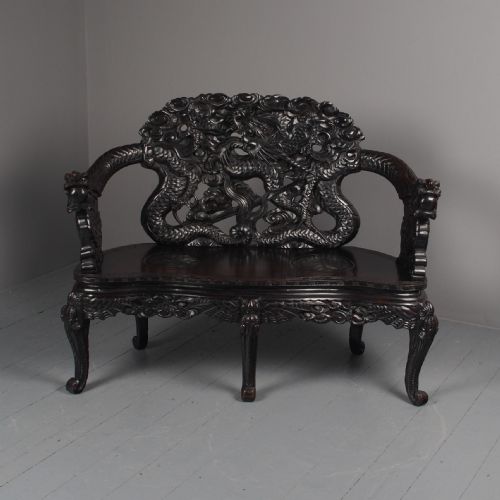
Quality rests upon the crispness of the hand carving and the depth of the relief work across the backrest and arms. Finer examples display meticulous detail in dragon scales and facial expressions rather than soft or shallow incisions.
The selection of materials dictates the upper tier of these pieces, particularly dense rosewood and intact layers of cinnabar lacquer or mother of pearl inlay. The integration of decorative elements without disturbance to the structural joinery marks superior workshop production.
The Chinese Settle Bench Glossary
- Cinnabar lacquer
- A traditional red coating built up in numerous layers on wood before being deeply carved. This technique requires considerable time and precision from the artisan.
- Chinese Export
- Items produced in China specifically for western markets during the nineteenth and early twentieth centuries. These pieces often blend traditional domestic forms with stylistic preferences from abroad.
- Qing Dynasty
- The final imperial dynasty of China, lasting from sixteen-forty-four to nineteen-twelve. Furniture from this era is celebrated for elaborate carving and use of native hardwoods.
- Mother of pearl
- The iridescent inner layer of mollusc shells used for inlay work in furniture surfaces. Small pieces are shaped and fitted into recesses in the wood to create shimmering decorative patterns.
Chinese Settle Bench: Frequently Asked Questions
How do I use a chinese settle bench today?
These benches work effectively in large hallways or entrance spaces where their high backs and carved panels create a strong visual statement. They also serve as striking seating options in spacious living rooms.
Because of their substantial timber construction, they require adequate floor space to let the carving and proportions be appreciated without crowding the room.
What woods were used for these benches?
Cabinetmakers relied heavily on dense hardwoods and rosewood to build these seating pieces. These heavy timbers provided the structural strength needed for deep relief carving.
Ebonised finishes and lacquered surfaces were also applied over the wood to alter the visual tone of the bench.
How do I tell nineteenth century pieces apart?
Dating relies on examining the depth and style of the woodcarving, alongside the specific type of lacquer or inlay present. Nineteenth century pieces often display heavier proportions and hand-carved dragon motifs.
Later examples from the early twentieth century may incorporate export styling or differing combinations of bone and mother of pearl decoration.
Are these benches comfortable for daily sitting?
The seating surface is solid carved wood without upholstery, designed primarily for short periods of rest in a hallway or reception room. Many people add custom cushions for extended sitting.
The high wooden backrests provide firm upright support rather than a cushioned lounge experience.