




Oriental Hall Bench
These oriental hall bench pieces are substantial Chinese seating forms designed for grand entryways, offering intricate carved details and rich woods that command attention.
Oriental Hall Bench
When you search for an oriental hall bench, you are looking at substantial hardwood seating designed for grand entryways and reception spaces. These pieces originate primarily from China, spanning the nineteenth century through to the early decades of the twentieth century, encompassing various traditional forms.
The styles range from export pieces to Qing Dynasty creations and traditional Chinese designs. These forms combine functional seating with dramatic artistic expression, reflecting the distinct craftsmanship of their periods of origin.
How they were made
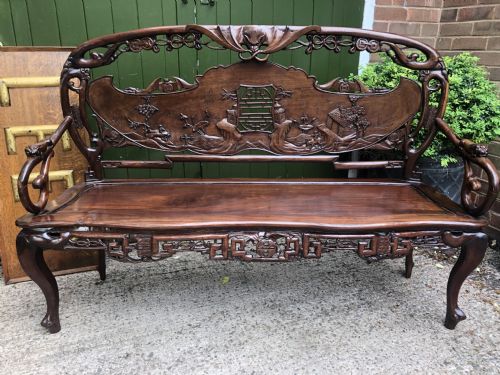
Makers utilised dense timbers such as rosewood, elm, and polished hardwood to build these enduring frames. These woods provided the necessary structural integrity to support intricate, deep-relief carving across the backs and seats.
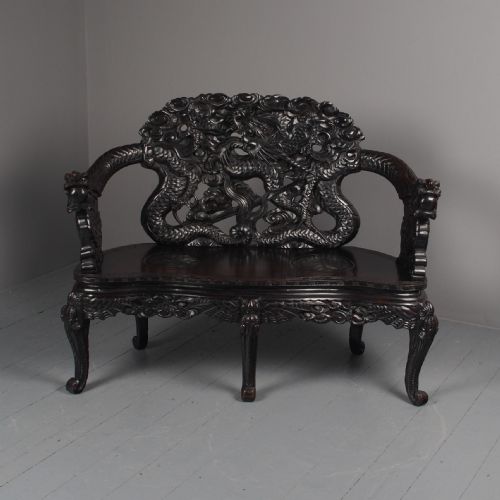
Surface decoration frequently involved cinnabar lacquer or ebonisation, adding depth and colour to the carved woodwork. Some examples incorporated contrasting materials like bone inlay or marble to enhance the visual impact of the design.
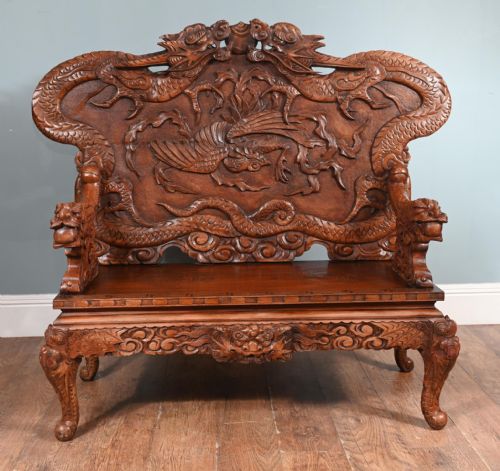
Traditional joinery techniques ensured the stability of these large seating forms without relying on modern fasteners. Carvers worked directly into the hardwood, executing elaborate dragon motifs and traditional Chinese patterns by hand.
Several benches feature carved dragons with expressions that suggest they take their job as hall guardians very seriously indeed.
What varies in quality
The depth and clarity of the carving separate standard examples from exceptional ones. Master carvers produced crisp, dynamic figures with distinct layering, whereas lesser pieces show softer, shallower incisions.
Choice of material also dictates the standing of a piece. Dense, heavy rosewood and expertly applied cinnabar lacquer command greater appreciation than simpler blonde wood or plain elm constructions.
Proportion and architectural harmony distinguish superior seating. The best examples balance elaborate decorative elements with balanced structural lines, maintaining visual poise across larger settles and corner benches.
The Oriental Hall Bench Glossary
- Cinnabar lacquer
- A traditional decorative coating made from the layered resin of the lacquer tree, tinted with mercuric sulphide to produce a rich red colour. Carvers cut intricate designs through these hardened layers.
- Settle
- A wooden bench featuring a high back to block draughts, often incorporating solid armrests and a box seat. These forms were adapted in Chinese workshops for grand halls.
- Qing Dynasty
- The final imperial dynasty of China, lasting from the mid-seventeenth century until the early twentieth century. Pieces from this era often display formal court styles and precise carved motifs.
- Ebonised hardwood
- Timber treated with chemical finishes or dark stains to imitate the dense black appearance of ebony. This technique provided a uniform dark background for carved details.
- Chinese Export
- Items produced in China specifically for Western markets from the eighteenth century onwards. These pieces often blended traditional domestic forms with stylistic preferences popular in Europe and America.
Oriental Hall Bench: Frequently Asked Questions
What is an oriental hall bench?
An oriental hall bench is a substantial hardwood seat made in China, designed for entryways and reception rooms.
These pieces range from nineteenth-century Qing Dynasty examples to early twentieth-century export forms, featuring carved wooden backs and sturdy frames.
How were these benches used?
They served as functional seating in large hallways, offering a place to sit while welcoming visitors or removing outer garments.
Their grand scale and elaborate carvings also made them statement furniture pieces that displayed the status of a household.
How do I live with an oriental hall bench?
Place the bench against a sturdy wall in a hallway, reception room, or large living space where its scale can be appreciated. Ensure it is kept away from direct heat sources to protect the hardwood and lacquer finishes.
Because many examples feature deep carvings and dense timbers, pairing them with simpler surroundings allows the intricate details of the wood to stand out.
How do I tell periods apart?
Nineteenth-century examples often display traditional Qing Dynasty carving styles with deep, intricate relief work in dense rosewood or elm. Pieces from the early twentieth century may show export influences or alternate with blonde wood and lacquered finishes.
Examining the depth of the carving and the specific treatment of the wood helps place the piece within its historical bracket.