






Chinese Carved Settle
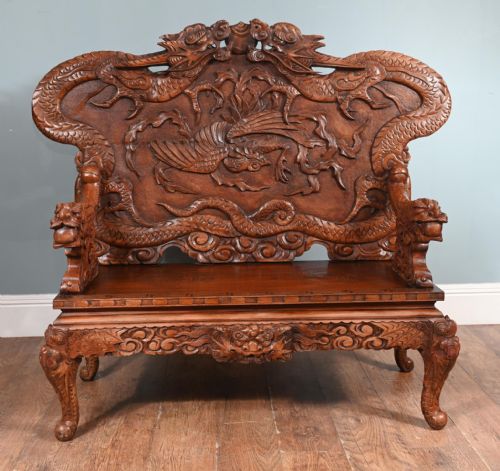
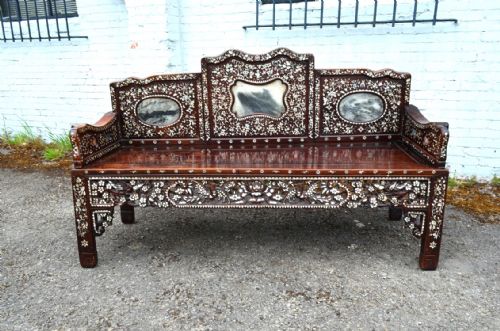
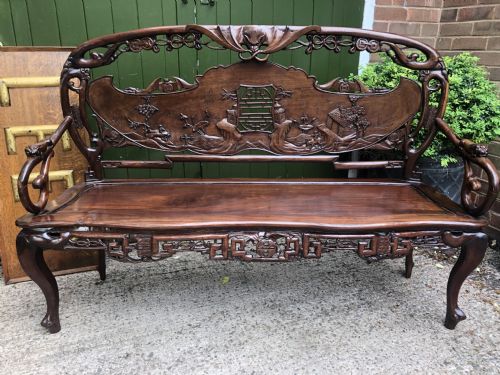
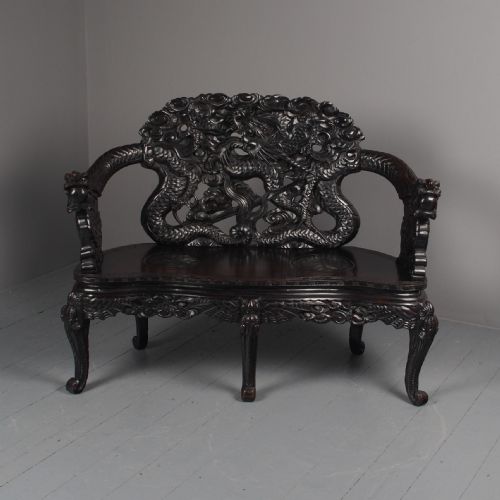
These Chinese carved settle examples bring heavy hardwood and intricate relief work into hallways, offering a solid seat rooted in traditional export and Qing Dynasty forms.
Chinese Carved Settle
These forms range from straightforward hardwood benches to elaborate dragon-carved seats and lacquered sofas. Originating primarily from the late nineteenth century and the early decades of the twentieth century, they combine practical domestic seating with dense surface ornament.
How they were made
Makers constructed these pieces from dense timbers such as rosewood, ebonised hardwood, and general hardwood, often finishing surfaces with cinnabar lacquer. Traditional joinery supported heavy frames designed to bear significant weight while displaying deeply carved motifs.
Artisans embellished many surfaces through bone inlay and mother of pearl detailing, contrasting pale, luminous inserts against dark timber grounds. Carved dragons, horseshoes, and figurative scenes emerged through patient chisel work directly into the wood or lacquer layers.
Listings feature hard timbers including rosewood alongside decorative surfaces finished in cinnabar lacquer and mother of pearl inlay.
What varies in quality
The distinction between ordinary and superior pieces rests on the depth and crispness of the carving, particularly around complex motifs like dragons and scrolling foliage. Finer examples display high precision in joinery and secure, flush settings for any mother of pearl or bone inlay.
Material selection also defines the tier of a piece, with dense, heavy rosewood and rich cinnabar lacquer holding greater visual and physical weight than simpler domestic hardwoods. The integration of the decorative panels into the core structure determines whether a piece maintains its integrity over decades of use.
The Chinese Carved Settle Glossary
- Cinnabar lacquer
- A traditional red lacquer built from multiple layers of resin containing mercuric sulphide, which artisans carved into relief designs once hardened.
- Mother of pearl
- An iridescent inner shell layer utilised for delicate inlay work across dark timber surfaces, catching the light from various angles.
- Bone inlay
- Sliced animal bone fitted tightly into carved channels within wood to create pale geometric or floral patterns.
- Qing Dynasty style
- An aesthetic echoing the artistic conventions of China's final imperial dynasty, characterised by formal balance and heavy ornamentation.
- Chinese Export
- Objects manufactured in China specifically for Western markets, blending traditional domestic forms with stylistic preferences popular in Europe and America.
Chinese Carved Settle: Frequently Asked Questions
Where should I place a settle?
These long wooden benches suit large hallways, spacious landings, or wide entryways where their solid backs and carved panels can be viewed clearly.
They also function effectively in generous living areas or dining spaces when paired with complementary tables or chairs.
How do I clean carved wood?
Dust surfaces regularly with a soft, dry cloth to prevent dirt from settling into the deep recesses of the relief carving.
Avoid harsh liquid cleaners or excessive moisture, which can damage aged lacquer, rosewood, and delicate pearl or bone inlays.
Are these seats comfortable?
Most historical pieces feature rigid wooden seats designed for upright posture rather than lounging, reflecting their original hallway placement.
Owners often add custom fabric squabs or cushions to make extended sitting more practical for modern daily use.
How do I date these pieces?
Dating relies on examining the timber density, tool marks, lacquer characteristics, and stylistic traits associated with nineteenth and early twentieth century production.
Comparing the specific motifs to documented Qing Dynasty and export patterns helps narrow down the probable era of manufacture.