
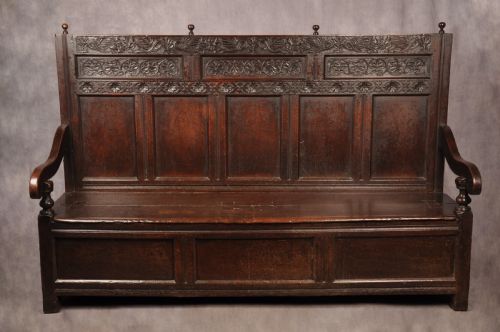


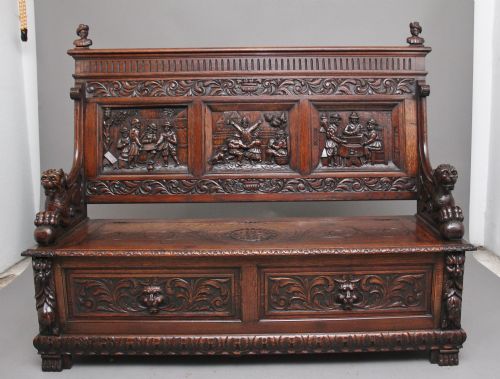
Carved Coffer Bench
These carved coffer bench options combine heavy timber storage with domestic seating, offering solid utility rooted in centuries of rural craft.
Carved Coffer Bench
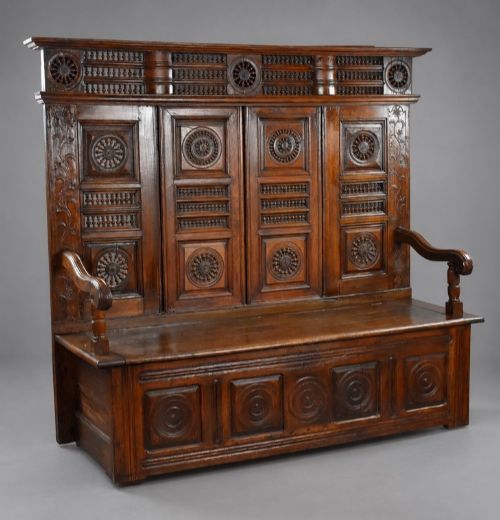
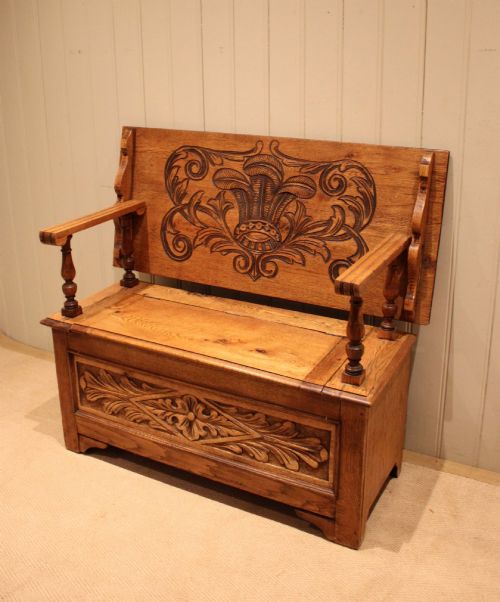
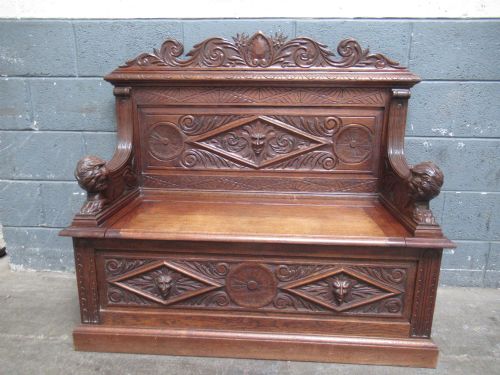
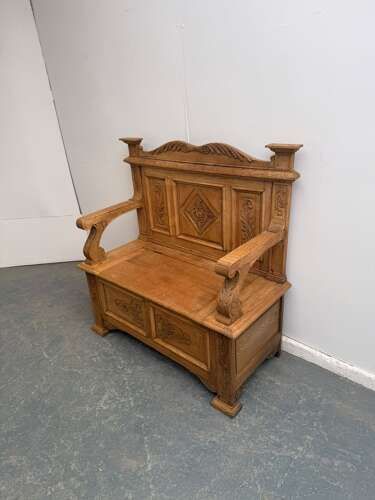
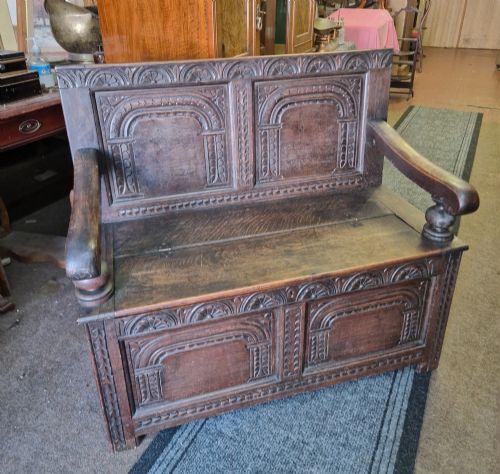
A carved coffer bench serves a dual purpose as a storage chest and a seat, frequently designated as a settle, monks bench, or hall seat across the listings. Buyers meet heavy timber examples originating from English, French, Scottish, and Italian workshops spanning several centuries.
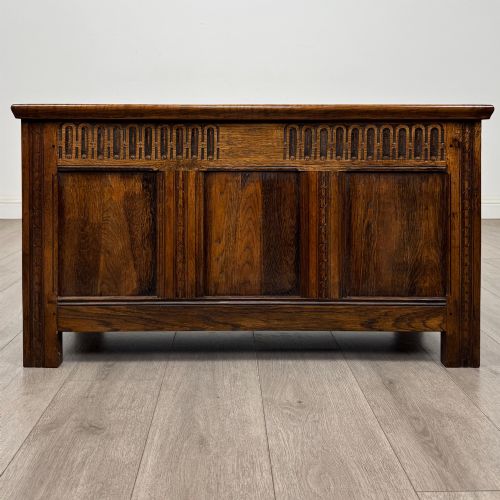
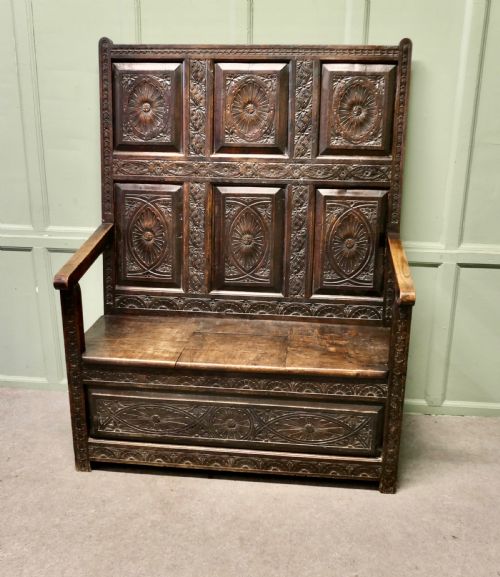
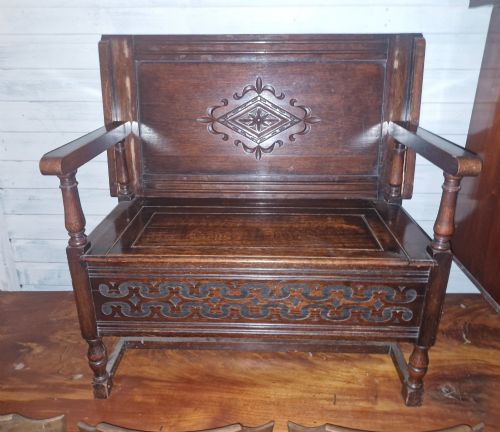
The dominant version on this page is the Victorian or 20th century oak revival piece, often featuring a high back, panelled construction, and a lift-up seat or fold-over top. Earlier 17th and 18th century variants appear alongside these, showing simpler proportions or regional North Country characteristics.
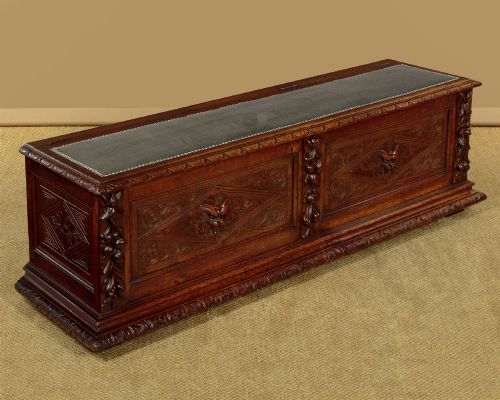
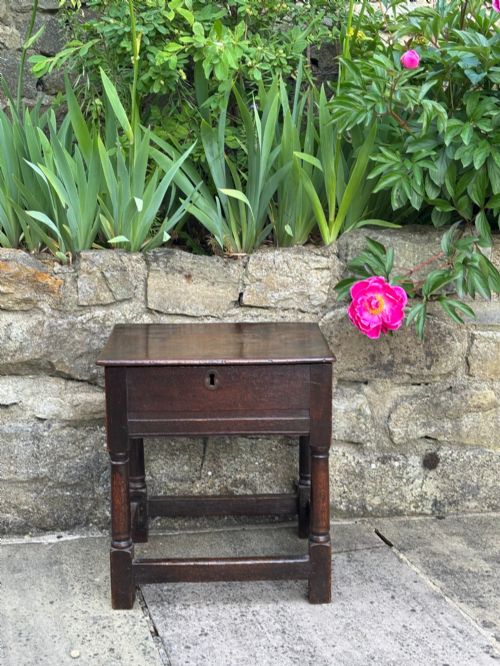
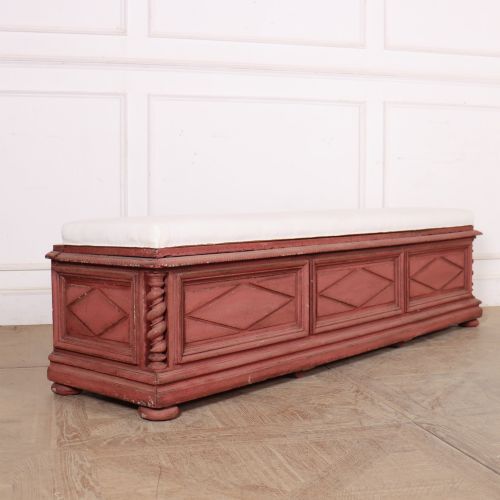
Makers utilised various secondary forms, including blanket boxes, hall benches, and box stools, which share the fundamental architectural trait of a lidded compartment beneath the sitter. Regional styles range from plain English country pieces to elaborate Renaissance Revival and Gothic interpretations.
Materials and Technique
Oak dominates the physical evidence, shaped by carpenters using traditional frame-and-panel construction to accommodate the natural seasonal movement of solid timber. Workshops also employed secondary hardwoods such as walnut, mahogany, fruitwood, and pine, occasionally mounting brass or iron hardware for hinges and catches.
Surface ornamentation relies heavily on chip carving, relief panels, and applied mouldings executed by hand. Carvers frequently utilised motifs such as the Green Man, scrolling foliage, dragons, or geometric strapwork to decorate the backrests and front rails of the coffer base.
Finishes range from historic beeswax to later Victorian varnishes, preserving the grain while sealing the dense timber. Joints typically rely on mortise and tenon construction pinned with wooden pegs, securing the heavy seats and high backs against daily use.
Listings span from the seventeenth century through to the Edwardian period, with oak serving as the predominant timber alongside occasional walnut and pine.
Craft and Proportion
Quality rests in the crispness of the hand carving and the integrity of the timber selection, distinguishing purposeful regional craftsmanship from later mass-produced revival items. Superior examples display deep, well-defined relief work on the panels and backrests rather than shallow, mechanical stamping.
Proportion and scale dictate the visual balance of a carved coffer bench, with better pieces maintaining harmonious relationships between the height of the back and the depth of the storage box. Structural tightness in the joints and the original operation of the lift-up lid or fold-over top signal superior historical upkeep.
The Carved Coffer Bench Glossary
- Settle
- A wooden bench with a high back, solid arms, and a closed base that often serves as a storage chest. This form kept draughts away from sitters in large halls.
- Monks Bench
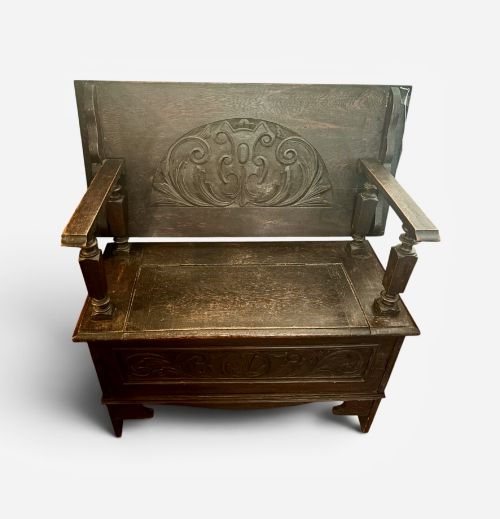
- A multifunctional seat featuring a hinged top that folds forward to convert the backrest into a table surface. These pieces maximise utility in compact interior spaces.
- Coffer
- A large wooden chest used traditionally for storing valuables, linen, or documents. When fitted with arms and a backrest, it transforms into a seat.
- Green Man
- A sculptural architectural ornament depicting a human face emerging from or entwined with foliage. It symbolises rebirth and appears frequently on revival woodwork.
- Revival
- A stylistic movement where makers deliberately copied or adapted historical periods like the Jacobean or Gothic eras. These pieces date from the 19th century onwards.
Carved Coffer Bench: Frequently Asked Questions
What is a monks bench?
A monks bench is a dual-purpose item of furniture featuring a pivoting backrest that folds flat over the arms to form a table. This clever transformation allowed single pieces to serve both dining and seating functions in smaller rooms.
Most examples seen here date from the Victorian era and the early twentieth century, constructed from solid oak with carved panels decorating the front of the storage base.
How were these benches used?
These benches were traditionally placed in entrance halls, great rooms, or farmhouses to provide both a place to sit when removing outerwear and a secure compartment for blankets, boots, or household goods. The high back shielded the occupant from cold draughts in large, stone-floored rooms.
Over time, their practical storage capability made them enduring household fixtures across different European regions, from English country houses to French provincial dwellings.
How do I tell an older piece from a revival?
Distinguishing seventeenth-century timber from nineteenth-century revival work requires examining tool marks, timber shrinkage, and construction methods. Authentic early pieces display hand-riven boards, irregular peg placements, and wear patterns consistent with centuries of use.
Revival furniture often exhibits uniform machine sawing, standardised fixings, and cleaner, less weathered interior surfaces while still utilising traditional oak materials.
Are these benches comfortable to sit on?
These benches were built with rigid wooden seats and upright backs designed for posture rather than lounging. Many historical pieces accommodate loose squab cushions or fabric pads to soften the seating area for modern living.
Their primary strength lies in sturdy daily utility and generous enclosed storage rather than upholstered ergonomic comfort.