




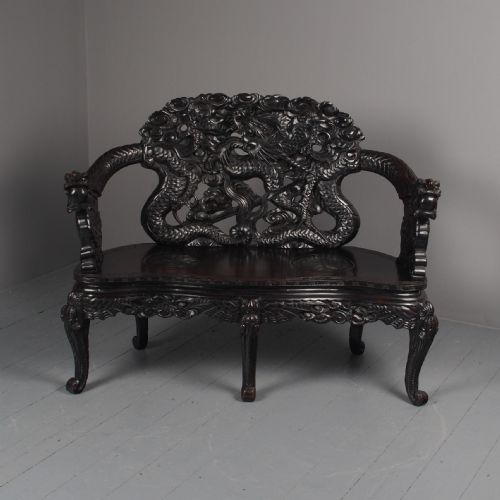


Carved Dragon Chair
A carved dragon chair brings dramatic presence to a room, rooted in centuries of intricate woodworking traditions.
Carved Dragon Chair
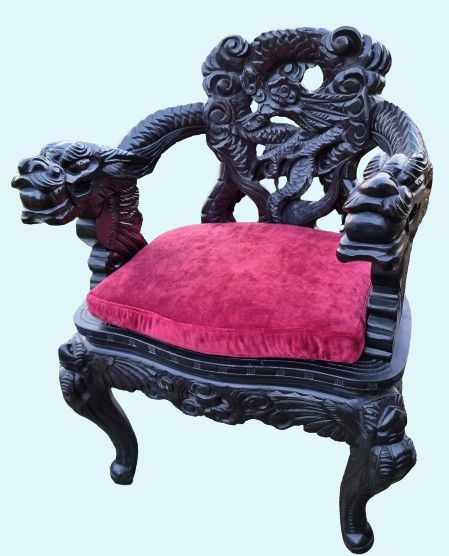
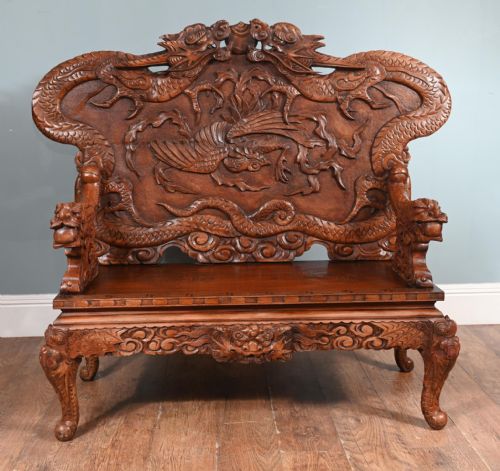
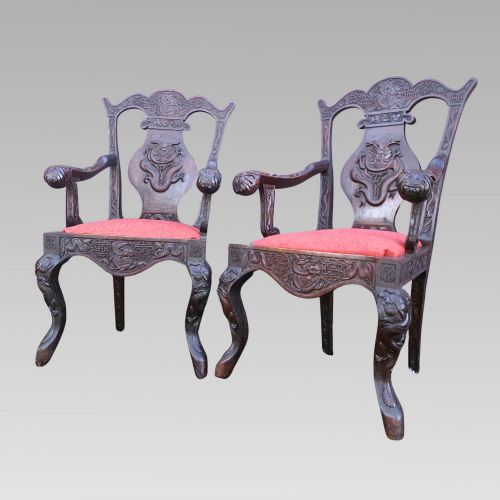
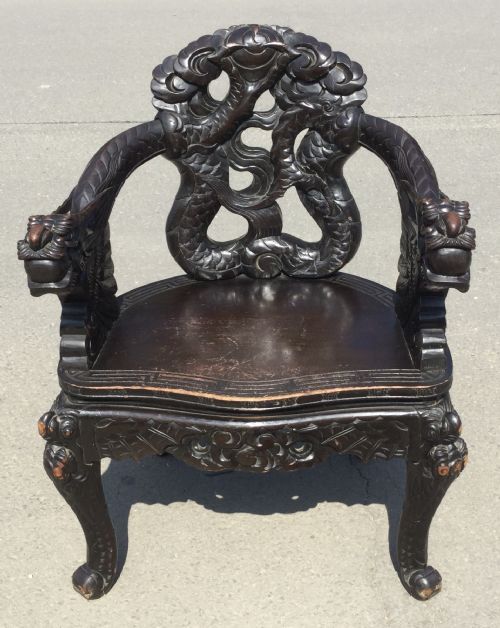
When you search for a carved dragon chair, you are looking at substantial seating pieces defined by intricate dragon motifs. The selection spans armchairs, benches, settles, and seating sets.
You are most likely to meet 19th-century Chinese export examples alongside pieces from the Qing Dynasty and later periods around 1900. These items range from single accent chairs to grand hall benches and matching pairs.
The forms encompass traditional armchairs, horseshoe hall benches, folding chairs, and low elm seats. A Welsh folk art spinning chair also appears among the harder-to-find regional variations.
How they were made
Joinery relies on dense timbers like hardwood, rosewood, elm, and teak, which provide the structural strength needed for deep relief carving. Artisans shaped these resistant materials using traditional mortise and tenon construction.
Surface treatments include polished hardwood finishes and rich cinnabar lacquer applied over carved wooden cores. Certain pieces incorporate contrasting details such as bone inlay or textured velvet upholstery.
Carved Dragon Chair Retail Price Guide 2026
Typical asking prices for carved dragon chair among the pieces listed under this phrase on Sellingantiques today, from the lower quarter to the upper quarter. They describe what is for sale here now, not the wider market.
Listings feature items spanning the 19th century, 1860, 1880, 1900, and 1930 periods, executed in hardwood, rosewood, elm, teak, lacquer, and bone inlay.
What varies in quality
Material selection and timber choice govern the weight and longevity of the frame. Denser rosewood and teak specimens demonstrate greater structural integrity than softer woods, holding intricate details without splintering over time.
The Carved Dragon Chair Glossary
- Qing Dynasty
- The final imperial dynasty of China, lasting from 1644 until 1912. Much of the surviving export furniture originates from the later decades of this period.
- Cinnabar lacquer
- A traditional Chinese decorative technique involving multiple layers of coloured lacquer applied to a base material, usually carved once dry. This creates a smooth, durable surface with deep red tones.
- Settle
- A wooden bench featuring high backs, solid arms, and often a storage box beneath the seat. These forms were designed to block draughts in large halls.
- Elm
- A resilient domestic timber used for traditional furniture construction. It offers good bending strength and a pronounced grain pattern.
- Rosewood
- A heavy, dense tropical timber valued for its rich colour and ability to take fine carving detail.
Carved Dragon Chair: Frequently Asked Questions
How were dragon chairs used originally?
These chairs served as formal seating in ancestral halls, reception rooms, and temples. Their imposing decoration reflected the status and authority of the household.
In domestic settings, grand armchairs and settles occupied prominent positions where guests were received. Smaller variants functioned as functional seating or decorative accents within reception spaces.
How do I date a carved dragon chair?
Dating relies on examining the timber species, construction methods, and the style of the carving. Nineteenth-century examples often display deep relief work in dense rosewood or teak, reflecting export trends of the period.
Later pieces from around 1900 share similar manufacturing traits, while specific regional pieces, such as Welsh folk art examples, display entirely different local vernacular joinery and timber choices.
Are these chairs comfortable for daily use?
Most antique dragon chairs were built for visual impact rather than ergonomic lounging. The heavy wooden armrests and upright backs encourage an upright posture.
Some examples feature upholstered seats or accommodate loose cushions to improve comfort. However, their solid timber construction makes them firm compared to modern upholstered armchairs.