


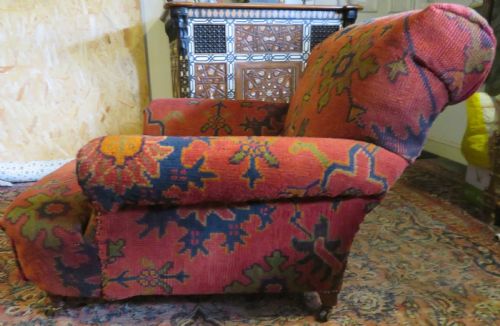


Vintage Oriental Armchair
These vintage oriental armchairs bring distinct regional character and carved presence into a room, making a vintage oriental armchair a striking choice for eclectic seating.
Vintage Oriental Armchair
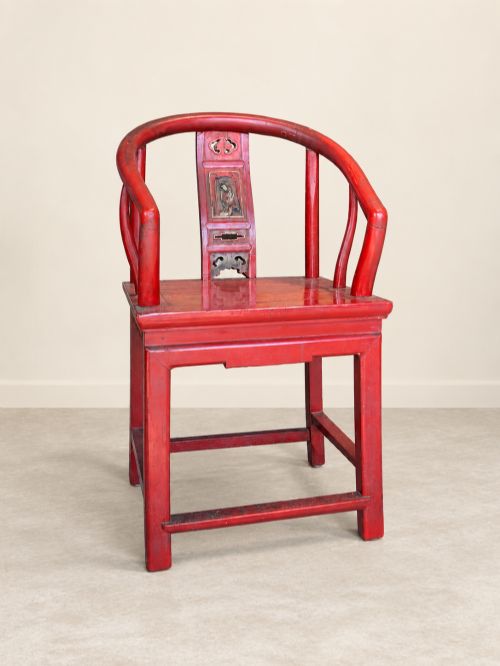
A vintage oriental armchair spans several centuries of craftsmanship, taking forms such as horseshoe back chairs, corner chairs, and carved hardwood seating. These pieces originate from traditions including Chinese export, Qing dynasty styles, and Anglo-Indian design.
The selection on this page leans heavily towards traditional Chinese forms constructed from elm and dense hardwoods, alongside lacquered finishes and occasional canework details. Buyers encounter both single statement chairs and matched pairs suited to period and eclectic interiors alike.
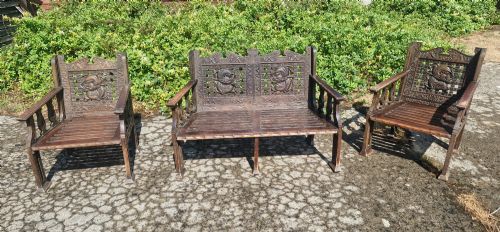
Beyond standard armchairs, related seating types appear across the inventory, including slipper chairs and conservatory suites. Each piece reflects the specific aesthetic of its production period, ranging from the eighteenth century to the early twentieth century.
How they were made
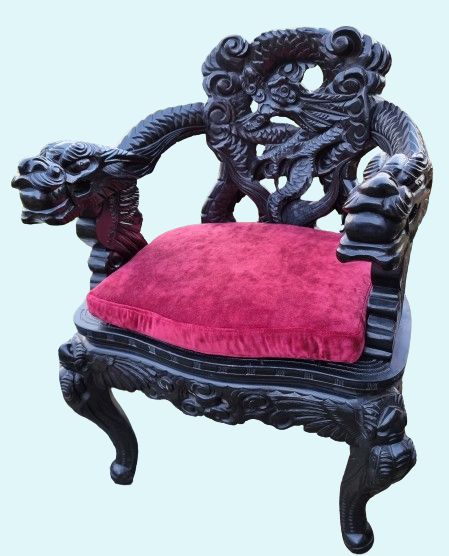
Construction relies on dense timbers such as hardwood, teak, and elm, providing structural integrity for intricate hand-carved elements and complex joinery. Artisans shaped these robust materials into distinctive silhouettes, including curved horseshoe backs and corner frames.
Surface treatments introduce further visual depth through traditional lacquerwork, painted details, and inlaid motifs. Where upholstery is present, materials like velvet and carpet fabrics are integrated into the seating design.
Seating forms on this page include corner armchairs, slipper chairs, and complete conservatory suites alongside standard armchairs.
What varies in quality
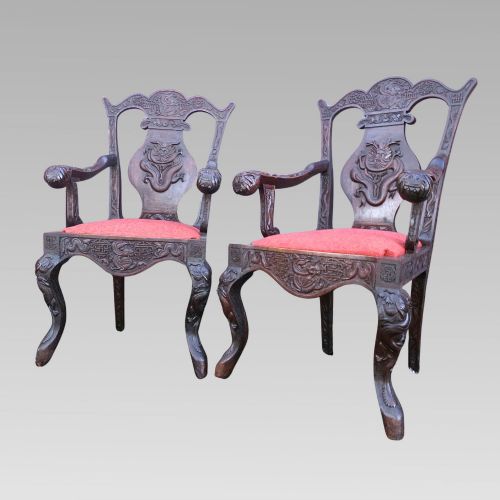
The depth and crispness of the hand-carving dictate much of the visual distinction between examples, separating standard utilitarian seating from pieces designed with sculptural ambition. Exceptional pieces display fluid lines, particularly in complex forms like horseshoe backs and corner chairs.
The integrity of the timber and the preservation of original surface finishes, whether polished hardwood, lacquer, or paint, influence the overall character. Proportion and balance also vary, with eccentric or curvaceous designs often representing more ambitious regional workshop output.
The Vintage Oriental Armchair Glossary
- Horseshoe back
- A chair design featuring a continuous curved crestrail and arms that sweep forward in a single graceful arc. This traditional Chinese form offers ergonomic support.
- Corner armchair
- A seating design engineered to fit into room angles, typically featuring a diagonal orientation and a continuous backrail supported by corner posts.
- Lacquer
- A durable resin finish applied in multiple layers to wood surfaces, providing a smooth, protective coating often associated with Asian decorative arts.
- Elm
- A resilient hardwood utilised extensively in traditional Chinese furniture making for its interlocking grain and ability to hold fine carved details.
- Canework
- Woven rattan or cane material used for chair seats and backs, offering flexible support and a lighter visual texture.
Vintage Oriental Armchair: Frequently Asked Questions
How do I style a vintage oriental armchair?
These chairs function well as standalone statement pieces in contemporary or traditional rooms, offering sculptural form and distinct history. Pair them with neutral furnishings to highlight their carved timber or lacquered surfaces.
Consider the scale of the chair in relation to surrounding furniture, particularly with horseshoe back or corner designs that occupy visual space differently than standard armchairs.
What woods are typical for these chairs?
Construction commonly involves dense hardwoods and elm, selected for strength and stability. These timbers support intricate carved dragons, foliage, and geometric patterns.
Surface finishes range from polished natural grain to applied lacquer and paint, reflecting the workshop traditions of the period.
Are these chairs comfortable for daily use?
Many traditional designs prioritize upright posture and structured wooden support, while upholstered variants incorporate velvet or carpet seat pads for added cushioning. Ergonomy varies significantly by regional style and period.
Adding a loose cushion can adjust the seating depth and comfort level to suit individual preference without altering the chair.
How do I identify the period of a Chinese armchair?
Dating relies on stylistic markers such as joinery techniques, timber patination, and the complexity of the carving. Eighteenth-century examples often display restrained lines or specific backrail geometries.
Nineteenth and early twentieth-century pieces frequently incorporate heavier carving or varied surface treatments like lacquer and canework.