





Hardwood Chinese Armchairs
Hardwood chinese armchairs are substantial seating pieces bringing traditional craftsmanship and dense timbers into modern interiors.
Hardwood Chinese Armchairs
Hardwood chinese armchairs encompass seating forms created across the eighteenth and nineteenth centuries, including the Victorian era and the early decades of the twentieth century. Buyers seeking these items encounter single chairs, matched pairs, and larger parlour suites or seating sets designed for formal interiors.
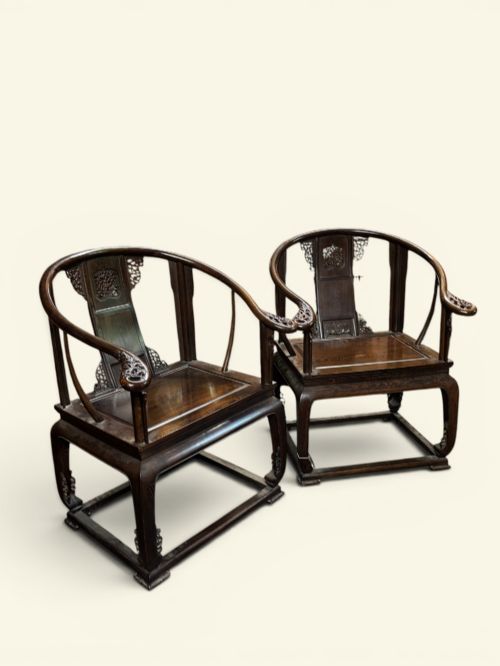
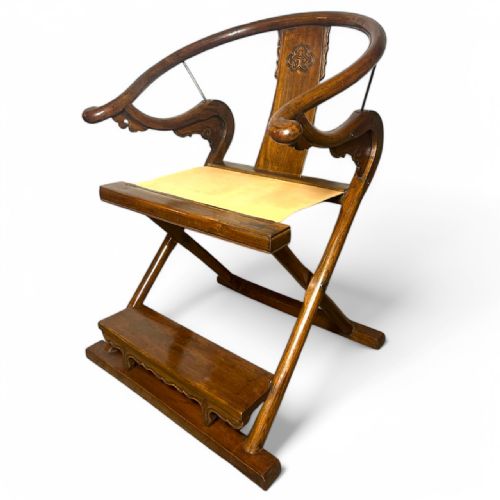
The selection ranges from classic horseshoe-back throne chairs and folding frames to corner armchairs and day beds or stargazers chairs. Qing dynasty examples and traditional Chinese export pieces feature prominently alongside variants showing Victorian influences.
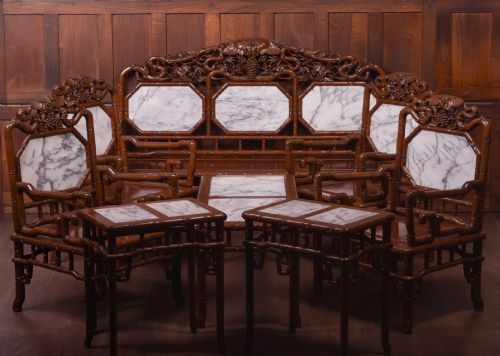
Most items arrive in dense timbers such as hongmu and rosewood, often paired with elm, lacquer, marble, or brass inlay work. These constructions serve both functional seating roles and decorative display functions within a room.
How they were made
Craftsmen utilised heavy tropical hardwoods, notably hongmu and rosewood alongside durable elm, building frames designed to withstand sustained use without warping. Artisans shaped these dense timbers using traditional joinery methods that relied on interlocking joints rather than metal fasteners.
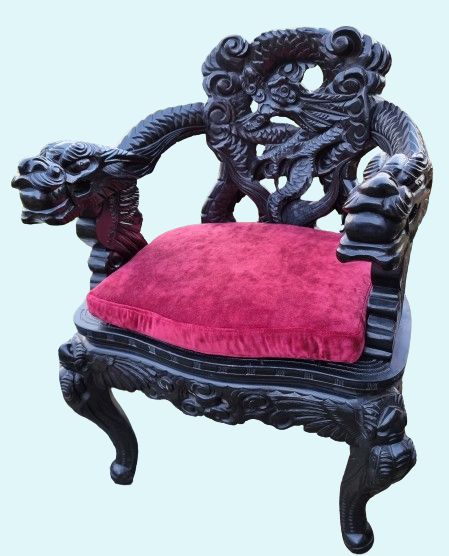
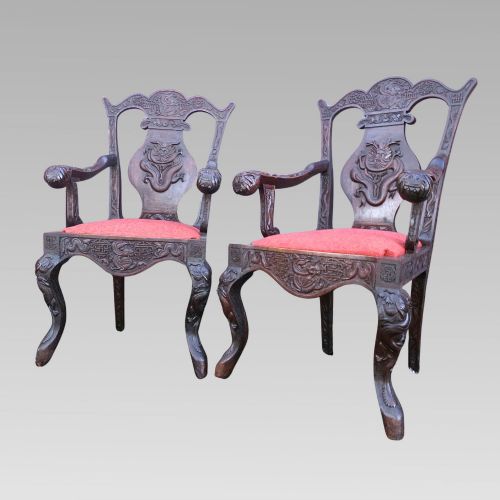
Carving formed an integral part of the production process, with elaborate relief work depicting dragons and traditional motifs across backs and armrests. Workshops incorporated contrasting materials like marble inserts, mother of pearl inlay, and brass wire to accent the dark timber surfaces.
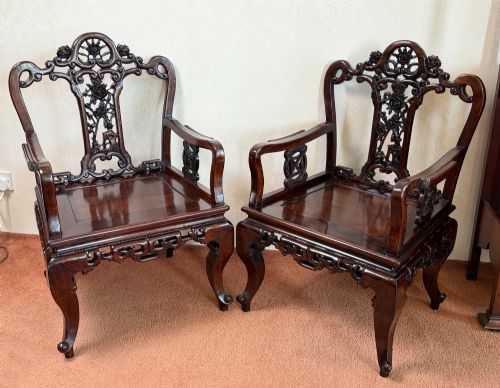
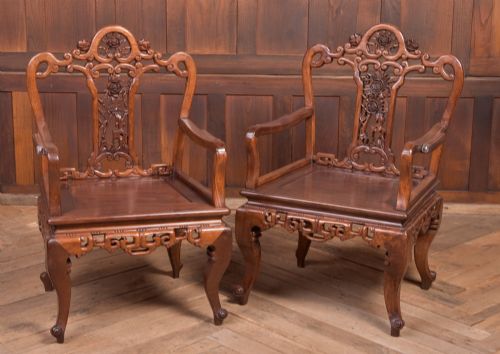
The archive records matching pairs of carved hongmu throne-style armchairs alongside unusual folding and corner chair designs.
What varies in quality
Quality reveals itself in the depth and crispness of the carved detail, where sharper linework on dragon motifs and floral panels indicates a more skilled hand at the bench. The selection of the timber also dictates value, with dense hongmu and figured rosewood commanding greater visual weight than plainer elm frames.
Proportion and symmetry set the finer parlour suites and pairs apart from more utilitarian seating, particularly in complex forms like horseshoe-back chairs and folding frames. The integration of secondary materials such as marble seats or brass inlay demonstrates the maker's ambition and the commission's original status.
The Hardwood Chinese Armchairs Glossary
- Hongmu
- A dense, dark red-brown tropical hardwood favoured by traditional Chinese cabinetmakers for high-status seating. This timber takes a fine polish and supports deep, crisp carving.
- Horseshoe-back
- A continuous curved arm and back rail sweeping down to the seat, offering an ergonomic embrace. This profile appears frequently on throne chairs and folding variants.
- Qing Dynasty
- The final imperial dynasty of China, spanning from sixteen forty-four to nineteen twelve, known for elaborate carved furniture. Pieces from this era often feature powerful dragon motifs and formal symmetry.
- Elm
- A native hardwood utilised in regional Chinese furniture for its tough, interlocking grain. It provides a lighter alternative to exotic dense timbers while offering strong structural integrity.
- Export
- Goods produced specifically for Western markets during the eighteenth and nineteenth centuries. These pieces often blend traditional Chinese forms with European aesthetic preferences.
Hardwood Chinese Armchairs: Frequently Asked Questions
How do I care for hardwood chinese armchairs?
Maintain these timber pieces by keeping them away from direct heat sources and sudden humidity shifts that can stress ancient joints. Apply a light application of natural wax periodically to nourish the surface without building up residue.
Avoid harsh chemical cleaners and abrasive cloths when dusting the carved surfaces and inlaid panels. Gentle maintenance preserves the original patina developed over centuries of handling.
Are these chairs comfortable to sit in?
These seating pieces offer firm support derived from solid timber seats and upright wooden backrests. While designed primarily for formal posture rather than lounging, many include generous proportions that accommodate everyday use.
Adding loose silk or velvet cushions can soften the wooden seat while respecting the historic aesthetic. The ergonomic curve of horseshoe designs provides natural arm support.
How do I identify a qing dynasty piece?
Qing dynasty items typically display dense hardwoods like hongmu or rosewood combined with deep, intricate carving of dragons and auspicious symbols. Construction often employs traditional joinery without nails, showing substantial weight and formal presence.
Matching pairs and throne chairs from this era reflect strict stylistic hierarchies intended for elite interiors. Examining the grain and the crispness of the relief work helps confirm the period.