

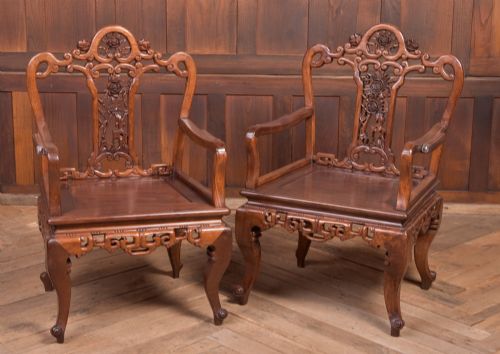


Oriental Wooden Chairs
Oriental wooden chairs bring character to a room, offering sculptural shapes and rich timbers like elm, rosewood, and teak from the nineteenth century onwards.
Oriental Wooden Chairs
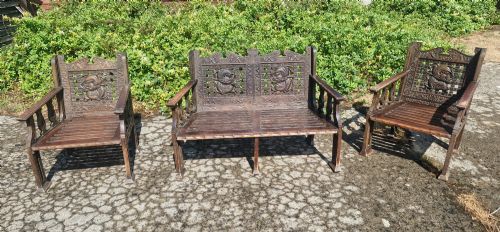
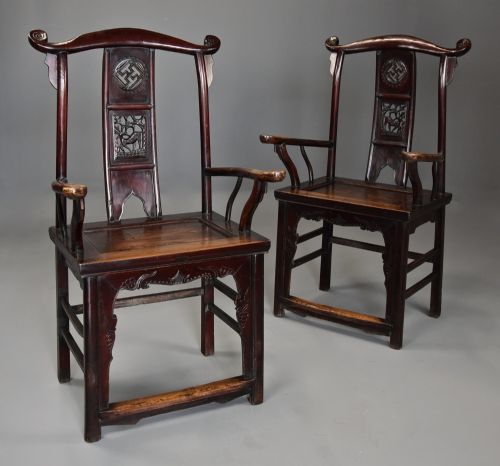
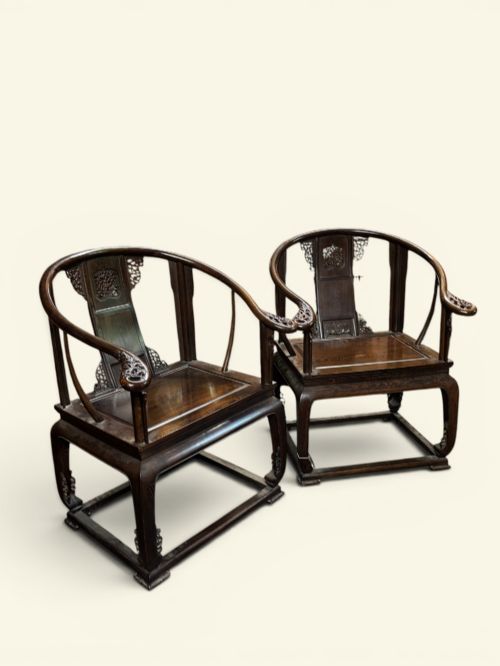
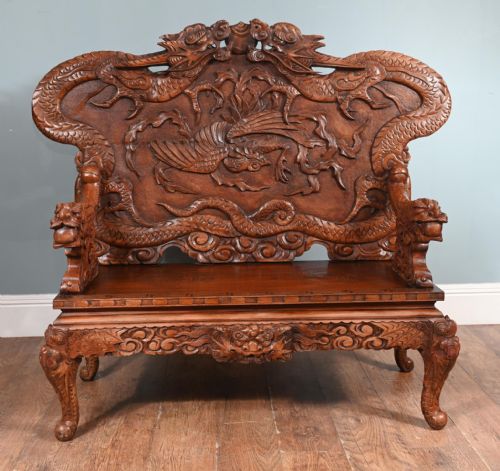
Oriental wooden chairs encompass a diverse range of seating, from horseshoe-back armchairs and yoke-back scholar's chairs to low benches and settle seating. Buyers seeking oriental wooden chairs will most commonly encounter nineteenth-century elm and hardwood examples rooted in Chinese traditions, alongside regional variations from India and Burma.
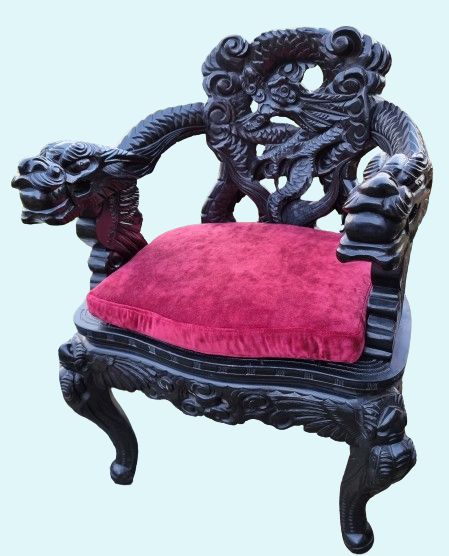
Makers utilised native and imported timbers, creating seating that served both functional domestic roles and ceremonial purposes. The inventory spans straightforward folk art creations to highly ornate carved seating with brass inlay or painted surfaces.
What varies in quality
Quality rests in the crispness of the hand-carved detailing and the structural integrity of the joinery. Superior examples maintain their original finish and develop a rich, honest patina that speaks to age and usage.
The choice of timber dictates the baseline stability, with dense hardwoods and well-seasoned elm outperforming softer woods. Retaining original lacquer, paint, or cane work significantly elevates the character and integrity of a piece.
Listings feature items from the nineteenth century, including Victorian-era imports, alongside pieces dating to nineteen-twenty and the Qing Dynasty.
The Oriental Wooden Chairs Glossary
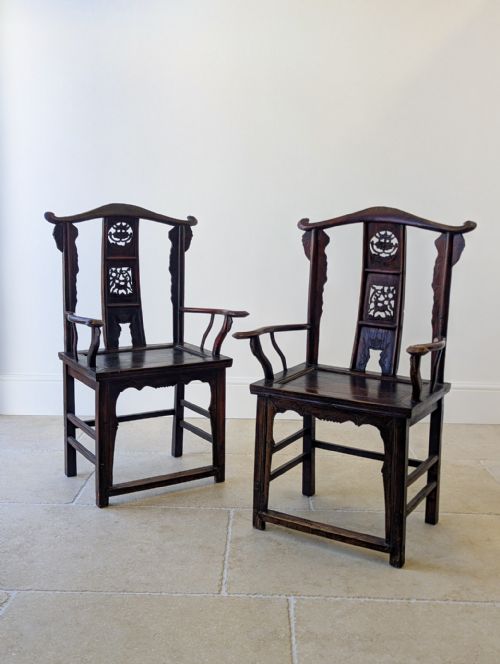
- Yoke-back chair
- A traditional Chinese chair featuring a top rail that curves upwards resembling an ox yoke. This design supported the occupant's posture while reading or meditating.
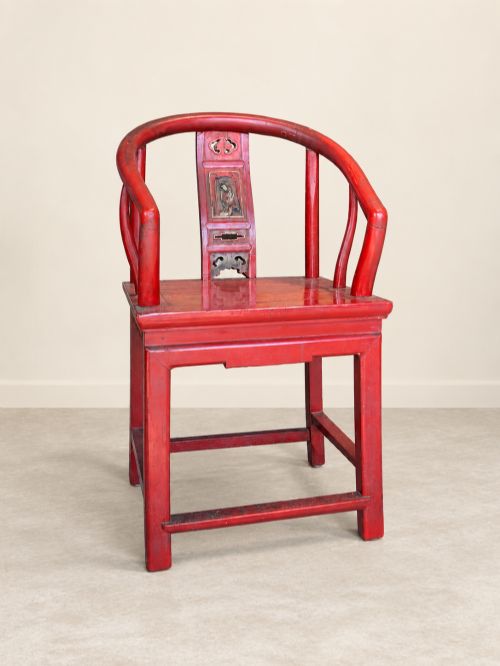
- Horseshoe-back chair
- A seating form characterised by a continuous curved backrest and armrail shaped like a horseshoe. It often includes a carved splat for central support.
- Cinnabar lacquer
- A red decorative coating derived from mercury sulphide applied in numerous layers to wood. Artisans carved intricate patterns into the hardened surface.
- Elm
- A durable, fibrous timber favoured by Chinese cabinetmakers for its strength and flexibility. It takes carving well and develops a warm patina with age.
- Scholar's chair
- A minimalist wooden chair designed for officials and scholars in dynastic China. These pieces emphasised clean lines and ergonomic support over excessive ornamentation.
Oriental Wooden Chairs: Frequently Asked Questions
How do I identify a yoke-back chair?
Look for the distinctive curved top rail that mimics the shape of an ox yoke, combined with a vertical splat running down the centre of the backrest.
These chairs often utilise elm or hardwood and were designed to keep the occupant's posture upright during long periods of study or contemplation.
What is a horseshoe-back chair used for?
The continuous curved rail provides comfortable arm support and a secure enclosure for the sitter. They function well as statement accent chairs in modern living spaces.
Historically, their sweeping form allowed ample room for heavy traditional garments and offered an ergonomic seat for high-status individuals.
How should I care for lacquered wooden chairs?
Keep wooden and lacquered seating away from direct sunlight and dramatic fluctuations in temperature to prevent the finish from cracking. Dust gently with a dry, soft cloth.
Avoid chemical polishes that can strip original nineteenth-century surfaces or soften historic lacquer layers over time.
Are these chairs comfortable for daily use?
Many traditional designs were built for upright posture rather than lounging, focusing on lumbar support through shaped back splats. Adding a custom silk or linen cushion can improve comfort for modern seating.
Solid hardwood and elm construction provides a sturdy base, making them practical for everyday dining or hallway use.