


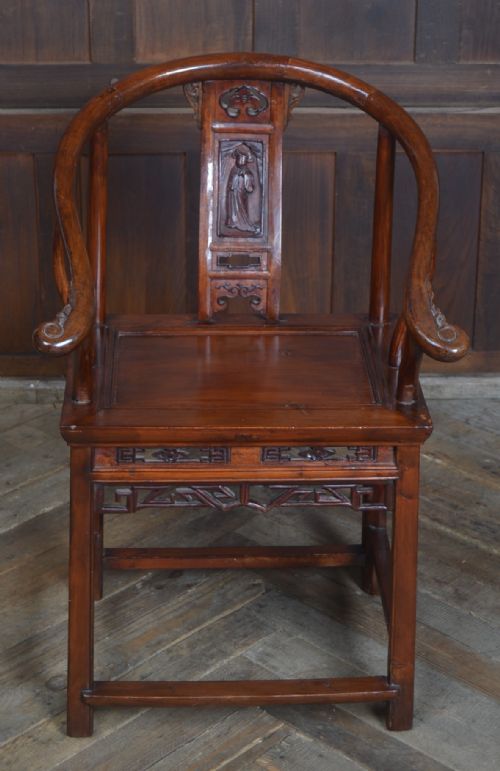


Qing Style Chairs
These qing style chairs bring substance and carved detail to a room, offering practical seating rooted in traditional Chinese forms.
Qing Style Chairs
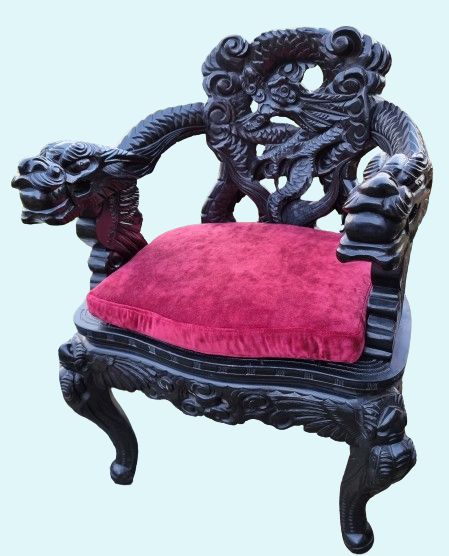
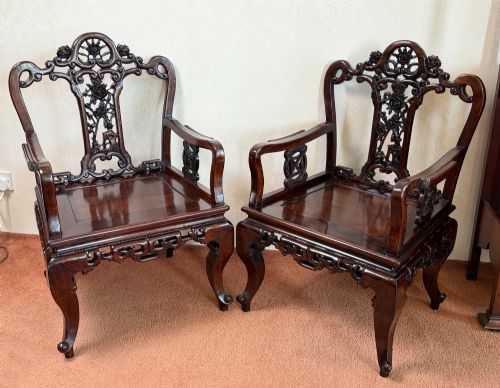
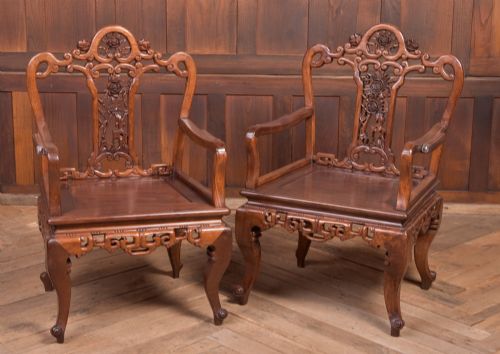
When you search for qing style chairs, you encounter seating derived from historical Chinese furniture traditions, primarily taking the form of armchairs, hall chairs, and side chairs. These pieces span periods from the eighteenth century through to the early twentieth century, including Edwardian examples.
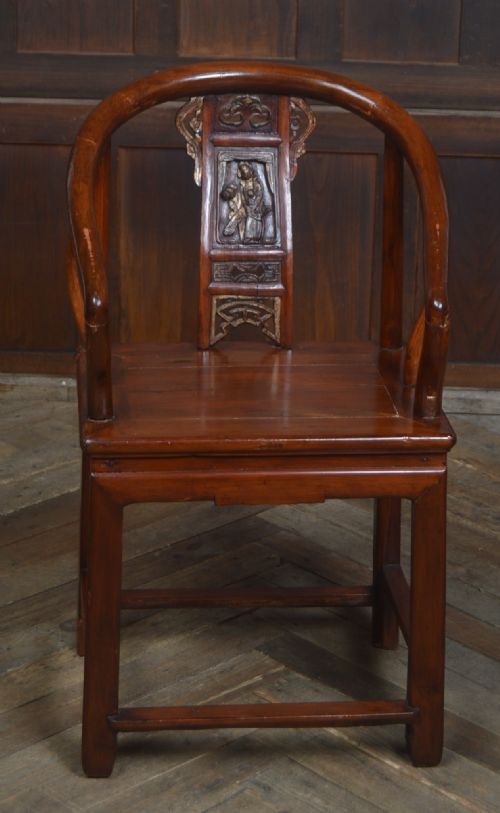
The selections on this page heavily feature hardwood and elm constructions, often incorporating regional variations like hongmu, huanghuali, or lacquered wood. Forms range from standard armchairs and throne chairs to horseshoe-backed designs and corner chairs.
How they were made
Construction relies heavily on dense timbers such as hardwood, elm, and hongmu, selected for stability and structural integrity. Craftsmen utilised traditional joinery methods alongside detailed carving to shape frames, backs, and legs.
Surface treatments vary between polished timber finishes and lacquered wood, occasionally supplemented by brass inlay work or upholstered elements in velvet and fabric.
One listed item doubles as a day bed, accommodating those moments when sitting upright simply becomes too much effort.
What varies in quality
The execution of the carved detail distinguishes different grades of seating, ranging from simple geometric mouldings to deep, complex figural work. Crisp lines in the joinery and well-preserved timber grain elevate the overall presence of the piece.
Material selection plays a primary role, as dense timbers like huanghuali or hongmu carry different visual weight and durability compared to standard elm or generic hardwood frames.
The Qing Style Chairs Glossary
- Hongmu
- A category of dense, heavy tropical hardwoods used in traditional Chinese furniture construction. It translates literally to red wood and develops a deep patina over time.
- Huanghuali
- A prized aromatic hardwood prized for its rich grain patterns and durability in antique Chinese seating. Pieces constructed from this material are historically significant.
- Horseshoe back
- A continuous curved rail forming the back and armrests of a chair in one sweeping arc. This ergonomic design provides sturdy support.
- Corner armchair
- A specialised seating form designed to fit into room angles, featuring a diagonal orientation and wraparound backrest. These often display eccentric and curvaceous proportions.
- Throne chair
- An imposing, high-backed armchair designed with formal proportions and heavy carving. Such pieces served prominent functions within traditional interiors.
Qing Style Chairs: Frequently Asked Questions
Where were corner chairs used?
Corner chairs were designed to sit neatly within room angles or at tables where space was restricted. Their diagonal stance offers an alternative silhouette to standard seating.
These pieces frequently incorporate horseshoe backs or eccentric proportions.
How do I care for lacquered wood?
Lacquered wood surfaces require protection from direct sunlight and excessive humidity to prevent cracking. Dusting with a soft cloth maintains the finish without abrasive cleaners.
Edwardian and nineteenth-century lacquered pieces benefit from stable indoor environments.
What distinguishes a throne chair?
Throne chairs possess elevated, imposing backrests and heavy, formal carving designed to project authority. They stand apart from standard hall chairs and side chairs.
Examples from the late nineteenth century show elaborate detailing in this form.