





Asian Style Armchair
An asian style armchair brings substantial presence and rich timber grain to a room, offering both sculptural form and deep seating comfort.
Asian Style Armchair
When you search for an asian style armchair, you encounter seating built across the eighteenth, nineteenth, and early twentieth centuries. These pieces originate from traditions spanning traditional Chinese, Qing dynasty, and Anglo-Indian workshops.
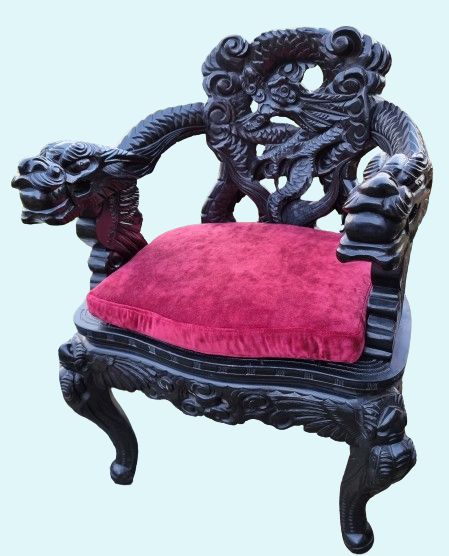
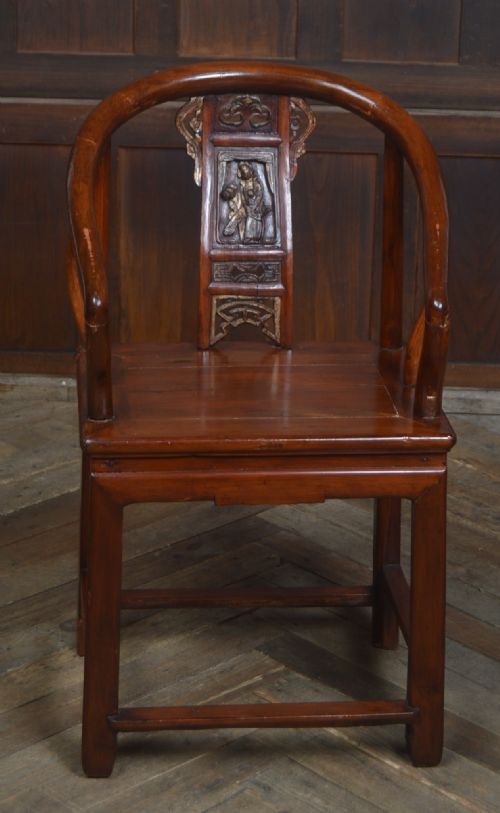
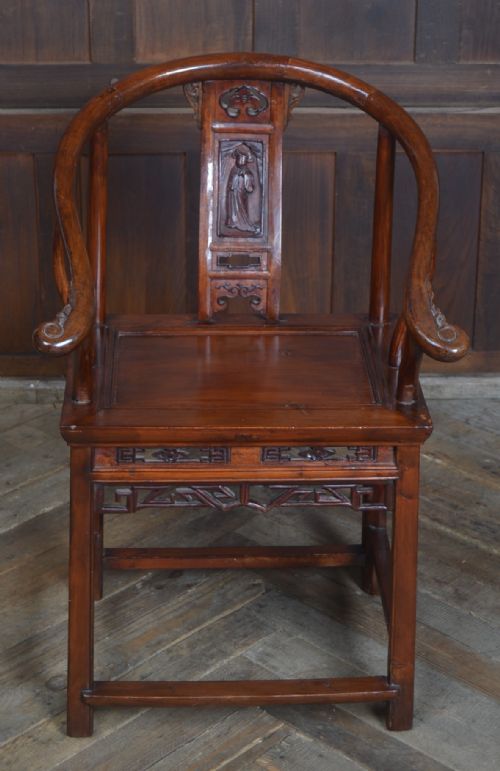
You are most likely to meet hardwood or elm armchairs on this page, often taking the distinctive horseshoe shape with curved backrests. The selection ranges from singular throne chairs to matched pairs and larger furniture suites.
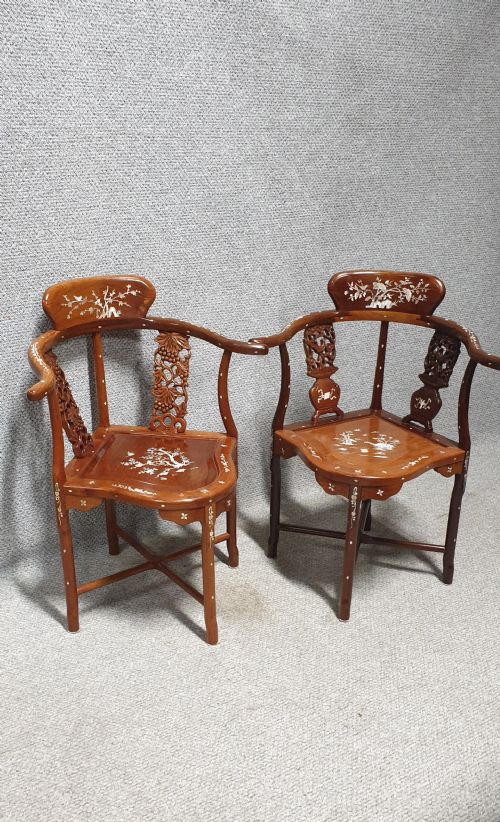
Forms include corner chairs, hall benches, and day beds alongside standard armchairs. The construction employs traditional joinery methods rooted in centuries of regional cabinet making.
How they were made
These armchairs rely on dense timbers such as rosewood, hongmu, elm, and general polished hardwood. Cabinet makers utilised these heavy woods to achieve rigid frames and durable seating.
Decoration involves intricate wood carving, contrasting brass inlay work, and dark lacquer finishes. Horseshoe and wishbone backs were shaped through steam bending or segmented joinery to create smooth, continuous curves.
Listings feature pieces spanning the eighteenth century through to the 1930s, constructed in hardwood, elm, rosewood, and teak.
What varies in quality
Quality separates in the precision of the joinery and the depth of the timber carving. Superior examples display crisp relief work and tight, interlocking joints that hold firm without modern metal fasteners.
The choice of material dictates much of the distinction, with dense rosewood and hongmu specimens carrying greater heft than simpler elm builds. Surface finish and the preservation of original lacquer or polish further divide the standard range from the finest pieces.
The Asian Style Armchair Glossary
- Hongmu
- A category of dense, heavy Asian hardwoods that translates literally to red wood. These timbers are prized for deep natural colour and fine grain.
- Horseshoe back
- A continuous curved rail that forms both the backrest and the armrests of a chair. This ergonomic design provides comfortable support for the arms and back.
- Elm
- A resilient domestic timber utilised widely in regional Chinese cabinet making. Pickled elm variants display a lighter, limed surface texture.
Asian Style Armchair: Frequently Asked Questions
How are these armchairs best used in a modern interior?
These armchairs serve well as statement seating in a living room, study, or hallway. Their strong timber profiles anchor a room without requiring heavy surrounding decoration.
Pare them with minimalist furniture to let the carved details and traditional forms stand out. They function comfortably as standalone reading chairs or paired flanking a central table.
How do I identify the wood used?
Asian armchairs employ various timbers including dense rosewood, hongmu, and lighter elm. Grain pattern, weight, and natural colour help distinguish the material.
Rosewood and hongmu feel exceptionally heavy and display deep reddish or brown tones. Elm presents a pronounced, open grain structure that takes lacquer or pickled finishes effectively.
What defines a throne chair?
Throne chairs are larger, more formal seats characterised by high, straight backs and substantial armrests. They were designed to convey authority and status in traditional settings.
These pieces often feature extensive carved ornamentation and solid timber panels. Their commanding height makes them natural focal points within a room.