




Chinese Elbow Chairs
Chinese elbow chairs are traditional Asian seats combining structural timber and formal carving, offering both comfort and historical presence to an interior.
Chinese Elbow Chairs
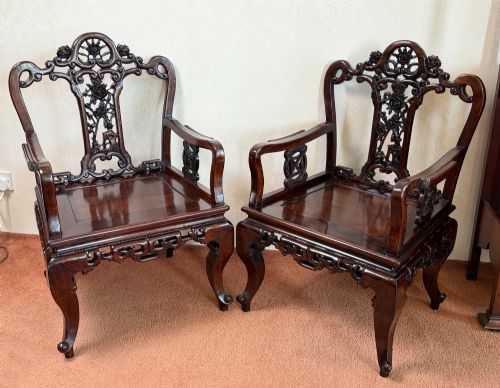
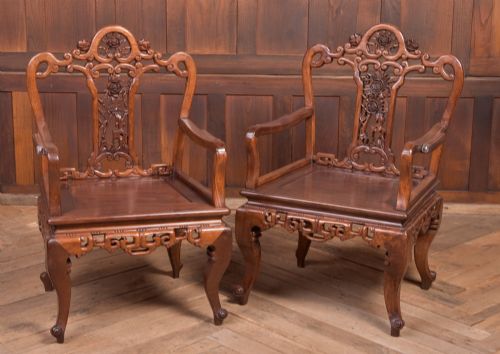
When you search for chinese elbow chairs, you encounter a selection of seating largely rooted in the nineteenth century, including Victorian periods and the Edwardian era. These pieces frequently appear as matched pairs featuring distinct arm supports and solid timber construction.
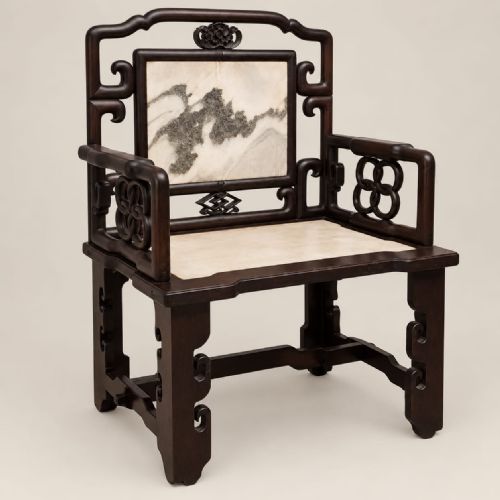
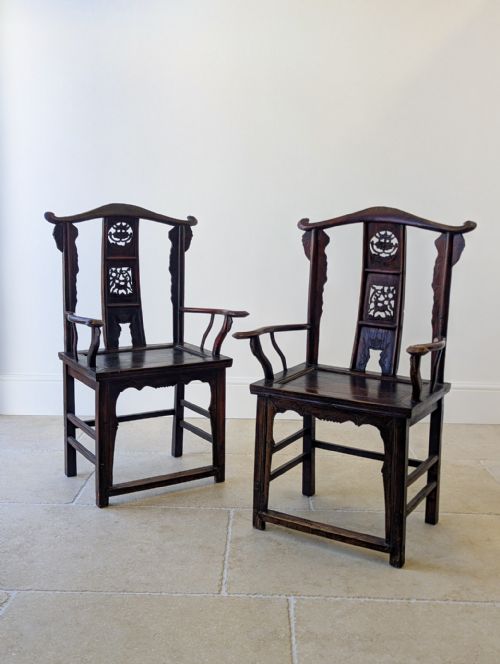
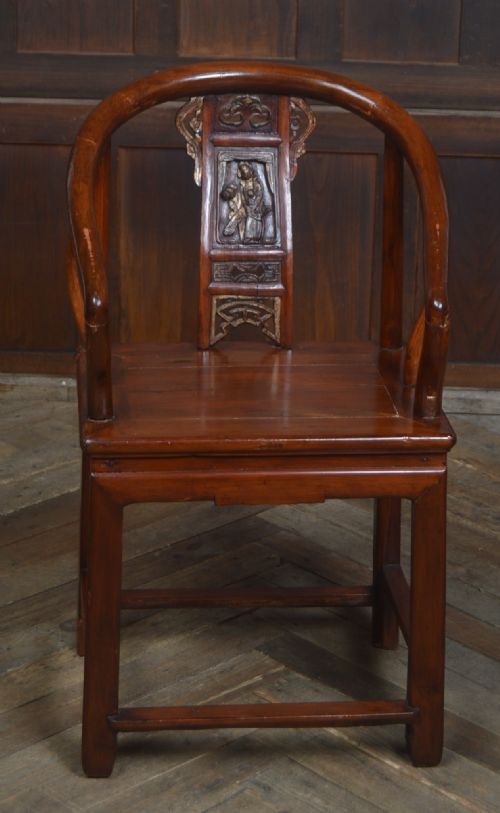
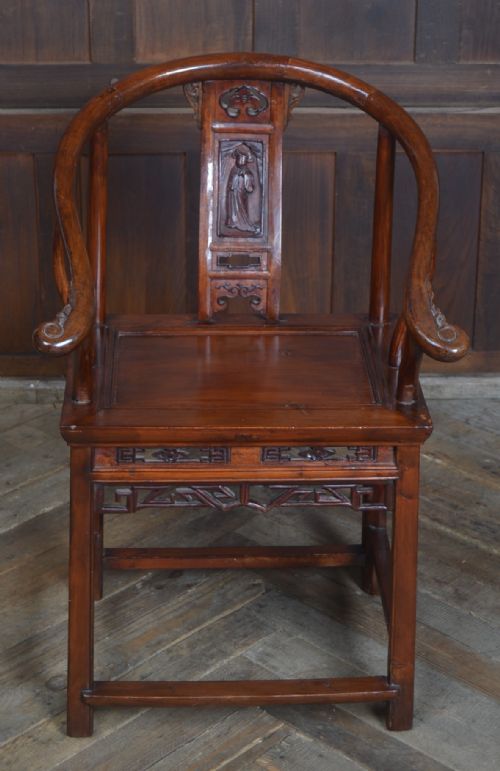
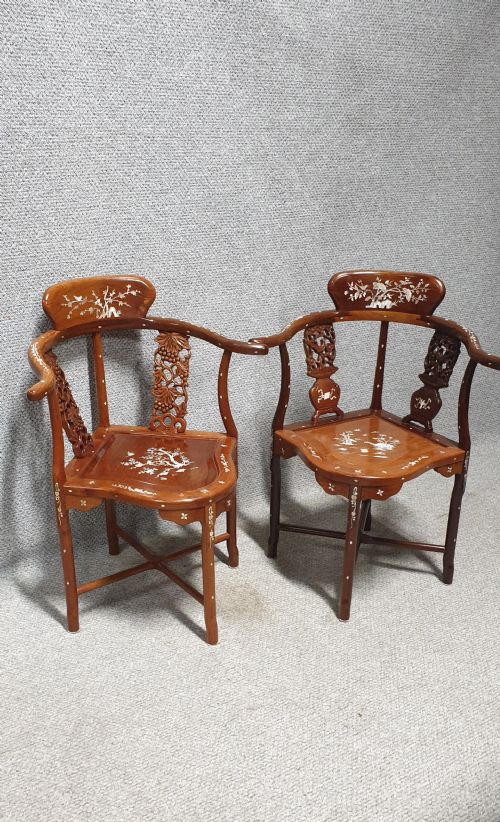
The objects span varied aesthetic branches, from Qing Dynasty productions and Qing Dynasty style revivals to Chinese Export work. Formats range from yoke-back armchairs and horseshoe armchairs to corner chairs and throne chairs.
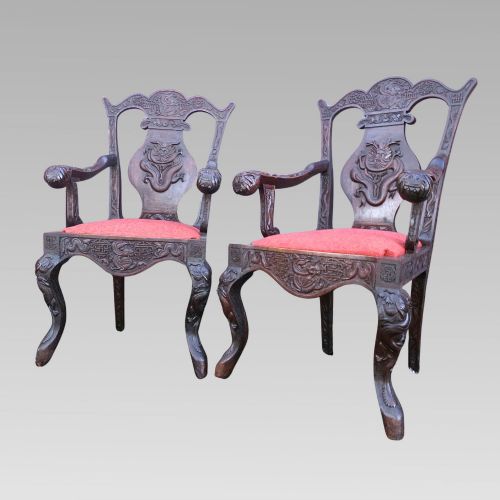
Makers and workshops utilised robust regional timber varieties to construct these armchairs, adapting traditional joinery methods for domestic utility and export markets. Many examples incorporate carved ornamentation depicting dragons or floral motifs along the backsplats and rails.
How they were made
Makers constructed chinese elbow chairs primarily from dense timber stocks, notably hardwood, elm, rosewood, teak and dark hardwood. Craftsmen often paired these structural woods with inset marble panels or added surface treatments such as red lacquer.
Carpenters relied on traditional mortise and tenon joinery to build rigid frames capable of withstanding daily use without metal fasteners. Carvers then applied intricate relief work directly into the solid timber elements or shaped the armrests and crestrails into sweeping, ergonomic curves.
Materials recorded across the inventory include hardwood, elm, rosewood, teak, lacquer and inset marble.
What varies in quality
The standard of chinese elbow chairs depends significantly on the density and selection of the timber used in the primary frame. Superior examples display tightly grained hardwoods or well-figured elm that has aged with a deep, stable patina.
Depth and crispness of the carving distinguish finer items from simpler production pieces. On better examples, dragon motifs and structural joints remain sharp and firmly seated, whereas lesser versions show shallower carving and looser joinery over time.
The Chinese Elbow Chairs Glossary
- Yoke-back armchair
- A wooden seat featuring a crestrail that curves upwards at the ends, resembling an ox yoke. This form provides ergonomic head and neck support.
- Horseshoe armchair
- A continuous curved crest and armrail that sweeps downward in a single fluid line from the back to the front supports. The design is traditional in Chinese cabinetry.
- Qing Dynasty
- The final imperial dynasty of China, lasting from sixteen-forty-four to nineteen-twelve. Furniture from this era is characterised by formal symmetry and deep carving.
- Hardwood
- Dense, slow-growing timber sourced from deciduous trees such as rosewood and teak. It forms the heavy structural core of high-status Asian seating.
- Elm
- A resilient, domestically grown timber utilised for regional furniture production. It accepts lacquer finishes well and displays a pronounced grain pattern.
Chinese Elbow Chairs: Frequently Asked Questions
How were chinese elbow chairs used?
These armchairs served as formal seating within traditional domestic and administrative settings. The integrated armrests provided comfort for seated officials and household heads.
In Western interiors, they functioned as statement pieces placed in studies, drawing rooms or hallways. Their distinct silhouettes added visual weight and exotic character to period rooms.
How do I live with chinese elbow chairs?
Position these chairs away from direct heat sources and strong sunlight to prevent the timber from drying out or splitting. Consistent indoor humidity helps preserve both the wood and any applied lacquer.
Treat the wooden surfaces with care by dusting with a soft cloth rather than applying modern chemical polishes. Allow sufficient clearance around the protruding arms to avoid accidental knocks against the joinery.
How do I identify a Qing Dynasty chair?
Look for dense hardwood construction, traditional joinery without modern fixings, and deeply carved motifs such as dragons. These elements point to official or high-status workshop production.
Examine the wear patterns on the footrests and arm terminals for signs of genuine age. The patina on the timber should show a soft, natural lustre developed over decades of handling.
What is the difference between elm and hardwood chairs?
Elm chairs generally exhibit a lighter, more visible grain structure with a slightly warmer tone. Elm was widely used for regional and domestic seating across various Chinese provinces.
Hardwood chairs utilise denser, heavier timber species like rosewood or teak that naturally take a darker, more uniform finish. These dense woods permitted sharper, more detailed relief carving.