

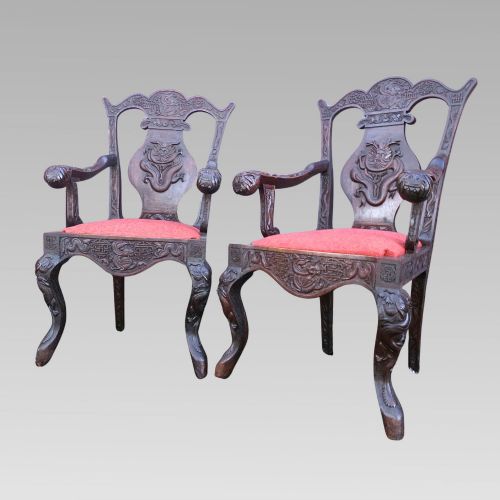


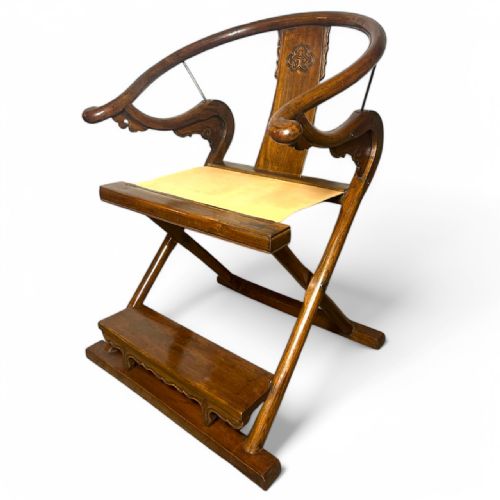
Dark Wood Chinese Chair
A dark wood chinese chair brings structural timber and carved detail together, offering seating defined by centuries of Far Eastern craftsmanship.
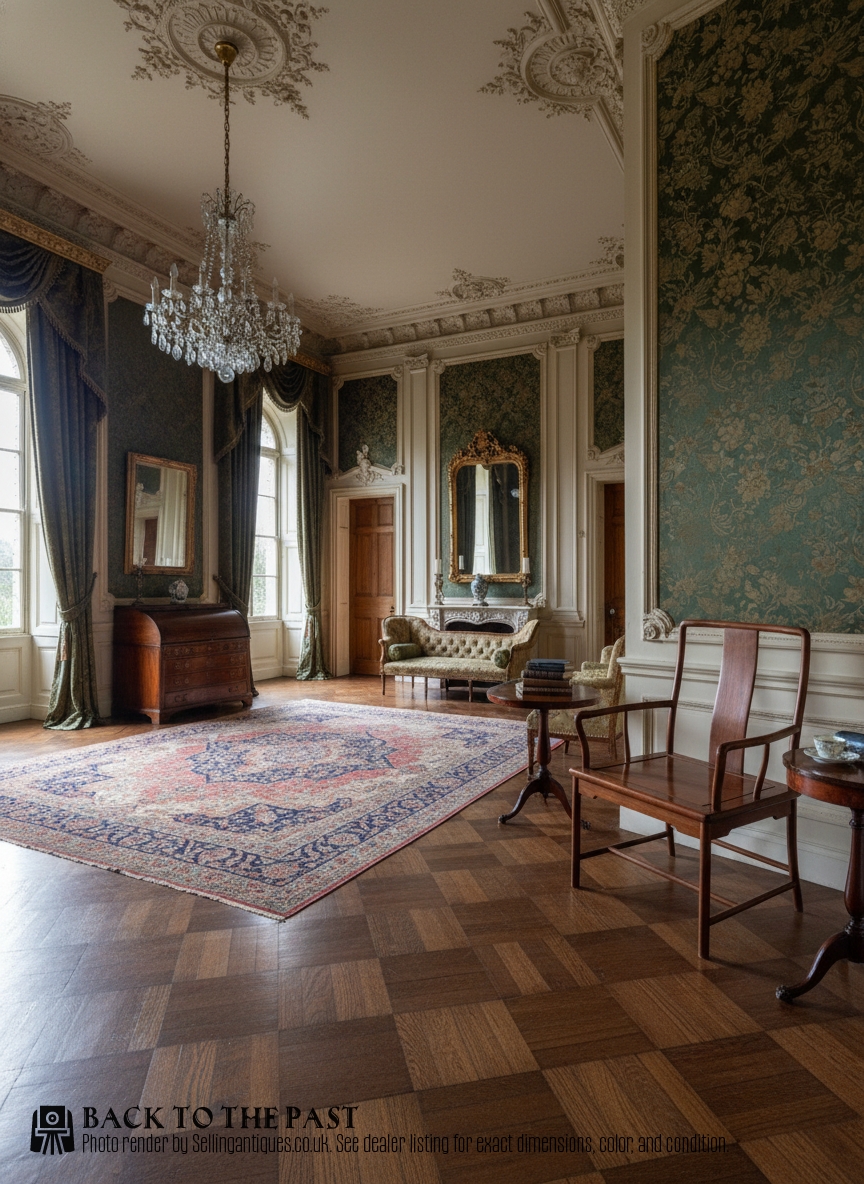
Dark Wood Chinese Chair
A dark wood chinese chair encompasses armchairs, side chairs, and benches originating from or styled after traditional Eastern forms. These seats often arrive in dense timbers such as hardwood, rosewood, and elm.
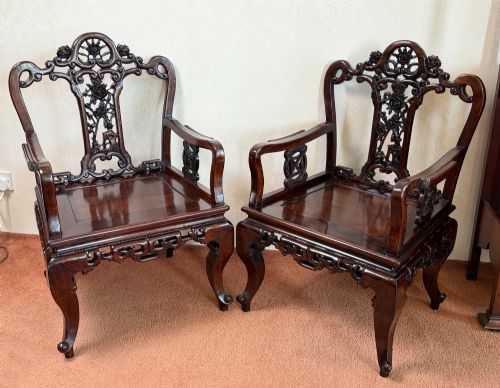
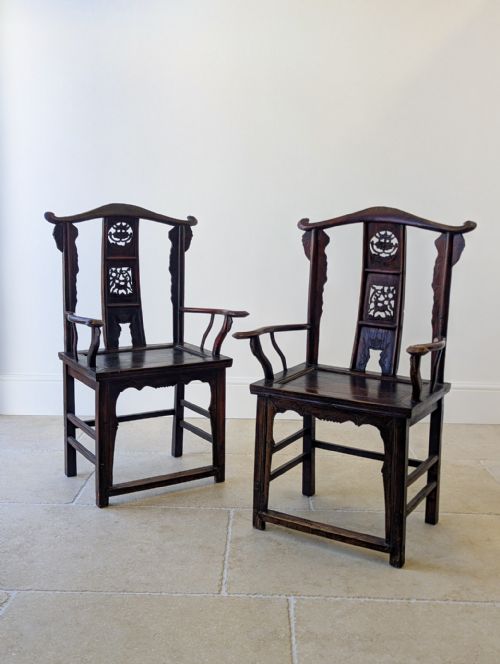
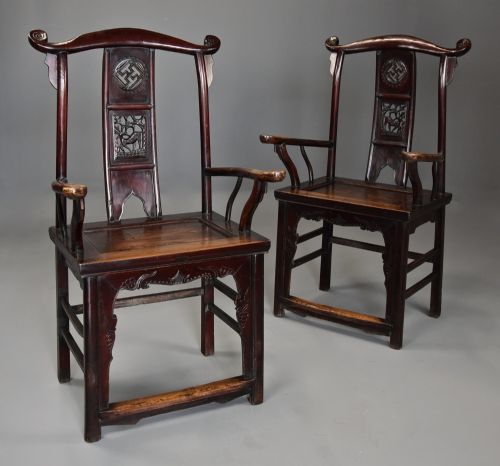
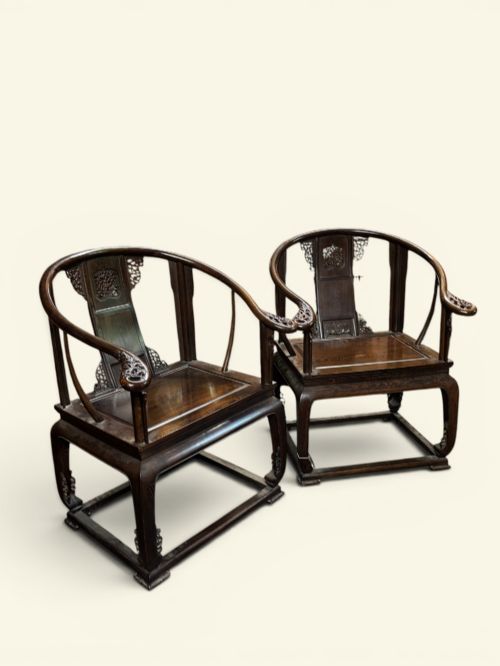
The varieties met most frequently on this page belong to the nineteenth century and the Qing dynasty, featuring distinctive silhouettes like the yoke-back and horseshoe-back. Armchairs and pairs dominate the selections available.
Makers utilised regional aesthetic traditions, ranging from formal throne chairs to domestic elm seating. Such pieces function equally as standalone decorative objects and robust functional furniture.
How they were made
Carpenters constructed these seats using heavy tropical hardwoods, elm, rosewood, and mahogany without relying on modern fasteners. Joinery techniques allowed frames to hold rigid shapes under heavy daily use.
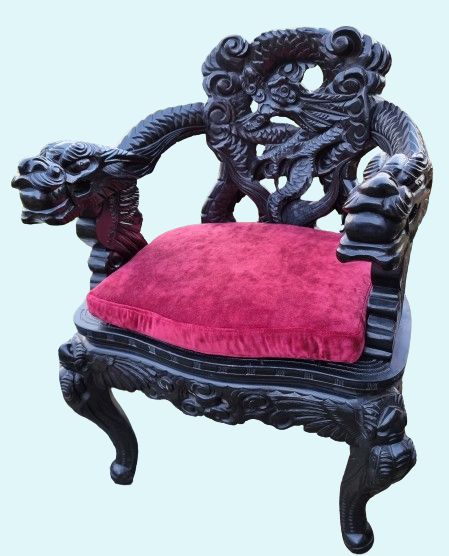
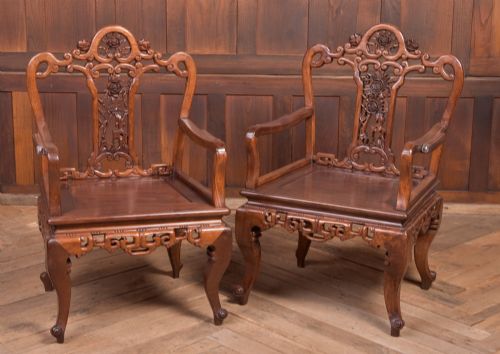
Surface treatments included clear polishing to reveal dense grain patterns, alongside occasional applications of red lacquer and brass inlay. Carved dragon motifs and pierced splats required precise hand chiselling by skilled artisans.
Some items double as stargazers' chairs, proving that historical relaxation required a very specific angle of repose.
What varies in quality
The depth of hand carving and the crispness of relief work set superior examples apart from standard workshop output. Subtle touches like brass inlay and original red lacquer coatings elevate the finish.
Timber selection dictates the longevity and visual weight of the frame, with dense rosewood and heavy hardwoods commanding greater attention than lighter elm. Proportions that balance eccentric curves with structural harmony mark the finest pieces.
The Dark Wood Chinese Chair Glossary
- Yoke-back
- A chair design featuring a curved top rail resembling a traditional ox yoke. This shape provides comfortable shoulder support while maintaining a clean silhouette.
- Horseshoe-back
- A continuous, rounded crestrail that sweeps forward to form the armrests. This ergonomic form appears frequently on folding and stationary throne chairs.
- Hongmu
- A translation meaning red wood, applied to dense, dark tropical hardwoods used in traditional Chinese furniture. It develops a deep natural sheen over time.
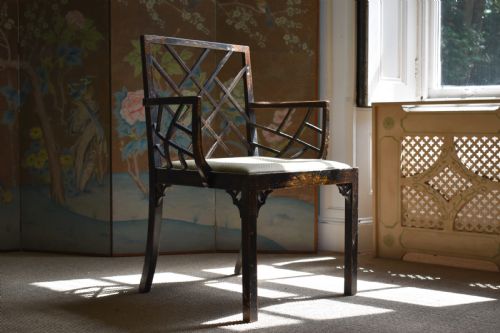
- Cockpen
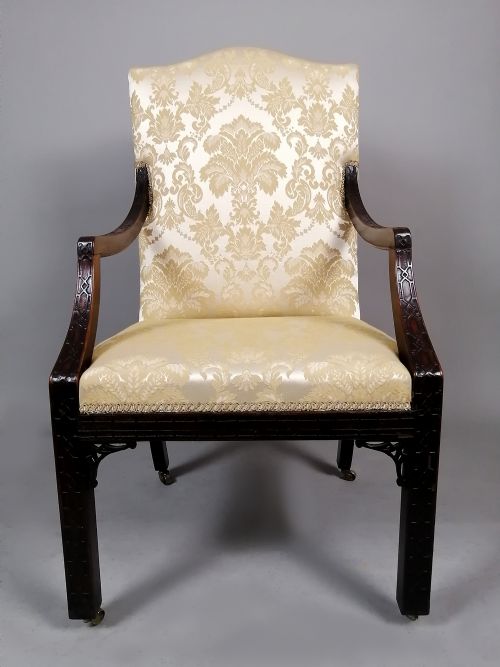
- An eighteenth-century English chair style inspired by Chinese lattice patterns. It incorporates geometric fretwork panels within the arm and back assemblies.
- Settle
- A wooden bench featuring a high back and solid arms to block drafts. Chinese examples often incorporate elaborate dragon carvings along the crest.
Dark Wood Chinese Chair: Frequently Asked Questions
How do I date a Chinese chair?
Dating relies on timber density, joinery methods, and stylistic indicators associated with periods like the Qing dynasty. Wear patterns on the seat and foot rails also offer clues to age.
Comparison with documented examples helps narrow down the decade of production. Experts look at the integration of brass inlay and lacquer traces for further verification.
Are these chairs comfortable to sit in?
Many designs, particularly horseshoe-back and yoke-back armchairs, offer surprisingly ergonomic support through curved crestrails and armrests. They were engineered for upright posture rather than lounging.
Adding a simple squab cushion adapts firmer wooden seats for modern daily use. The generous proportions of throne chairs and day beds provide ample room.
How do I care for dark hardwood furniture?
Maintain the timber by dusting with a dry, soft cloth and avoiding direct sunlight or excessive heat sources. These precautions prevent the dense wood from drying out or splitting.
Occasional application of natural wax preserves the patina without creating a heavy buildup. Keep humidity levels stable in the room where the chair stands.
What is the difference between export and domestic styles?
Export pieces often incorporate Western stylistic influences, such as Georgian Chippendale or Regency proportions, tailored for European markets. Domestic pieces adhere strictly to traditional Chinese forms like lamp hanger and throne designs.
Both categories utilise the same dense hardwoods and joinery techniques. The primary distinction lies in the decorative vocabulary applied to the frame.