


Hardwood Armchair Pair
These hardwood armchair pair selections bring together robust seating crafted from dense timbers across various international traditions.
Hardwood Armchair Pair
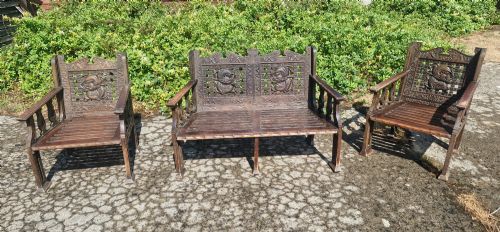
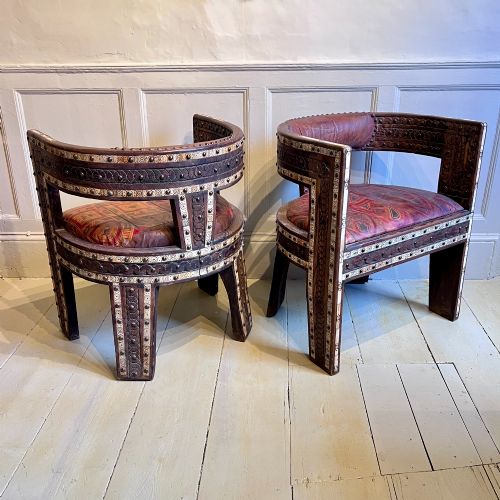
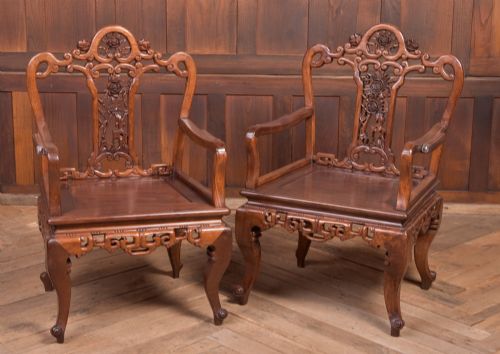
A hardwood armchair pair consists of matching seats shaped from dense timbers, most frequently appearing in Chinese Qing Dynasty designs and nineteenth century export styles. Buyers find regional interpretations ranging from horseshoe-back forms and throne chairs to North African leather-backed pieces and Anglo-Indian hall seats.
The selections span diverse eras including the Victorian period, the nineteenth century, and early twentieth century milestones like Art Deco and Art Nouveau. Chinese export pieces in hongmu, teak, and elm dominate the inventory alongside conservatory suites and brass-inlaid variants.
How they were made
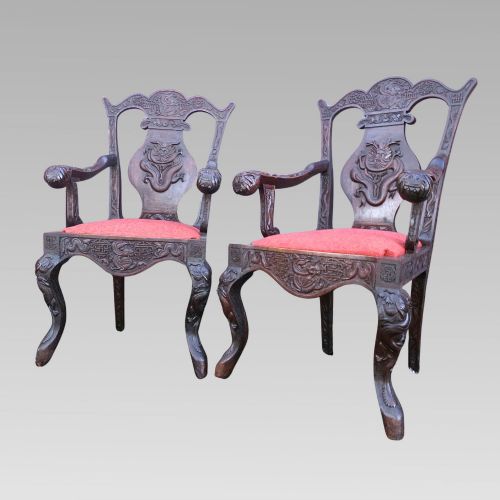
Joinery and surface treatment relied on traditional carving and lacquering techniques to articulate dragon motifs, ceremonial crests, and floral patterns. Artisans shaped structural elements like horseshoe curves and folding frames to balance utility with ornamental carving.
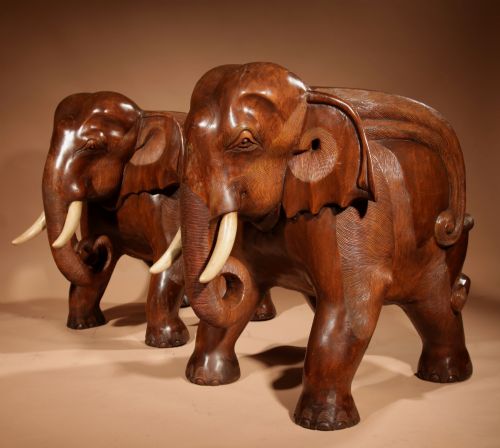
Art Deco period dugout real pair of impressive elephant arm chairs wait quietly for an adventurous interior.
What varies in quality
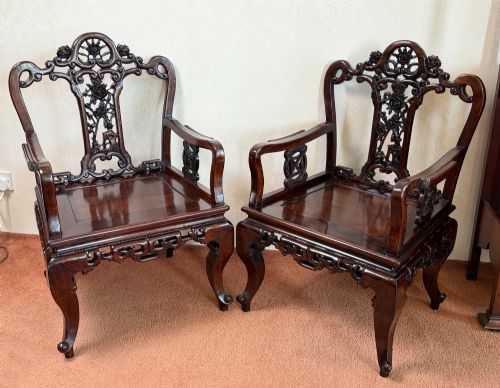
The distinction between standard examples and exceptional work rests on the crispness of the hand carving and the selection of timber. Dense, heavily figured hongmu or teak handled by skilled carvers produces deep relief work that retains sharp edges on dragons and floral motifs.
Structural integrity and matching symmetry elevate a pair, particularly when dealing with complex forms like horseshoe backs, folding mechanisms, or throne chairs. Superior examples maintain balanced proportions across both chairs, whereas lesser pieces show discrepancies in timber grain or simplified carving.
The Hardwood Armchair Pair Glossary
- Hongmu
- A dense, dark tropical hardwood traditionally utilised in fine Chinese furniture construction. It translates literally to red wood and develops a rich patina over time.
- Horseshoe-back
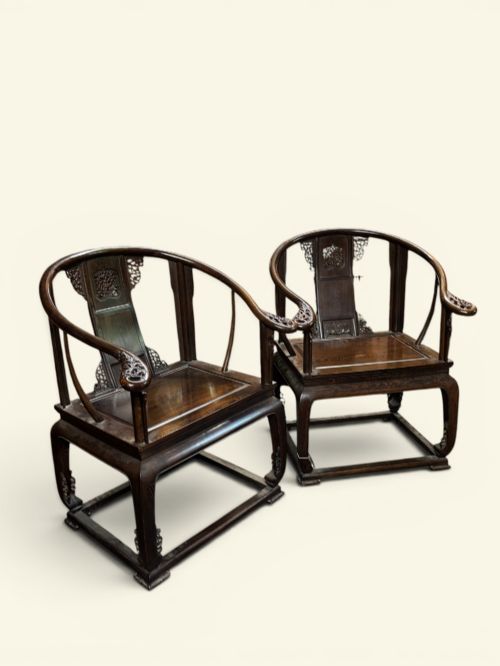
- A seating form featuring a continuous curved crestrail that sweeps forward to form the armrests. This ergonomic shape originates from classical Chinese cabinetmaking.
- Throne chair
- An imposing armchair style with a high, often elaborately carved back panel associated with formal reception rooms. These pieces frequently display imperial dragon motifs.
- Anglo-Indian
- A stylistic intersection where British furniture forms meet traditional Indian carving techniques. These items often combine heavy hardwood frames with intricate floral reliefs.
- Elm
- A resilient native timber used in vernacular chair production for its tough, interlocking grain. It provides a lighter alternative to tropical hardwoods while offering strong structural support.
Hardwood Armchair Pair: Frequently Asked Questions
Are these chairs comfortable for daily use?
Many examples feature upright wooden seats designed for formal reception or ceremonial use rather than lounging. Adding cushions or selecting leather-backed variants improves everyday comfort.
Buyers often place them in hallways, studies, or conservatories where their structural form stands out. The sturdy timber frames provide dependable support across decades of domestic placement.
How do I identify Chinese Qing Dynasty chairs?
Qing pieces typically display dense tropical hardwoods like hongmu and feature deep relief carvings of dragons or floral subjects. The joinery often avoids visible metal fasteners through precise woodworking techniques.
Silhouettes include horseshoe-back frames and imposing throne chairs designed to project authority. Comparing the carving depth helps separate period examples from later revival styles.
Can I mix these chairs with modern interiors?
The clean architectural lines of nineteenth-century hardwood seating complement contemporary minimalist spaces effectively. Their dark timber tones anchor neutral rooms and add visual weight.
Pairing them with simple modern tables creates a deliberate contrast between old and new. The natural grain of rosewood and teak bridges traditional craftsmanship with modern design sensibilities.
What maintenance do hardwood frames require?
Routine dusting with a soft cloth keeps the timber surface clear of particulate buildup. Applying appropriate wax occasionally preserves the natural lustre of dense hardwoods like teak and hongmu.
Keeping the chairs away from direct heat sources prevents the timber from drying out or splitting. Stable indoor humidity protects both the wood and any inlaid brass or bone elements.