





Traditional Chinese Armchairs
Traditional chinese armchairs bring historic seating into a room, offering sturdy joinery and distinct back profiles shaped by centuries of craftsmanship.
Traditional Chinese Armchairs
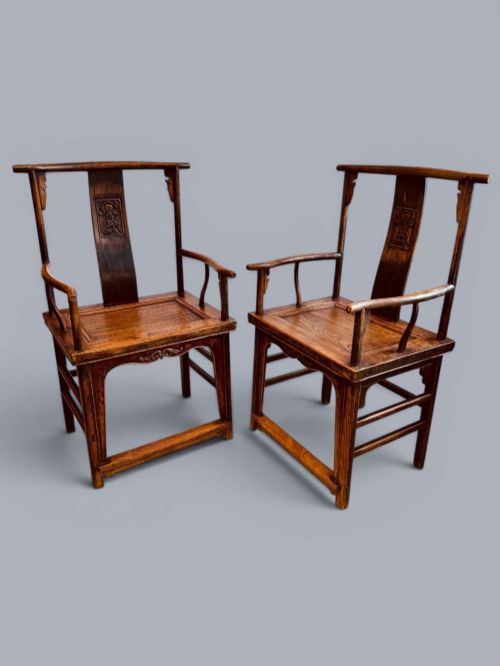
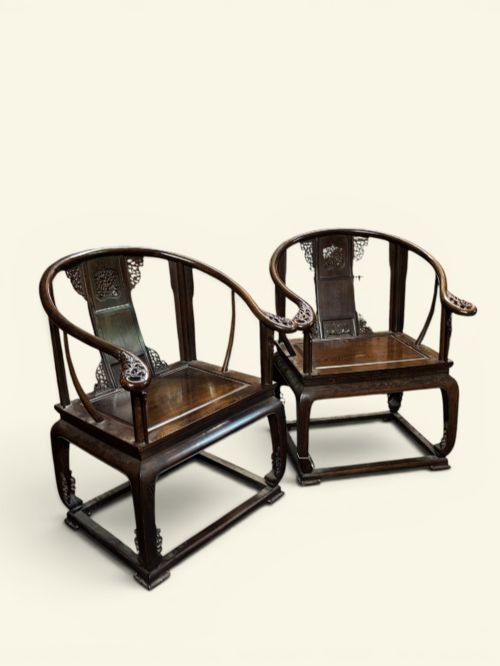
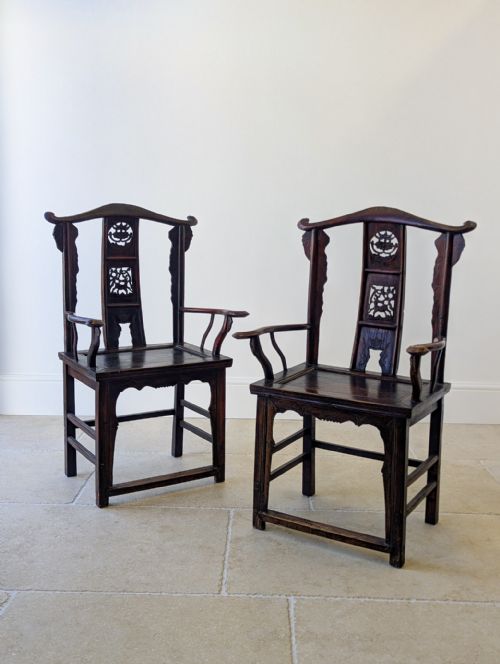
Traditional chinese armchairs encompass seating from the eighteenth century through to the early twentieth century, spanning Qing Dynasty pieces and revival designs. Buyers frequently encounter pairs of horseshoe-back and yoke-back armchairs fashioned from solid timbers.
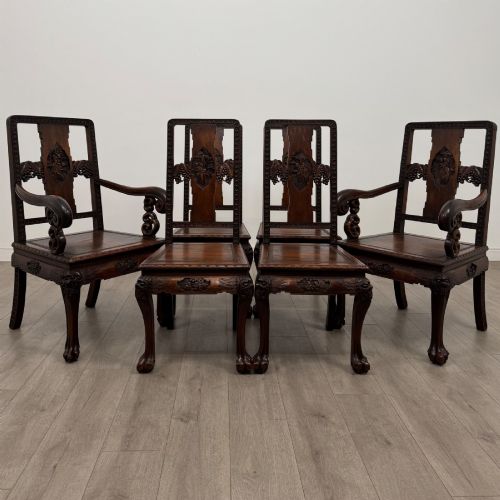
Forms range from simple elm scholars chairs to elaborately carved hongmu throne chairs and folding armchairs. Certain examples arrive alongside matching side tables or form part of larger seating sets.
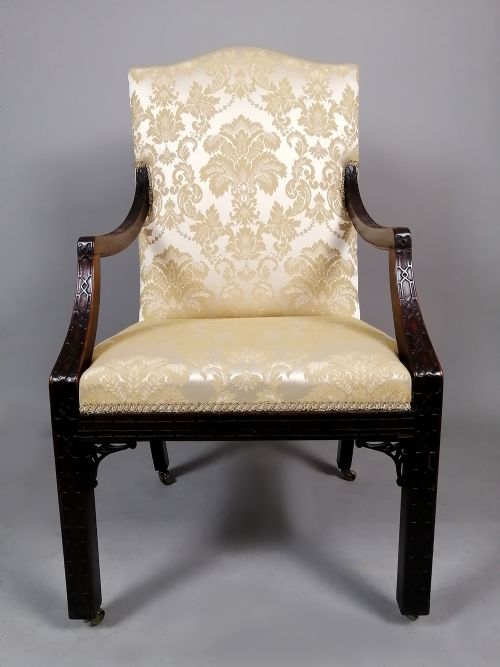
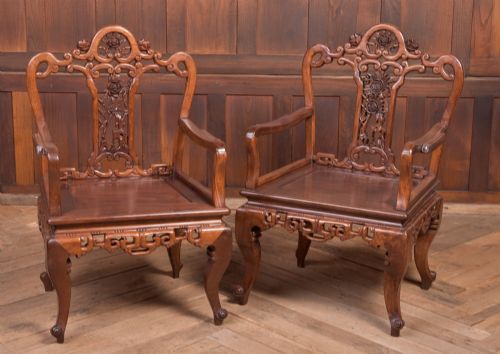
Origins stretch across Chinese workshops and export furniture makers, alongside British adaptations in the Chinese Chippendale style. These chairs function as statement seating or functional hall furniture within modern interiors.
Materials and Construction
Construction relies heavily on dense Asian hardwoods, including rosewood, hongmu, and elm, often shaped without nails using traditional mortise and tenon joinery. Timber selection dictates the weight and structural longevity of each frame.
Surface treatments introduce layers of red lacquer, painted finishes, or contrasting brass inlay to enrich the natural grain. Canework panels occasionally form the seat inserts, offering a lighter texture against the heavy wood frames.
Traditional Chinese Armchairs Retail Price Guide 2026
Typical asking prices for traditional chinese armchairs among the pieces listed under this phrase on Sellingantiques today, from the lower quarter to the upper quarter. They describe what is for sale here now, not the wider market.
Available seating styles span Qing Dynasty pieces, Chinese Chippendale, and Victorian export designs.
Qualities of Construction and Design
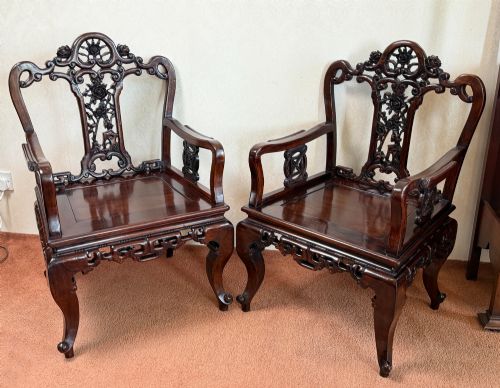
Depth and crispness of hand carving distinguish standard seating from exceptional examples, particularly on Qing Dynasty throne chairs and back splats. Sharp details in floral and geometric motifs indicate superior workshop output.
Condition of the original timber frame, joinery stability, and surviving lacquer or patination define the integrity of the piece. Uniformity in paired chairs and the subtlety of brass inlays further elevate the standing of an armchair.
The Traditional Chinese Armchairs Glossary
- Horseshoe-back
- A chair design featuring a continuous curved crestrail and armrests that sweep forward in a single fluid arc. This profile provides ergonomic support and a distinct silhouette.
- Yoke-back
- A chair style characterised by a top crestrail that resembles a traditional ox yoke, often paired with a central splat. These were traditionally favored by scholars.
- Hongmu
- A category of dense, heavy Asian hardwoods translated literally as red wood. It encompasses timber species prized for deep colour and durability.
- Qing Dynasty
- The imperial dynasty ruling China from the seventeenth to the early twentieth century. Pieces from this era often display formal carving and structured joinery.
- Chinese Chippendale
- An eighteenth-century European style inspired by Chinese aesthetic motifs. It reinterprets traditional forms through British cabinetmaking traditions.
Traditional Chinese Armchairs: Frequently Asked Questions
Where were these armchairs placed originally?
These chairs were positioned in reception halls, studies, and private chambers of traditional homes. Scholar chairs sat near desks for reading and writing, while throne chairs commanded formal spaces.
Today, they adapt easily to living rooms and hallways as accent seating. Pairs work particularly well flanking a fireplace or console table.
What is the difference between elm and hongmu chairs?
Elm offers a lighter timber with a pronounced grain, frequently finished with red lacquer or pickled treatments. It yields a more rustic appearance suited to everyday seating.
Hongmu is a dense, dark hardwood reserved for formal pieces like throne chairs and detailed scholars seating. It accepts fine, crisp carving and develops a deep patina over time.
How do I care for lacquered and hardwood surfaces?
Maintain the timber by dusting gently with a dry cloth and avoiding placement near direct heat sources or strong sunlight. This protects fragile lacquer and prevents wood shrinkage.
Apply occasional microcrystalline wax to unlacquered hardwoods to nourish the grain. Avoid chemical cleaning products that can strip historic patination.