



Oriental Wooden Armchairs
Oriental wooden armchairs are substantial seats carved from dense timbers like elm, hardwood, and rosewood, offering both structural presence and historic character for any room.
Oriental Wooden Armchairs
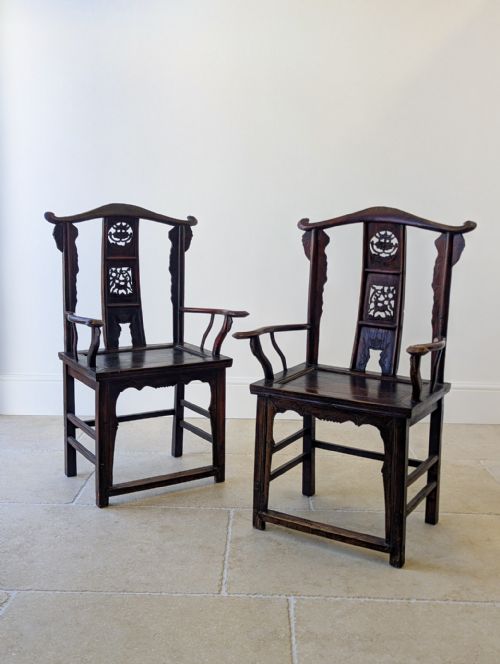
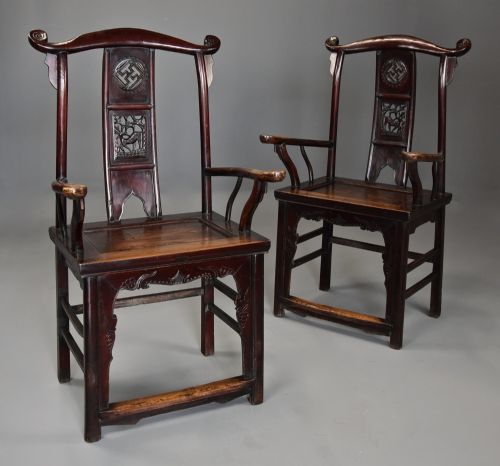
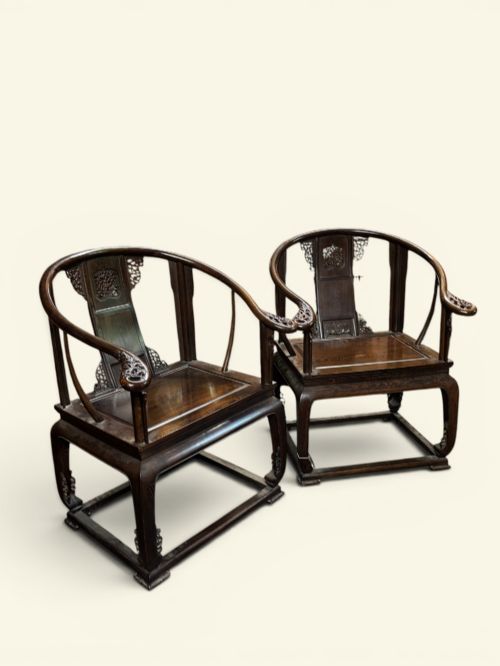
When you search for oriental wooden armchairs, you encounter a distinct selection of seating shaped by traditions ranging from Qing Dynasty China to Anglo-Indian workshops. The pieces span periods from the nineteenth century into the early twentieth century, taking forms such as yoke-back scholars' chairs, horseshoe designs, and carved elbow seats.
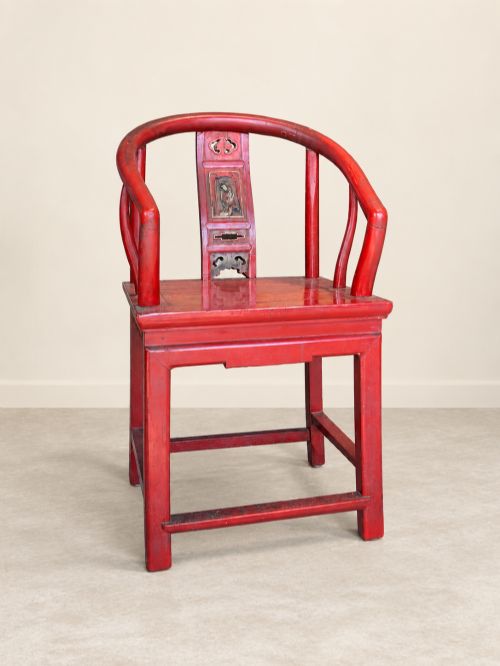
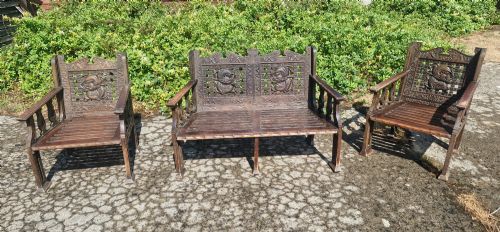
The version you are most likely to meet on this page is the nineteenth-century Chinese elm or hardwood armchair, often constructed with distinctive curved rails or panelled seats. Alongside these sit pairs of lacquered chairs and occasional Burmese or Anglo-Indian conservatory suites.
Makers utilised resilient regional timbers, shaping them into seating that functioned both as formal hall chairs and comfortable daily furniture. These chairs combine architectural joinery with carved decorative motifs, reflecting the specific regional aesthetics of their origin.
How they were made
Joiners and carvers constructed these armchairs using dense woods including elm, teak, rosewood, and general hardwood, relying on precise traditional joinery rather than metal fixings. Many examples feature exposed timber grain enhanced by patination, while others received protective coats of red or black lacquer.
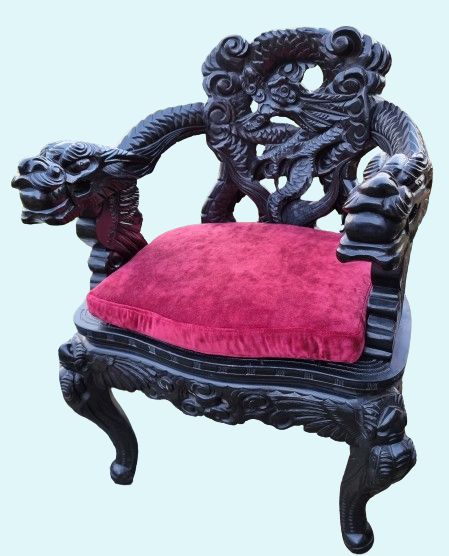
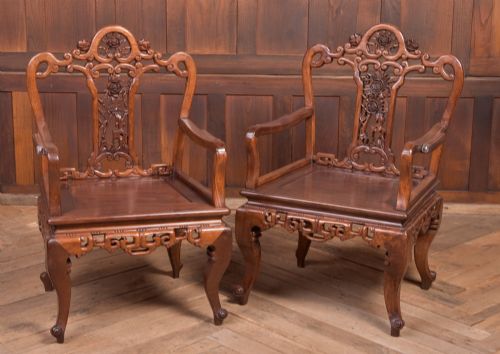
Decoration was achieved through deep relief carving into the solid wood or by incorporating contrasting elements such as brass inlay and woven cane panels. Yoke-back and horseshoe forms required steam-bending or segmented construction to achieve their characteristic curved top rails.
The documented styles span Qing Dynasty pieces, Anglo-Indian elbow chairs, and Chinese export seating.
What varies in quality
The distinction between standard examples and the finest pieces rests upon the crispness of the woodcarving and the integrity of the original timber frame. Chairs retaining undisturbed original lacquer surfaces or deep, rich patination command greater interest than those with heavily restored finishes.
Structural harmony also defines the better items, where traditional joinery remains tight and the proportions of the arms and backsplats maintain their balanced design. Matched pairs and complete seating suites demonstrate a higher tier of original craftsmanship than isolated single chairs.
The Oriental Wooden Armchairs Glossary
- Yoke-back chair
- A traditional Chinese seating form featuring a top rail that curves upward at the ends, resembling an ox yoke. This design supports an upright posture and often includes a carved central splat.
- Horseshoe-back
- A continuous curved rail that forms both the arms and the backrest of the chair in a single sweeping arc. It is frequently joined to the seat through complex mitered joints.
- Patina
- The surface sheen and colour developed by aged wood through decades of handling, light, and polishing. A good patina indicates genuine age and minimal harsh stripping.
- Elm
- A durable hardwood commonly utilised in Chinese furniture making for its tough, fibrous grain that resists splitting. It takes both clear finishes and lacquer exceptionally well.
- Lacquered wood
- Timber coated with multiple layers of refined resin to produce a smooth, protective, and often coloured decorative surface. Red and black tones predominate in antique examples.
Oriental Wooden Armchairs: Frequently Asked Questions
Where were horseshoe armchairs used?
Horseshoe armchairs served as prominent seating within traditional Chinese domestic interiors, often placed in reception halls for guests or scholars.
The continuous curved rail allowed the sitter to rest their arms comfortably at various angles while maintaining an upright position.
What is Anglo-Indian furniture?
Anglo-Indian furniture represents pieces made in India by local craftsmen using traditional techniques adapted to British colonial tastes and room designs.
These items frequently feature dense tropical hardwoods and profuse, intricate carved decoration applied to familiar Western forms like elbow chairs.
How should I care for lacquered wood?
Lacquered wooden armchairs require gentle dusting with a soft, dry cloth and protection from direct sunlight and extreme humidity fluctuations.
Avoid using modern chemical polishes or abrasive cleaners, as these can permanently damage the historic surface finish.