



Antique Asian Accent Chairs
These antique asian accent chairs bring striking regional character into a room, offering functional seating shaped by centuries of craftsmanship.
Antique Asian Accent Chairs
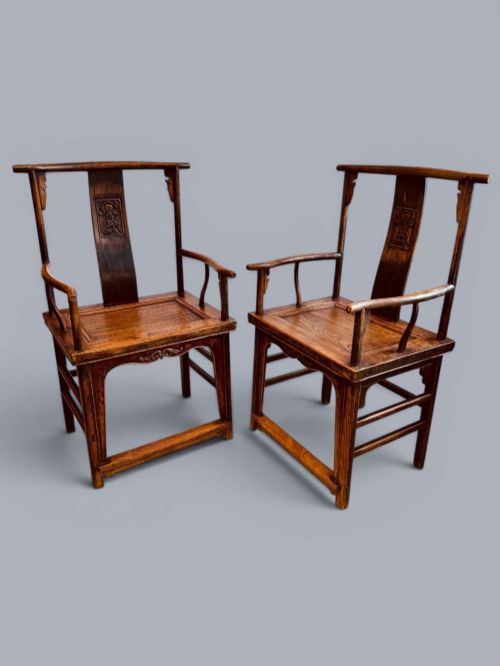
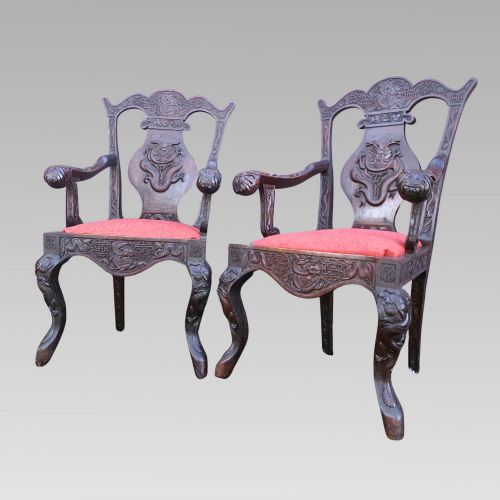
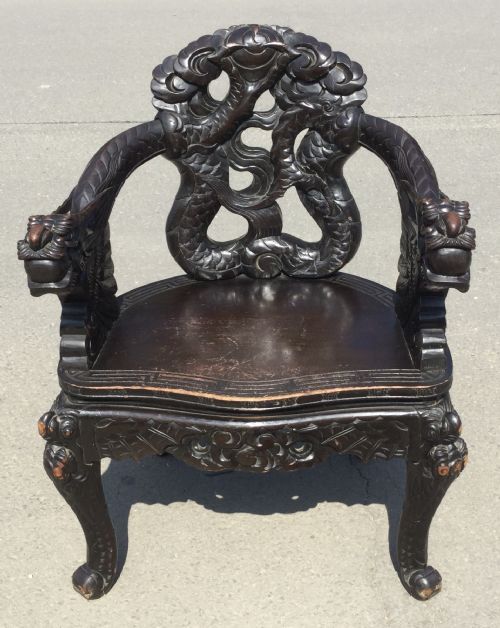
When you search for antique asian accent chairs, you encounter seating originating primarily from China and Burma during the nineteenth and early twentieth centuries. These pieces encompass various forms including armchairs, side chairs, hall chairs, and specific traditional silhouettes like yokeback, horseshoe-back, and throne chairs.
You meet examples fashioned from dense hardwoods, elm, and bamboo, alongside pieces finished in red lacquer or featuring brass inlay. The selection includes matched pairs and individual seats reflecting distinct regional aesthetics such as Qing Dynasty, Burmese, and Anglo-Indian styles.
How they were made
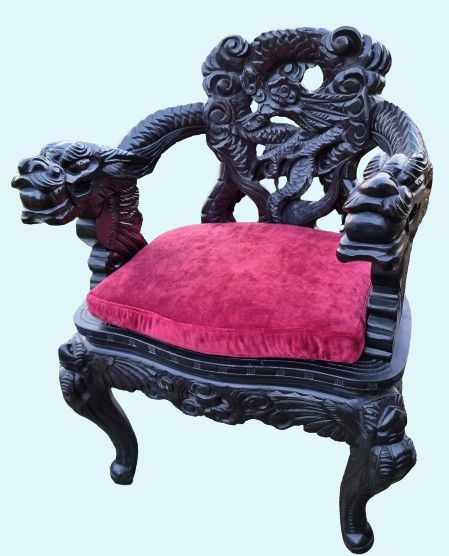
Craftsmen utilised durable timbers such as elm, teak, rosewood, and general hardwoods to construct sturdy frames often relying on traditional joinery techniques. Surfaces received treatments including applied lacquer, painted finishes, and intricate hand-carvings depicting motifs like dragons.
Additional elements incorporate natural canework for seating panels and detailed brass inlays embedded into the wooden structures. These combined materials create the distinct structural and visual profiles observed across the inventory.
Antique Asian Accent Chairs Retail Price Guide 2026
Typical asking prices for asian accent chairs among the pieces listed under this phrase on Sellingantiques today, from the lower quarter to the upper quarter. They describe what is for sale here now, not the wider market.
Several chairs double as folding seats, proving that portable luxury seating has existed for centuries.
What varies in quality
Distinction across the range lies in the depth of carving and the preservation of original surface treatments like red lacquer and natural wood patina. Superior examples display refined proportions and intact traditional joinery that maintain structural integrity over generations.
The complexity of the form also dictates standing, with specialised seating like horseshoe-back armchairs and throne chairs demonstrating elevated levels of joinery skill compared to simpler hall chairs.
The Antique Asian Accent Chairs Glossary
- Yokeback
- A chair style featuring a top rail that curves or projects outward resembling a traditional yoke. This design provides ergonomic upper back support.
- Horseshoe-back
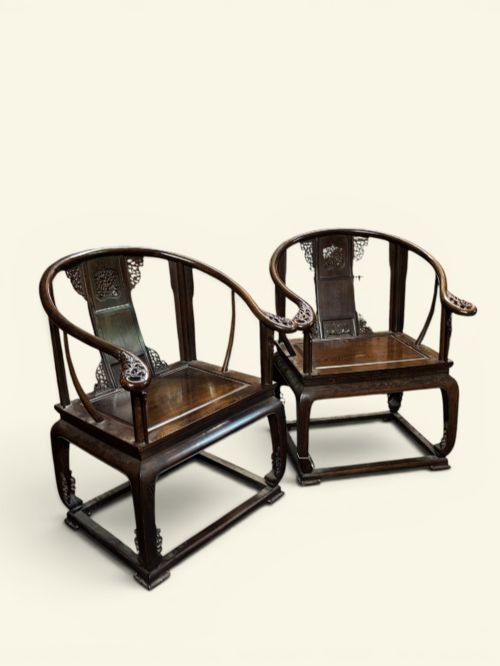
- A seating form characterised by a continuous curved rail sweeping down to form the armrests. It represents a classic shape in traditional Chinese seating design.
- Lacquer
- A protective and decorative coating derived from tree sap applied in multiple layers. It yields a smooth, durable finish often seen in red hues on these chairs.
- Canework
- Woven plant material such as bamboo or rattan utilised for seat panels. It offers a flexible and breathable surface for sitting.
- Hongmu
- A translation meaning red wood used to describe various dense, heavy Asian hardwoods. Items built from this material possess significant weight and dark grain patterns.
Antique Asian Accent Chairs: Frequently Asked Questions
How do I identify a yokeback chair?
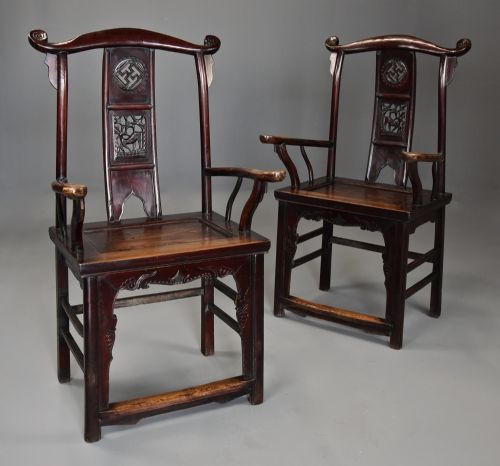
Yokeback chairs feature a distinct top crestrail that resembles a traditional ox yoke, curving gracefully for shoulder support. They often include a central splat running down the back.
This form was favoured by scholars and officials, combining upright posture with understated elegance.
Where were horseshoe-back chairs used?
Horseshoe-back chairs functioned as prominent seating pieces within traditional homes and temples, offering an encompassing armrest design. Their curved upper rail allowed the sitter to rest their arms comfortably from any angle.
They stand out through their fluid circular geometry contrasting with rectilinear room structures.
How should I clean red lacquer?
Maintain red lacquer surfaces by dusting gently with a soft, dry cloth to prevent abrasion. Avoid liquid cleaners and harsh chemical polishes that can degrade the historic finish.
Keeping the chair away from direct sunlight preserves the vibrancy of the original red pigment.
What is a temple chair?
Temple chairs originate from monastic or sacred environments in regions like Burma, built with sturdy proportions and heavy ornamentation. They served ceremonial functions or provided seating for esteemed figures within religious settings.
Their robust construction distinguishes them from domestic seating varieties.