






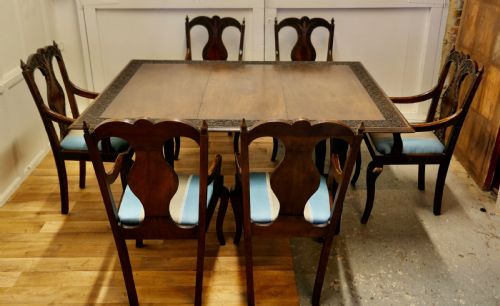
Chinese Export Carved Chairs
Chinese export carved chairs combine traditional form with dense hardwoods, offering collectors functional seating deeply rooted in historical trade.
Chinese Export Carved Chairs
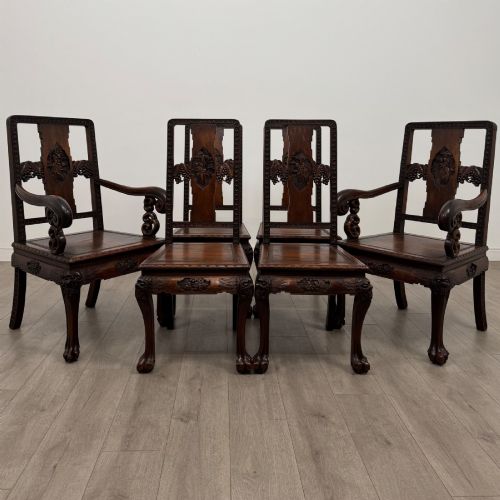
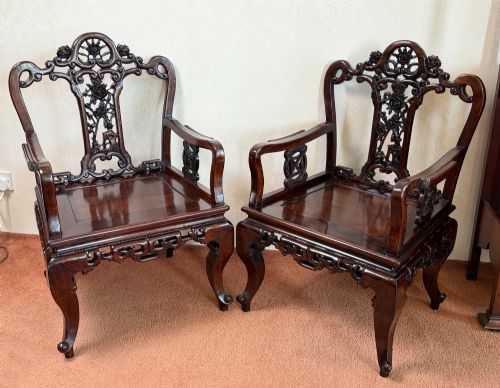
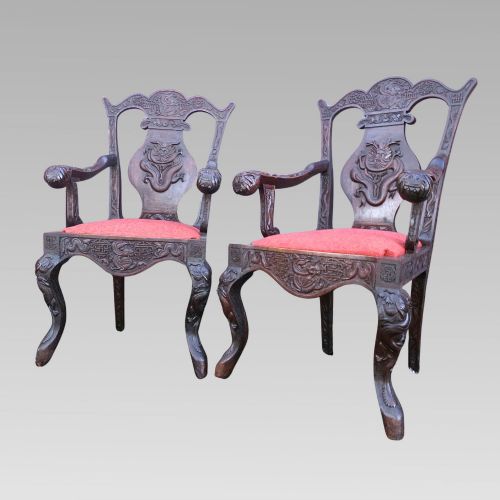
Chinese export carved chairs encompass functional seating such as armchairs, hall chairs, benches, and dining sets produced for international markets. Examples on this page span from the eighteenth century through the early twentieth century, reflecting varied periods including the Qing dynasty.
The forms range from sturdy corner armchairs and formal hall chairs to expansive dining sets and benches featuring detailed ornamentation. Buyers frequently encounter nineteenth-century pieces alongside examples dated around eighteen-eighty and nineteen hundred.
These items bridge traditional Asian woodworking traditions with Western utility, often exhibiting regional crossover styles like Anglo-Indian alongside standard Chinese export aesthetics.
Materials and construction methods
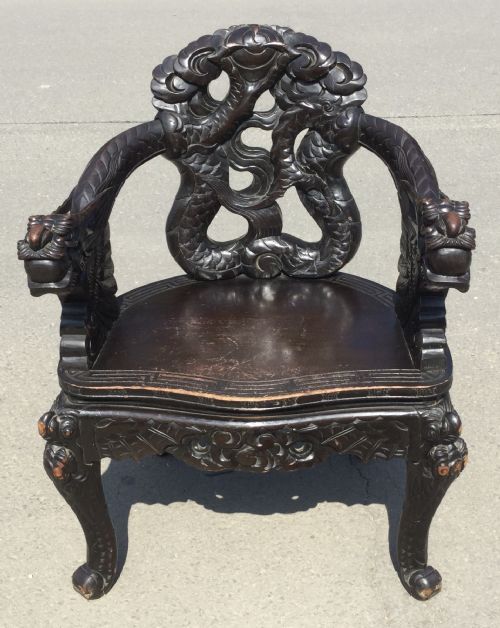
Makers utilised dense timbers such as rosewood, teak, elm, and general hardwood to ensure structural longevity and provide a stable base for intricate carving. These heavy woods support deep relief work depicting dragons and traditional motifs without compromising the integrity of the frame.
Additional decorative elements include bone inlay and mother of pearl, which are set directly into the wooden surfaces to create contrasting visual patterns. Upholstery and fabric occasionally appear on seating suites, complementing the rigid carved frames with softer textures.
Chinese Export Carved Chairs Retail Price Guide 2026
Typical asking prices for chinese export carved chairs among the pieces listed under this phrase on Sellingantiques today, from the lower quarter to the upper quarter. They describe what is for sale here now, not the wider market.
At least one eighteenth-century corner armchair is noted specifically for having an eccentric and curvaceous design.
Distinctions in craftsmanship and design
Superior examples display crisp, deeply undercut carving where figures and botanical details retain sharp definition and clean lines. Lesser pieces feature shallow, hurried incisions that lack depth and dimensionality.
Proportion and wood selection also dictate standard, with dense rosewood and teak displaying consistent grain and rich natural colouration. Eccentric or unusual proportions, such as those found on specific corner armchairs, often indicate bespoke commissions rather than standard workshop production.
The Chinese Export Carved Chairs Glossary
- Chinese export
- Items manufactured in China specifically for overseas markets and Western clientele. This trade influenced the decorative motifs and forms of the furniture.
- Qing dynasty
- The final imperial dynasty of China, spanning from sixteen forty-four to nineteen twelve. Pieces from this era often feature traditional dragon motifs and formal carving.
- Hardwood
- Slow-growing dense timber utilised for durable furniture production. Rosewood, teak, and elm fall into this category.
- Bone inlay
- A decorative technique where small pieces of animal bone are embedded into carved recesses in the wood. This creates pale, contrasting geometric or floral patterns.
- Hall chair
- A rigid, upright wooden seat traditionally placed in a hallway or entryway. These items prioritize architectural presence over cushioned comfort.
Chinese Export Carved Chairs: Frequently Asked Questions
What periods do these chairs date from?
The pieces span from the eighteenth century through the early twentieth century, with a significant concentration originating in the nineteenth century and around nineteen hundred.
Individual items may also reflect specific eras such as the Qing dynasty or later revival periods.
What woods were used to make them?
Constructed primarily from dense hardwoods, these chairs frequently utilise rosewood, teak, and elm. Selected examples incorporate additional materials like bone inlay or mother of pearl.
These durable timbers support the heavy, intricate carving characteristic of the export trade.
Are these chairs suitable for daily use?
Constructed from heavy hardwoods, these chairs are structurally robust and designed for functional seating. Solid frames of teak or rosewood provide enduring stability.
Care should be taken with inlaid elements and upholstered portions to preserve their original condition during everyday habitation.
How do hall chairs differ from armchairs?
Hall chairs feature upright, rigid wooden backs and lack armrests, designed originally for brief seating in entryways or hallways. Armchairs include supportive side rests and often feature more expansive proportions.
Both forms utilise deep carving, but armchairs frequently serve as primary seating furniture.
What decorative motifs appear on the carving?
Carvings frequently depict dragons and traditional oriental ornamentation across the crest rails and splats. These intricate reliefs showcase the technical skill of the makers.
Some pieces also incorporate mother of pearl or bone inlay to enhance the visual texture of the wood.