
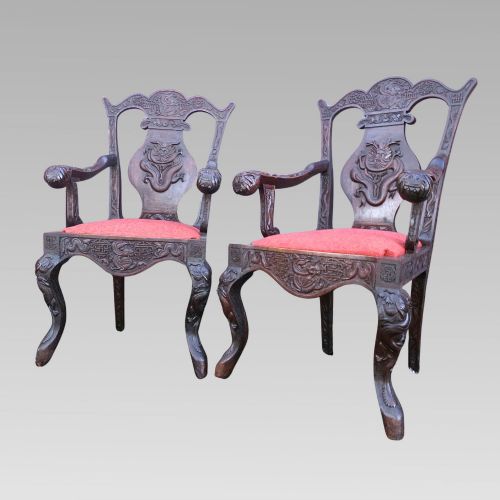


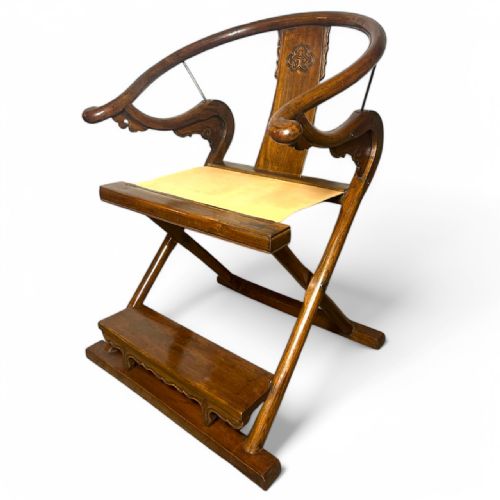

Oriental Carved Wood Armchairs
These oriental carved wood armchairs bring striking form and rich timber to a room, offering both history and solid comfort.
Oriental Carved Wood Armchairs
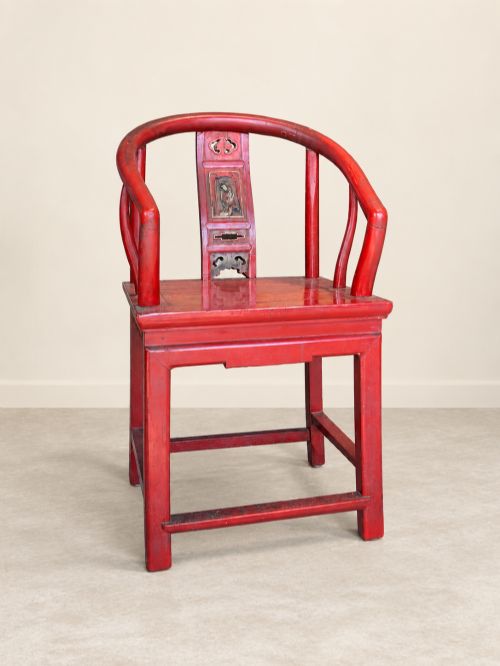
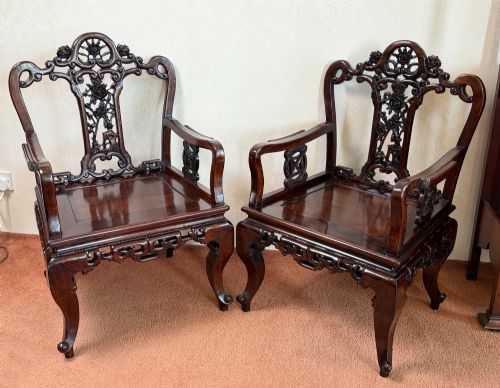
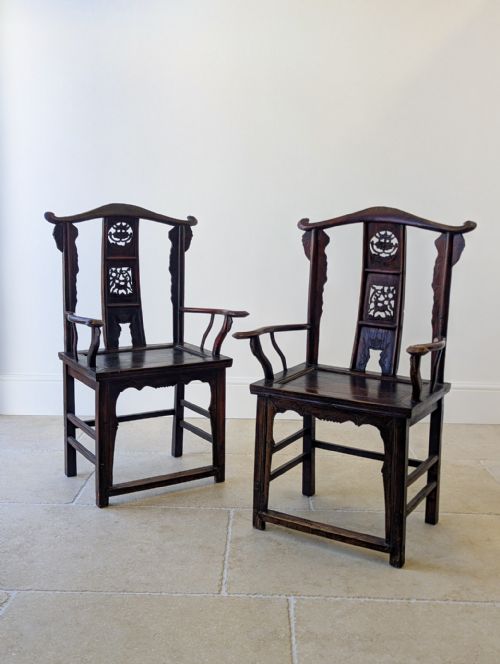
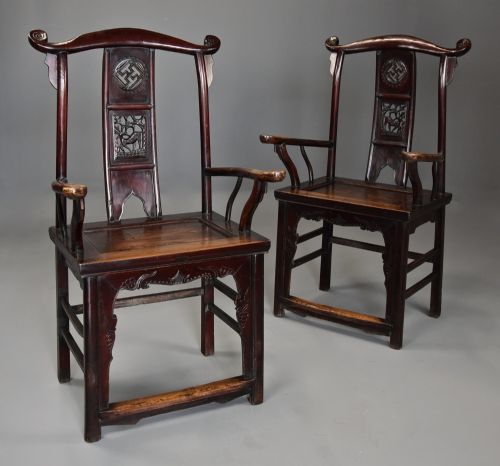
Oriental carved wood armchairs span multiple origins and eras, with nineteenth-century Chinese hardwood examples appearing most frequently on this page. Buyers will find distinct seating types such as yoke-backs, horseshoe-backs, and imposing throne chairs.
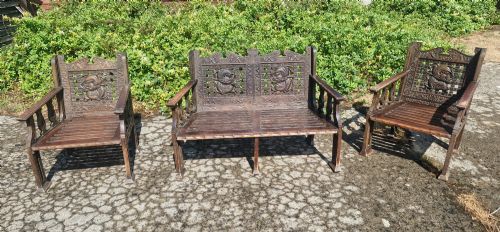
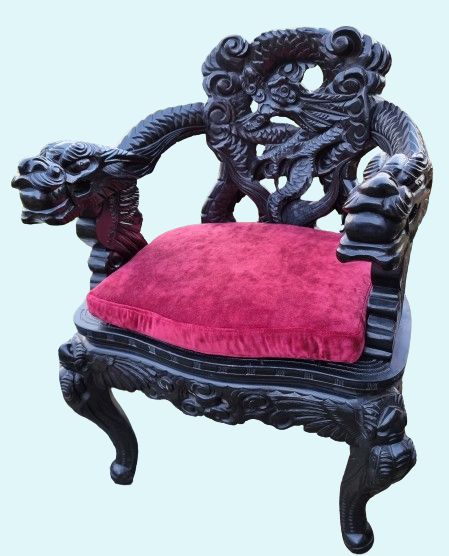
The selection also includes regional variations like Anglo-Indian elbow chairs and Burmese conservatory suites. These pieces range from restrained elm designs to profusely carved dragon motifs and lacquered finishes.
Most items date from the nineteenth century, alongside pieces from the Edwardian period and around nineteen-twenty. They include individual armchairs, pairs, and larger seating suites.
Materials and construction
Makers utilised dense timbers such as hardwood, rosewood, teak, and elm to build these chairs. These durable materials support intricate surface carving without compromising the structural integrity of the frame.
Traditional joinery methods unite the components, often without modern metal fasteners. Surfaces receive finishes ranging from natural wood patinas to red lacquer and painted details, occasionally complemented by upholstery or velvet.
The indicators of quality
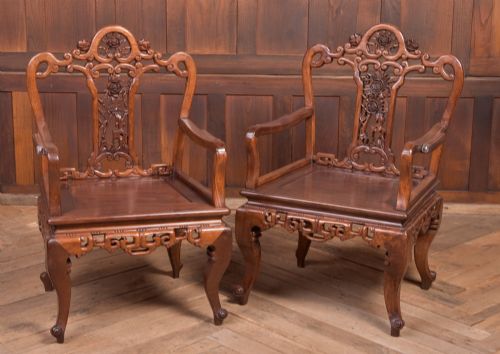
Depth and crispness of the carving distinguish finer examples from simpler production. Superior pieces display hand-cut relief work where motifs like dragons and foliage remain sharp and well-defined.
The choice of timber and the condition of the surface patina dictate value. Dense hardwoods and elm with well-preserved original lacquer or deep natural shine elevate a chair above standard utility grade.
The Oriental Carved Wood Armchairs Glossary
- Yoke-back
- A chair style featuring a top rail that curves upward resembling an ox yoke. This shape provides comfortable head and neck support.
- Horseshoe-back
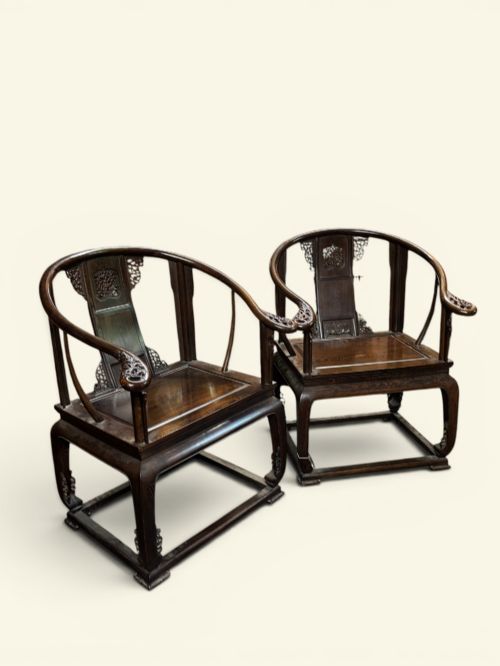
- A continuous, curved back and arm rail formed in a single sweeping semicircle. It offers ergonomic support around the upper body.
- Hongmu
- A category of dense, fragrant Asian hardwoods often translated as red wood. Craftsmen favour it for heavy, durable furniture.
- Patina
- The surface sheen and texture developed through age, handling, and use. Collectors value a rich, undisturbed finish.
- Qing Dynasty
- The final imperial dynasty of China, spanning from sixteen-fourteen-fourteen to nineteen-twelve. Many traditional seating designs date from its later years.
Oriental Carved Wood Armchairs: Frequently Asked Questions
How do I style an oriental armchair?
These chairs work effectively as standalone accent pieces in modern or traditional rooms. Their sculptural wooden frames stand out best when placed against plain walls.
Pairing a pair of horseshoe-back chairs with a simple side table creates a deliberate focal point in a living space or hallway.
Are these chairs comfortable for daily use?
Many traditional Chinese wooden armchairs were designed for upright posture rather than lounging. Their supportive wooden splats and armrests encourage an attentive sitting position.
Adding a loose silk or linen cushion can soften the seat for extended periods of reading or relaxation.
How do I care for antique hardwood furniture?
Maintain the wood by dusting with a dry microfibre cloth and keeping the piece away from direct heat sources. Sudden temperature changes can cause timber to split.
Apply a microcrystalline wax sparingly once or twice a year to nourish the antique surface without attracting dust.