



Dark Hardwood Armchair
A dark hardwood armchair brings substantial weight and deep grain to a room, offering robust seating shaped by diverse global traditions.
Dark Hardwood Armchair
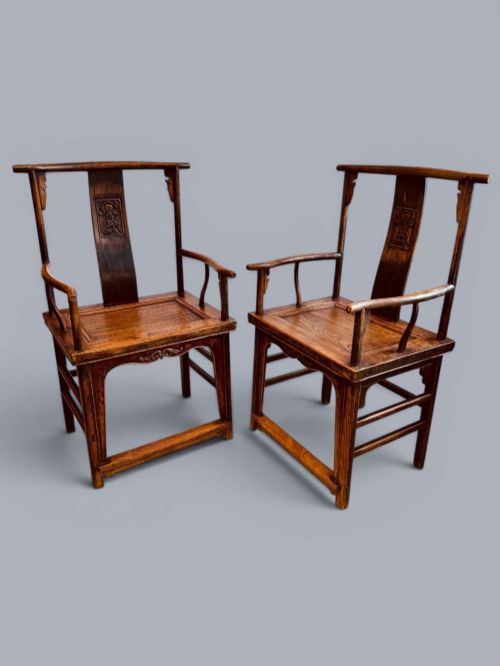
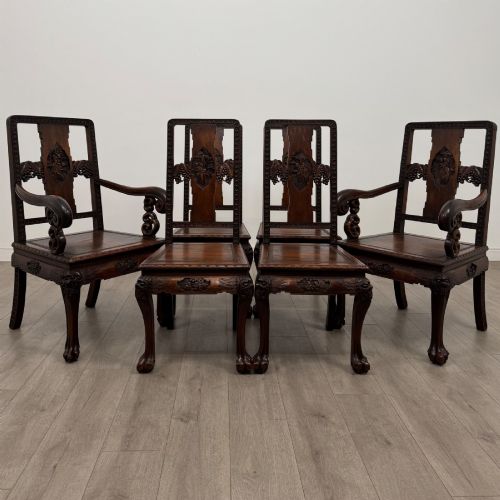
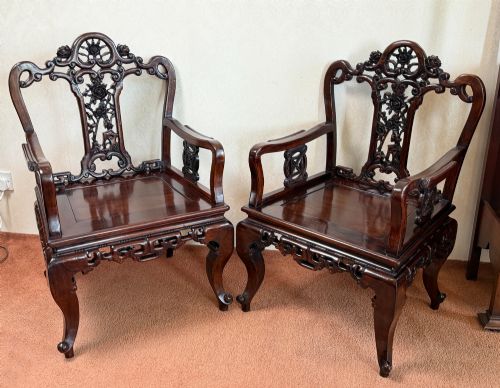
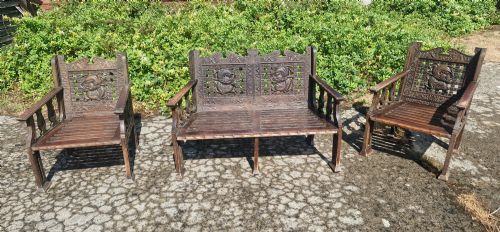
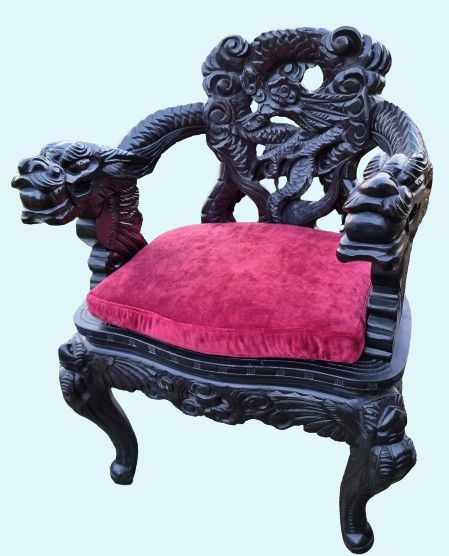
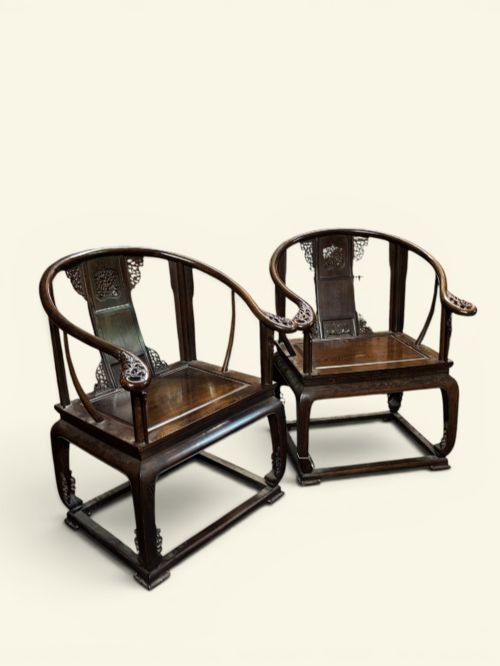
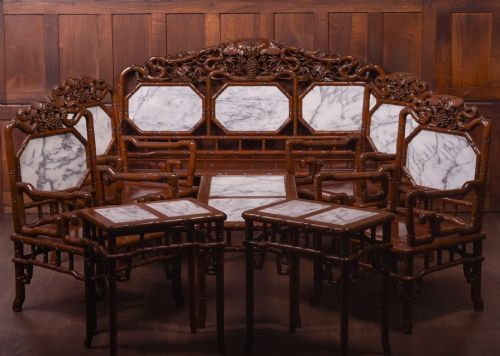
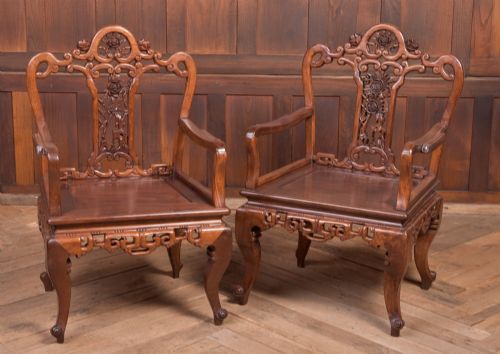
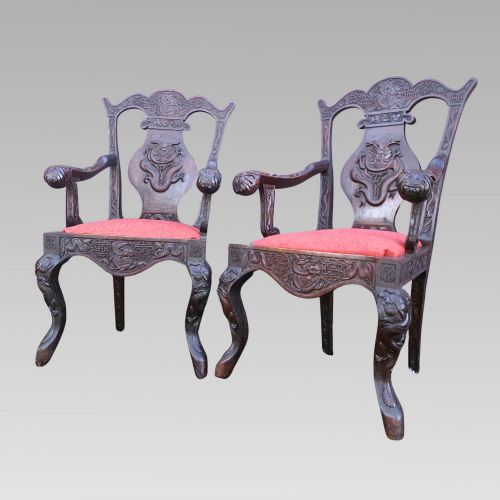
A dark hardwood armchair combines sturdy construction with dense timber, emerging in various regional forms across the eighteenth, nineteenth, and early twentieth centuries. These seats span from elaborate Qing Dynasty throne chairs and horseshoe-back designs to North African and Anglo-Indian variants.
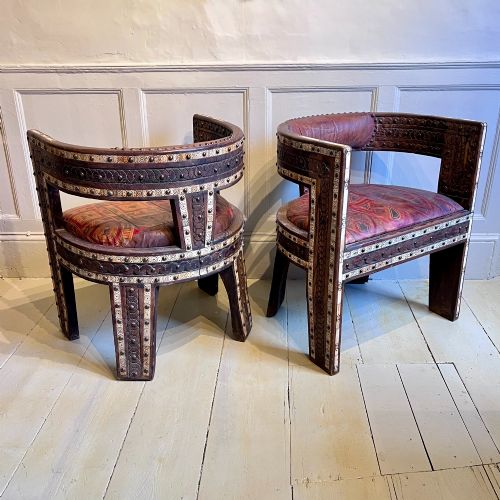
Buyers encounter traditional Chinese export items, Moorish influences, and occasional Art Deco interpretations. Each specimen demonstrates the distinct woodworking methods of its period, ranging from simple elm and teak builds to richly figured rosewood and hongmu.
Materials and construction methods
Craftsmen utilised dense timbers such as rosewood, teak, elm, and hongmu to build these chairs, often applying deep finishes that highlight the natural grain. Structural integrity relied on traditional joinery techniques, sometimes reinforced with brass inlay or mother of pearl details.
Dark Hardwood Armchair Retail Price Guide 2026
Typical asking prices for dark hardwood armchair among the pieces listed under this phrase on Sellingantiques today, from the lower quarter to the upper quarter. They describe what is for sale here now, not the wider market.
One curious offering includes a designated stargazers chair, providing a unique historical seating arrangement for outdoor contemplation.
Distinctions in quality and execution
The standard of a dark hardwood armchair rests upon the precision of its joinery and the depth of its hand-carved detailing. Superior examples exhibit crisp, well-defined motifs and stable, robust frames built from dense, high-grade timber without excessive modern intervention.
Proportion and balance also divide standard output from finer work, particularly in complex horseshoe-back or folding forms that require exact geometric alignment. The choice of materials, such as heavy hongmu or figured rosewood, further elevates the stature of a piece.
The Dark Hardwood Armchair Glossary
- Hongmu
- A dense, durable Chinese hardwood prized for deep reddish-brown tones and heavy weight. It frequently appears in formal throne chairs and nineteenth-century seating.
- Horseshoe-back
- A distinctive chair design where the crest rail curves continuously to form both the backrest and the armrests. This shape requires advanced joinery to achieve stability.
- Qing Dynasty
- An imperial Chinese historical period spanning from the mid-seventeenth to the early twentieth century. Furniture from this era often displays elaborate hand-carved ornamentation.
- Rosewood
- A heavily grained, hard tropical timber valued for rich colouration and polished finishes. Makers utilised it extensively for fine hall and parlour chairs.
- Anglo-Indian
- A stylistic description for items made in India by local artisans using traditional methods for British or European patrons. These pieces often blend British furniture forms with intricate Indian carving.
Dark Hardwood Armchair: Frequently Asked Questions
What is hongmu timber?
Hongmu translates literally as red wood and designates a category of dense, heavy hardwoods used in traditional Chinese furnituremaking. It possesses a deep natural colour and takes a fine polish.
Pieces built from hongmu maintain exceptional structural stability and withstand heavy daily use. Collectors look for this timber in formal throne chairs and matching suites.
How should I care for a dark hardwood chair?
Maintaining a dark hardwood chair involves keeping it away from direct sunlight and sudden temperature fluctuations that can dry out the timber. Regular dusting with a soft, dry cloth preserves the finish without damaging the grain.
Avoid placing these chairs near intense heat sources or damp environments. Occasional gentle cleaning maintains the natural patina developed over decades of use.
What defines Anglo-Indian seating?
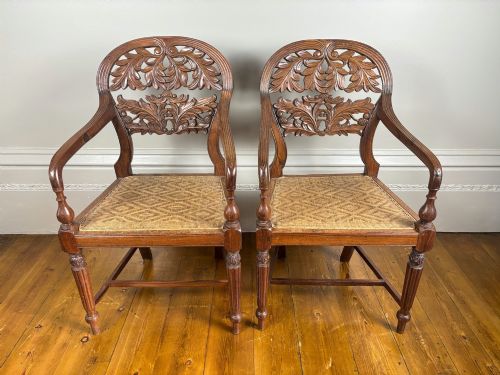
Anglo-Indian seating combines British furniture forms with traditional Indian carving techniques and dense regional hardwoods. These pieces reflect colonial trade and design exchange during the nineteenth century.
They often display profuse floral or figural carving across the entire wooden frame. The result is a robust chair that bridges distinct cultural aesthetics.