





18th Century Corner Armchair
An 18th century corner armchair offers a sculptural silhouette and ingenious space-saving design, anchoring any room with understated period presence.
18th Century Corner Armchair
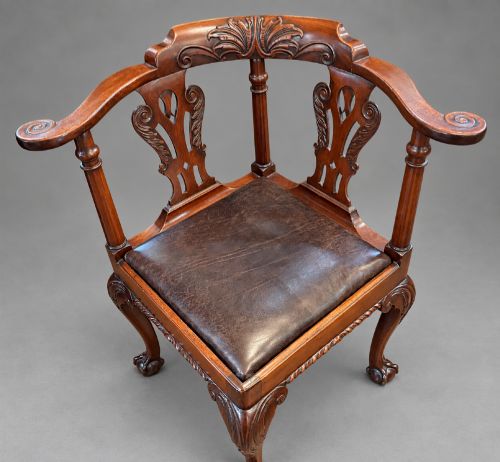
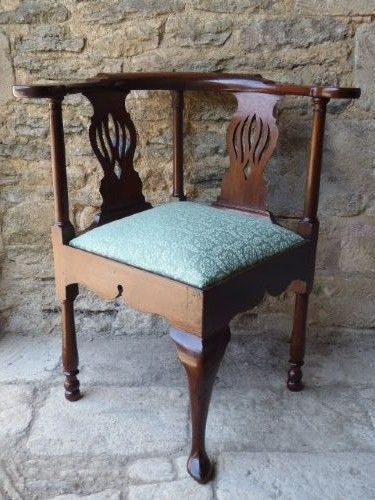
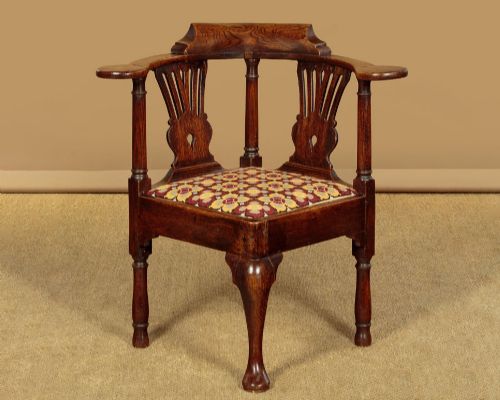
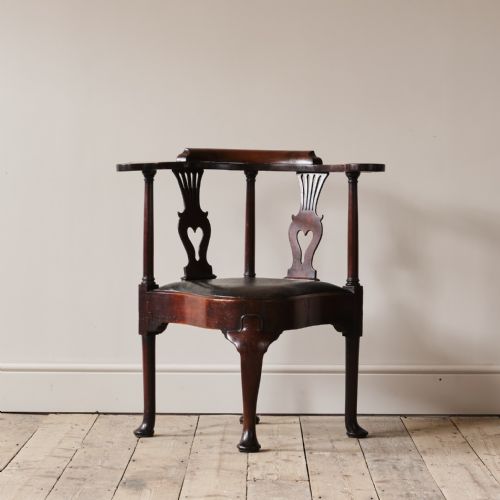
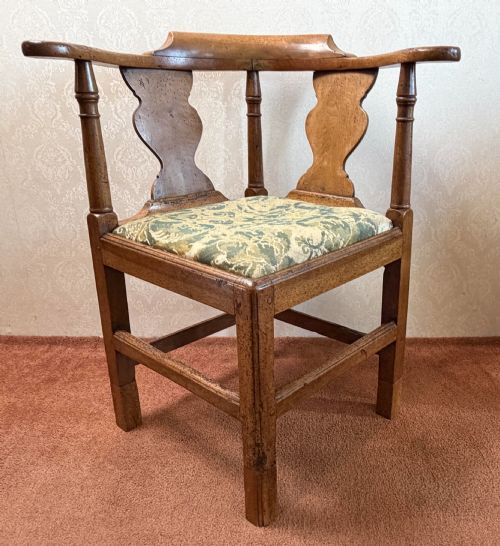
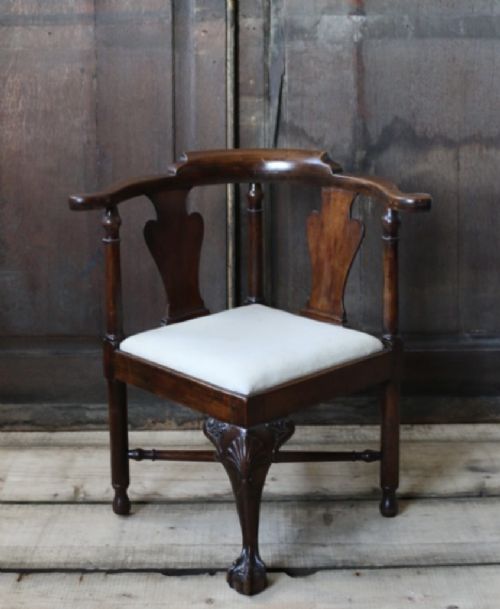
When you search for an 18th century corner armchair, you encounter a specialised form of seating designed specifically to fit into the intersection of two walls or to serve as a compact desk or reading chair. These pieces generally feature a continuous curved armrest supported by balusters or spindles, centred above a square seat set diagonally.
The versions most frequently met on this page span the Georgian era, encompassing distinct regional variants from English country workshops alongside more refined urban examples. Materials range from dense hardwoods like mahogany and walnut down to regional timbers such as oak, elm, fruitwood, and rush.
Makers of the period occasionally adapted the form with Chinese export hardwoods or integrated upholstery in fabric, leather, and tapestry. They function equally well as occasional chairs in a hallway or as dedicated writing seats.
How They Were Made
Cabinetmakers constructed these frames using sturdy timbers such as mahogany, oak, walnut, and fruitwood, often selecting dense woods to withstand the structural demands of the diagonal frame. Regional examples frequently pair structural oak with softer fruitwoods or elm.
Joinery relied on traditional mortise and tenon joints to secure the complex curves of the enveloping backrail and the diagonal leg placement. Seats were designed to receive drop-in pads upholstered in fabric, leather, and tapestry, or woven directly from natural rush.
18th Century Corner Armchair Retail Price Guide 2026
Typical asking prices for 18th century corner armchair among the pieces listed under this phrase on Sellingantiques today, from the lower quarter to the upper quarter. They describe what is for sale here now, not the wider market.
Listings demonstrate a material preference spanning imported mahogany and walnut alongside regional oak, elm, fruitwood, and rush.
What Varies in Quality
The distinction between standard examples and exceptional ones rests in the ambition of the design and the crispness of the timber carving. Urban pieces from the George II or George III periods often display sophisticated cabriole legs and finely turned arm supports, whereas country pieces prioritise sturdy utility and local timbers.
Proportions also dictate distinction, with eccentric or curvaceous forms commanding greater visual interest than standard utilitarian seating. The survival of original upholstery surfaces, such as early tapestry or leather, elevates the historical integrity of the piece.
The 18th Century Corner Armchair Glossary
- Corner Chair
- A seating form designed to fit neatly into a room angle, featuring a diagonal seat plan and a continuous curved back rail.
- Chinese Export
- Items manufactured in East Asia during the period, often utilising dense exotic hardwoods and distinctive eccentric proportions.
- Rush Seat
- A seating surface woven from dried marsh plants, commonly found on regional country examples.
- Cabriole Leg
- A furniture leg that curves outward and then tapers inward, typical of finer Georgian seating.
- Slat Back
- A chair back constructed from vertical wooden slats rather than upholstered padding or solid panels.
18th Century Corner Armchair: Frequently Asked Questions
Where did they sit?
These chairs were originally designed to sit neatly into the corner of a room, maximising floor space while providing a comfortable seat.
They were also frequently pulled up to a desk or used as reading chairs, owing to their supportive, enclosed back rails.
How do I date one?
Dating relies on identifying stylistic markers associated with specific reigns, such as Queen Anne, George I, George II, and George III.
Timber choice and construction methods, whether urban mahogany or regional country oak and fruitwood, also help narrow down the period of manufacture.
Are they comfortable?
The enveloping curved back rail provides surprising lumbar support, making them well-suited for shorter periods of sitting at a desk.
Comfort largely depends on the padding of the drop-in seat, which can be upholstered in modern or period-appropriate textiles.
How do I care for the wood?
Maintain the timber by keeping it away from direct heat sources and sudden humidity changes to prevent the wood from splitting.
Apply occasional traditional wax to nourish the surface and preserve the natural patina built up over centuries.