

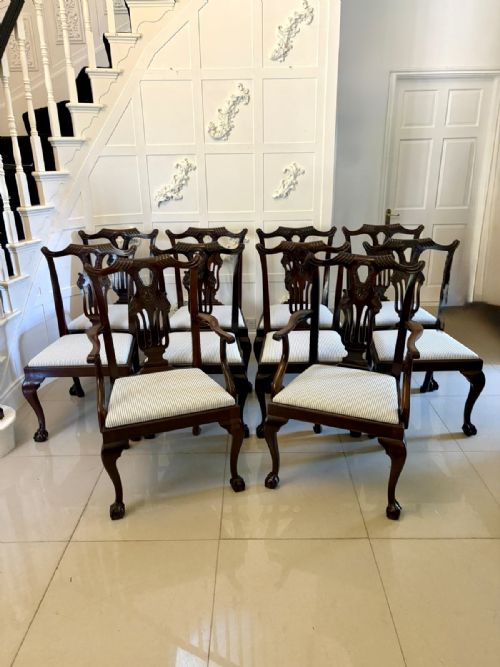


Carved Claw Foot Chair
A carved claw foot chair anchors a room with undeniable presence, bringing centuries of cabinet-making history straight to your floor.
Carved Claw Foot Chair
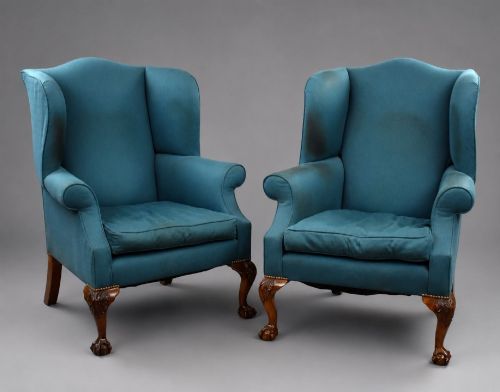
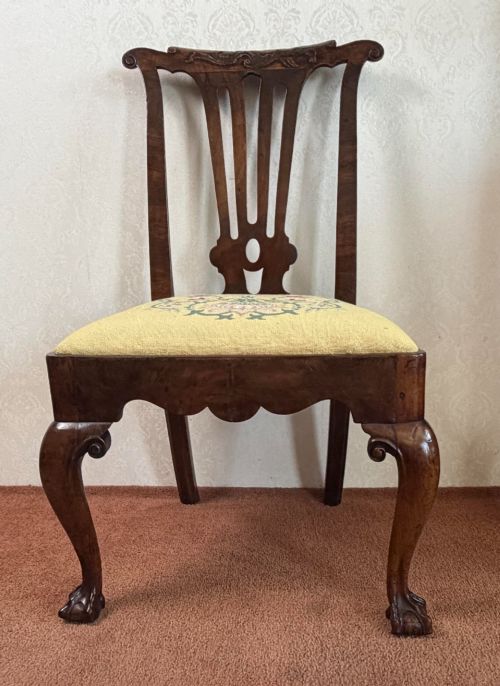
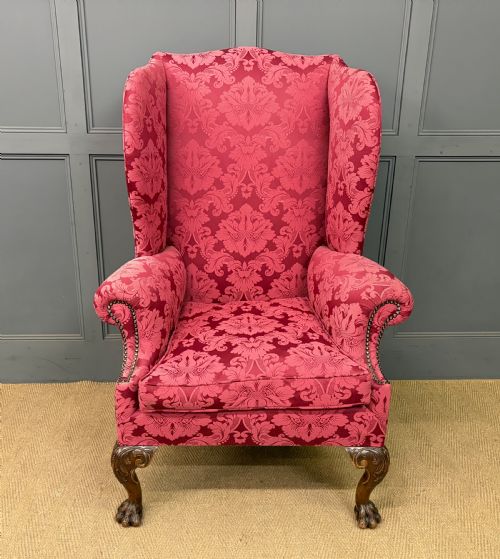
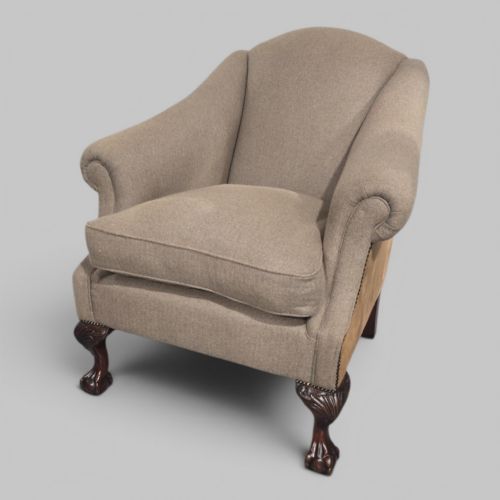
A carved claw foot chair brings together substantial timber frames and prominent foot ornamentation, spanning forms from single side and desk chairs to large library armchairs and dining sets. When exploring carved claw foot chair options, you will encounter pieces ranging from authentic 18th-century Georgian and Regency originals to later revival interpretations.
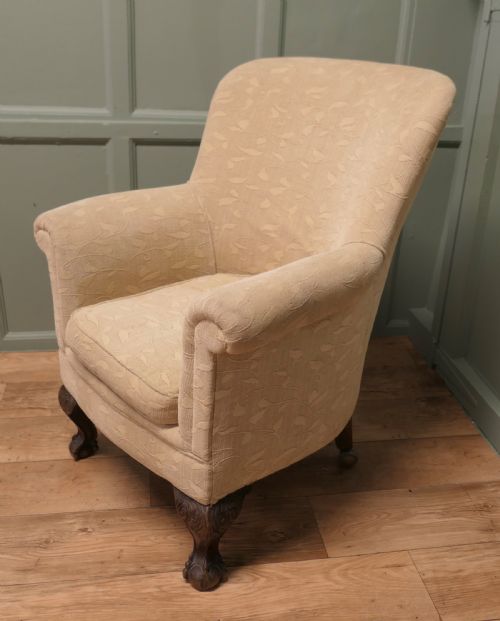
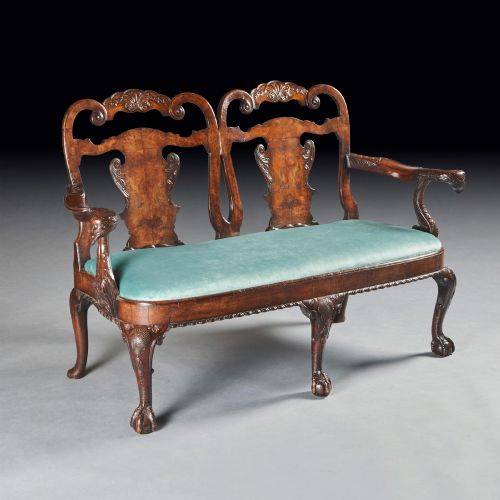
The selection includes specific regional variations, such as Irish mahogany dining chairs and Italian walnut side chairs, alongside larger seating arrangements like settees and twin chair back sofas. Armchairs and carvers dominate the heavier styles, frequently featuring drop-in seats or deep upholstered frames covered in leather, velvet, or fabric.
Materials and construction
Makers relied heavily on dense hardwoods like mahogany and walnut for structural integrity, allowing carvers to execute intricate details on the knees and feet without compromising strength. Secondary timbers like oak appear in earlier frames, while decorative elements incorporate brass accents and various upholstery coverings.
Joinery methods depended on traditional mortise and tenon construction, paired with hand-carved relief work on the cabriole legs. Upholstered pieces utilised webbing, horsehair stuffing, and heavy textiles secured with brass tacks, reflecting the domestic requirements of each period.
An eccentric Chinese export hardwood corner armchair proves that artisans across the globe enjoyed giving claw feet a distinctly curvaceous twist.
Evaluating the standard
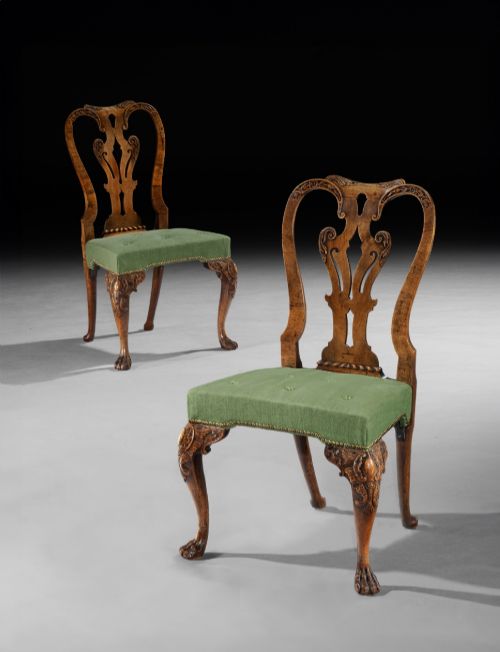
Quality rests in the crispness of the carving on the claw and ball foot, where deep relief and distinct talon definition separate superior work from softer, worn execution. The flow of the cabriole leg must integrate naturally with the seat rail rather than appearing disjointed.
Proportion and timber selection dictate the upper tier of pieces, requiring rich grain patterns in the mahogany or walnut and balanced symmetry across matching sets or pairs. Original surface patination and tight, unaltered joints hold more weight than heavily restored or later-revised frames.
Howard and Sons·George Bullock
The Carved Claw Foot Chair Glossary
- Cabriole leg
- A furniture leg that bends in an outward curve at the knee and tapers inward to an ankle and foot. This design mimics the natural shape of an animal's leg and became popular during the early 18th century.
- Carver
- An armchair designed to match a set of dining chairs, traditionally sat in by the head of the household. These pieces typically feature open arms to accommodate formal clothing.
- Drop-in seat
- A removable wooden frame insert upholstered independently before being set into a rebate in the chair frame. This construction method allows easier reupholstering without dismantling the main structure.
- Patina
- The surface sheen and colour developed on wood and leather over decades of use and handling. Natural oxidation creates this deep finish, which collectors prize on antique timber.
- Settee
- A long wooden or upholstered seat with a back and arms, designed to accommodate multiple people. These forms mirror the stylistic development of contemporary single chairs.
Carved Claw Foot Chair: Frequently Asked Questions
How do I identify a true 18th-century piece?
Examine the timber shrinkage, hand-cut joinery marks, and the tool work visible inside the frame construction. True period pieces display natural wear patterns and consistent patination across all structural points.
Compare the carving style of the feet and knees against documented examples from the same decade. Regional variations in walnut and mahogany species also help confirm the manufacturing era.
Were these chairs used for dining or lounging?
Form dictates function, with lighter side chairs and carvers built for dining tables, while deep tub chairs, wing backs, and library armchairs served studies and drawing rooms. Heavier frames with leather or velvet upholstery were meant for long periods of sitting.
Matching sets usually indicate dining or parlour use, whereas single grand armchairs functioned as statement pieces in libraries or halls.
How should I care for antique leather upholstery?
Maintain historical leather by applying appropriate conservation waxes or specialised conditioning balms to prevent the material from drying and cracking. Keep the pieces away from direct sunlight and strong heat sources.
Avoid harsh modern cleaning chemicals that strip the original dye and finish. Gentle dusting with a dry cloth preserves the surface integrity.
What is the difference between Georgian and Regency styles?
Georgian furniture, particularly from the mid-18th century, favours ornate carved mahogany and walnut with rich curves and prominent claw and ball feet. The proportions feel heavy, decorative, and sculptural.
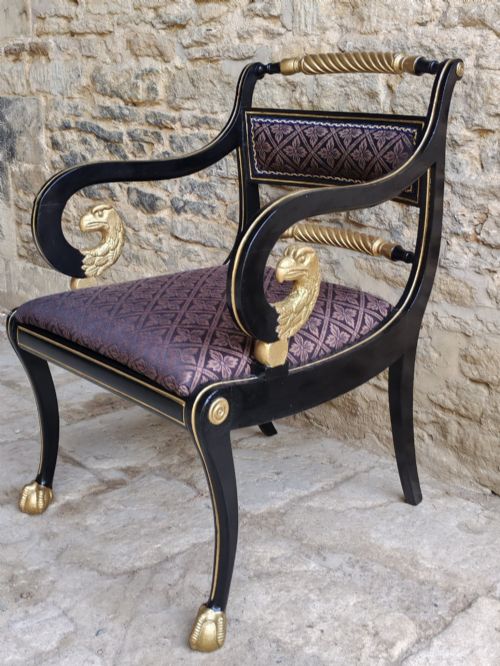
Regency design shifts toward classical restraint, drawing inspiration from ancient Roman and Greek forms with cleaner lines and occasionally simpler foot treatments.