




Chinese Export Armchair
A chinese export armchair brings remarkable carving and dense timber together, offering solid seating built for trade.
Chinese Export Armchair
A chinese export armchair combines traditional form with the demands of Western trade, typically appearing in dense timbers like hardwood, rosewood, and teak. Buyers searching for a chinese export armchair encounter pieces primarily from the nineteenth century, alongside occasional eighteenth-century examples and suite components.
The construction ranges from singular armchairs to matched pairs and larger suites incorporating mother of pearl inlay or elm elements. Stylistic influences span the Qing dynasty alongside Regency interpretations, reflecting the varied markets these seats served.
How they were made
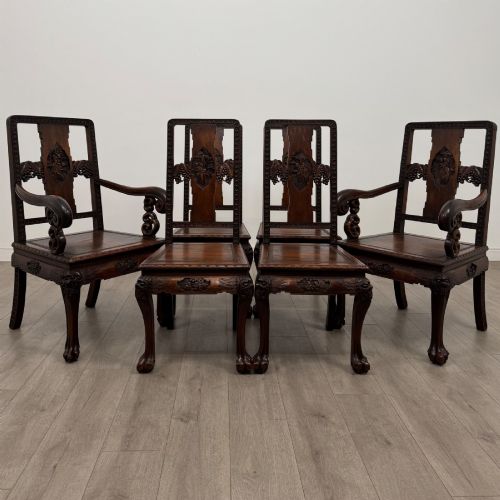
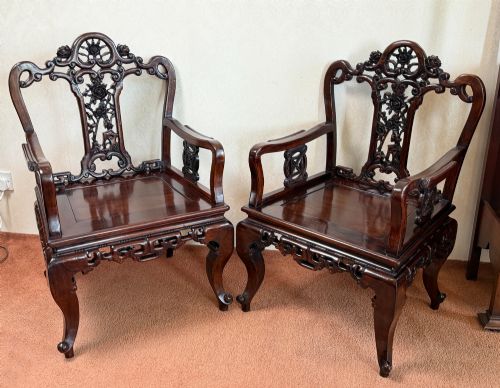
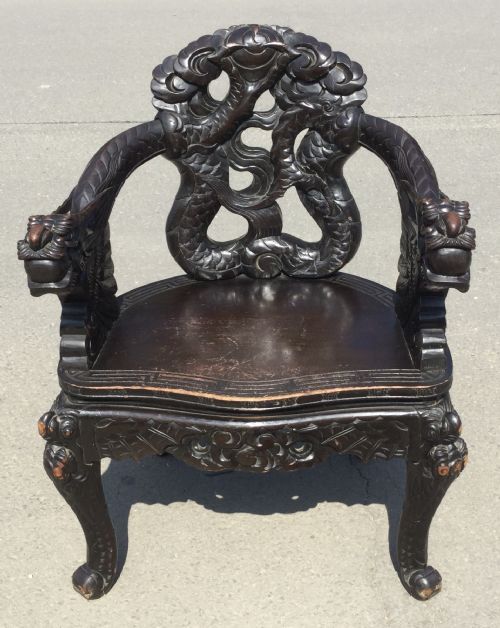
Craftsmen shaped these seats from heavy timbers including hardwood, rosewood, teak, and elm, relying on traditional joinery rather than metal fasteners. Surfaces frequently display deep oriental carved dragon motifs and intricate detailing.
Selected examples incorporate contrasting inlay work, such as mother of pearl, set directly into the dark wood body. Lacquered finishes and upholstered elements appear across the surviving pieces, showing varied finishing techniques.
Chinese Export Armchair Retail Price Guide 2026
Typical asking prices for chinese export armchair among the pieces listed under this phrase on Sellingantiques today, from the lower quarter to the upper quarter. They describe what is for sale here now, not the wider market.
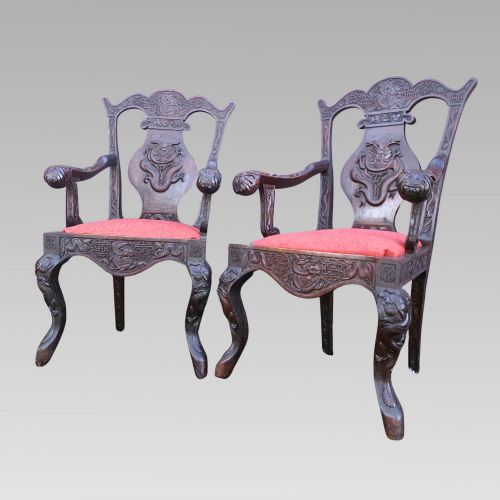
Some chairs sport such eccentric and curvaceous framing that even the dragons look slightly startled by the journey.
What varies in quality
Depth and precision of the carving separate standard workshop production from finer examples, particularly where dragon motifs and pierced splats are rendered with high definition. The choice and figure of the timber also define the tier of the piece, with dense rosewood and well-matched hardwoods commanding greater presence.
Structural complexity influences distinction, seen when comparing straightforward hall chairs to eccentric corner armchairs or full seating suites. The integration of decorative details like mother of pearl inlay indicates the original tier of commissioning.
The Chinese Export Armchair Glossary
- Chinese Export
- Furniture made in China specifically for Western markets, blending Eastern construction methods with European taste. This label covers a wide span of nineteenth-century trade pieces.
- Hardwood
- Dense, durable timber harvested from broad-leaved trees, forming the primary structural material for these seats. Rosewood and teak are notable examples found in this category.
- Qing Dynasty
- The final imperial dynasty of China, spanning from the seventeenth to the early twentieth century. Pieces from this era often feature characteristic imperial dragon motifs and formal carving.
- Regency
- A British design period spanning the early nineteenth century that occasionally influenced the silhouette of export seating. It brings neoclassical restraint to heavier carved forms.
- Mother of Pearl
- Iridescent inner shell material used for inlaid decoration on dark timber surfaces. It provides sharp visual contrast against polished hardwood.
Chinese Export Armchair: Frequently Asked Questions
What defines a chinese export armchair?
These armchairs are seating pieces made in China for international markets, combining traditional domestic forms with Western tastes. They typically utilise dense timbers and intricate regional carving.
They serve as functional seating or decorative focal points in a room, bridging Eastern craftsmanship and Western interior design history.
How do I date these armchairs?
Dating relies on stylistic markers, timber choice, and construction methods associated with the nineteenth century or earlier periods. Qing dynasty influence and Regency crossover shapes offer key chronological clues.
Examining the depth of the carving and the specific finish helps place the chair within its production era.
Where were these chairs used?
Originally manufactured in China, these armchairs were exported to Western homes via maritime trade routes. They furnished grand European and American residences as exotic statement pieces.
Today, they function comfortably in studies, hallways, or living rooms as standalone seating.
Are these chairs part of larger sets?
While many survive as single armchairs or pairs, some examples formed part of larger seating suites or bench sets. Suites often included matching tables or multiple chairs with uniform inlay.
Pairs and suites generally indicate a more substantial original commission.