


Dark Timber Carved Armchair
A dark timber carved armchair brings substantial presence and deep-relief carving to a room, ranging from robust country oak to intricate colonial hardwoods.
Dark Timber Carved Armchair
A dark timber carved armchair is a substantial seating form executed in dense woods such as oak, mahogany, padouk, elm, and blackwood. These chairs span multiple centuries and design traditions, encompassing formal Georgian and Victorian pieces alongside vernacular Windsor and wainscot forms.
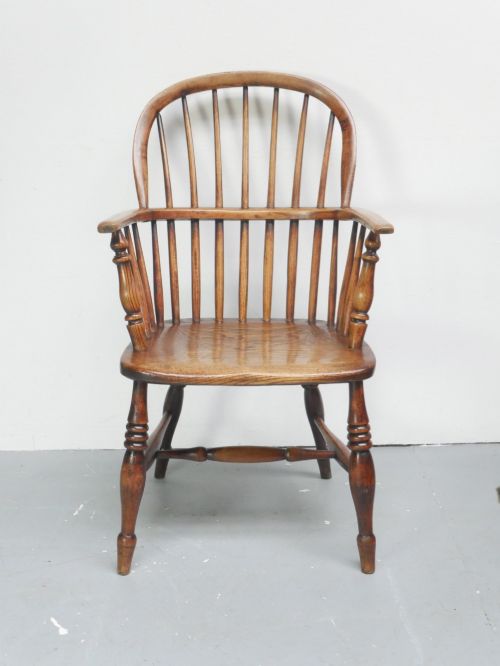
The selections available here showcase a broad geographical spread, featuring traditional British country and regional seating alongside Chinese export, Anglo-Indian, and Ceylonese workshop productions. Buyers encounter everything from neat domestic windsor chairs to ornate ceremonial armchairs and folding chairs.
Nineteenth-century examples dominate the offerings, though seventeenth- and eighteenth-century wainscot and ladder-back chairs appear alongside early twentieth-century art deco and American forms. Forms range from heavy parlour suites and rocking chairs down to apprentice pieces and child's armchairs.
How they were made
Carpenters and cabinetmakers utilised dense timbers like oak, mahogany, rosewood, and elm, relying on traditional joinery such as mortise and tenon frames. Solid wood construction provided the structural stability necessary to support deep, heavy chisel and gouge carving.
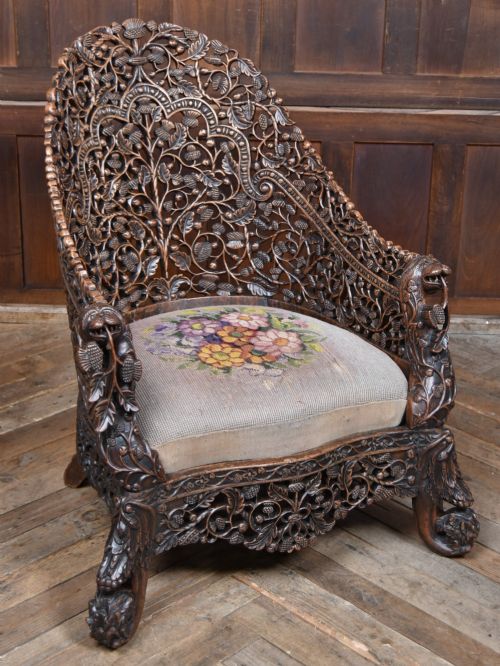
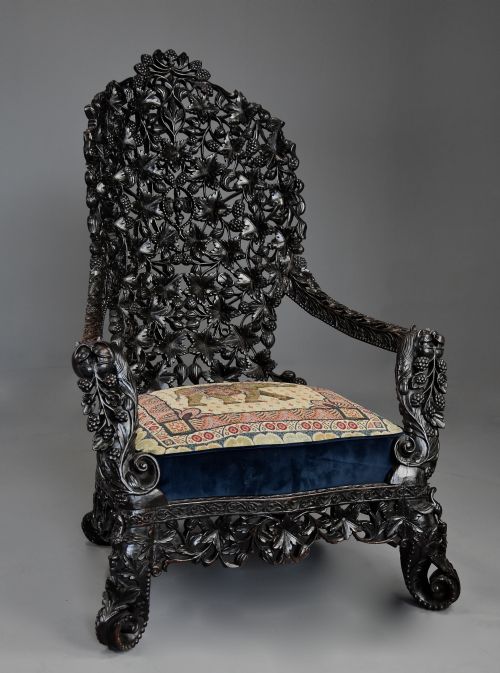
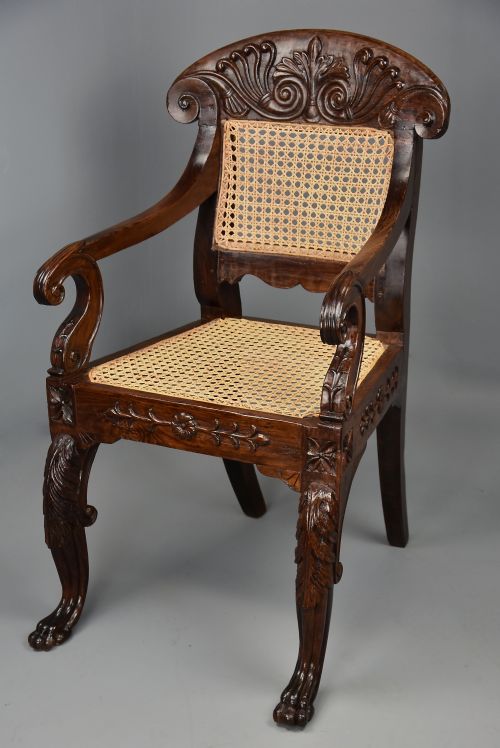
Carving techniques varied by region and period, moving from geometric strapwork and turned components on early wainscot chairs to elaborate floral, foliate, and zoomorphic motifs on Anglo-Indian and Chinese export pieces. Secondary materials like brass, leather, and tapestry upholstery were integrated to provide structural reinforcement and functional comfort.
Materials span native British oaks and elms alongside exotic hardwoods like padouk, mahogany, and rosewood.
What varies in quality
Quality rests primarily on the crispness and depth of the hand carving, where confident, fluid relief work distinguishes master craftsmanship from mechanical or hurried execution. The choice and figure of the timber itself dictate the inherent value, with dense, richly grained padouk, mahogany, and quarter-sawn oak holding visual and physical superiority.
Proportion and structural integrity separate standard utility seating from high-status examples, particularly in regional forms where balanced arm geometry and sympathetic historic repairs maintain the integrity of the piece. The synthesis of regional carving traditions with classic British forms, such as Anglo-Indian pieces displaying Regency influences, denotes higher workshop ambition.
The Dark Timber Carved Armchair Glossary
- Wainscot chair
- A heavy wooden armchair of seventeenth-century or revival design, constructed with panelled backs and solid timber seats. This form represents some of the earliest and most robust domestic seating found in British interiors.
- Padouk
- A heavy, durable tropical hardwood with a distinctive reddish-brown colour that darkens with age, frequently utilised in Anglo-Indian and colonial furniture. It accepts fine, sharp carving without splintering.
- Ladder-back chair
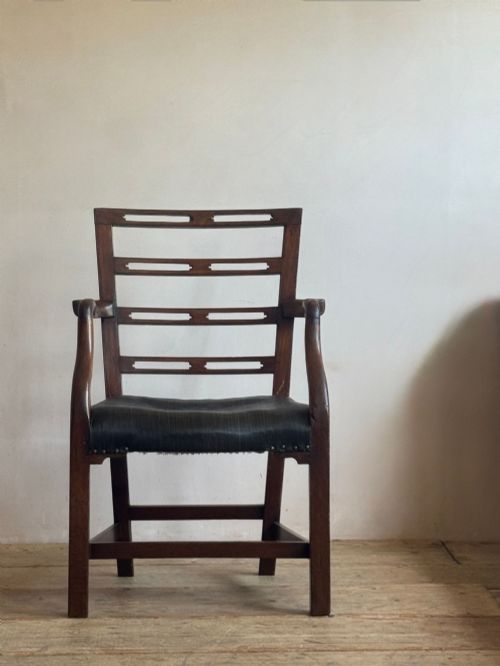
- A traditional seating form featuring horizontal arched slats between the uprights of the back. This vernacular design offers lightweight strength through simple turned wooden framing.
- Apprentice piece
- A miniature or trial model executed by a trainee craftsman to demonstrate mastery of joinery and carving techniques before entering a guild. These items display the exact details of full-scale furniture on a smaller scale.
- Turned chair
- An early form constructed largely from cylindrical wooden members shaped on a lathe, sometimes associated with historic vernacular traditions. The joints rely on pegged or wedged tenons.
Dark Timber Carved Armchair: Frequently Asked Questions
What is a wainscot armchair?
A wainscot armchair is a heavy wooden seat featuring a panelled back and solid timber construction, originating in the seventeenth century and revived in later periods. They served as primary status seating in early domestic interiors.
These chairs rely on sturdy pegged joinery and often incorporate carved strapwork or scrolling details across the upper crest rail.
How do I date a carved wooden armchair?
Dating relies on examining the timber species, joinery methods, tool marks, and stylistic motifs present in the carving. Comparing the regional form against documented period examples helps narrow the decade of production.
Changes in turning styles and upholstery foundations also provide reliable clues to whether a chair belongs to the seventeenth, eighteenth, or nineteenth century.
Where were Anglo-Indian armchairs made?
Anglo-Indian armchairs were produced in workshops across the Indian subcontinent during the nineteenth century, often for British colonial officers or export markets. They combined local dense hardwoods with British furniture forms.
Carvers utilised traditional Indian floral and animal motifs on frames shaped to domestic English proportions.
How should I care for dark timber furniture?
Maintain dark timber chairs by keeping them away from direct heat sources and strong sunlight, which can dry out and fade dense hardwoods. Regular dusting with a soft, dry cloth preserves the finish.
Avoid silicone-based polishes and instead use traditional beeswax sparingly to nourish the wood grain over time.