

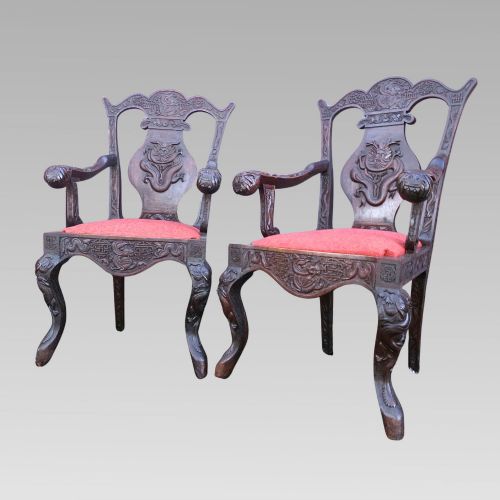


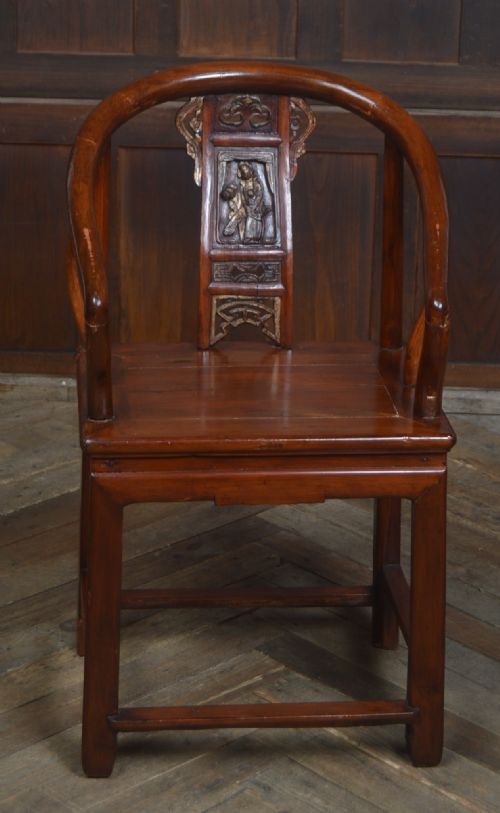
Asian Carved Accent Chairs
These asian carved accent chairs bring rich regional form and deep timber grain straight into a modern interior.
Asian Carved Accent Chairs
Asian carved accent chairs encompass distinctive seating forms originating from nineteenth-century workshops, traditional Chinese dynasties, and Burmese temple traditions. Buyers searching for asian carved accent chairs encounter substantial timber seating designed with specific cultural and functional roles.
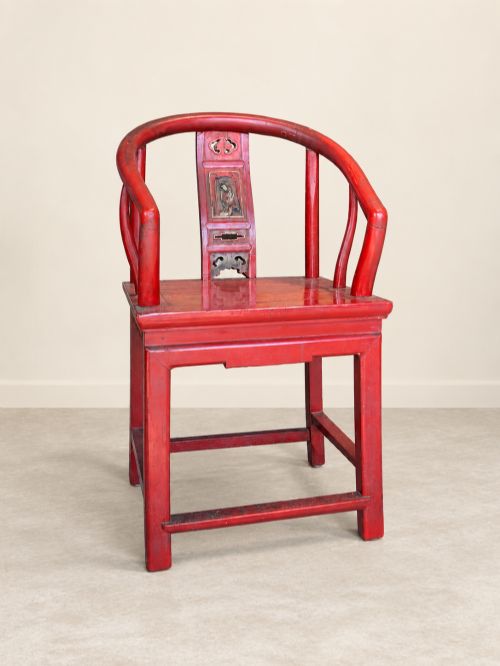
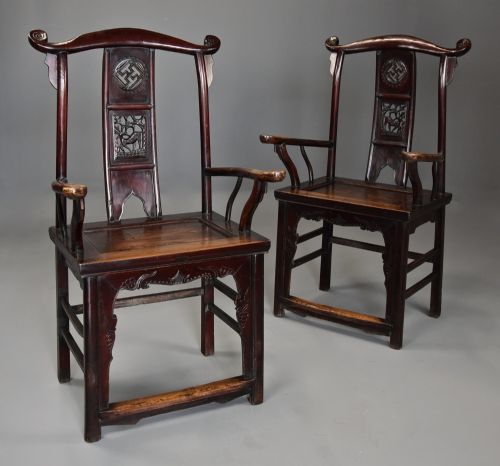
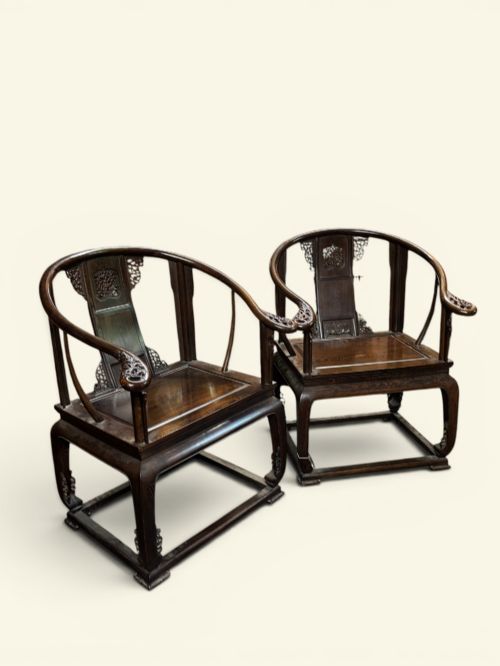
The selection on this page centres primarily on armchairs, side chairs, accent chairs, and hall chairs. Prominent regional variations include horseshoe-back armchairs, yokeback scholars chairs, folding armchairs, concubine chairs, and throne chairs.
Origin styles range from Qing Dynasty and Chinese Export pieces to Burmese and Anglo-Indian designs. These seating options bring robust historical presence and intricate carving into contemporary rooms.
How they were made
Craftsmen shaped these pieces using dense woods including elm, teak, rosewood, hongmu, and general dark hardwood. These timbers provided the structural strength required for intricate pierced carving and joinery without metal fasteners.
Surface finishes rely heavily on traditional red lacquer and painted details applied directly to the timber. Certain pieces retain original lacquering that highlights the underlying wood grain and age.
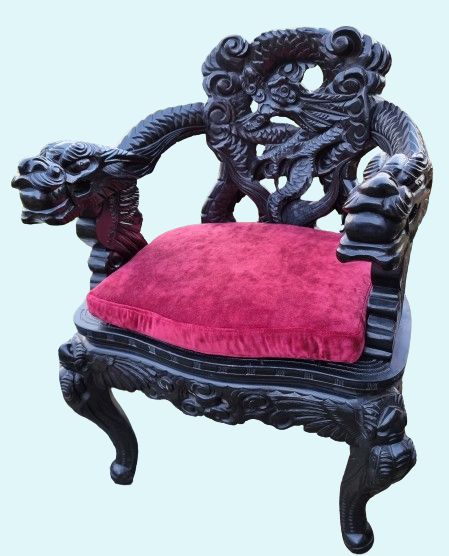
Carved dragons peer from chair backs with expressions that suggest they take interior design critique very seriously.
What varies in quality
The distinction between standard examples and exceptional pieces rests in the crispness and depth of the wood carving. Fine throne chairs and dragon armchairs display deeply undercut motifs that demonstrate superior hand-tool mastery.
Patina and timber selection dictate the visual standing of each chair. Examples featuring well-preserved original red lacquer or rich hardwood grain command greater appreciation among collectors.
The Asian Carved Accent Chairs Glossary
- Yokeback
- A chair style featuring a top crestrail that curves upwards at the ends resembling a traditional yoke. This form provides ergonomic support for the sitter.
- Horseshoe-back
- A continuous semicircular crest and arm rail that sweeps downward in a single fluid curve. It is typical of classic Chinese seating design.
- Lacquer
- A durable resin finish applied in multiple layers to seal and decorate wood surfaces. It often appears in red tones across nineteenth-century elm furniture.
- Hongmu
- A category of dense, heavy Asian hardwoods translated literally as red wood. It is prized for deep natural colour and heavy structural weight.
Asian Carved Accent Chairs: Frequently Asked Questions
How do I identify a Qing Dynasty chair?
Qing Dynasty chairs typically display formal proportions, heavy hardwoods like hongmu or rosewood, and dense symbolic carving. Look for authoritative structural forms such as throne chairs or horseshoe-back designs.
These pieces reflect the rigorous joinery and aesthetic standards of their specific imperial era, differing significantly from lighter export or Edwardian variations.
Where were yokeback chairs used?
Yokeback scholars chairs were traditionally utilised in the studies of magistrates and scholars across China. Their restrained yet ergonomic shape supported long hours of reading and writing.
Over time, these functional seats transitioned into general reception spaces where their refined silhouette denoted scholarly status.
Are folding armchairs authentic?
Nineteenth-century Chinese folding armchairs represent a sophisticated ancient tradition of portable elite seating. Their complex hinged wooden frames allowed officials to transport comfortable seats during travel.
Today, surviving examples are valued for the remarkable engineering required to make folding hardwood furniture both sturdy and elegant.
How do I care for lacquered wood?
Lacquered surfaces require stable indoor humidity levels and protection from direct sunlight to prevent drying or cracking. Dust gently with a dry, soft microfibre cloth rather than wet cleaners.
Preserving the original red lacquer finish relies on maintaining a gentle environment without abrasive polishes or chemical solvents.