



Dark Rosewood Armchair
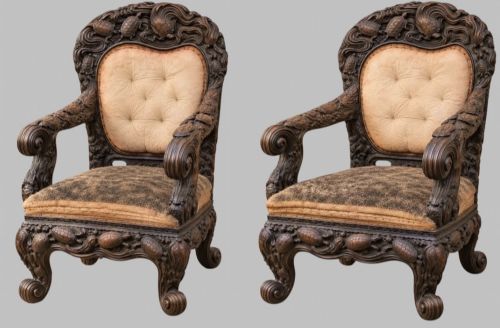
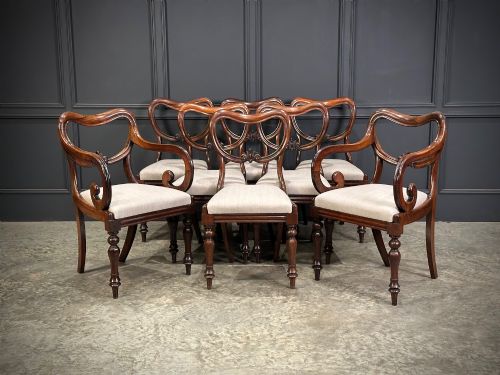
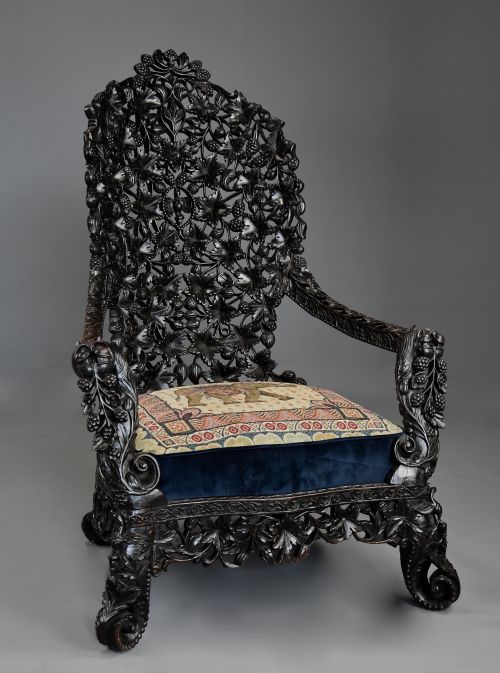
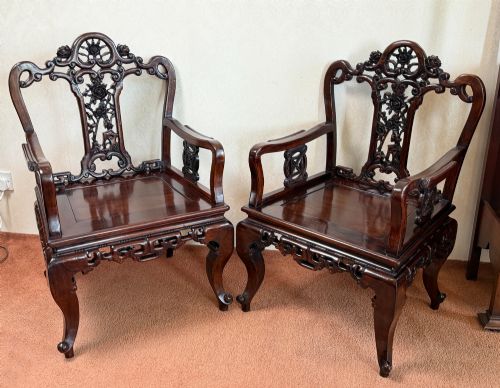
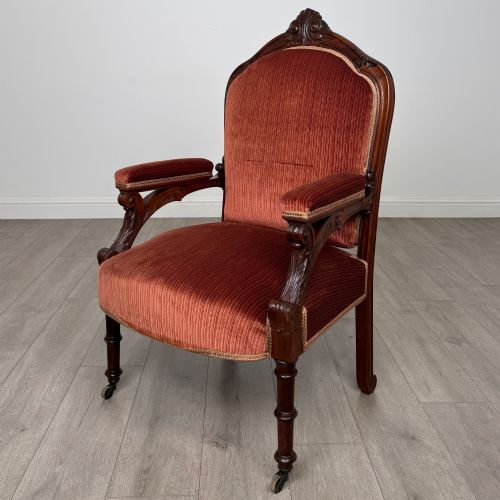
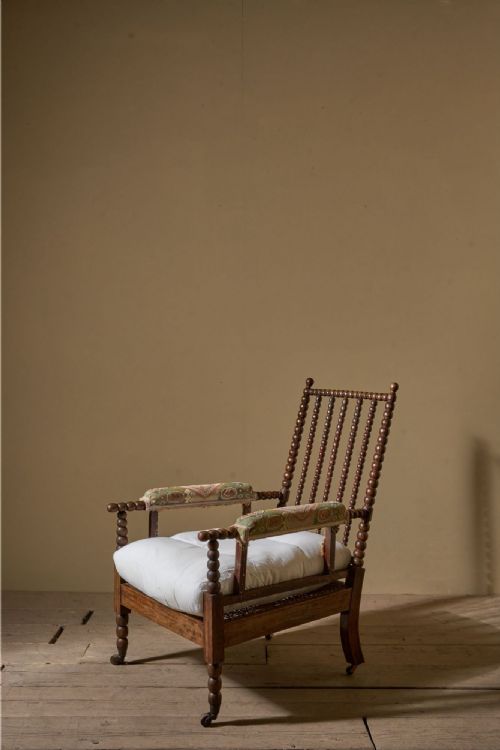
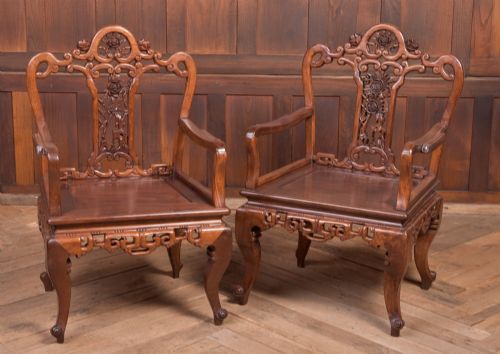
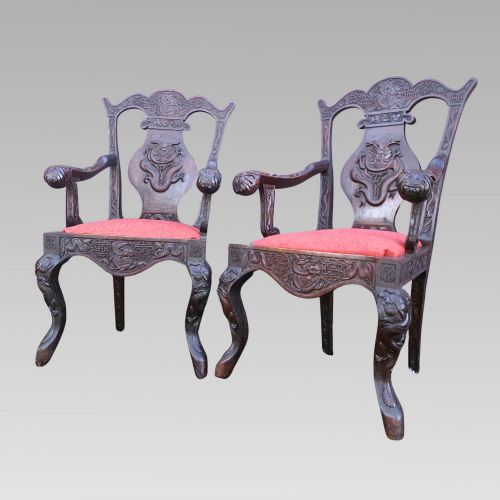
These dark rosewood armchairs combine dense tropical timbers with deep nineteenth-century carving, offering both robust support and considerable decorative presence.
Dark Rosewood Armchair
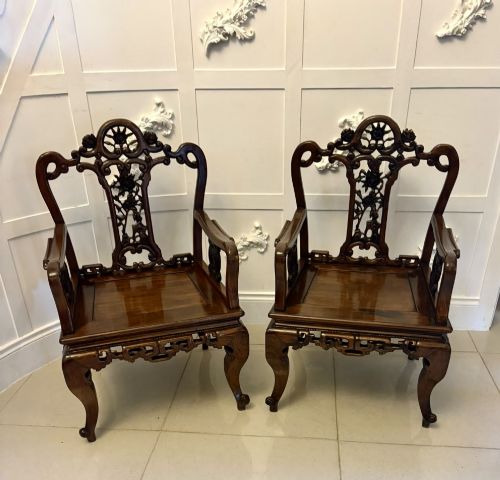
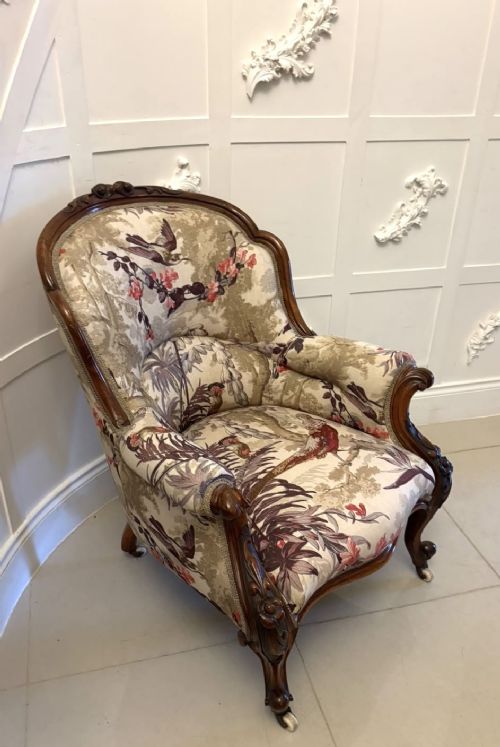
A dark rosewood armchair brings together solid tropical timber frames and upholstered or carved seating designed for studies, libraries, and parlours. When exploring a dark rosewood armchair, you will encounter diverse regional interpretations ranging from British Regency and Victorian library seating to intricately carved Anglo-Indian and Chinese Qing Dynasty pieces.
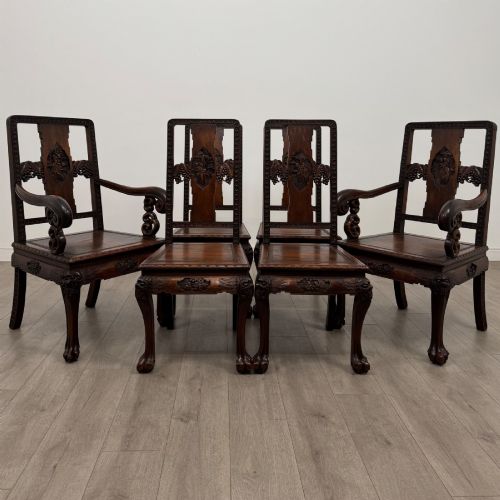
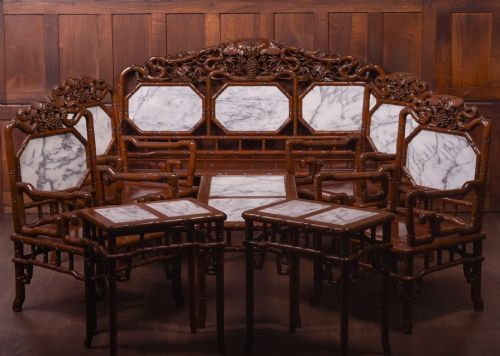
The selection on this page spans the eighteenth, nineteenth, and early twentieth centuries, capturing forms such as library armchairs, bergères, elbow chairs, and grand throne seats. Many pieces appear as pairs or part of larger parlour suites, reflecting the formal seating arrangements of their original interiors.
Makers utilised both solid timbers and simulated finishes, pairing dense rosewood, hongmu, and padauk with brass inlay, velvet, and marble inserts. Whether you seek the restrained elegance of a Regency library chair or the deep relief carving of Chinese export furniture, these seating options display distinct craftsmanship from varied global workshops.
Gradations of quality
Quality rests upon the crispness of hand-carving and the structural integrity of the dense hardwood frame. Superior examples demonstrate deep, clean relief work on arms and crest rails without splintering in the dense grain.
The selection of timber and the precision of brass inlay or joinery further separate standard workshop production from exceptional library and throne chairs. Original surfaces and well-maintained upholstery systems retain historical value better than heavily altered counterparts.
Dark Rosewood Armchair Retail Price Guide 2026
Typical asking prices for dark rosewood armchair among the pieces listed under this phrase on Sellingantiques today, from the lower quarter to the upper quarter. They describe what is for sale here now, not the wider market.
Materials documented across the inventory include solid rosewood, simulated rosewood, brass, velvet, marble, and padauk wood.
The Dark Rosewood Armchair Glossary
- Elbow chair
- A traditional term for a wooden armchair with open sides, commonly used at desks or as part of a dining or parlour suite.
- Hongmu
- A category of dense, dark tropical Chinese hardwoods often translated as red wood. It provides a heavy, durable structure for intricately carved throne chairs.
- Padauk
- A heavy reddish-brown tropical hardwood utilised in colonial furniture making. It withstands intensive carving and offers natural resistance to environmental wear.
- Library chair
- A sturdy, comfortable armchair designed for reading rooms and studies during the Regency and Victorian eras. These typically feature padded armrests and solid timber frames.
Dark Rosewood Armchair: Frequently Asked Questions
How do I date a rosewood armchair?
Dating relies on stylistic markers, construction methods, and material choices associated with periods like the Regency, Victorian, and Qing Dynasty. Examining the joinery beneath the seat and the wear patterns on the timber helps confirm the era of manufacture.
Makers often adapted regional carving styles to suit contemporary tastes, meaning details like cabriole legs, brass inlay, or high-backed frames offer reliable clues to the decade of origin.
Where were these chairs used originally?
These seating pieces originated in formal libraries, studies, and grand parlours across Britain, India, and China. Wealthy households utilised library chairs for reading and writing, while throne chairs and parlour suites furnished reception rooms.
Colonial administrators and merchants also commissioned pieces from Anglo-Indian and Chinese export workshops to furnish substantial homes overseas, blending European forms with local carving traditions.
Are these chairs suitable for daily use?
Solid hardwood frames and sturdy joinery make many of these nineteenth-century armchairs structurally sound for everyday seating. Library and elbow chairs were originally built to withstand constant use in active rooms.
Upholstered components and internal webbing may require periodic restoration to support daily sitting comfortably while preserving the historic timber frame beneath.
What is the difference between rosewood and hongmu?
Rosewood generally refers to dense timbers from various tropical species valued for their dark grain and polish. Hongmu is a specific Chinese classification covering several heavy, dark hardwoods used for elite furniture.
Both materials share exceptional weight and durability, though hongmu pieces frequently display the distinct deep-relief carving characteristic of Qing Dynasty imperial and export workshops.