
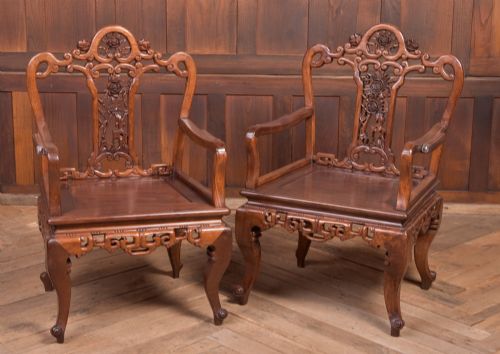

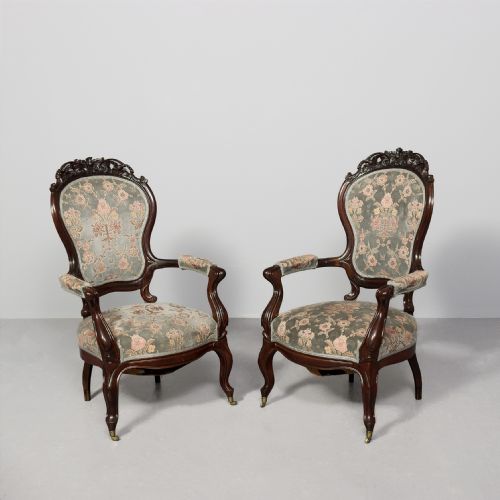

Rosewood Accent Chair
A rosewood accent chair brings rich grain and distinctive period character to a room, offering both comfortable seating and striking decorative presence.
What these pieces are
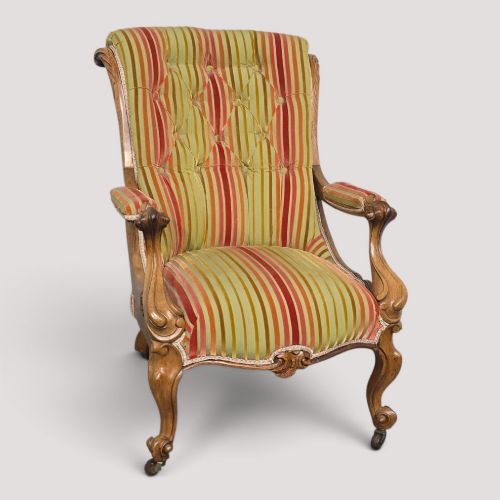
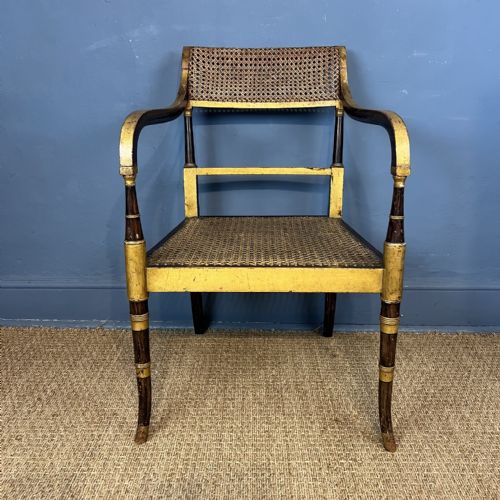
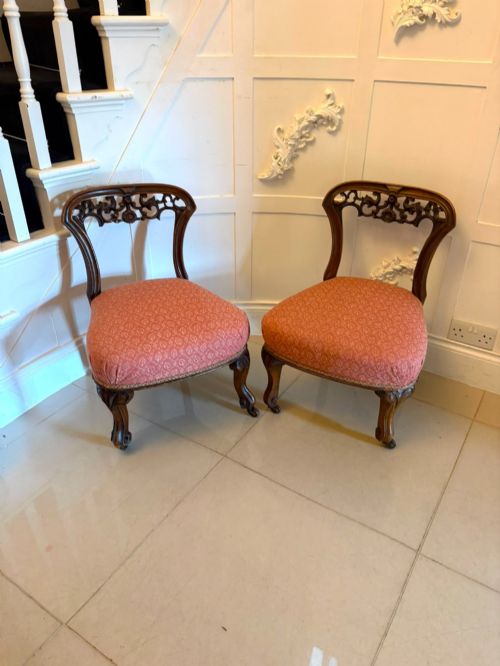
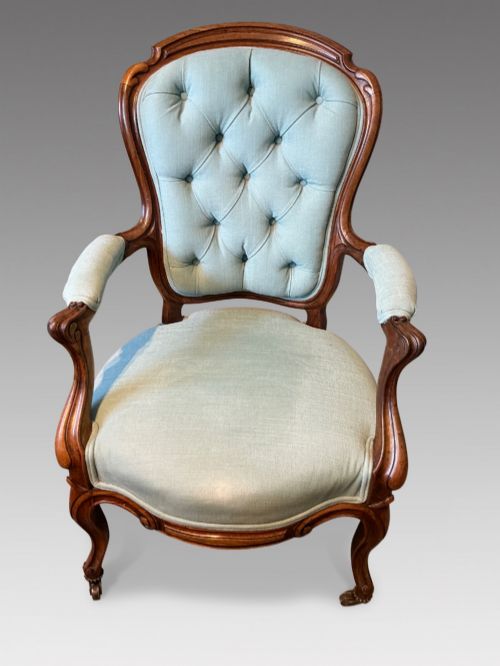
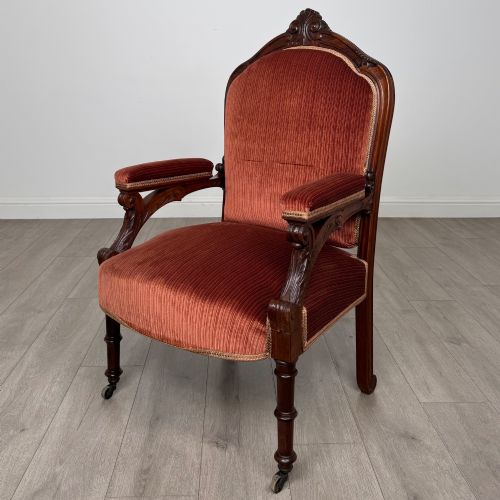
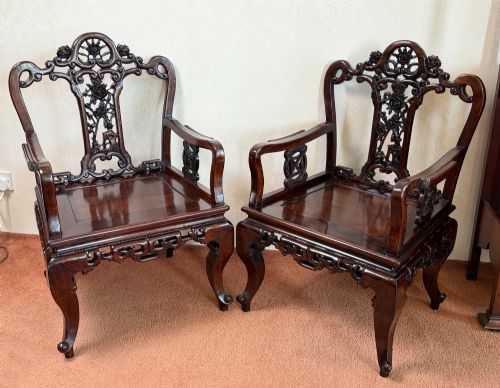
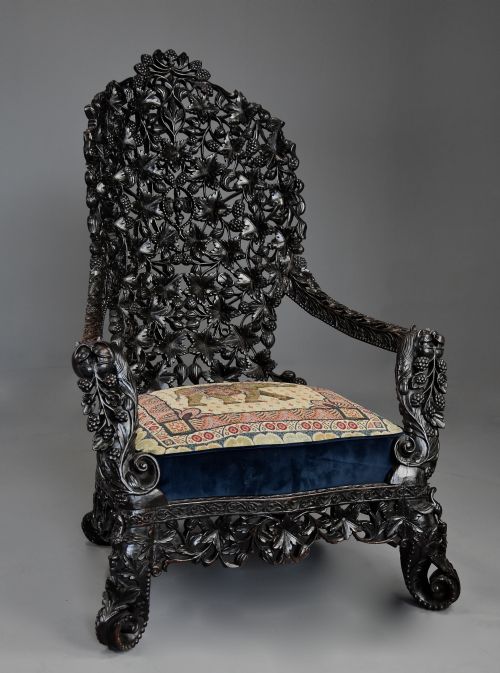
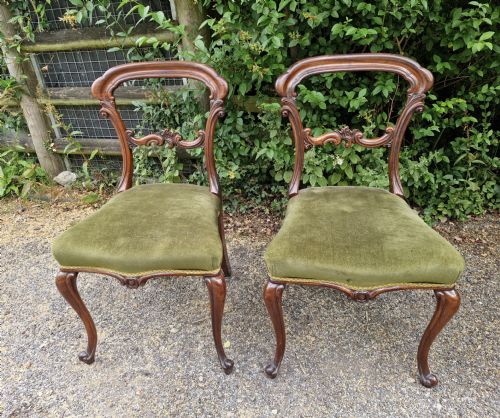
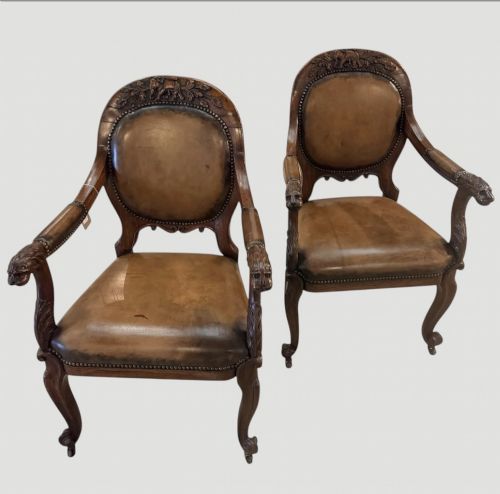
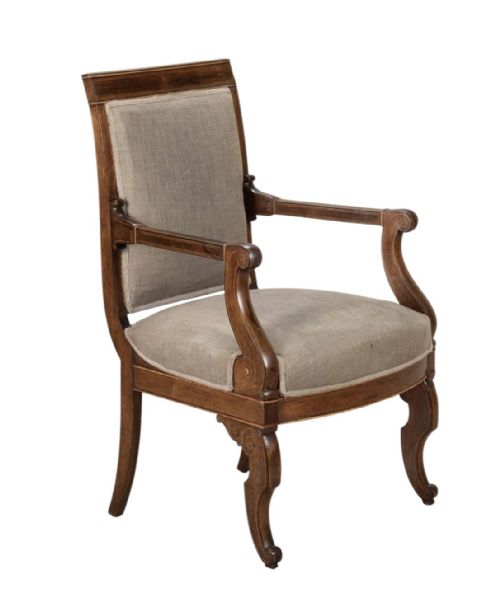
A rosewood accent chair is a seating piece designed to stand out in a room, drawing on Victorian, Regency, and Edwardian design traditions. These chairs appear in several distinct forms across the listings, including open armchairs, side chairs, corner bedroom chairs, and kidney back chairs.
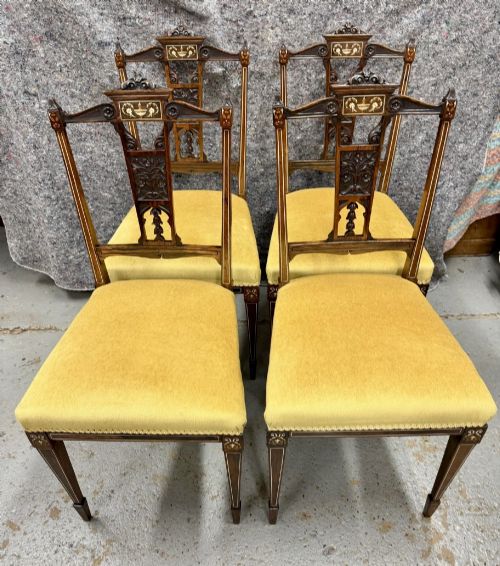
The most common examples on this page date from the nineteenth century, spanning early Victorian and later Victorian periods. Makers shaped these dense timbers into carved showwood frames, button-back upholstered seats, and marquetry inlaid designs.
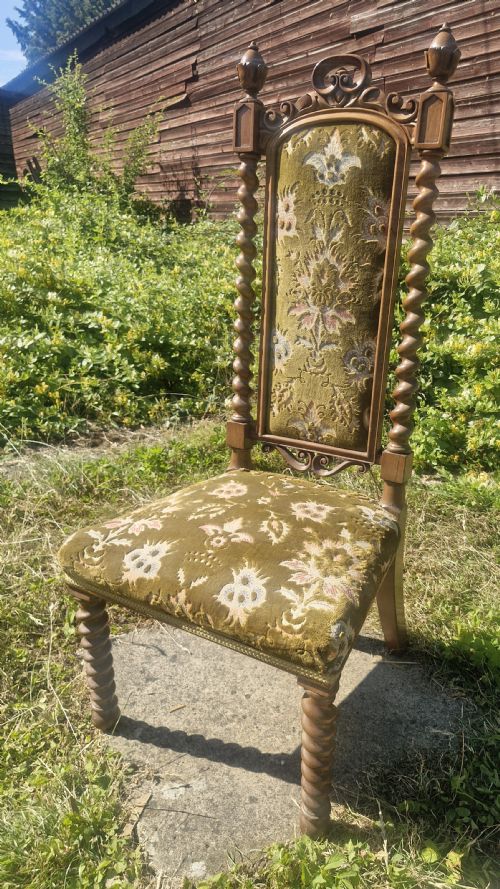
Buyers find pieces ranging from compact side chairs to substantial upholstered armchairs featuring barley twist supports. Each variation reflects the evolving domestic tastes of the eighteen hundreds and nineteen hundreds.
How they were made
Cabinet makers utilised dense rosewood for the exposed wooden frames, known as showwood, often shaping the timber with elaborate hand carvings. Structural joints relied on traditional carpentry techniques to support the weight of the chair while displaying the rich, dark grain of the wood.
Upholstery techniques varied from simple drop-in pads to complex button-back springing, secured with materials like hessian, calico, velvet, satin, and wool. Details such as brass fittings and intricate marquetry inlay completed the construction of these decorative seats.
Retail Price Guide 2026
Typical UK retail prices for rosewood accent chair, calculated from the Sellingantiques database of over a million retail prices indexed since 2003. This retail price guide relies exclusively on Sellingantiques data; no external sources or auction records are used, so the figures do not describe the wider market.
Listings feature rosewood, brass, velvet, fabric, satin, wool, Hessian, and calico across Victorian, Regency, and Edwardian periods.
What varies in quality
Quality in a rosewood accent chair rests primarily on the depth and crispness of the hand-carved details on the showwood frame. Superior pieces display fluid lines and precise execution in elements like barley twist turnings or marquetry inlay.
The selection of the rosewood timber itself dictates the visual impact, with deeply figured grain commanding greater attention. Furthermore, the integrity of the original construction and the harmony of the upholstery materials determine the overall success of the piece.
The Rosewood Accent Chair Glossary
- Showwood
- The exposed wooden framing of an upholstered chair that is deliberately left visible to display the grain and carving. This contrasts with fully upholstered pieces where the frame is hidden beneath fabric.
- Marquetry
- A decorative technique where thin pieces of contrasting wood veneer are fitted together to form geometric or floral patterns. On these chairs, inlay frequently enhances corner and back panels.
- Barley Twist
- A turning technique resembling the spiralling coils of barley sugar, popular in nineteenth-century furniture supports. Craftsmen carved or turned this dynamic motif into chair legs and structural stretchers.
- Kidney Back
- A chair back shaped with a distinct curved indentation resembling a kidney bean. This ergonomic form offered comfortable support while adding a graceful silhouette to drawing room seating.
Frequently Asked Questions
What periods do these chairs come from?
The pieces span the nineteenth and early twentieth centuries, encompassing Regency, Victorian, and Edwardian eras. Most examples date from the Victorian period.
Craftsmen working during these times adapted traditional forms into distinct stylistic variations like early Victorian and Edwardian.
How were rosewood accent chairs used?
These seats served as decorative and functional additions to principal rooms, drawing rooms, and bedrooms. Side chairs and corner chairs provided flexible seating options.
Armchairs offered more permanent comfort for reading or conversation while displaying the status afforded by exotic timber.
What fabrics cover these chairs?
Upholstery materials seen across the pieces include velvet, satin, wool, Hessian, and calico. Many rely on button-back tension to shape the fabric.
These textiles often represent later re-upholstery work rather than original nineteenth-century fabric.
How do I identify a corner chair?
A corner chair is built on a diagonal footprint designed to fit neatly into the corner of a room. These pieces typically feature a curved backrest supported by multiple turned or carved pillars.
Examples on this page include both simple wooden frames and marquetry inlaid versions.