


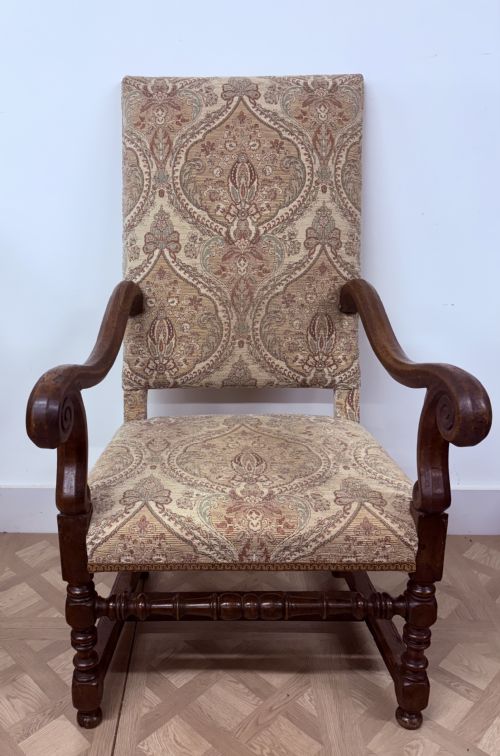
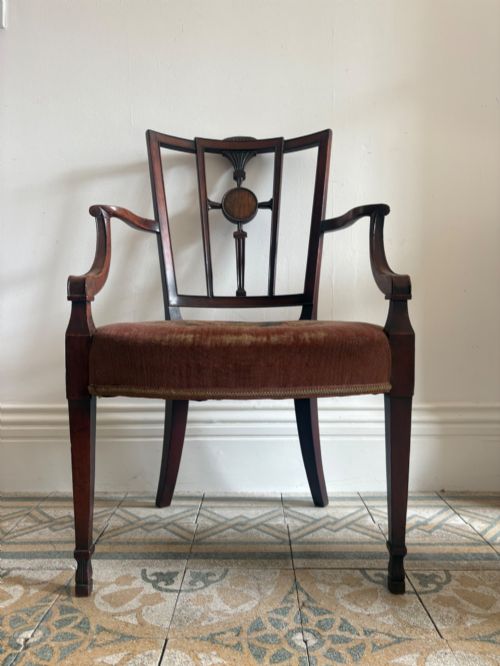
Brown Upholstered Armchair
A brown upholstered armchair brings warmth and comfort to a room, offering enduring seating shaped by centuries of cabinet-making tradition.
What these armchairs are
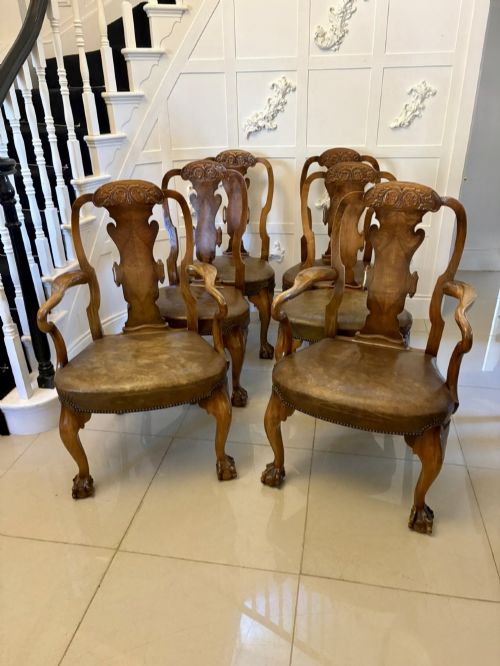
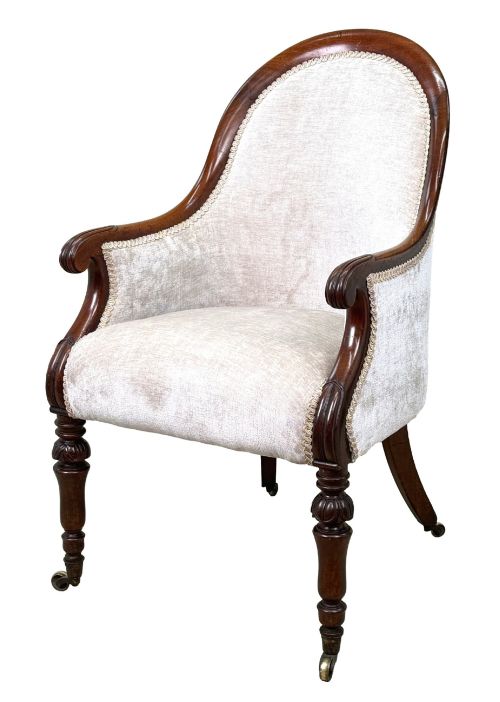
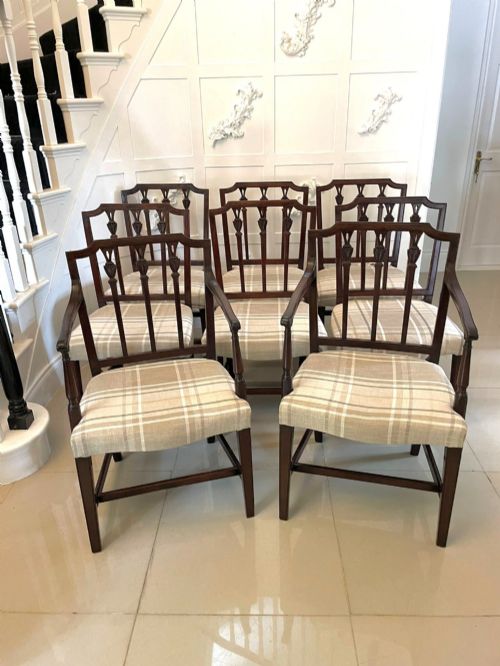
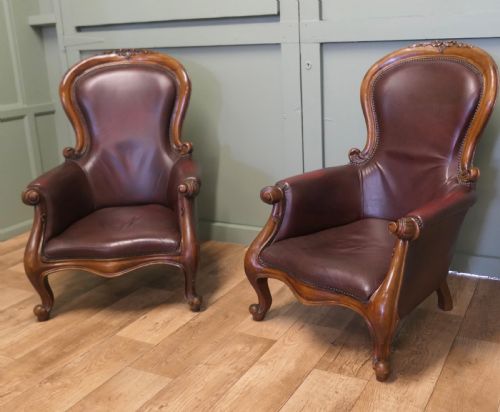
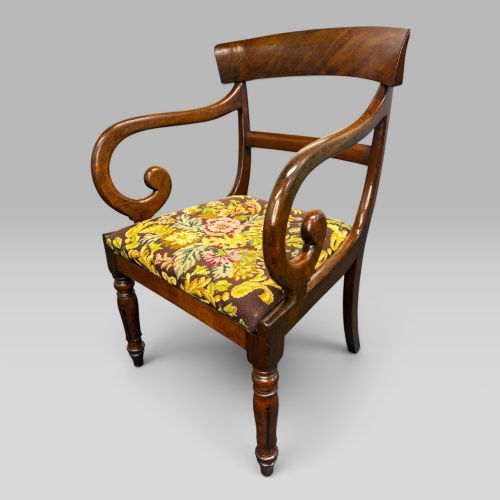
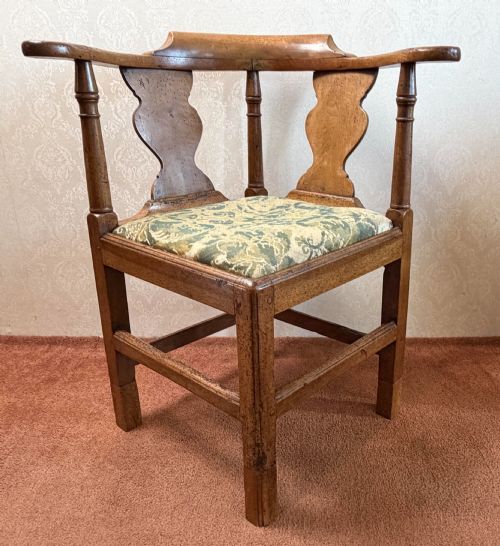
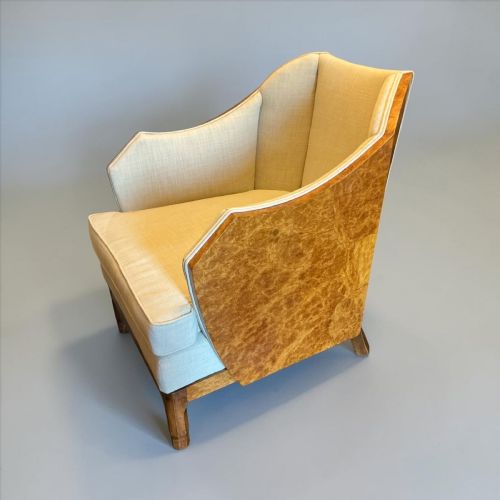
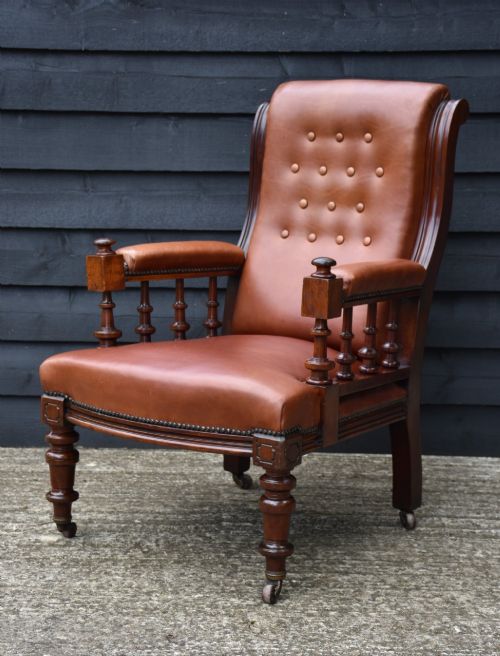
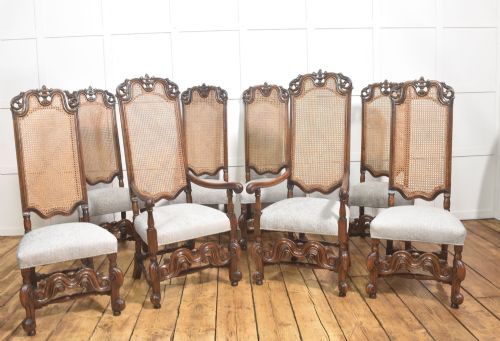
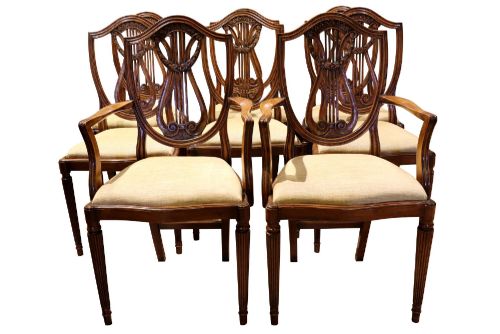
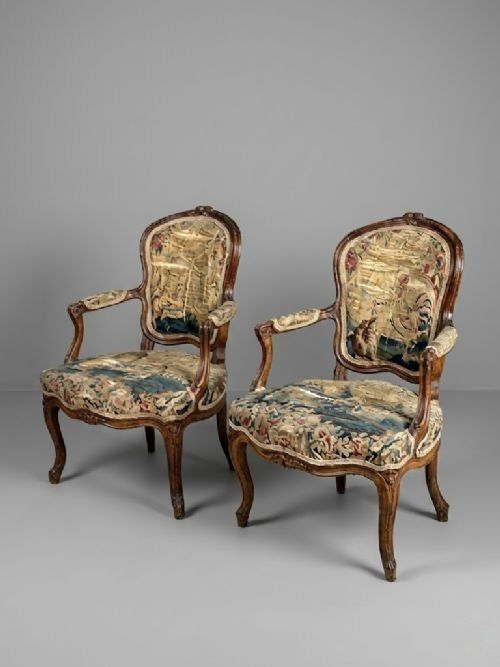
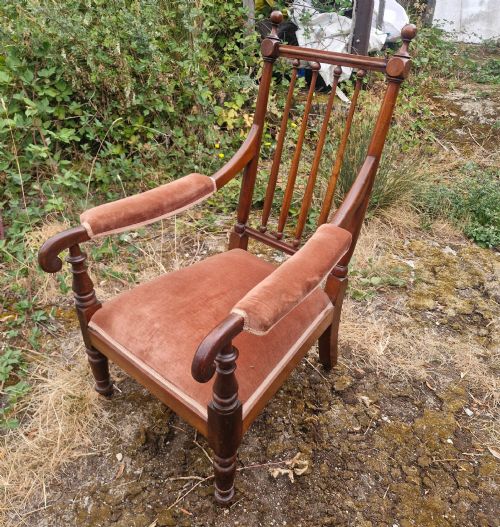
A brown upholstered armchair spans several distinct periods, ranging from eighteenth-century George II and George III designs to Regency, Victorian, Edwardian, and later twentieth-century iterations. These seats appear in various forms including open armchairs, carver chairs, library chairs, and salon or bedroom chairs.
The materials recorded across these pieces combine robust hardwoods with tactile coverings, establishing a tradition of functional seating designed for daily use and formal rooms alike. Makers utilised timbers such as mahogany, rosewood, and boxwood alongside brass details and diverse upholstery fabrics.
Buyers encounter different regional and stylistic expressions, from Scottish country workshop output to refined London furniture. Each piece reflects the aesthetic priorities of its era, whether that involves the restrained elegance of the Georgian period or the decorative inlay of Edwardian work.
How they were made
Construction relies on solid hardwoods like mahogany and rosewood, frequently shaped into frames that support upholstery and wool fabrics. Workshops employed traditional joinery techniques to ensure structural stability for armchairs and carver chairs.
Surface detailing incorporates specialised elements such as boxwood stringing, brass fittings, and rosewood roundels. Carved backs and inlaid patterns demonstrate the meticulous hand-work applied by cabinet-makers during the eighteenth, nineteenth, and early twentieth centuries.
Retail Price Guide 2026
Typical UK retail prices for brown upholstered armchair, calculated from the Sellingantiques database of over a million retail prices indexed since 2003. This retail price guide relies exclusively on Sellingantiques data; no external sources or auction records are used, so the figures do not describe the wider market.
A solitary rosewood roundel can completely change the personality of a mahogany frame.
What varies in quality
The standard of a brown upholstered armchair depends upon the crispness of its woodwork and the integrity of its frame construction. Superior examples exhibit finely executed carved backs, precise inlay, and well-chosen timber grains that speak to the maker's skill.
Makers' marks and stamps elevate certain pieces by providing documented provenance, as seen in stamped eighteenth-century workshop output. The harmony between the timber frame and the chosen fabric upholstery also dictates the overall visual success of the chair.
Gillows·Wheelers of Arncroach
The Brown Upholstered Armchair Glossary
- Carver chair
- A sturdy armchair, often designed to sit at the head of a dining table or serve as a desk chair. These seats typically feature substantial wooden arms and supportive frames.
- Gainsborough chair
- A type of upholstered armchair dating from the mid-eighteenth century, featuring open padded arms and a wide seat. They were traditionally used in libraries and studies.
- Inlay
- A decorative technique where contrasting materials like boxwood or rosewood are inserted into recesses within the primary wood surface. This creates patterns and highlights the form of the furniture.
- Roundel
- A circular decorative motif carved or applied onto furniture surfaces. In these pieces, rosewood roundels add subtle contrast to mahogany frames.
Frequently Asked Questions
What periods do these armchairs come from?
The pieces span multiple eras, including the eighteenth century, George III, Regency, Victorian, Edwardian, and early twentieth-century periods. Each era brings distinct proportions and stylistic details to the design.
Cabinet-makers across these centuries adapted forms to suit changing domestic fashions, resulting in a diverse selection of seating styles.
How do I identify a library chair?
Library chairs generally feature upholstered seats and armrests designed for extended comfort while reading or working at a desk. They often utilise sturdy mahogany frames and generous proportions.
These chairs were built to withstand daily use in private studies and public reading spaces alike.
What woods were commonly used?
Makers relied heavily on dense hardwoods such as mahogany and rosewood for structural frames and visible surfaces. Boxwood was also utilised for fine decorative inlay.
These materials provided the necessary strength for supporting upholstered seating while offering rich natural colour tones.
Are Edwardian chairs different from earlier styles?
Edwardian examples frequently incorporate delicate decorative elements like inlaid rosewood and lighter frames intended for bedrooms and salons. Earlier Georgian and Regency pieces tend to prioritise heavier timber construction and carved structural details.
Comparing the woodwork and joinery helps reveal the shift in taste between the eighteenth and early twentieth centuries.