
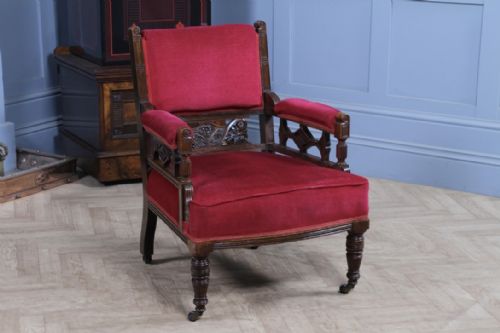
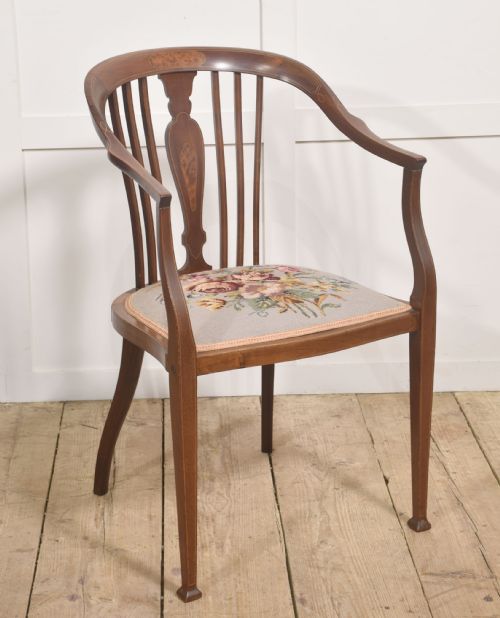

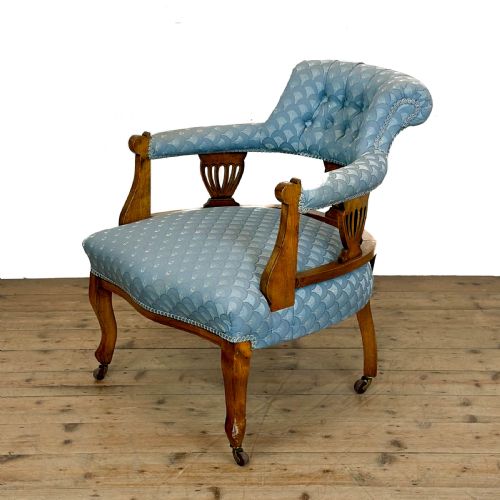


Edwardian Occasional Chair
An Edwardian occasional chair is a light, decorative seat designed to move easily around a room.
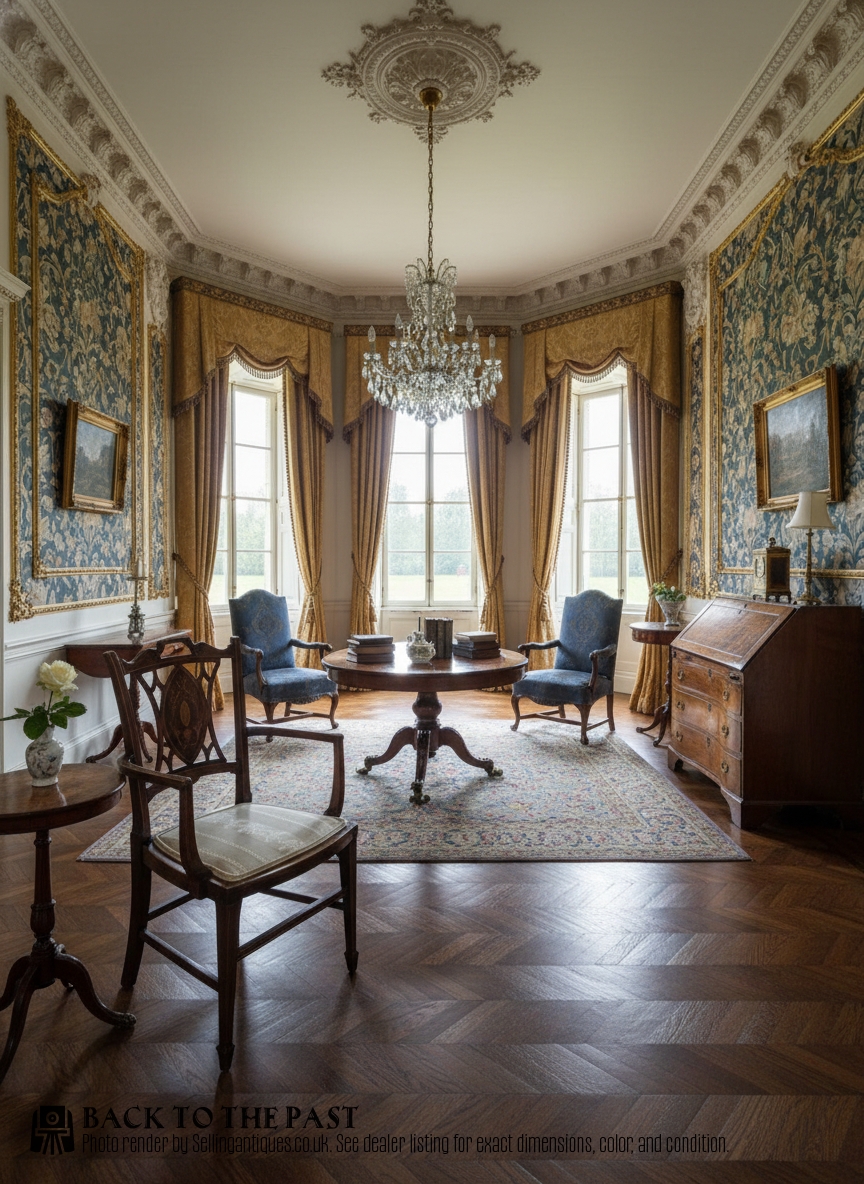
Edwardian Occasional Chair
The search for an edwardian occasional chair brings up light, versatile seating created for the drawing room, bedroom or salon around the turn of the twentieth century. These pieces were made to be moved about the house as needed, serving as extra seats when guests gathered or as decorative accents in corners.
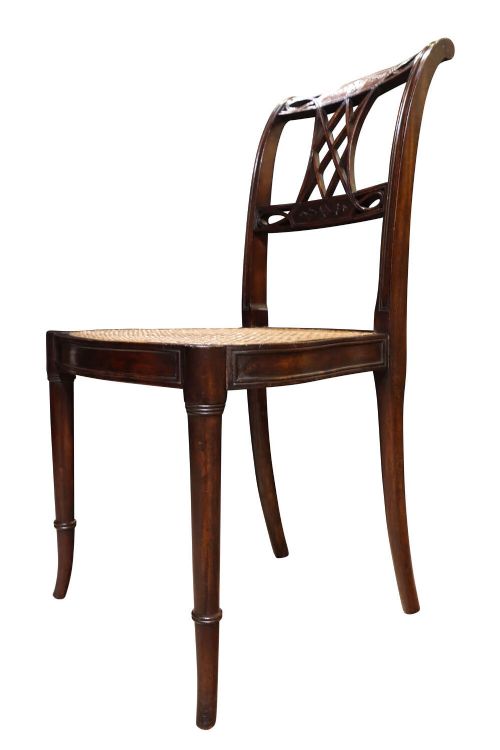
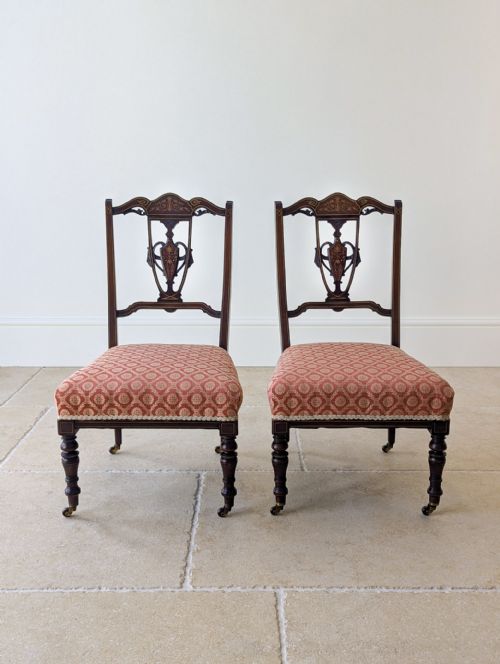
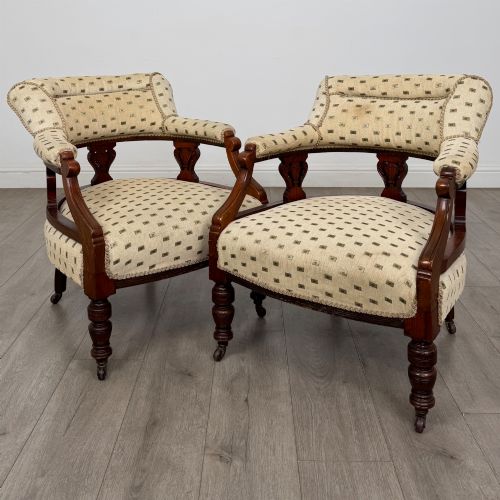
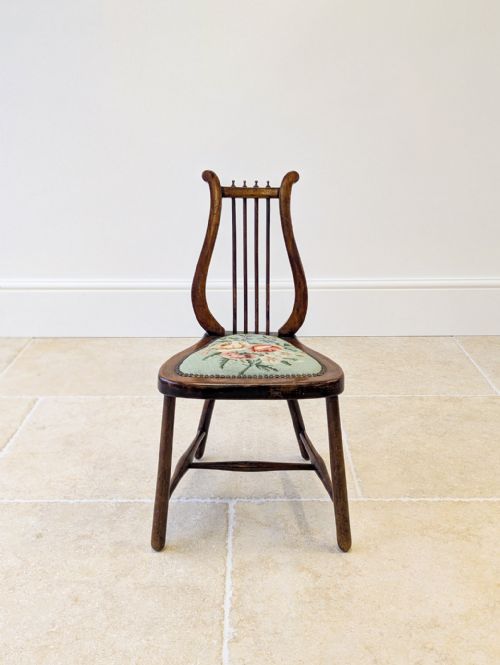
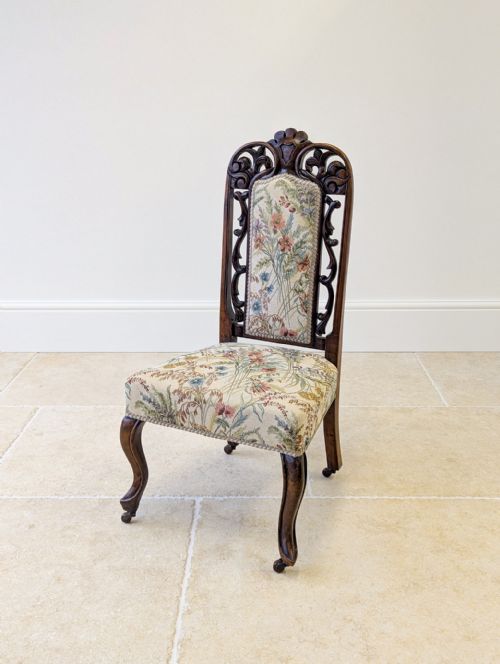
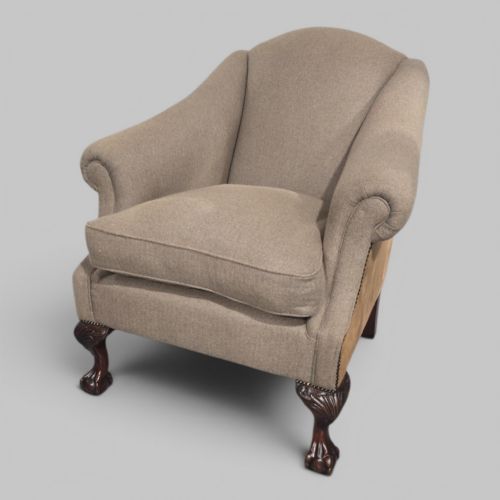
You will most frequently meet mahogany or beech frames on this page, often finished with satinwood inlay, cane seats or period upholstery like velvet, fabric and linen. The designs range from simple spindleback and lyre-back side chairs to inlaid armchairs, corner chairs and tub chairs originating from the Edwardian era and adjacent late Victorian periods.
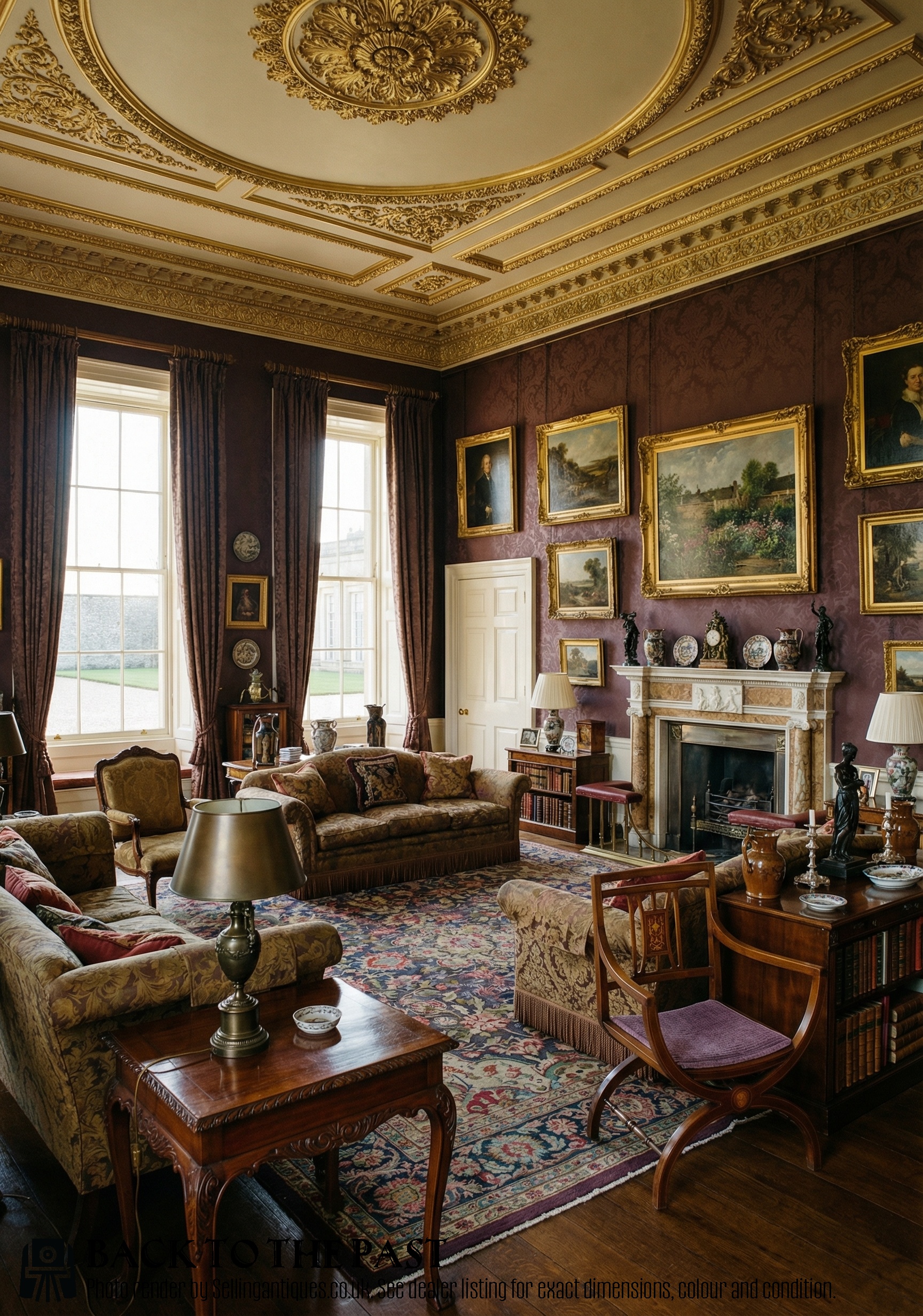
Materials and Construction
Timbers such as mahogany, walnut, satinwood and beech form the primary structures, chosen for strength and the ability to take fine carvings or decorative string inlay. Cabinetmakers combined traditional joinery with contrasting veneers to achieve the characteristic lighter aesthetic of the period.
Upholstery techniques varied from cane and rush seats to sprung foundations covered in velvet, tapestry or linen. Brass details and marquetry inlays were frequently applied to enhance the visual appeal of parlour and salon chairs.
Edwardian Occasional Chair Retail Price Guide 2026
Typical asking prices for edwardian occasional chair among the pieces listed under this phrase on Sellingantiques today, from the lower quarter to the upper quarter. They describe what is for sale here now, not the wider market.
Look out for gossip chairs designed for intimate hallway chats.
Judging Quality
Quality rests in the crispness of the timber carving, the precision of the satinwood stringing or marquetry inlay, and the integrity of the frame construction. Superior examples show thoughtful selection of grain and careful hand-finishing rather than mass-produced uniformity.
The distinction between standard utility seating and finer parlour pieces lies in the subtlety of the design, such as shaped elbow supports, pierced splats, or retained original upholstery and cane work that demonstrates skilled craftsmanship.

The Edwardian Occasional Chair Glossary
- Occasional chair
- A light, movable chair intended for use in various rooms rather than a fixed position at a dining table. They were produced in numerous styles to suit bedrooms and reception rooms.
- Sheraton Revival
- A late nineteenth and early twentieth century style drawing inspiration from the lighter neoclassical designs of Thomas Sheraton. These pieces commonly feature satinwood inlay and tapered legs.
- Bergère
- An enclosed upholstered armchair with cane or wicker work sides and back panels. The wooden frame is usually exposed and polished.
- Marquetry
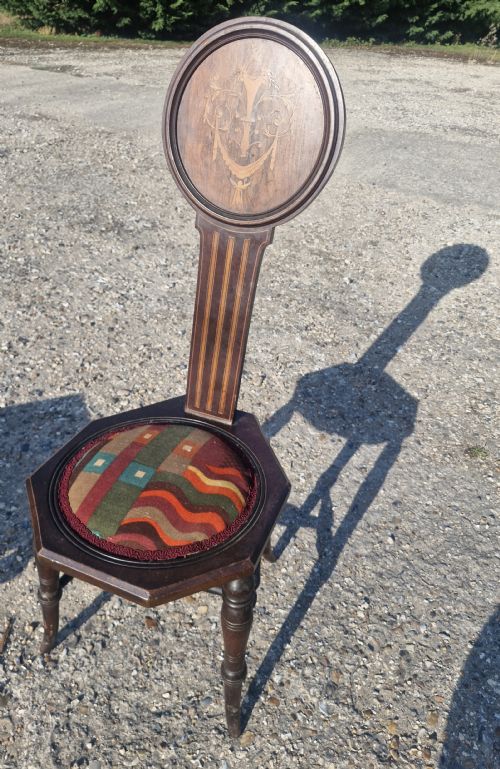
- Decorative woodwork where pieces of contrasting veneer are fitted into a wooden panel to form intricate patterns. It appears frequently on tabletops and chair backs of this era.
- Spindleback
- A chair back constructed with a series of slender turned wooden rods or spindles. This form offers a lighter visual profile than solid wood panels.
Edwardian Occasional Chair: Frequently Asked Questions
What is an edwardian occasional chair used for?
These seats were originally designed to be moved easily around a drawing room, bedroom or parlour to provide extra seating when visitors called. Today, they serve a similar purpose while adding period character to empty corners or dressing tables.
Because they are lighter than heavy dining or library chairs, they can be repositioned effortlessly to suit modern living spaces and smaller rooms.
How do I identify an edwardian occasional chair?
Look for the lighter construction typical of the period, often featuring mahogany or satinwood with delicate string inlay, marquetry, or painted details. The legs are frequently tapered or turned, and the forms include side chairs, armchairs, and corner chairs.
Dates generally centre around the turn of the twentieth century, bridging late Victorian aesthetics with the cleaner lines of the early nineteen hundreds.
Are these chairs comfortable for daily sitting?
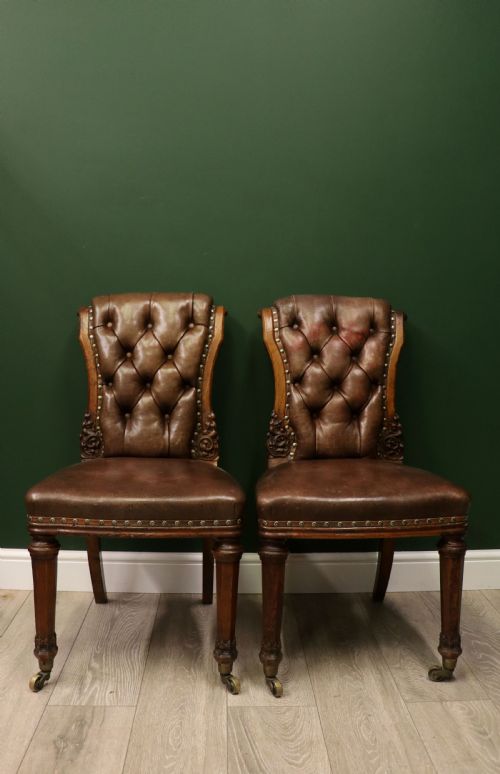
Most of these pieces were intended for light use or as decorative room accents rather than long periods of lounging. Upholstered versions with button backs or sprung seats offer more support, while cane and wooden seats are firmer.
Adding a cushion can improve comfort if you plan to use one at a desk or as an everyday reading seat.
Can I reupholster an antique occasional chair?
Many examples on the market are suited for recovering, allowing you to match your interior colour scheme with modern or period-appropriate fabrics like velvet and linen. Traditional methods use webbing, hessian, and hair stuffing beneath the top cover.
Checking the stability of the wooden frame before undertaking upholstery work ensures the piece will withstand regular use.