


Traditional Rocking Chair
A traditional rocking chair brings centuries of timber craftsmanship and relaxed domestic motion directly into your sitting room.
Traditional Rocking Chair
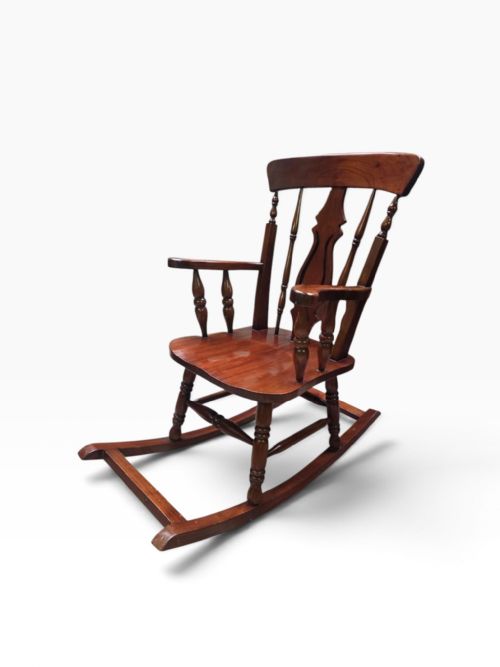
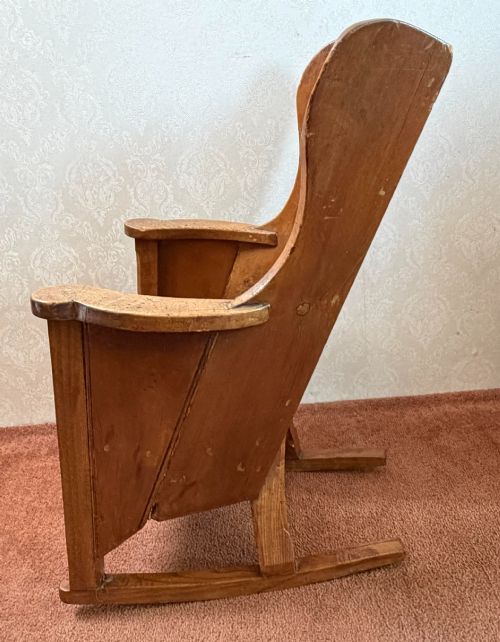
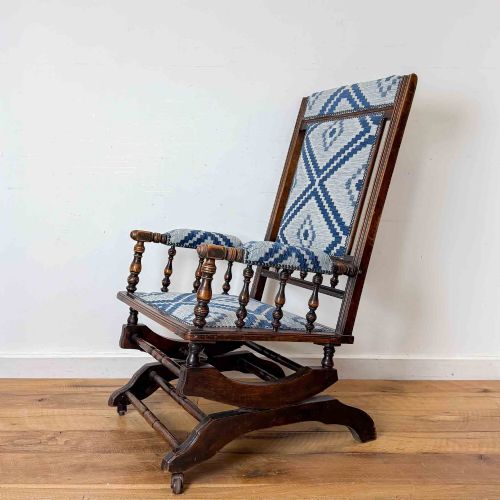
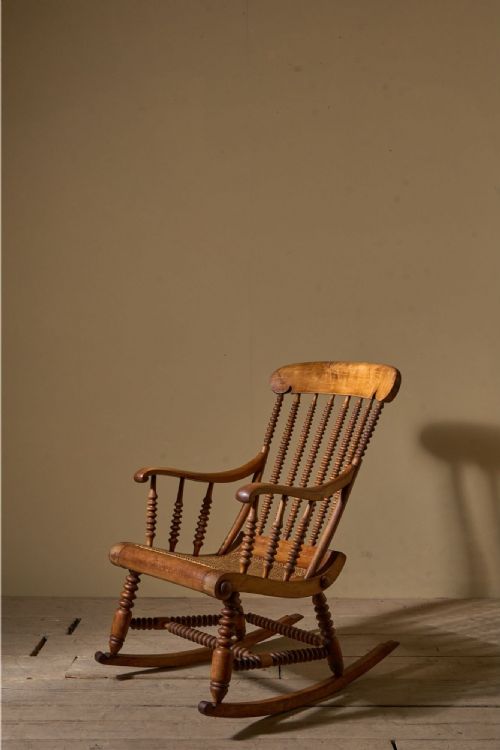
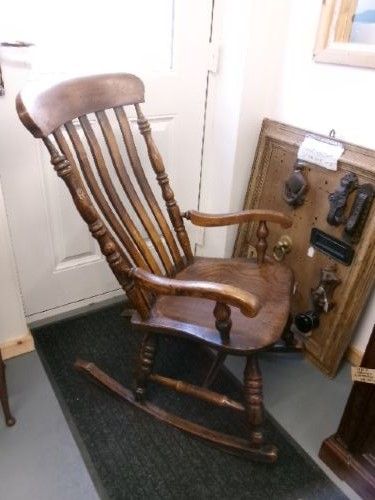
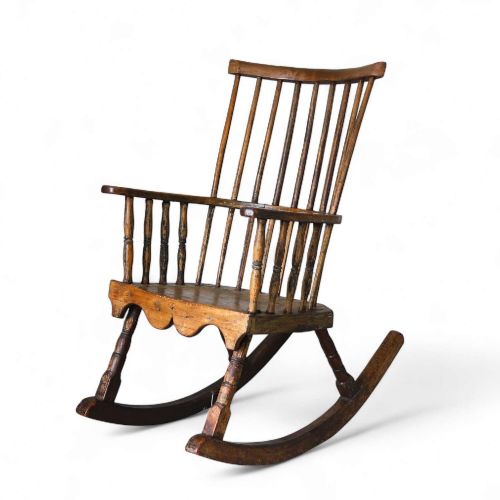
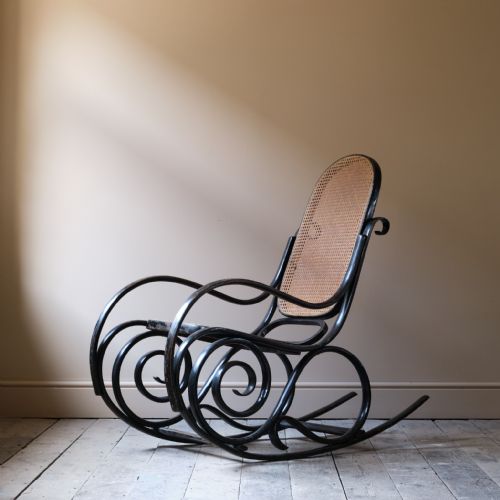
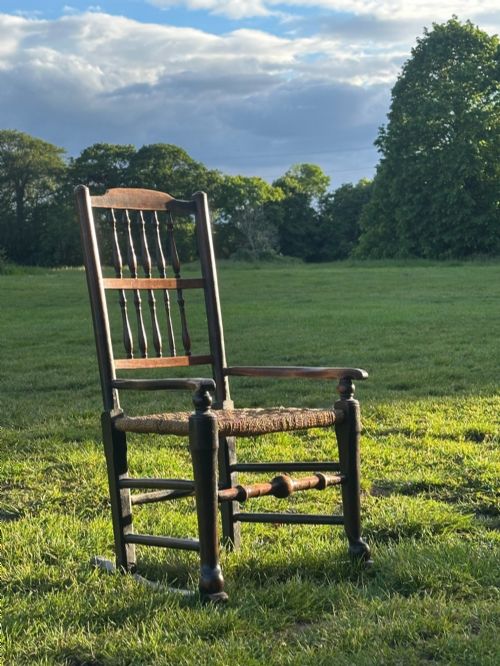
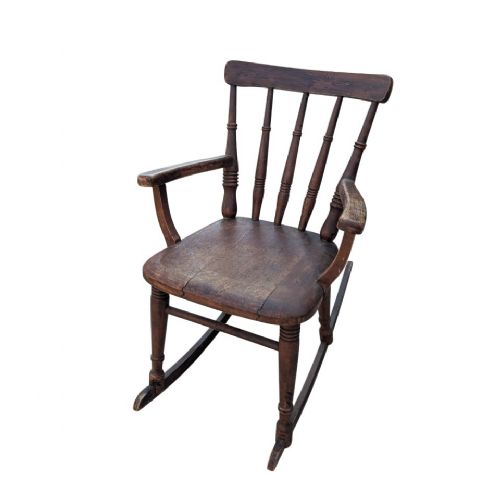
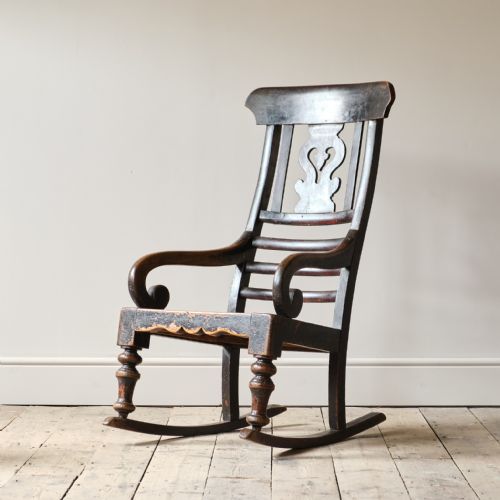
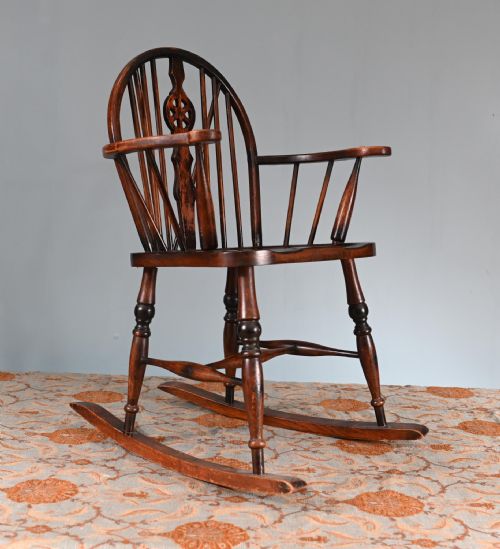
A traditional rocking chair takes many structural shapes, from regional Windsor armchairs and ladder-backs to low fireside seats and bentwood frames. You will frequently encounter nineteenth-century examples alongside earlier eighteenth-century vernacular forms.
Makers shaped these timber seats for everyday domestic use, producing both full-sized armchairs and smaller child's variants. Regional styles span English country workshops, Scottish vernacular designs, and imported American or Scandinavian pieces.
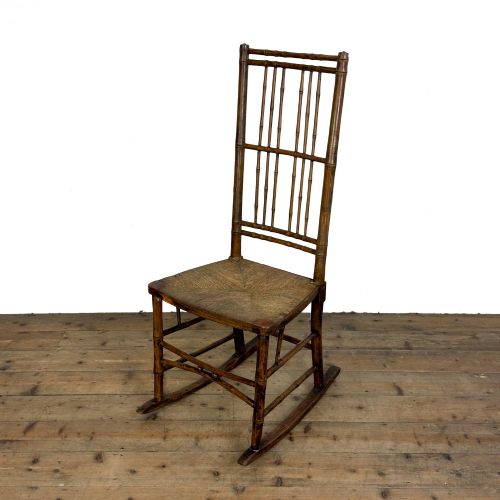
The materials reflect local woodland resources, pairing solid hardwood frames with woven rush, cane, or leather seating surfaces. Many retain traces of original paint or rich patinated timber surfaces accrued over generations of use.
Materials and Construction
Traditional rocking chairs rely heavily on native hardwoods like elm, ash, beech, oak, and mahogany, often combined in a single piece such as an ash frame with an elm seat. Timber selection governed both the structural strength of the spindle or comb-back and the comfort of the saddle-shaped seat.
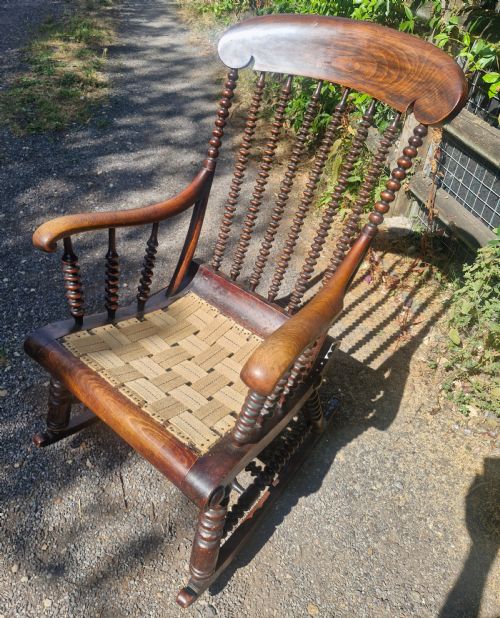
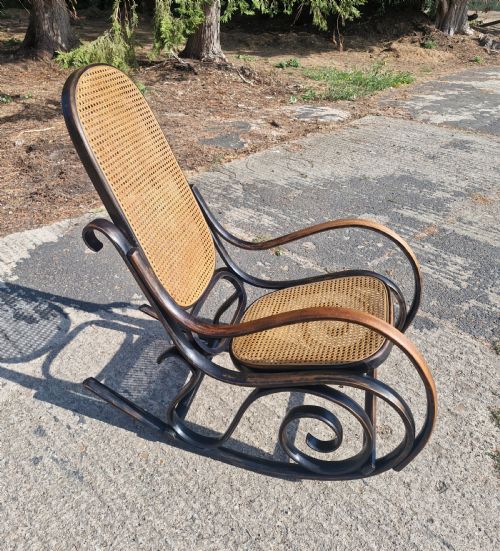
Construction techniques include traditional Windsor socket-and-tenon joints, steam-bent components found in bentwood and American-style chairs, and intricate bobbin-turned or faux bamboo framing. Master carpenters utilised rush and cane for lightweight, flexible seating grids.
Surface finishes range from transparent wax polishes that highlight the natural grain of fruitwood and mahogany to layers of original paint applied in regional workshops.
Traditional Rocking Chair Retail Price Guide 2026
Typical asking prices for traditional rocking chair among the pieces listed under this phrase on Sellingantiques today, from the lower quarter to the upper quarter. They describe what is for sale here now, not the wider market.
Assessing Craftsmanship and Proportion
Quality rests in the harmony of proportion between the upper spindle back and the sweeping curve of the rockers below. Superior examples display balanced joinery that maintains structural integrity without appearing heavy or clumsy.
The integrity of the timber and the retention of original surface treatments dictate the standing of a piece. Chairs that preserve their initial rush seating, cane panels, or historical paint layers hold greater material authenticity than heavily restored equivalents.
Thonet
The Traditional Rocking Chair Glossary
- Windsor chair
- A timber armchair characterised by a heavy wooden seat into which the legs and back spindles are directly joined. These chairs often feature distinctive comb-backs or wheel-shaped backsplats.
- Vernacular
- Objects designed by local craftsmen using regional traditions and native materials rather than adhering to formal metropolitan patterns. This approach produces honest, unpretentious furniture suited to everyday country life.
- Bentwood
- Wood softened through the application of steam and moisture, allowing artisans to bend solid lengths into sweeping curves. This technique defines lightweight nineteenth-century seating designs.
- Ladder-back
- A chair back constructed from horizontal wooden slats or rails positioned between two vertical uprights. This traditional format often uses rush or woven cord for the seat base.
- Bobbin-turned
- Timber turned on a lathe to create a series of rounded, spool-like swellings resembling bobbins. This decorative turning style is common on nineteenth-century regional frames.
Traditional Rocking Chair: Frequently Asked Questions
How do I identify an older rocking chair?
Look closely at the construction methods, tool marks, and timber shrinkage patterns visible beneath the seat and around the joints. Hand-turned spindles and pegged tenons generally point towards nineteenth-century or earlier craftsmanship.
Examine the wear on the base of the rockers, as centuries of motion leave distinct abrasion patterns. Original surface finishes, such as aged wax or historic paint, also help confirm the age of the piece.
Were these chairs used outdoors?
Traditional rocking chairs were built primarily as interior fireside or parlour seating designed for domestic comfort. Their native timbers and organic seat materials like rush or cane would suffer damage if exposed to damp outdoor conditions.
Moving them onto covered porches occurred in certain American and colonial traditions, but British vernacular chairs remained firmly inside the home. Keep them in dry, climate-controlled rooms to preserve the wood and woven components.
Can I use a antique rocker daily?
Most sturdy nineteenth-century and eighteenth-century rocking chairs remain fully capable of supporting regular sitting. However, you should check the stability of the joints and the condition of the rockers before placing one into heavy daily rotation.
Delicate child's chairs, fragile cane seats, or pieces with brittle dried timber are better suited for decorative display. Gentle use helps preserve fragile historical glue lines and patinated surfaces.
What woods were commonly used?
Cabinetmakers and country carpenters selected native hardwoods that offered a balance of flexibility and strength. Elm, ash, beech, and oak appear frequently across English and European vernacular pieces.
More formal urban chairs utilised imported mahogany or fruitwood to achieve a refined finish. Combining two or more timber species within a single chair frame was standard practice.