


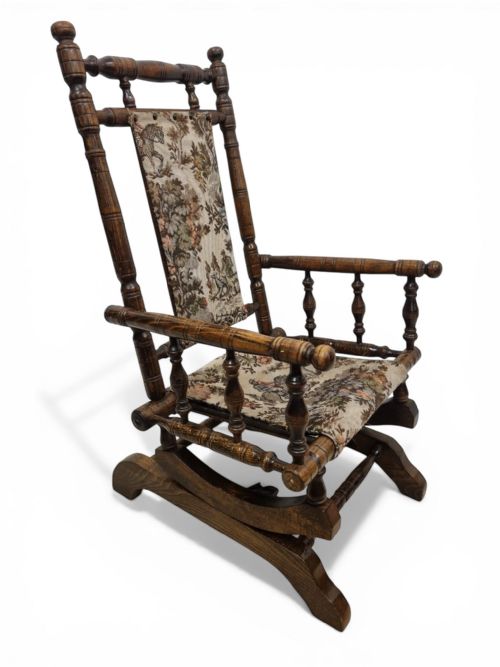

Victorian Rocking Chair
A victorian rocking chair brings domestic comfort and vernacular craft into a room, offering the gentle motion shaped by nineteenth-century makers.
Victorian Rocking Chair
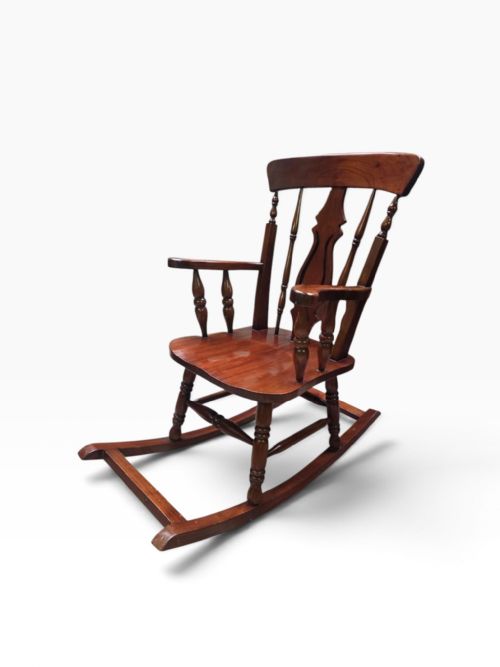
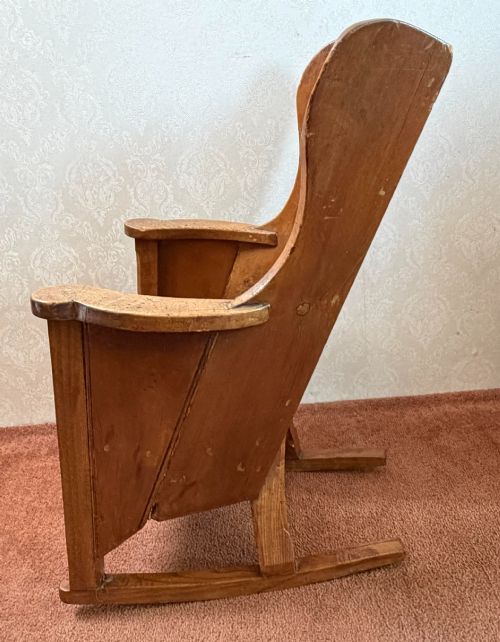
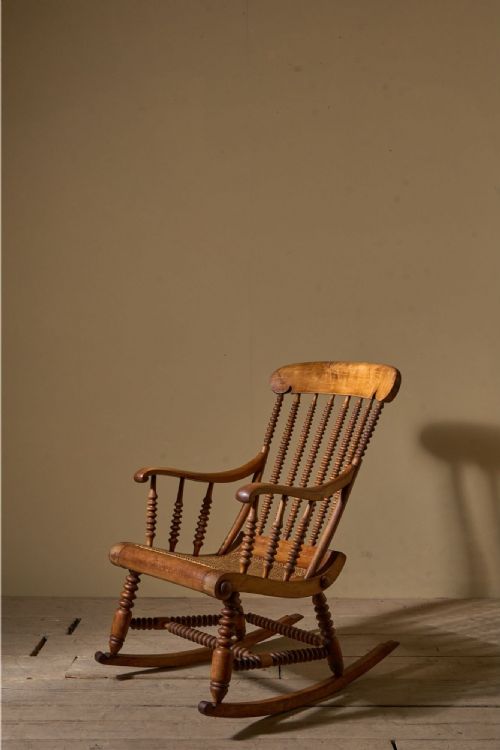
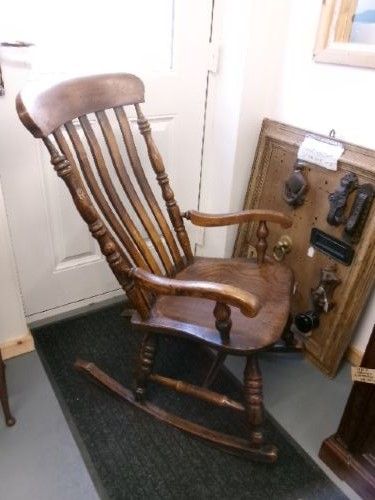
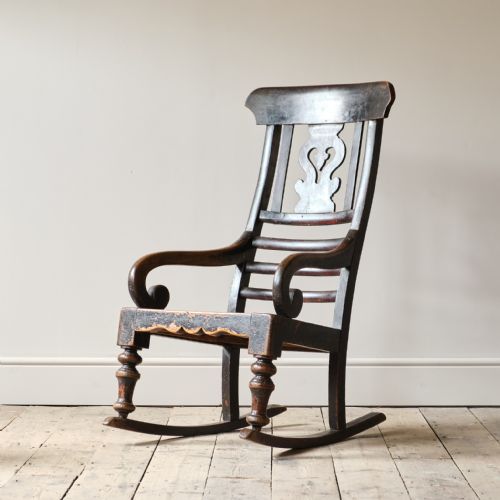
A victorian rocking chair spans robust country vernacular forms and polished parlour seating, reflecting the diverse domestic spaces of the nineteenth century. Buyers encounter sturdy elm and ash Windsor models alongside mahogany armchairs and specialist nursing or children's chairs.
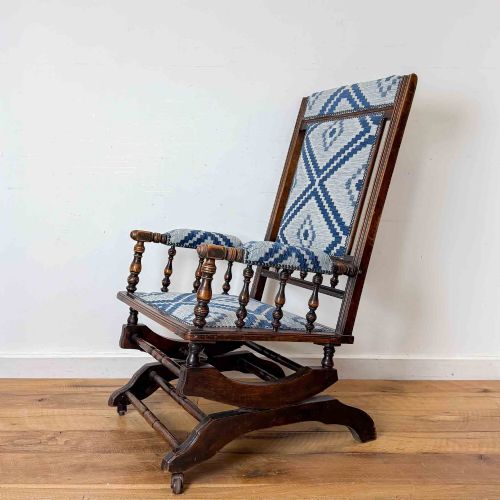
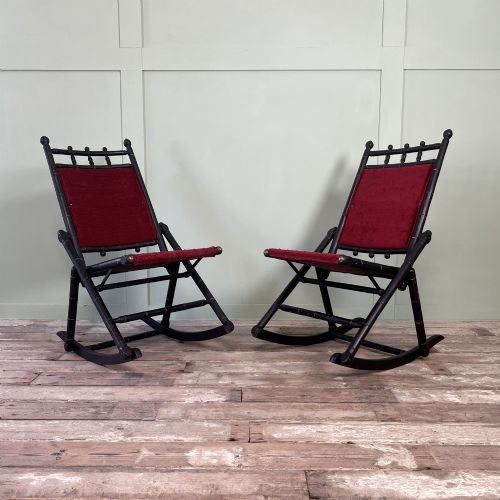
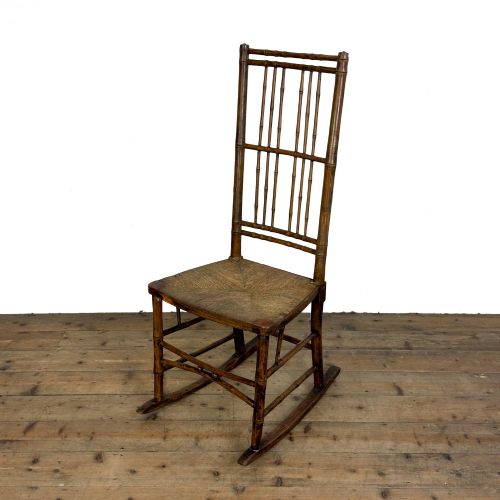
The selection includes rustic country seating with spindle or ladder backs, alongside formal styles influenced by the Aesthetic Movement or imported American designs. Smaller child-sized examples and folding faux bamboo frames also appear regularly within these periods.
How They Were Made
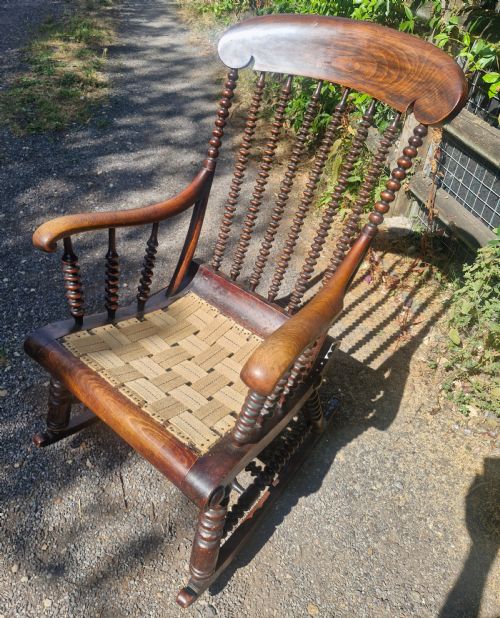
Frames rely on native hardwoods such as elm, beech, and ash for structural strength, often paired with mahogany, walnut, or fruitwood for polished show-woods. Turned elements like bobbin framing or spindle backs utilise traditional joinery to withstand the repetitive motion of the rockers.
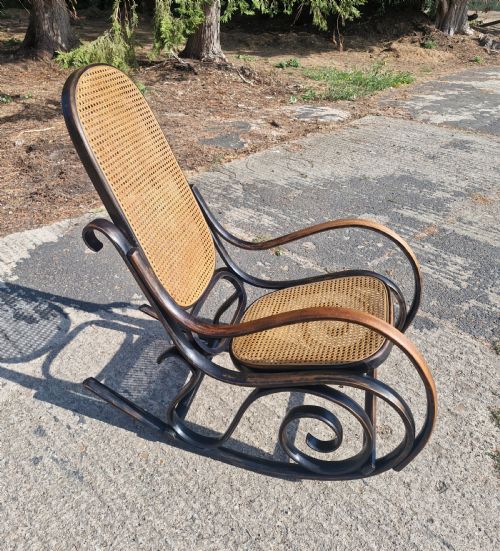
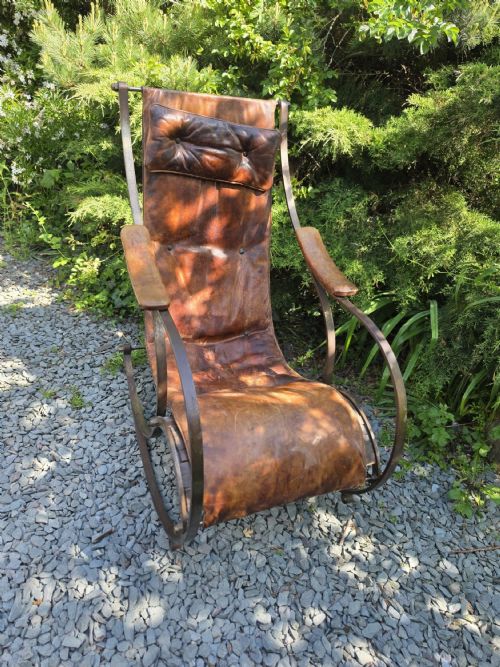
Seating surfaces vary from solid timber saddles and woven cane to upholstered panels featuring leather, tapestry, or brass detailing. Bentwood techniques also emerge in lighter frames, employing steamed wood formed into continuous curves.
Victorian Rocking Chair Retail Price Guide 2026
Typical asking prices for victorian rocking chair among the pieces listed under this phrase on Sellingantiques today, from the lower quarter to the upper quarter. They describe what is for sale here now, not the wider market.
The selection includes miniature children's rocking chairs alongside full-sized armchairs and folding variations.
What Varies in Quality
Quality rests upon the integrity of the timber selection and the precision of the turning and joinery that unites the frame. Superior examples display harmonious proportions between the upper seat and the curved rockers, ensuring balanced movement without listing.
The refinement of carved details, the retention of original upholstery materials like leather or cane, and the depth of the timber grain distinguish standard workshop output from exceptional vernacular or branded pieces.
R W Wingfield·Peter Cooper·John Shadford·Thonet
The Victorian Rocking Chair Glossary
- Windsor
- A traditional wooden chair style featuring a saddle-shaped seat into which the legs and back spindles are directly wedged.
- Bobbin turned
- Furniture legs and stretchers shaped on a lathe to resemble a series of wooden reels or bobbins joined end to end.
- Bentwood
- Timber heated with steam and bent into curved structural forms, commonly utilised in lighter nineteenth-century seating.
- Lath back
- A chair back constructed from horizontal wooden slats rather than vertical spindles.
- Vernacular
- Objects built by regional craftsmen using local materials to serve practical domestic functions rather than following high-style court designs.
Victorian Rocking Chair: Frequently Asked Questions
What is a nursing rocking chair?
A nursing rocking chair typically possesses a lower seat height and an absence of arms to accommodate the voluminous garments worn during child-rearing in the nineteenth century. These chairs allowed mothers to tend to infants with unobstructed movement.
They frequently appear in spindle-back or upholstered configurations across the Victorian period.
How can I tell a bentwood rocker from a turned wood rocker?
Bentwood rockers utilise continuous curved frames formed by steaming timber until pliable, resulting in smooth, sweeping lines without traditional joined corners. Turned wood rockers rely on carved structural components assembled from separate spindles and stretchers.
Bentwood examples offer a lighter silhouette associated with late nineteenth-century innovation.
Were rocking chairs used in formal rooms?
Rocking chairs served both utilitarian farmhouse kitchens and formal domestic parlours, depending on their timber and upholstery. Mahogany and walnut models featuring leather or tapestry adorned sitting rooms alongside standard armchairs.
Simpler ladder-back and rush or cane seated versions remained common in less formal settings.