




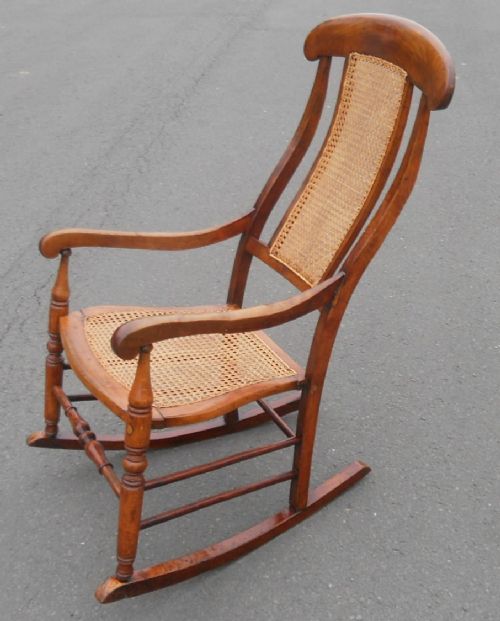

High Back Rocking Chair
A high back rocking chair offers deep lumbar support and gentle motion, making it a comfortable fireside seat.
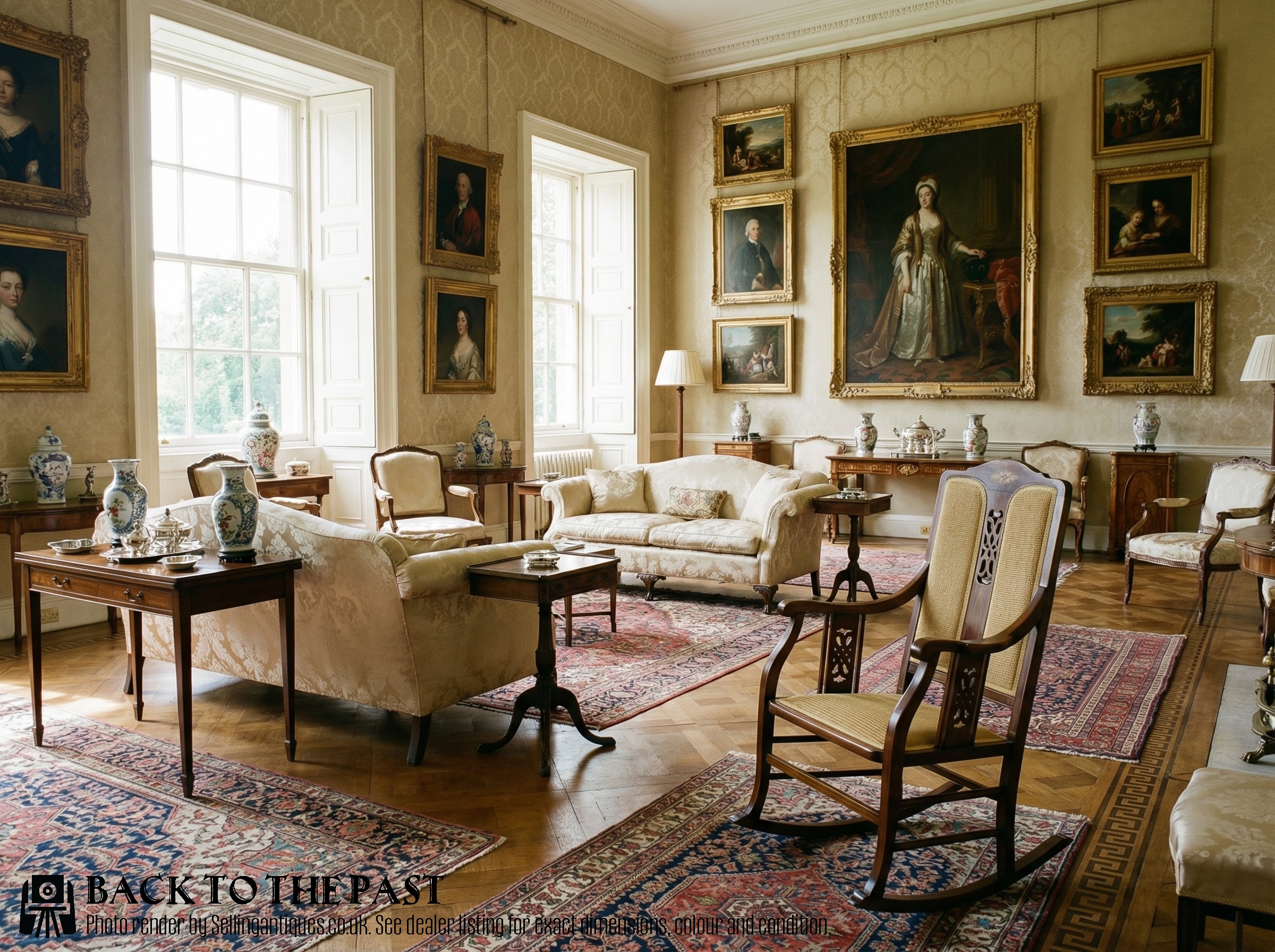
High Back Rocking Chair
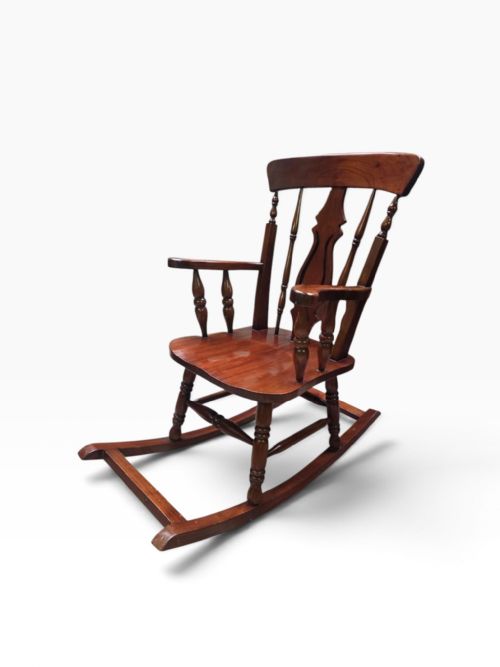
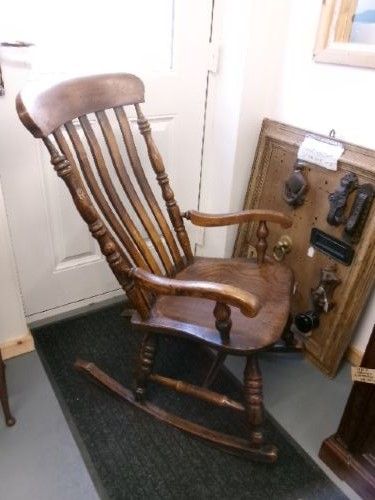
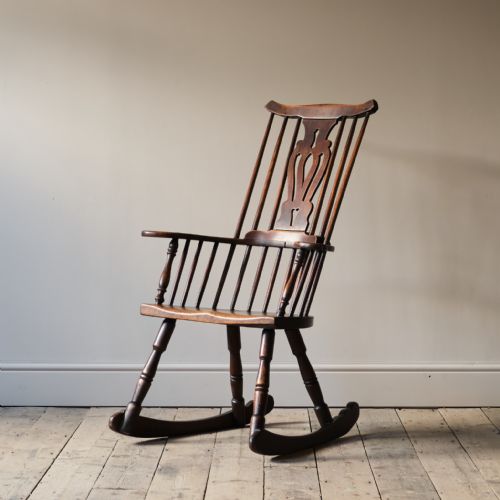
A high back rocking chair is a seating form designed with an elevated backrest and mounted on curved rockers. When buyers search for a high back rocking chair, they are typically examining Windsor styles, country armchairs, and spindle back designs.
The pieces seen on this page span from the late seventeenth century through the Victorian and Edwardian periods. Examples include regional variants like Yorkshire farmhouse chairs, Thames Valley Windsors, and Scottish Darvel chairs.
Most items combine traditional vernacular joinery with domestic comfort, appearing in forms such as nursing rocking chairs and broad arm kitchen armchairs. These seats served practical daily domestic duties in country houses and farmhouses alike.
Materials and construction
Makers utilised native timbers, predominantly turning to elm for solid seats, beech for turned spindles, and ash or oak for structural frames and bentwood elements. Mahogany appears in later refined Victorian and Edwardian iterations.
Construction methods rely on traditional Windsor stick-built techniques, where legs and back spindles are wedged directly into a thick wooden seat slab. Secondary materials such as cane, woven sea grass, and fabric upholstery provide seating surfaces.
High Back Rocking Chair Retail Price Guide 2026
Typical asking prices for high back rocking chair among the pieces listed under this phrase on Sellingantiques today, from the lower quarter to the upper quarter. They describe what is for sale here now, not the wider market.
Recorded forms include Windsor chairs, spindle backs, and woven sea grass seats.
Distinctions in quality
Quality rests in the proportional balance of the high backrest against the sweep of the rockers and the comfort of the arms. Finer examples display well-turned spindles and clean peg joints rather than hasty modern repairs.
The choice of timber grain and the integrity of the original wood surface distinguish ordinary vernacular seating from superior regional cabinet work. Retaining original surfaces without heavy alteration elevates the stature of the chair.
Hugh Shields·Hugh Shields Jnr
The High Back Rocking Chair Glossary
- Windsor
- A chair built with a solid wooden seat into which the legs and back sticks are tenoned directly. This method creates a sturdy, lightweight frame.
- Spindle back
- A chair back filled with numerous slender, turned wooden rods. These distribute weight evenly across the high backrest.
- Broad arm
- A chair featuring wide, flattened wooden armrests designed for utility. They provide a resting place for work materials or hands.
- Faux bamboo
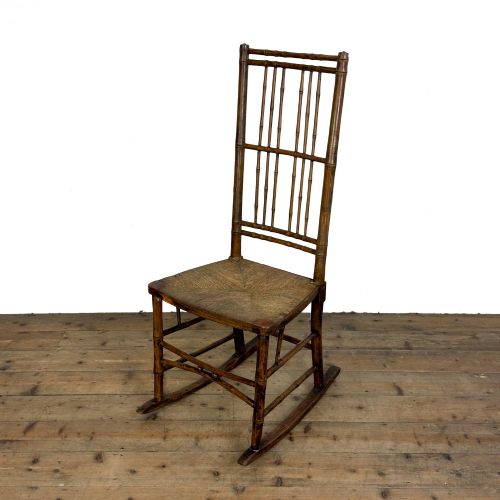
- Wood turned and carved to imitate natural bamboo stalks. This decorative finish gained popularity during the Victorian period.
- Cane
- Woven rattan peel used to form flexible seat or back panels. It offers a lightweight alternative to solid wood.
High Back Rocking Chair: Frequently Asked Questions
What is a high back rocking chair?
A high back rocking chair is a traditional timber seat featuring an extended backrest and curved wooden rockers at the base. These chairs combine upright support with gentle motion.
They appear in various regional forms, from Windsor kitchen armchairs to upholstered Victorian nursing chairs, built for domestic comfort.
Where were these chairs used?
These rocking chairs were primarily used in domestic spaces such as kitchens, nurseries, and parlours. Their sturdy construction suited daily household tasks.
Country houses and farmhouses utilised them near hearths for warmth and relaxation during long winter evenings.
How do I date a rocking chair?
Dating involves examining the wood species, turning styles, and construction marks. Early pieces from the seventeenth and eighteenth centuries often show simpler hand-turned joints and native timbers like elm or ash.
Later Victorian examples introduce mahogany, applied cane work, or machine-turned spindle details that reflect the industrial changes of the nineteenth century.
Can I use one daily?
These chairs were built for regular use from durable native hardwoods. Their robust construction handles everyday sitting.
Placing them on level flooring protects the wooden rockers from uneven wear over time.