
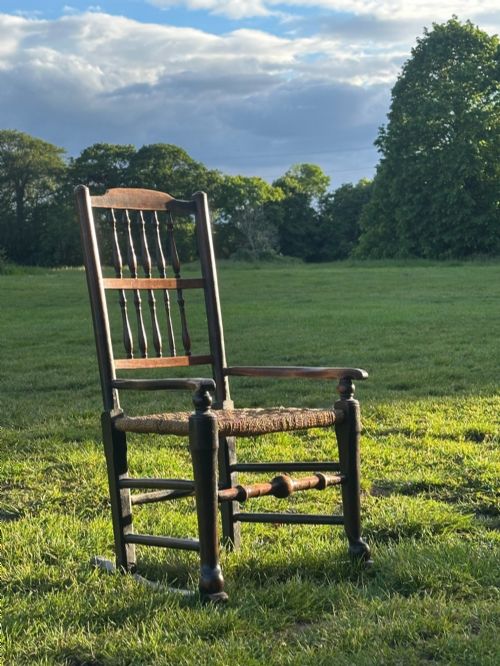
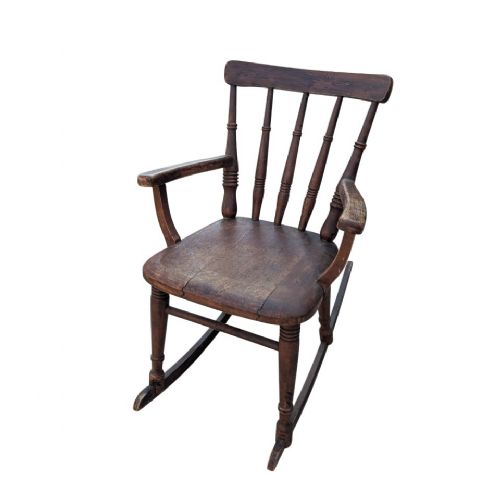


Spindle Back Rocking Chair
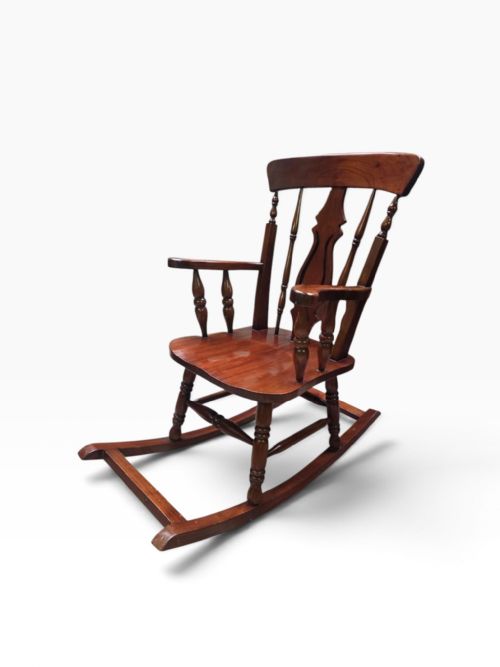
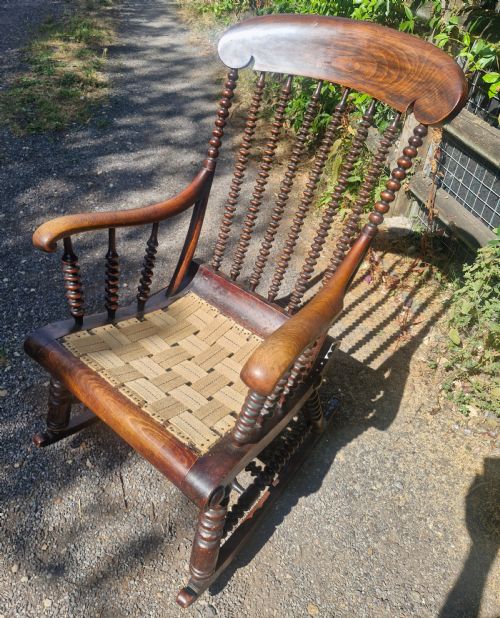
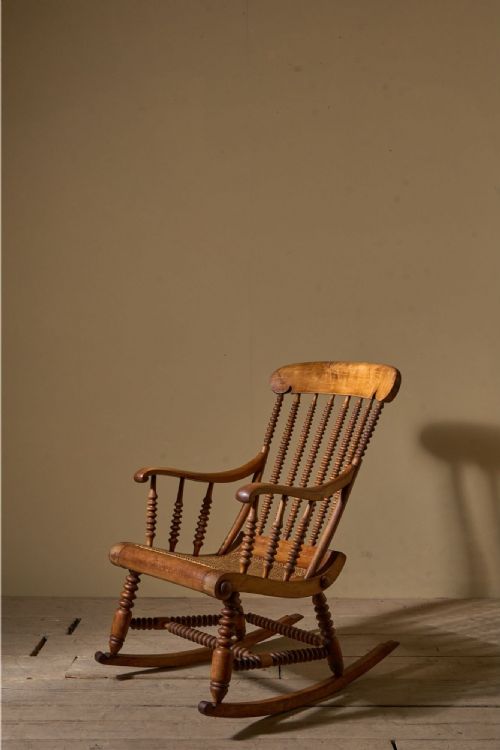
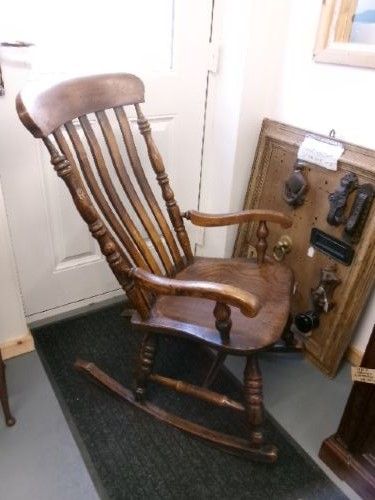
These spindle back rocking chair pieces are tactile country seating built for rhythmic motion, prized for their slender turned spindles and honest rural charm.
What these spindle back rocking chair pieces are
A spindle back rocking chair brings traditional country seating into the home, combining a supportive row of vertical turned spindles with curved rockers for gentle movement. Buyers searching this phrase will find nineteenth century examples, including Victorian farmhouse chairs and regional English or Scandinavian country pieces.
The selection here draws heavily from the nineteenth century, featuring Victorian eras alongside Regency and specific decades like eighteen sixty and eighteen ninety. Forms range from full size fireside seats to child models and low rocking armchairs.
Regional variations appear across the inventory, spanning English, Yorkshire, Lancashire, and Swedish country styles. Alongside standard wooden frames, builders utilised specific materials such as elm seats, oak, birch, ash, beech, and mahogany.
How they were made
Makers constructed these chairs from a mix of timbers, turning wood on lathes to produce slender spindles, bobbin frames, and bobbin turned structures. Seats typically relied on solid timber like elm, oak, and ash, whilst frames incorporated beech, birch, and mahogany.
Surface treatments varied from bare or stained wood to original paint and ebonised finishes. Some variants integrated woven webbing or cane elements into their design for additional texture.
Retail Price Guide 2026
Typical UK retail prices for spindle back rocking chair, calculated from the Sellingantiques database of over a million retail prices indexed since 2003. This retail price guide relies exclusively on Sellingantiques data; no external sources or auction records are used, so the figures do not describe the wider market.
What varies in quality
Quality rests in the harmony of the turning and the integrity of the timber, where crisp bobbin framing and well-proportioned spindle arrangements elevate a piece. The presence of untouched original paint or rich patination on woods like oak and elm distinguishes finer examples.
Structural distinction also depends on regional craftsmanship, where robust joinery and comfortable rocking arcs separate standard utility seating from superior vernacular design.
The Spindle Back Rocking Chair Glossary
- Spindle back
- A chair back constructed from a series of slender, turned vertical wooden rods. This construction lightens the visual weight of the frame while offering robust structural support.
- Bobbin turning
- A form of lathe work that produces a sequence of rounded knobs resembling spools of thread. It defines the decorative framing seen on several nineteenth century examples.
- Rocking chair
- A seat mounted on curved wooden rockers that permit the user to sway backward and forward. They appear frequently in nineteenth century country and farmhouse contexts.
- Original paint
- A surface coating applied when the piece was first manufactured that has survived without being stripped or repainted. Collectors value this untouched finish for its historical authenticity.
- Windsor
- A traditional chair style featuring a solid wooden seat into which the legs and back spindles are directly inserted. Regional variants include distinct comb or spindle arrangements.
Frequently Asked Questions
How old is a spindle back rocking chair?
Most examples date from the nineteenth century, encompassing Victorian production as well as earlier Regency and Georgian roots.
Craftsmanship from these periods relies on traditional turning techniques and regional timber choices.
Where were these rocking chairs made?
They originate from various rural workshops across England, including Yorkshire and Lancashire, alongside Scandinavian makers.
Each region employed local woods like elm, ash, and oak to build sturdy domestic seating.
Are painted finishes original on these chairs?
Some pieces retain original paint or ebonised surfaces applied during their initial period of use.
Unstripped painted finishes provide valuable evidence of historical interior decoration.
What woods were used for the seats?
Carvers frequently selected durable hardwoods such as elm and oak for solid saddle seats.
These dense timbers withstood decades of daily motion without splitting at the spindle joints.
How do I style a country rocking chair?
These chairs fit naturally beside firesides or in quiet reading corners where their sculptural spindles can be admired.
Pairing them with woven textiles or plain walls highlights their honest rural construction.