


Turned Spindle Rocking Chair
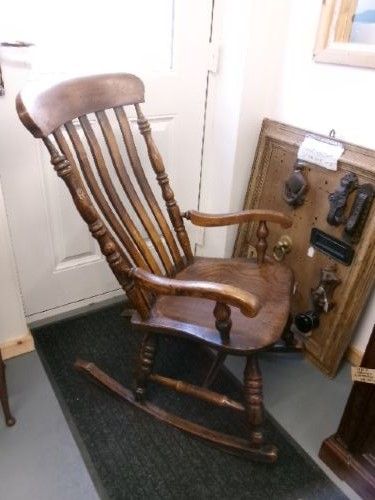
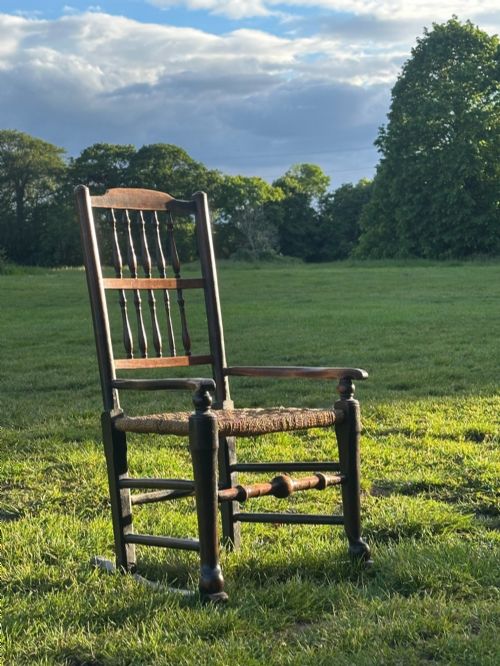
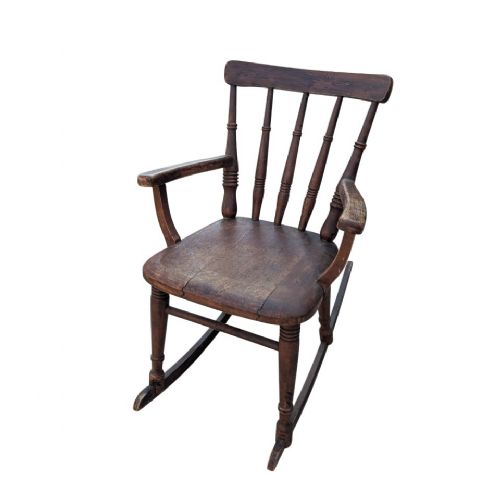
These turned spindle rocking chairs offer a classic seating form defined by turned wooden components and gentle motion.
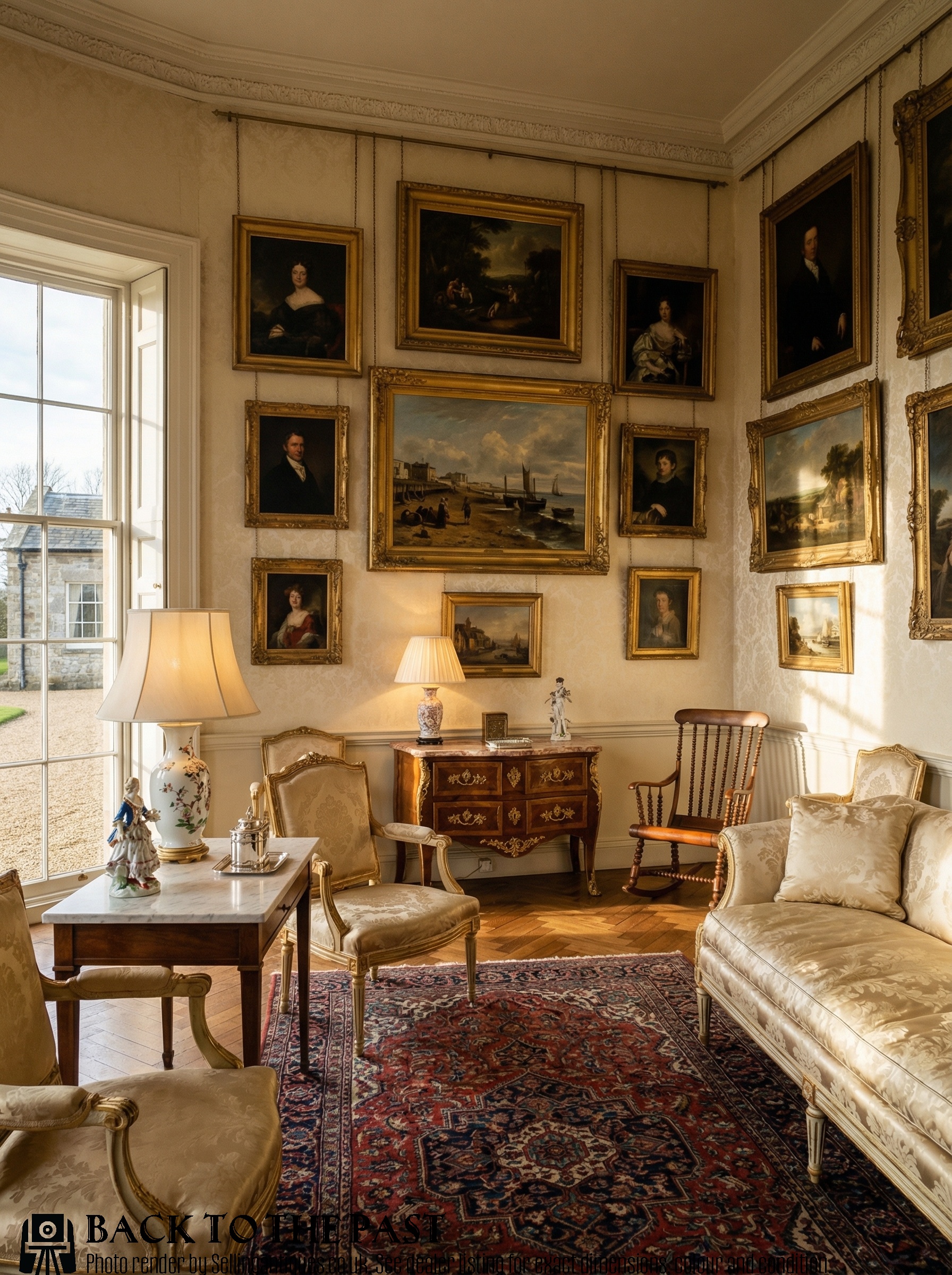
What turned spindle rocking chairs are
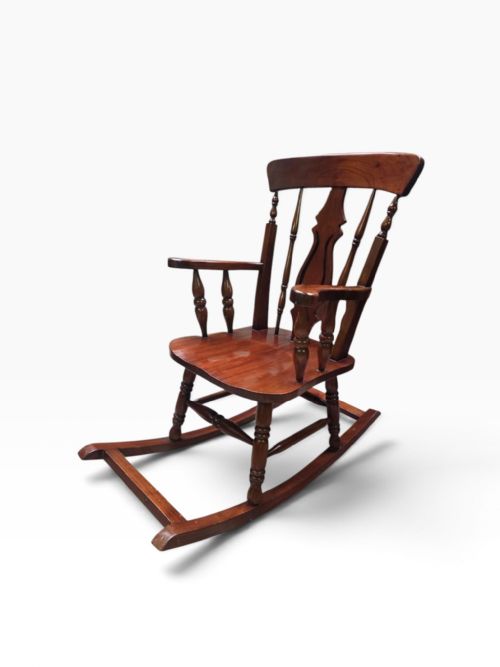
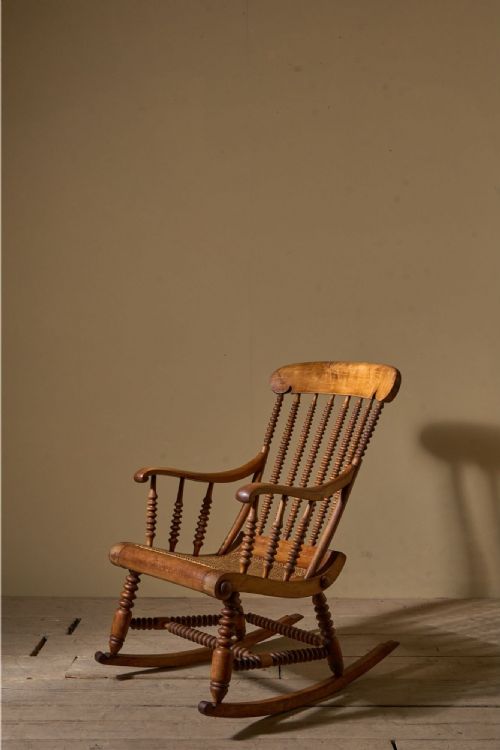
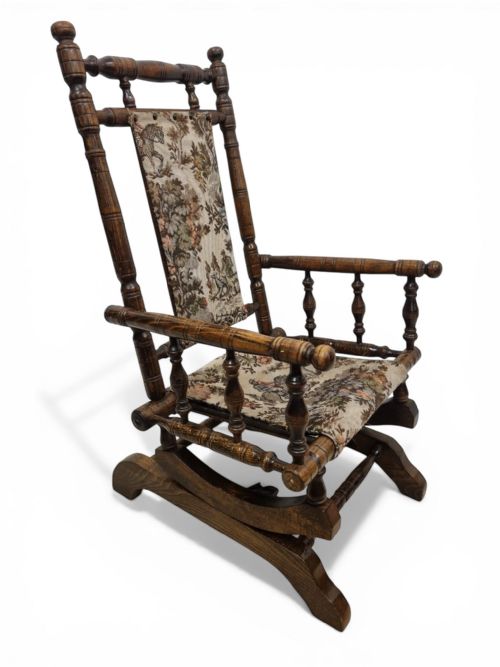
A turned spindle rocking chair provides a comfortable seat mounted on curved wooden rockers, utilising turned wooden spindles for structural support and decorative detail. The selection on this page includes examples spanning the Regency, Victorian, and 1920 periods, alongside child-sized variations.
The styles recorded across these listings range from traditional American and Scandinavian country to English and Scottish vernacular. Makers utilised robust timbers such as oak, birch, pine, elm, and dark hardwoods to build these domestic seats.
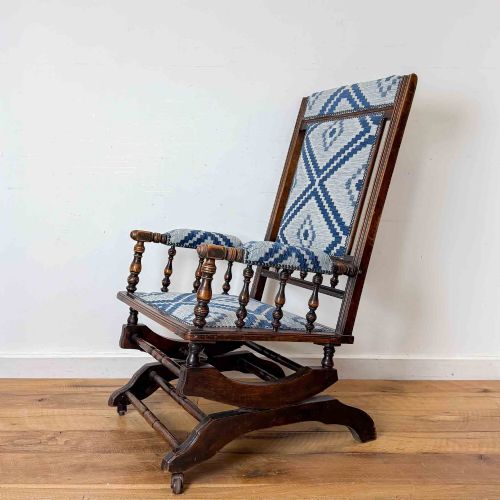
Buyers will encounter both full-sized seating and children's variants, some retaining original paint finishes while others feature woven or tapestry fabric upholstery. These chairs reflect regional woodworking traditions from Britain, Scandinavia, and America.
How they were made
Craftsmen shaped wooden components on a lathe to produce the distinctive turned spindles that form the backs and structural supports of these chairs. Woods like elm, birch, oak, and pine were selected for their strength and turned into uniform profiles before assembly.
Joinery techniques included mortise and tenon joints to secure the spindles and legs into the seat frames and crest rails. Some chairs incorporate curved rockers attached to the base, while upholstered examples integrate woven fabric or tapestry pads.
Retail Price Guide 2026
Typical UK retail prices for turned spindle rocking chair, calculated from the Sellingantiques database of over a million retail prices indexed since 2003. This retail price guide relies exclusively on Sellingantiques data; no external sources or auction records are used, so the figures do not describe the wider market.
Current listings feature pieces spanning the Regency period, the Victorian era, and the nineteen-twenties, constructed from oak, pine, birch, and elm.
What varies in quality
Quality in these chairs rests upon the precision of the woodturning and the integrity of the joinery holding the spindles in place. Tighter turnings and well-balanced frames distinguish finer vernacular examples from more basic production.
The survival of original surfaces, such as early paint layers or period upholstery fabrics, elevates certain pieces above those with later restorations or replacements.
The Turned Spindle Rocking Chair Glossary
- Spindle
- A cylindrical, turned wooden rod used decoratively and structurally in chair backs. Spindles are shaped individually on a lathe.
- Vernacular
- Regional furniture built by local craftsmen following traditional local designs rather than high-style metropolitan fashions. These pieces often utilise native timbers.
- Bobbin
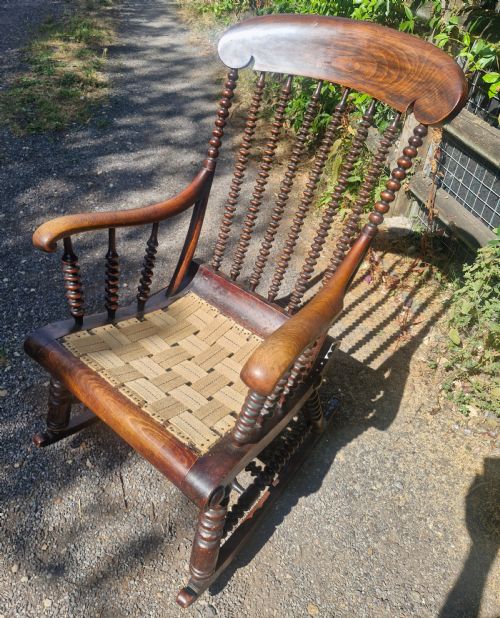
- A style of woodturning characterised by rounded spherical shapes resembling a thread bobbin along the length of the spindle. This technique appears on nineteenth-century seating.
- Rockers
- The curved wooden pieces attached to the bottom of the chair legs to permit a rocking motion. They must maintain an even curve for a smooth movement.
Frequently Asked Questions
What is a spindle back rocking chair?
A spindle back rocking chair is a seating form that uses a series of turned wooden rods in the backrest for support. These vertical elements distribute weight evenly while creating an open aesthetic.
The style spans various vernacular traditions, appearing in British, Scandinavian, and American domestic interiors throughout the nineteenth and early twentieth centuries.
How do I date an antique rocking chair?
Dating relies on observing the wood species, construction techniques, and stylistic markers present in the frame. Regency and Victorian examples often display hand-turned details and specific regional joinery.
Upholstery remnants or original painted surfaces also provide clues to the era of manufacture, alongside comparative regional furniture studies.
How do I care for a wooden rocking chair?
Wooden rocking chairs require stable indoor humidity levels to prevent timber from drying out or splitting. Gentle dusting and occasional waxing help preserve finished surfaces.
Avoid placing antique wooden furniture near direct heat sources or in strong sunlight to protect original finishes and applied paint.