


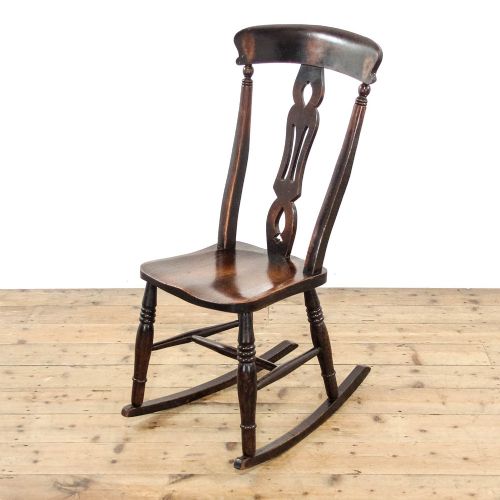


Turned Wood Rocking Chair
These turned wood rocking chair examples offer tactile regional character and rhythmic comfort for daily seating.
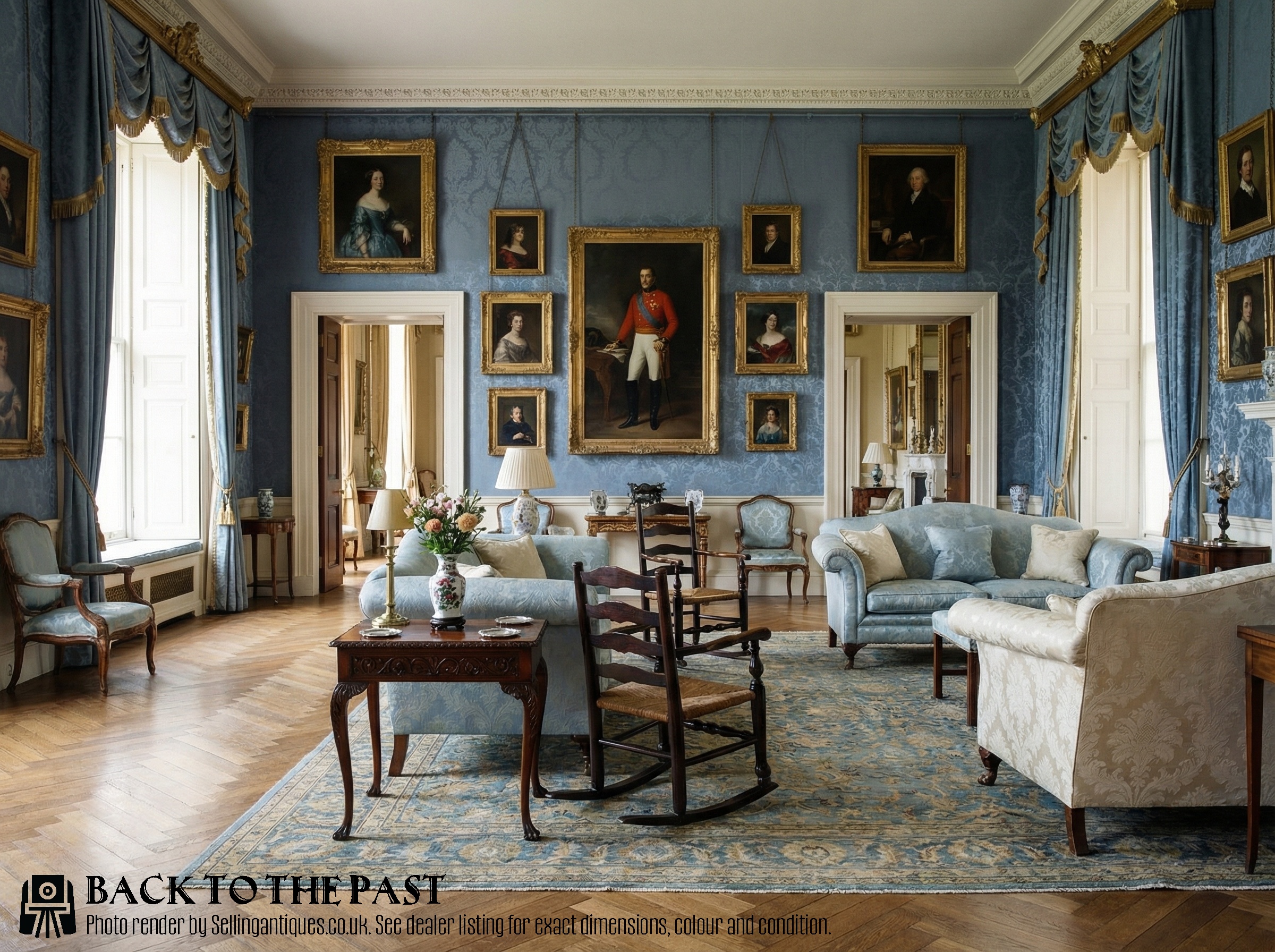
Turned Wood Rocking Chair
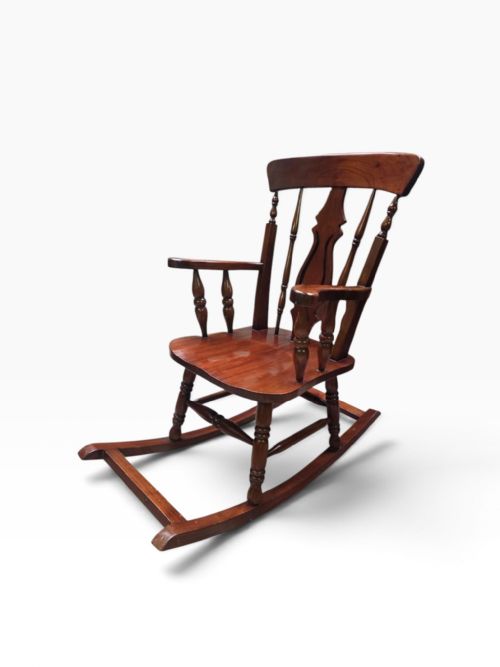
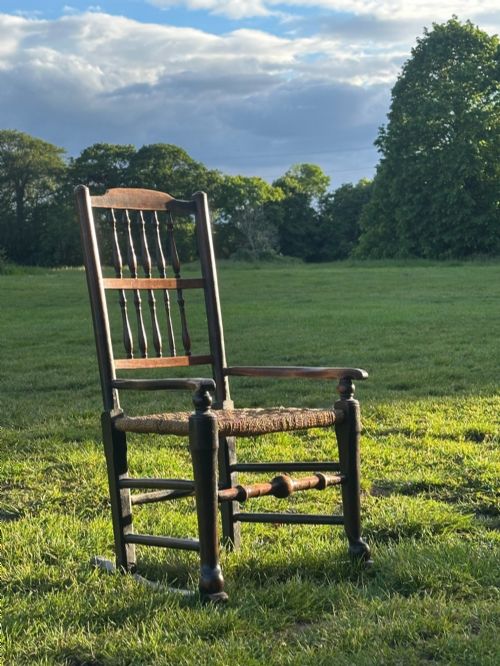
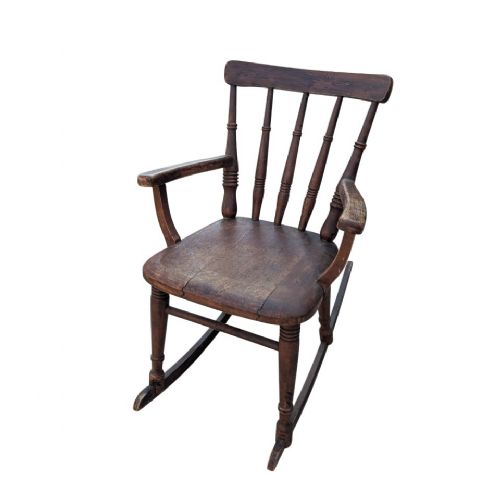
A turned wood rocking chair brings domestic vernacular tradition into the room through visible lathe work and curved floor rails. Buyers seek these pieces for their honest construction and historic presence across diverse domestic interiors.
The selections span functional adult seating and smaller child variants constructed across the nineteenth and eighteenth centuries. Regional country workshops produced sturdy spindle back and ladder back designs alongside formal Windsor adaptations.
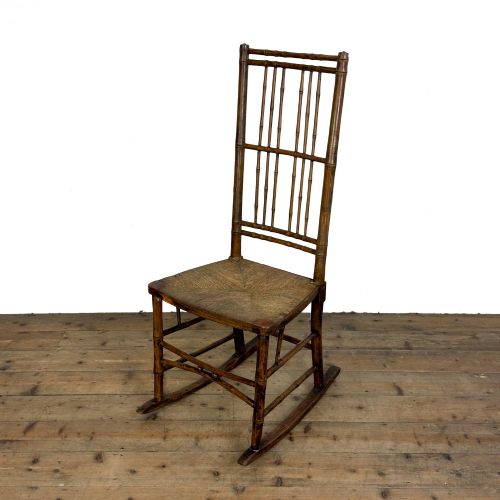
English and Scottish vernacular pieces appear alongside American imports and Scandinavian country variants. Common configurations utilise rush, cane, or solid timber seats paired with distinctive turned stretchers and arm supports.
Materials and construction methods
Craftsmen selected native hardwoods including beech, elm, ash, and fruitwood for their resilience and capacity for steam bending. These timbers formed the structural legs, bowed backs, and curved rockers necessary to sustain regular motion.
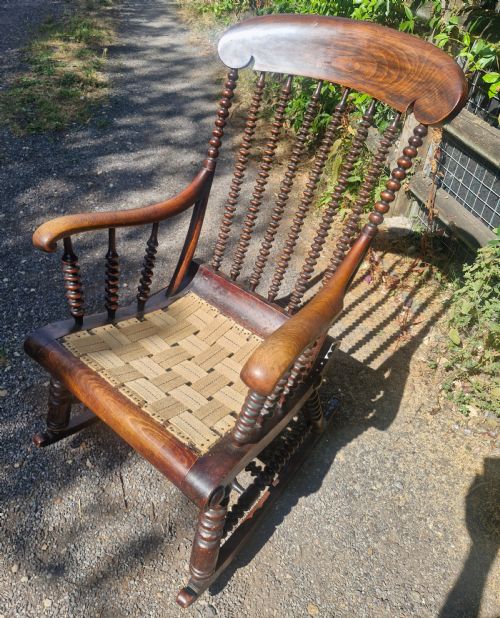
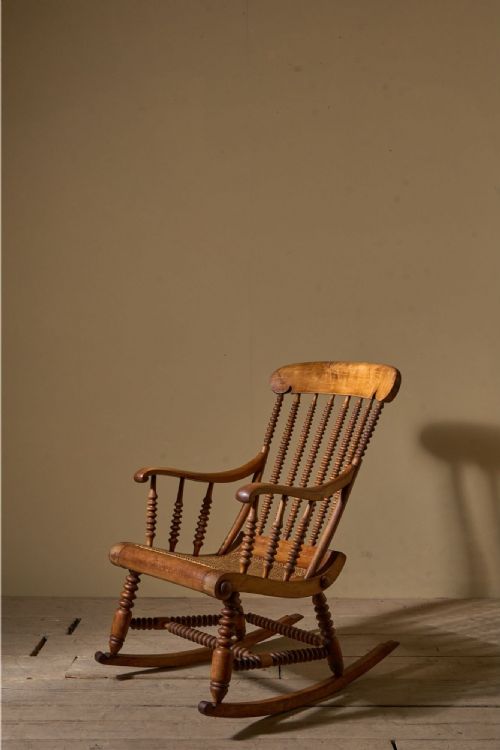
Lathe turning created decorative and structural components such as bobbin framing and slender spindles. Seat bases frequently integrated woven cane, sea grass, and rush inserts into solid timber frames.
Turned Wood Rocking Chair Retail Price Guide 2026
Typical asking prices for turned wood rocking chair among the pieces listed under this phrase on Sellingantiques today, from the lower quarter to the upper quarter. They describe what is for sale here now, not the wider market.
Listings feature periods spanning from the eighteenth century through the Edwardian era, utilising beech, elm, oak, and ash.
Distinctions in craftsmanship and preservation
Superior examples demonstrate crisp execution in lathe-turned details and tight joinery that withstands centuries of movement. The integration of original painted surfaces or mellow polished patina elevates the visual depth of the timber.
Lower tiers often show structural fatigue from rigorous use, replaced rockers, or compromised weaving on seats. The preservation of original components directly influences the integrity of each piece.
The Turned Wood Rocking Chair Glossary
- Bobbin turning
- A form of lathe work producing a series of rounded, spool-like shapes along a wooden spindle. This decorative technique appears frequently on nineteenth-century vernacular frames.
- Windsor chair
- A timber seat construction where legs and back spindles are wedged directly into a solid sculpted seat. These sturdy forms often incorporate steam-bent arm bows.
- Ladder back
- A chair back featuring horizontal slats positioned between two upright posts. Country makers shaped these curved slats to support the sitter's spine.
- Spindle back
- A chair featuring numerous slender turned vertical rods supporting the backrest. This design lightens the visual weight while maintaining structural strength.
- Rush seating
- Woven marsh grass utilised to create flexible and durable seat pads. Traditional craftsmen twisted the dried material before weaving it tightly across the frame.
Turned Wood Rocking Chair: Frequently Asked Questions
How do I date a turned wood rocking chair?
Dating relies upon examining tool marks, timber species, assembly methods, and stylistic indicators such as bobbin turning or ladder back profiles. Eighteenth-century models often display hand-carved elements and older regional fastening techniques.
Later Victorian and Edwardian examples incorporate machine-turned components and standardised joinery. Comparing the wear patterns on the curved rockers provides further context regarding age.
Were these chairs meant for nurseries?
While many smaller proportions indicate child variants or nursery use, full-scale armchairs served adult sitters in parlours and firesides. Low seating heights facilitated tending to hearths and domestic tasks.
Child versions mirrored adult stylistic developments scaled down for younger occupants. Both categories prioritized continuous rocking motion for soothing and resting.
How do I care for cane and rush seats?
Natural woven materials require moderate indoor humidity to prevent brittleness and snapping under pressure. Periodic gentle cleaning removes dust without saturating the vulnerable natural fibres.
Avoiding direct heat sources protects the timber framework from shrinking and loosening the woven surfaces. Proper weight distribution prevents undue stress on aged historic seating.
What defines American style rocking chairs?
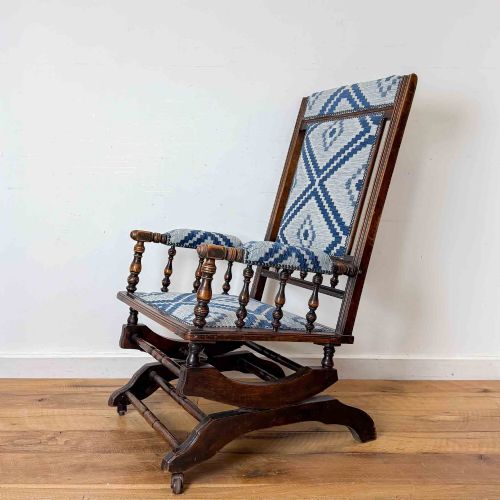
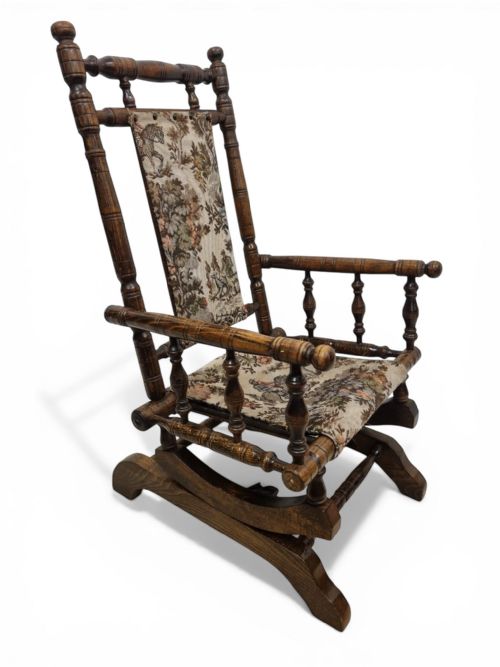
American style examples frequently feature turned beechwood frames and upholstered or cane inserts designed for deep comfort. Makers in the nineteenth century exported these robust forms widely across Britain.
They often combine deep seat pans with prominent back tilts suited for relaxed lounging. Turned stretchers reinforce the legs against lateral forces during rocking.