
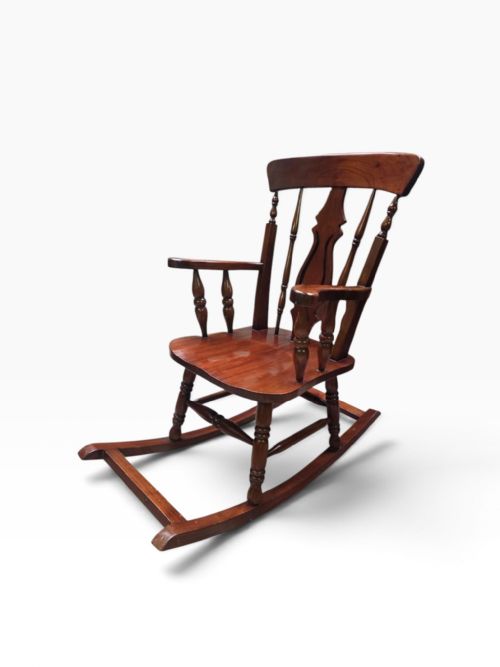


Mahogany Rocking Chair
A mahogany rocking chair brings tactile warmth and motion to a room, offering a comfortable seat shaped by Victorian and Edwardian joinery.
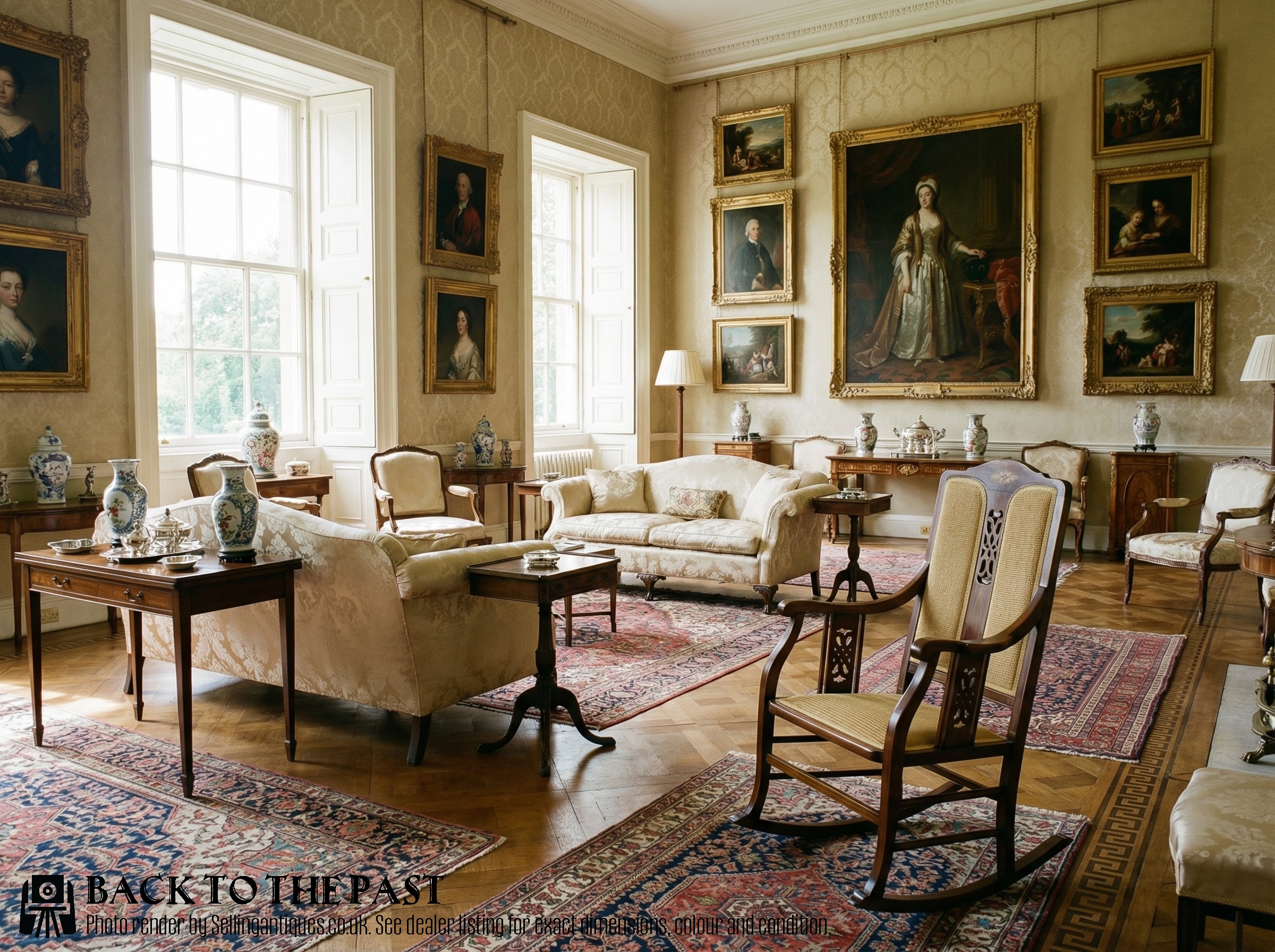
What these pieces are
When you search for a mahogany rocking chair, you encounter seating built across the nineteenth and early twentieth centuries, spanning the Victorian and Edwardian eras. These chairs take various forms, from child versions and ladder back fireside seats to nursing chairs and low rush seated models.
The Victorian period yields many examples in mahogany, often featuring upholstered pads or carved frames, alongside occasional pieces influenced by American designs or Shaker styles. Edwardian variations tend to display lighter proportions, sometimes incorporating satinwood inlay within the mahogany structure.
Earlier pieces from the Georgian and Regency periods also appear in the record, demonstrating that these moving seats served nurseries, parlours and firesides for generations. The overarching constants are the hardwood frame and the curved rockers fitted beneath.
How they were made
Makers constructed these chairs primarily using mahogany and other hardwoods, applying joinery techniques suited to bearing weight and repetitive movement. Wood inlay and satinwood accents appear on specific Edwardian and nineteenth-century examples to decorate the visible surfaces.
Upholstery forms a significant part of the construction, with fabric, leather and rush utilised for seats and backrests. Frames were carved, turned or assembled with spindle backs, depending on the stylistic period and regional workshop traditions.
Retail Price Guide 2026
Typical UK retail prices for mahogany rocking chair, calculated from the Sellingantiques database of over a million retail prices indexed since 2003. This retail price guide relies exclusively on Sellingantiques data; no external sources or auction records are used, so the figures do not describe the wider market.
The recorded selection spans Victorian, Edwardian, Georgian and nineteenth-century periods, constructed from mahogany, hardwood, rush and upholstery fabric.
What varies in quality
Quality in these rocking chairs rests upon the integrity of the mahogany frame and the smoothness of the rocker curves. Chairs that retain their original upholstery materials or well-preserved rush seats generally demonstrate superior preservation.
The fineness of hand-carving and the precision of wood inlay distinguish standard workshop production from more ambitious pieces. Proportion and balance also play a role, as the best examples maintain stability and elegance through decades of motion.
The Mahogany Rocking Chair Glossary
- Mahogany
- A durable tropical hardwood favoured for its rich reddish-brown tone and stable grain. It forms the primary structural material for these chairs.
- Rocker
- The curved wooden base attached to the legs that allows the chair to sway back and forth. Its sweep dictates the rhythm of the movement.
- Ladder back
- A chair back constructed with horizontal slats resembling the rungs of a ladder. This traditional form appears on several fireside rocking chairs.
- Spindle back
- A style featuring numerous thin, turned wooden rods arranged vertically in the backrest. It provides light yet sturdy support.
- Satinwood
- A pale, lustrous timber frequently utilised for contrasting inlay work on Edwardian mahogany furniture. It creates geometric or floral decorative patterns.
Frequently Asked Questions
Where were these chairs used?
Mahogany rocking chairs served primarily in domestic spaces such as nurseries, bedrooms and fireside sitting rooms. Their gentle motion suited tasks requiring comfort, such as tending to young children or quiet reading.
Over time, owners moved them between living areas and studies, adapting their seating to suit different rooms within the home.
How do I date a rocking chair?
Dating relies on observing stylistic markers, timber characteristics and construction methods. Victorian examples often display heavier frames and carved details, while Edwardian pieces tend to be lighter with inlaid decoration.
Earlier nineteenth-century and Georgian pieces show simpler joinery and proportions distinct from later mass-produced variations.
Can I use them on wooden floors?
Using a rocking chair on wooden floors requires attention to the wooden runners, which contact the ground with every movement. Many owners place a rug underneath to protect both the floorboards and the antique rockers from friction wear.
Ensuring the bottom surface of the rockers is smooth prevents scratching during use.
What maintenance do they need?
Maintenance involves gentle cleaning of the mahogany frame using appropriate wood care products to preserve the finish. Upholstery and rush seats require regular dusting and occasional professional attention depending on the fabric condition.
Checking the joints periodically ensures the frame remains stable under the motion of rocking.