


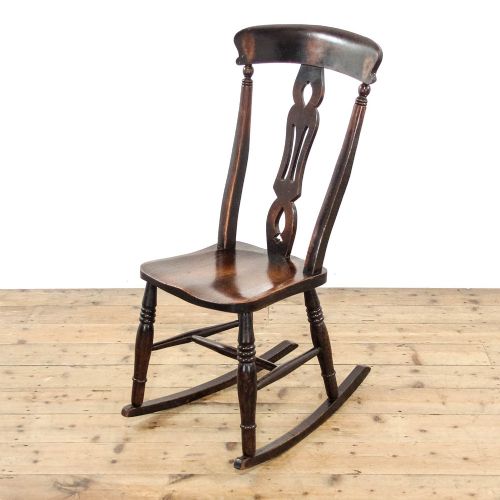


Turned Leg Rocking Chair
A turned leg rocking chair brings tactile warmth and sturdy craftsmanship into a room.
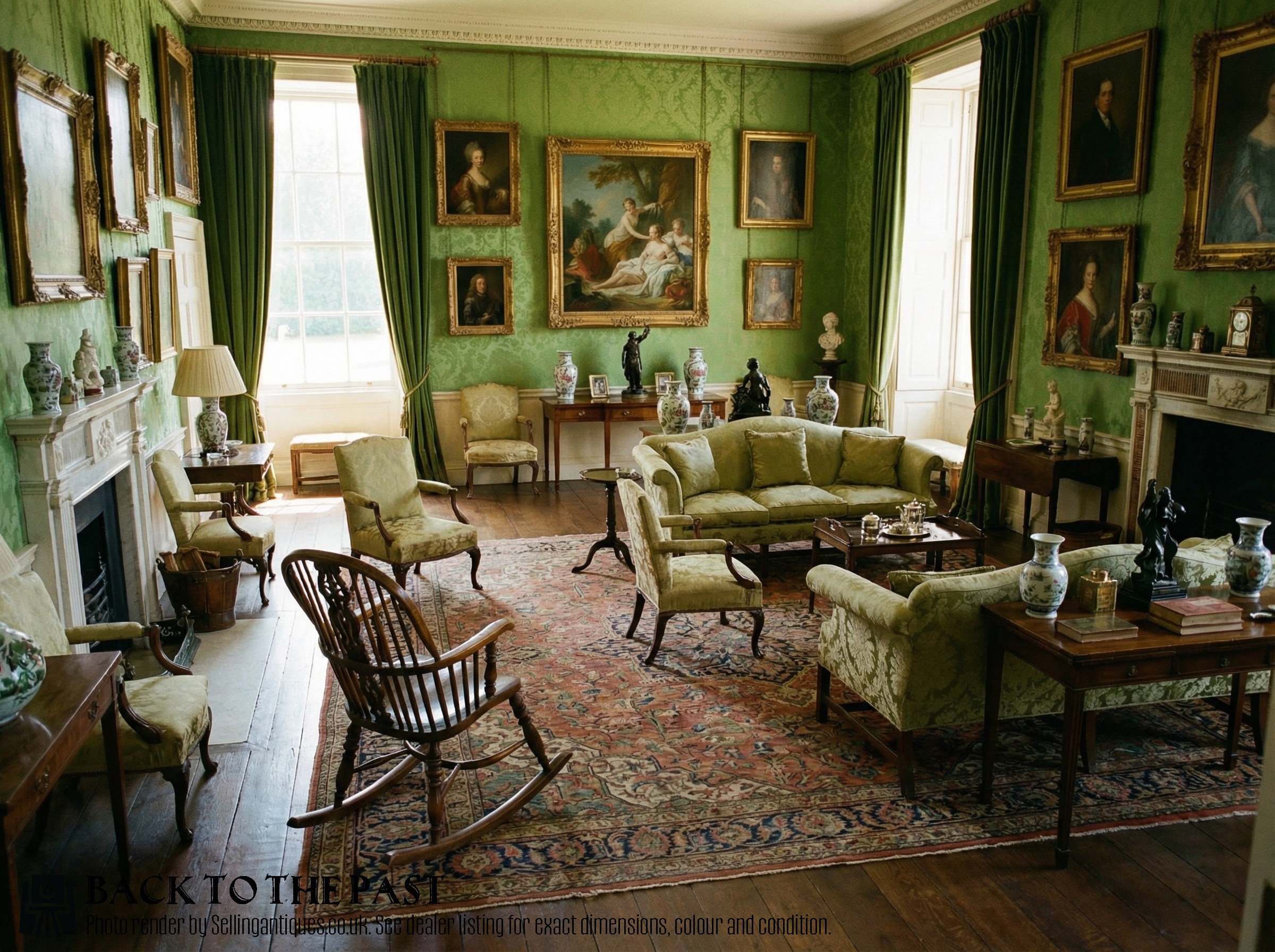
What a turned leg rocking chair is
A turned leg rocking chair is a traditional seating form designed for gentle motion and lasting comfort. These pieces appear mainly in nineteenth century and Victorian styles, originating from English country traditions. Buyers encounter various forms, including Windsor armchairs and nursing rockers.
The construction typically relies on robust timbers shaped into spindle backs and curved rockers. Many examples feature solid wooden seats, whilst others incorporate fitted leather pads. They suit both traditional interiors and rustic settings equally well.
How they were made
Craftsmen utilised native hardwoods such as elm, beech, ash, oak, yew and mahogany to build these chairs. Woodturners shaped the legs and spindles on a lathe to create symmetrical profiles and structural strength.
Makers formed the seats from solid timber planks, often contouring the surface for comfort. Components joined together through traditional pegged and mortise-and-tenon methods.
Retail Price Guide 2026
Typical UK retail prices for turned leg rocking chair, calculated from the Sellingantiques database of over a million retail prices indexed since 2003. This retail price guide relies exclusively on Sellingantiques data; no external sources or auction records are used, so the figures do not describe the wider market.
Some nineteenth century makers carefully selected elm for the seat specifically because its wild, interlocking grain made it virtually impossible for children to split with a heavy toy.
What varies in quality
Quality rests upon the choice of timber and the precision of the turning work. Dense hardwoods like yew and elm command greater respect for their durability and grain pattern compared to stained softer woods.
The balance of the rocking motion and the tightness of the joinery determine the overall integrity of the piece. Superior examples retain their original components without excessive replacement parts or structural sagging.
The Turned Leg Rocking Chair Glossary
- Windsor
- A chair style characterised by a wooden seat into which the legs and back spindles are directly fitted. This design provides exceptional structural stability.
- Spindle
- A slender, rounded piece of wood shaped on a lathe. Spindles form the backrests and structural supports of many traditional seats.
- Rockers
- The curved wooden rails attached to the bottom of the chair legs. These allow the seat to tilt backward and forward.
- Elm
- A tough, interlocking timber commonly used for chair seats because it resists splitting under pressure. Its distinctive grain adds visual depth.
- Turned
- Wood shaped by rotating it against a cutting tool on a lathe. This technique creates decorative and uniform cylindrical components.
Frequently Asked Questions
What is a turned leg rocking chair?
A turned leg rocking chair is a nineteenth century seating form featuring lathe-turned wooden legs and curved rockers for movement.
These traditional pieces draw on English country furniture traditions and utilise native timbers.
How do I identify a Victorian rocking chair?
Victorian rocking chairs typically display nineteenth century construction methods, using solid hardwoods like elm, beech, and ash.
Look for traditional joinery, spindle backs, and turned wooden components characteristic of the period.
What woods were used for these chairs?
Makers utilised a range of native British hardwoods, including elm, beech, ash, oak, yew, and mahogany.
Elm was frequently chosen for seats due to its strength, whilst ash and beech suited turned spindles.
Where should I place a rocking chair?
These chairs suit living rooms, studies, and bedrooms where their traditional aesthetic and gentle motion can be appreciated.
Ensure there is adequate floor clearance behind the rockers for smooth movement.