






Windsor Rocking Chair
A windsor rocking chair brings traditional country seating together with a gentle motion, uniting sturdy timber construction with comfortable domestic use.
Windsor Rocking Chair
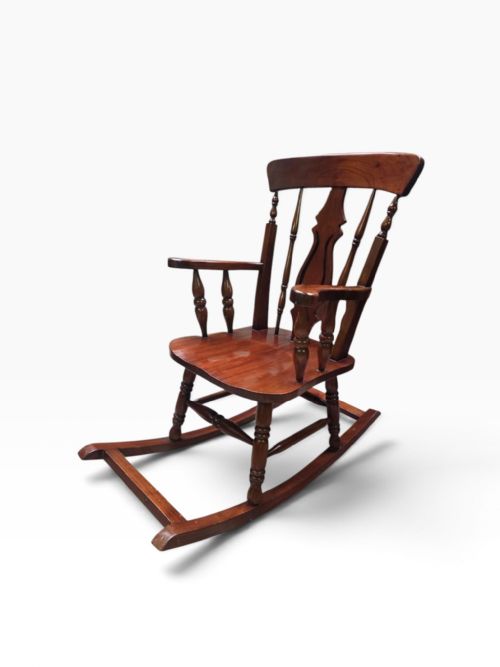
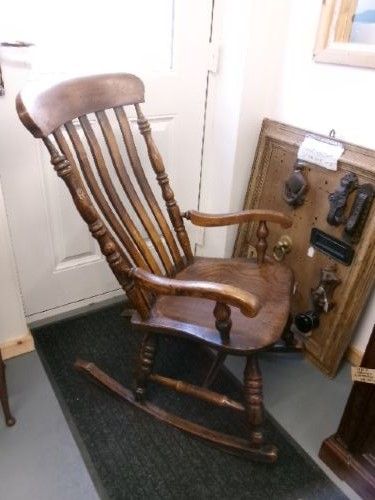
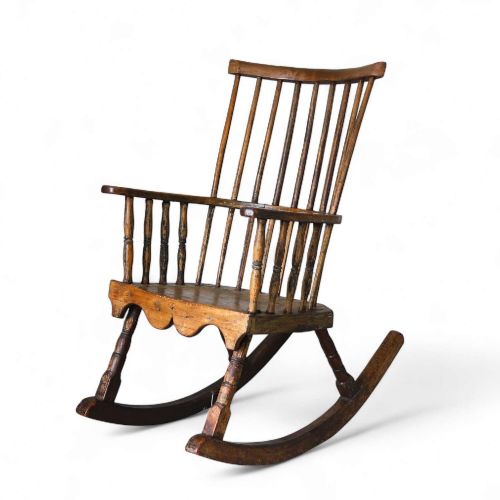
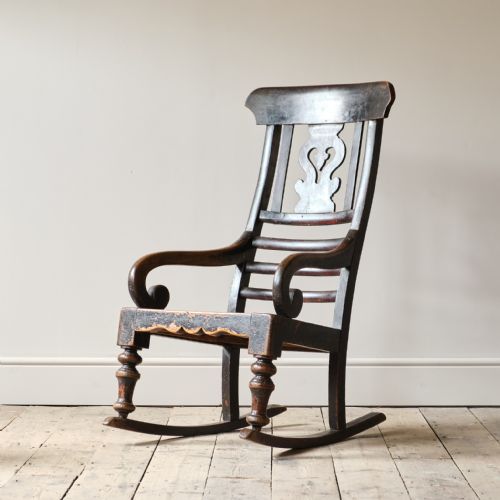
When you search for a windsor rocking chair, you encounter sturdy wooden seating designed for fireside and kitchen use, mounted on curved rockers. The examples available span from the mid eighteenth century through the Victorian era and into the early twentieth century.
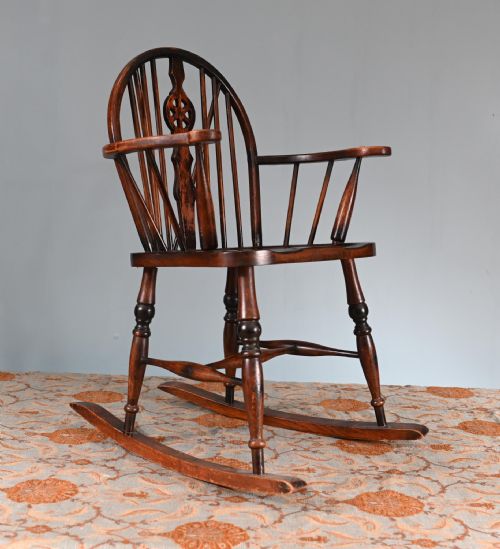
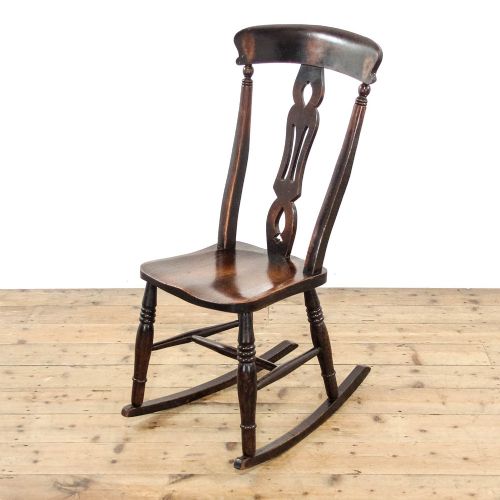
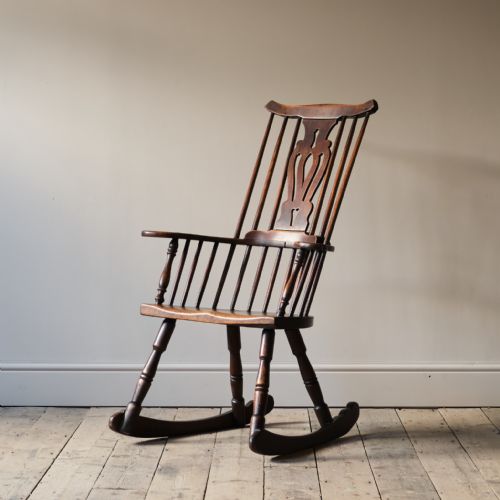
You meet various traditional forms on this page, including wheelback, comb-back, spindle back, splat back, and broad arm variants. Many originate from English rural workshops, while others reflect Scandinavian country traditions.
The selection includes adult armchairs alongside smaller child's versions, offering multiple scales of the same traditional form.
How they were made
Maker construction relies on a combination of native timbers, frequently pairing elm seats with ash, beech, or sycamore for the spindles and framework. Some examples incorporate yew wood, oak, or mahogany.
Chairwrights shaped solid wooden seats to receive steam-bent backs and turned legs, sometimes securing the structure with a crinoline stretcher.
Listings feature timbers including elm, ash, beech, yew, oak, mahogany, and sycamore across various regional styles.
What varies in quality
Quality depends upon the balance of the timber selection and the sharpness of the woodturning in the spindles and legs. A well-proportioned comb-back or wheelback exhibits careful shaping in the arms and crest rail.
Original surface finishes, such as early paint or patinated waxed elm, maintain the integrity of the piece more effectively than later refinishing.
John Shadford Caistor
The Windsor Rocking Chair Glossary
- Comb-back
- A chair back featuring an upper headrest rail supported by vertical spindles, resembling the teeth of a comb.
- Wheelback
- A Windsor chair variation incorporating a pierced wheel motif in the centre of the splat.
- Crinoline stretcher
- An arched wooden brace connecting the legs of a chair to provide rigidity and structural support.
- Broad arm
- A chair design featuring widened wooden armrests intended for writing or resting.
- Lathe back
- A style of chair back constructed using turned wooden spindles shaped on a lathe.
Windsor Rocking Chair: Frequently Asked Questions
Were these chairs made for nurseries?
Many examples, particularly smaller child's versions and nursing chairs, were built specifically for use in domestic nurseries and bedrooms. Lower seats and supportive arms assisted with holding children.
Larger broad-arm and high-back variants served general domestic duties around the farmhouse kitchen or fireside.
What woods were used?
Traditional makers selected native British hardwoods suited to different structural demands. Elm provided a tough, split-resistant seat, while ash and beech supplied strong, flexible spindles.
Less common examples incorporate yew, oak, or mahogany depending on the regional workshop and period.
How do I date a windsor rocking chair?
Dating relies on observing construction methods, wood types, and regional stylistic markers such as comb-backs or wheelbacks. Eighteenth-century examples often display heavier proportions and simpler turned details.
Victorian and later pieces incorporate more varied spindle profiles and machine-assisted turning techniques.