




Traditional Windsor Armchair
A traditional windsor armchair brings tactile grain and honest joinery into a room, offering sturdy seating shaped by centuries of country craftsmanship.
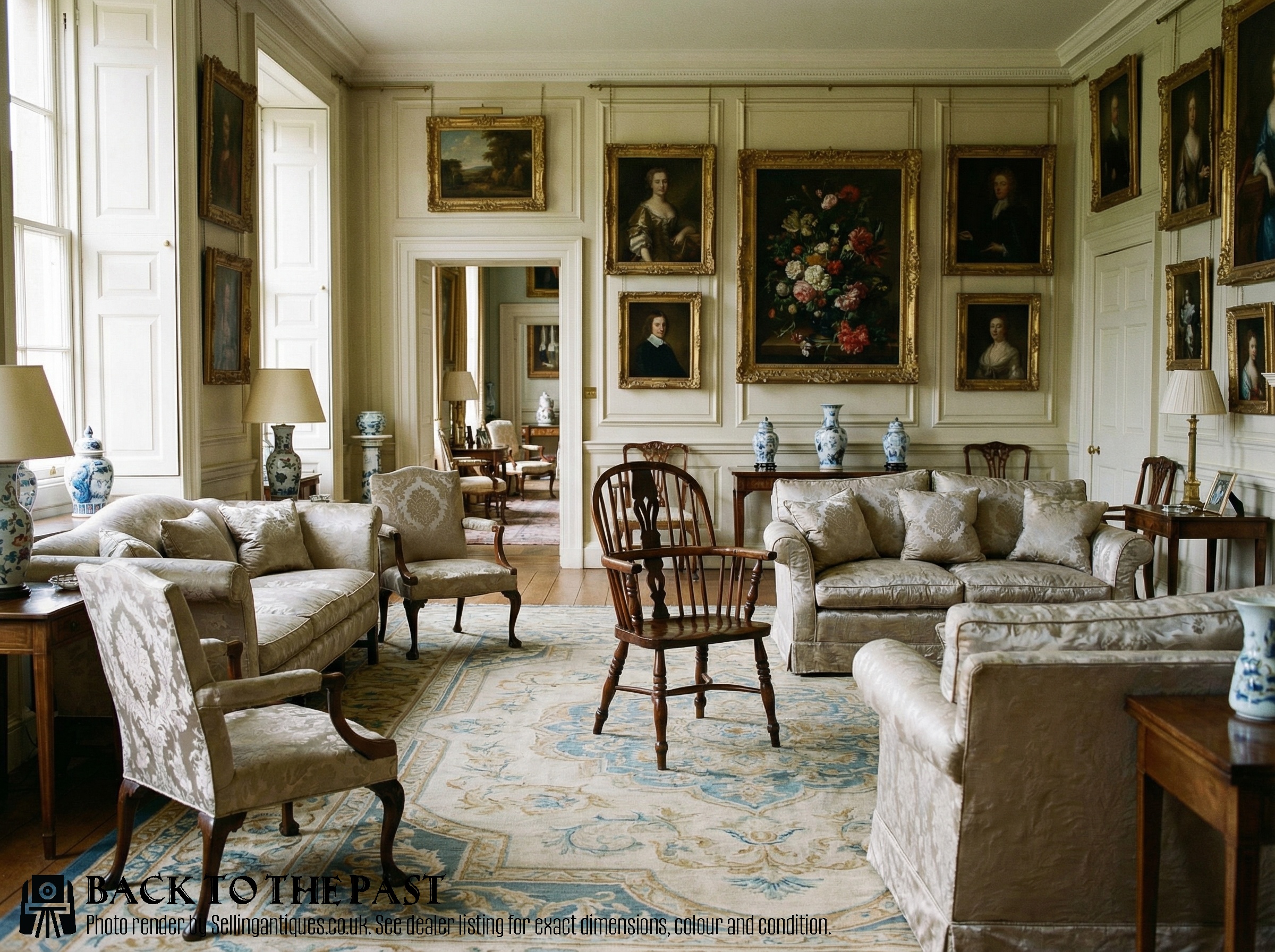
Traditional Windsor Armchair
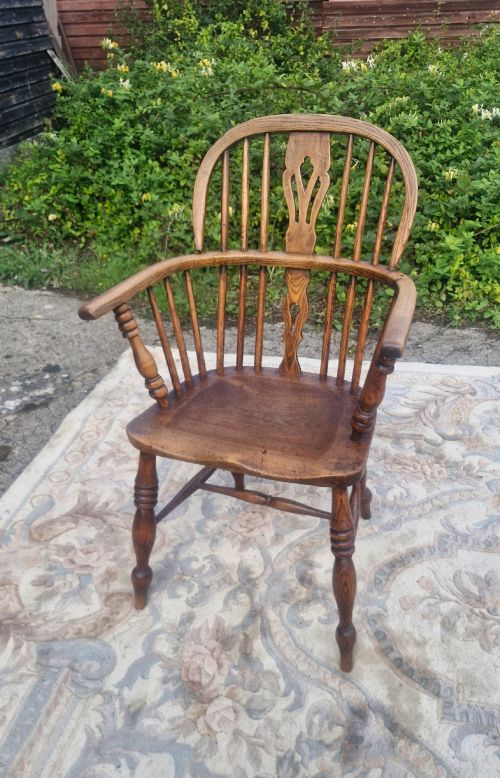
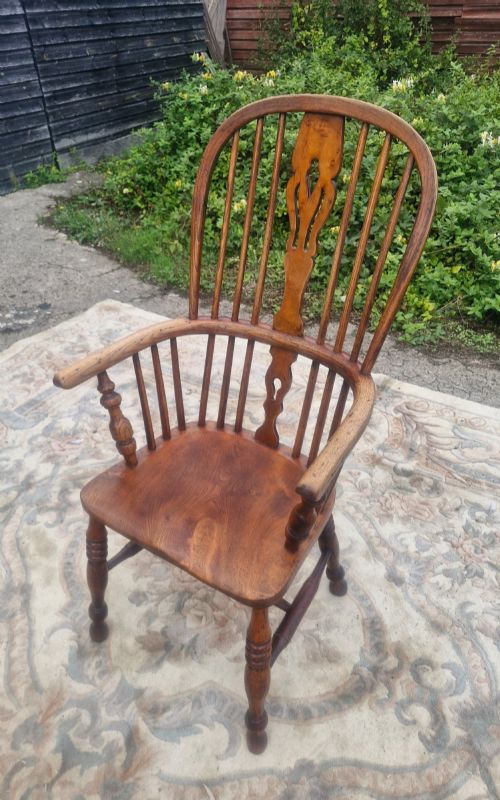
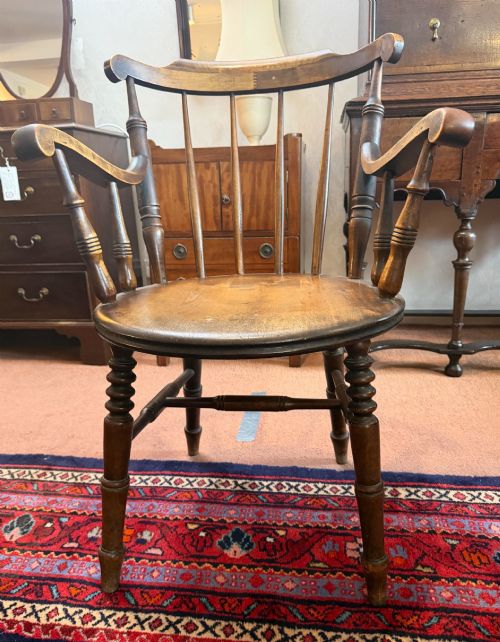
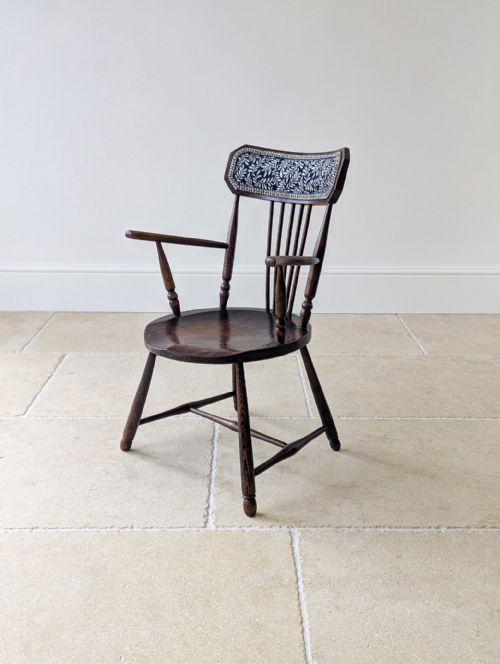
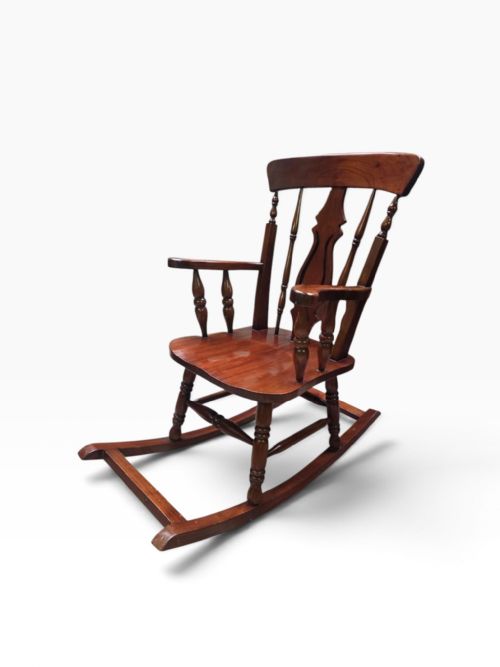
A traditional windsor armchair is a distinct form of seating defined by a solid wooden saddle-shaped seat into which the legs and back spindles are wedged directly. Buyers searching for this phrase encounter pieces spanning the Georgian, Victorian, and Edwardian eras, produced in regional styles across England, Wales, and Scotland.
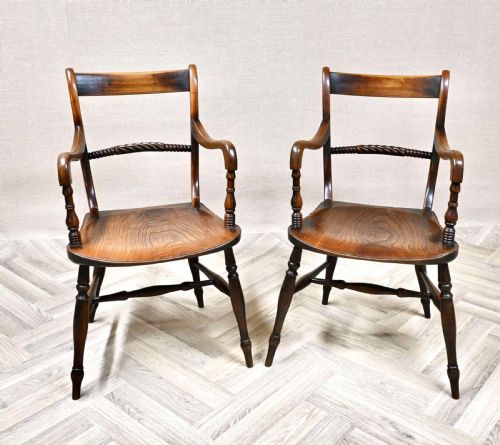
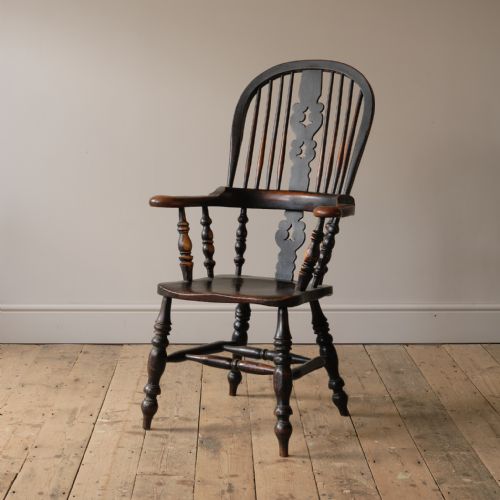
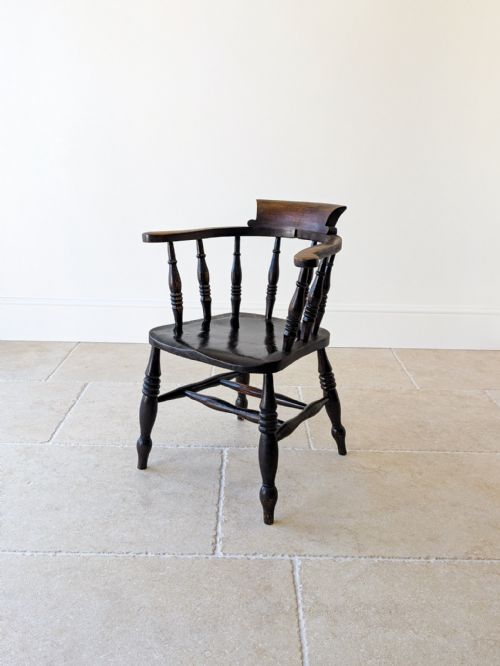
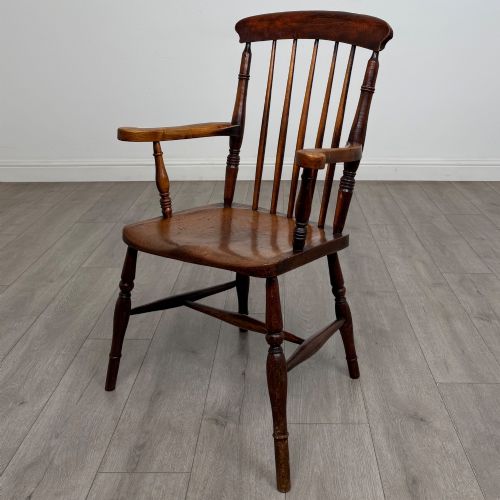
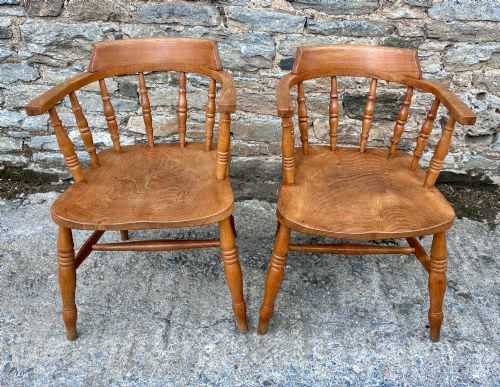
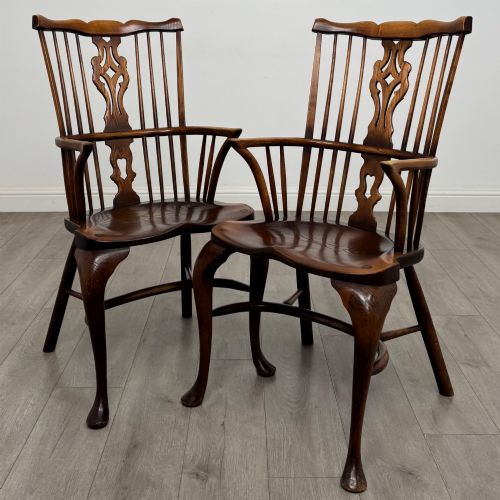
The versions most commonly met on this page include high-back, comb-back, wheel-back, and low-back armchair variants, alongside sturdy Captains chairs and smokers bows. These seating forms served practical roles in farmhouses, kitchens, and studies, resulting in enduring domestic shapes.
Origins stretch from the West Country to Scottish workshops, utilising vernacular designs that prioritized comfort and structural resilience over formal courtly aesthetics. Each piece demonstrates regional variations in comb shapes, splat designs, and arm construction.
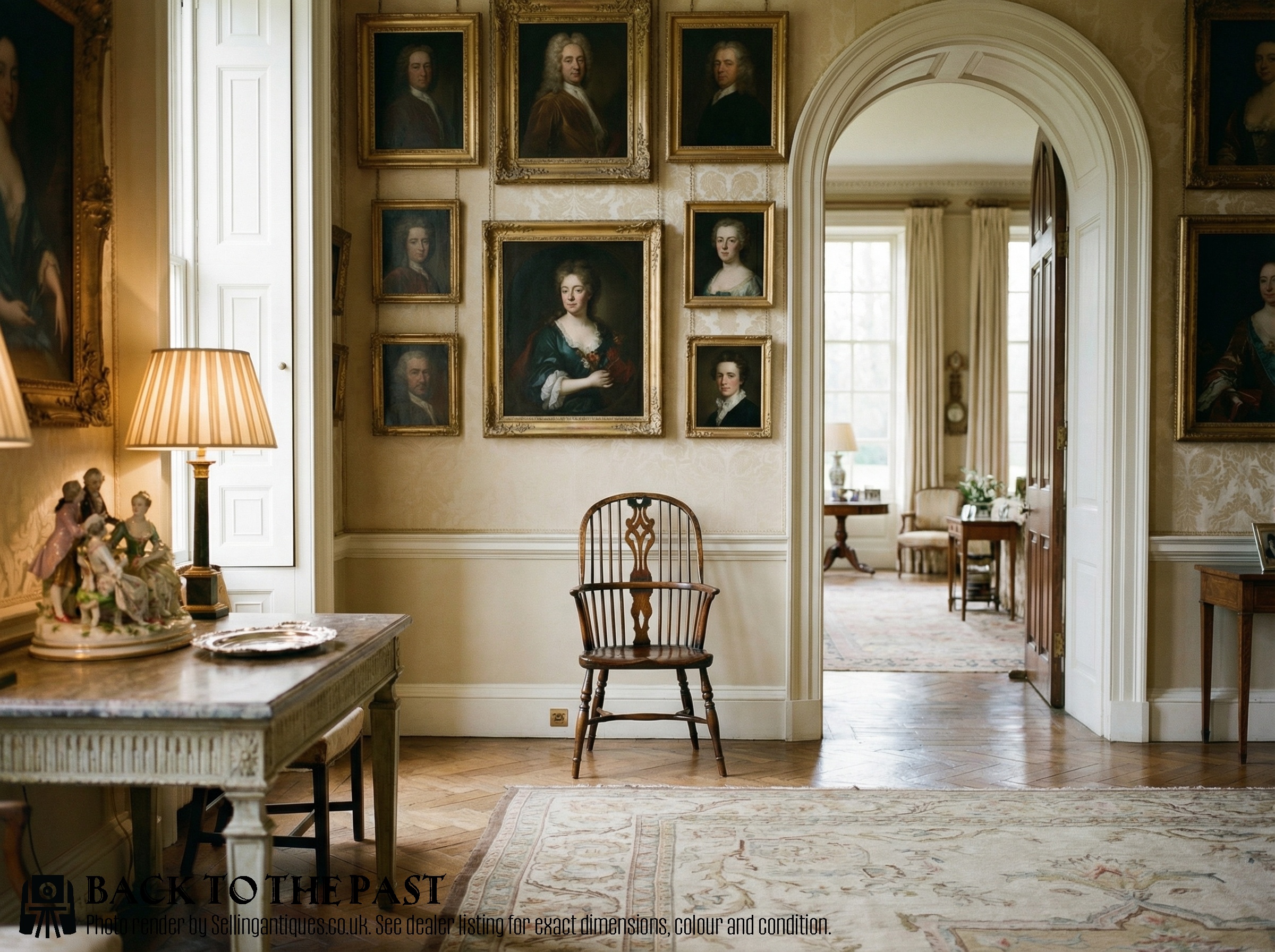
Materials and Construction
Makers constructed these chairs by combining different woods for specific structural demands, most frequently pairing elm seats with ash or yew for the bentwood bows and spindles. Elm provided a tough, interlocking grain for the solid seat that resisted splitting when legs were driven into it, while ash offered flexible strength for steam-bent hoops.
Turned components were produced on pole lathes, and back rails were bent into position using steam heat to achieve the characteristic curved profiles. Individual spindles were tapered and driven into drilled socket joints, often secured with wedges from above to lock the framework permanently in place.
Traditional Windsor Armchair Retail Price Guide 2026
Typical asking prices for traditional windsor armchair among the pieces listed under this phrase on Sellingantiques today, from the lower quarter to the upper quarter. They describe what is for sale here now, not the wider market.
Listings feature woods including elm, ash, oak, yew, beech, and birch across the 18th, 19th, and early 20th centuries.
Quality and Character
The distinction between ordinary and exceptional examples rests upon the choice of timber, particularly the figuring in yew wood and the depth of the carved elm saddle. Well-chosen grain patterns and well-balanced proportions elevate a piece from a utilitarian seat to a work of vernacular sculpture.
Patina and surface preservation separate chairs that retain their original scraped finishes from those stripped or overly sanded down through the decades. Subtle tool marks and smooth wear on the arms reflect an authentic history of use without compromising structural integrity.
J Spencer
The Traditional Windsor Armchair Glossary
- Comb-back
- A Windsor chair variation where the top rail resembles the spine of a comb, with vertical spindles rising through a horizontal arm-rail. This design provides robust upper back support.
- Crinoline stretcher
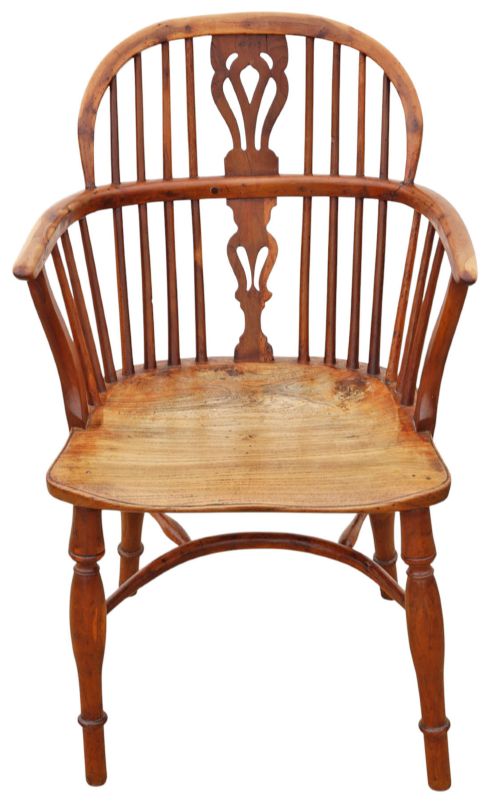
- A curved under-stretcher linking the legs of a chair in a continuous loop, often found on 18th-century and early 19th-century English Windsors. It adds rigidity to the lower framework.
- Smoker's bow
- A low-backed Windsor armchair with a continuous curved arm rail and turned spindles, commonly utilised in country inns and farmhouse smoking rooms during the 19th century.
- Wheel-back
- A Windsor chair style featuring a pierced central wooden splat carved in the shape of a spoked carriage wheel. This decorative motif gained popularity during the Georgian period.
- Saddle seat
- A thick wooden seat base shaped by adze and scorper into a concave contour that fits the human body. Elm was the preferred timber for this component due to its resistance to splitting.
Traditional Windsor Armchair: Frequently Asked Questions
How do I date a traditional windsor armchair?
Dating relies on observing construction methods, timber combinations, and the height and rake of the back assembly. Georgian examples often feature crinoline stretchers and yew construction, whereas later Victorian pieces utilise beech and incorporate factory-turned components.
Examining the tool marks beneath the seat and the wear on the footings provides further clues regarding age. Earlier pieces display hand-adzed seat contours and peg construction rather than modern adhesives.
Can I use a traditional windsor armchair at a dining table?
These armchairs serve well at the head of a dining table provided the arm height clears the underside of the table top. Their sturdy construction handles daily seating requirements without difficulty.
Checking the seat height against standard table clearances ensures comfortable positioning. The robust elm and ash frames offer reliable support for regular dining use.
Why are some traditional windsor armchairs made of yew?
Yew wood was selected for high-status country chairs due to its rich figuring, warm tone, and exceptional bending strength. Timber yards prized yew for stick-backs and comb-backs because the grain supported slender, resilient spindles.
Chairs utilising yew wood often command attention for their striking visual depth compared to standard ash or elm pieces. Makers reserved this dense timber for the most refined vernacular commissions.