
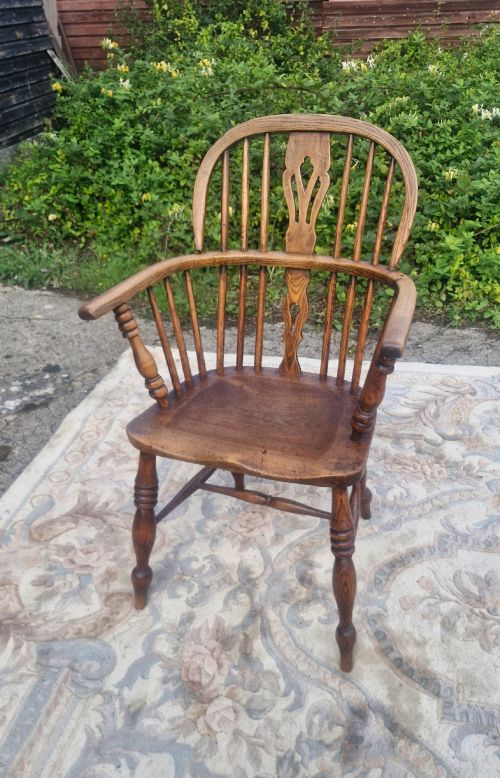
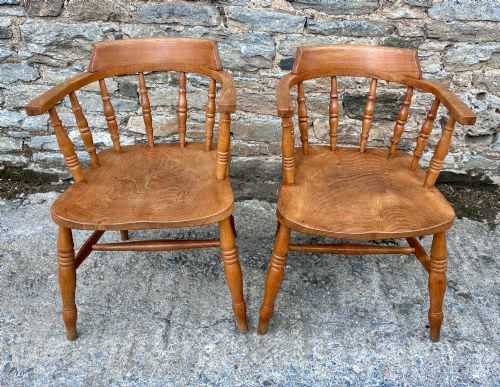
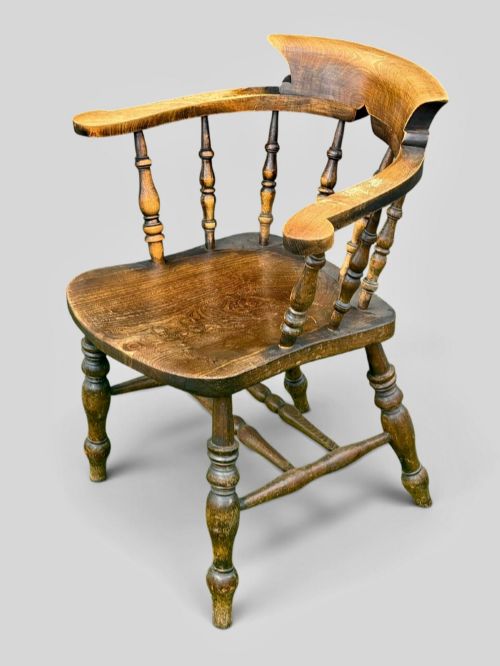
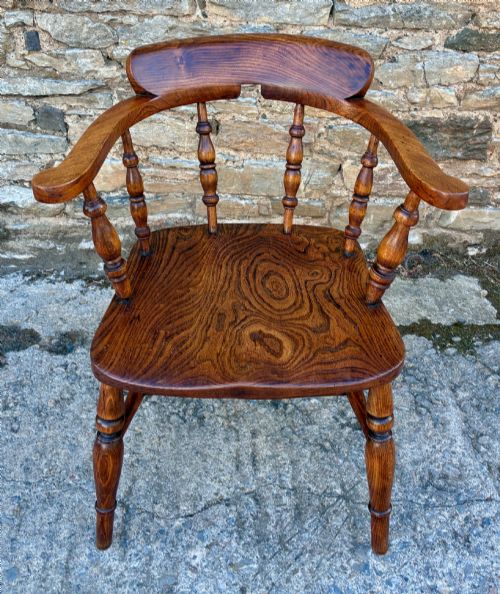
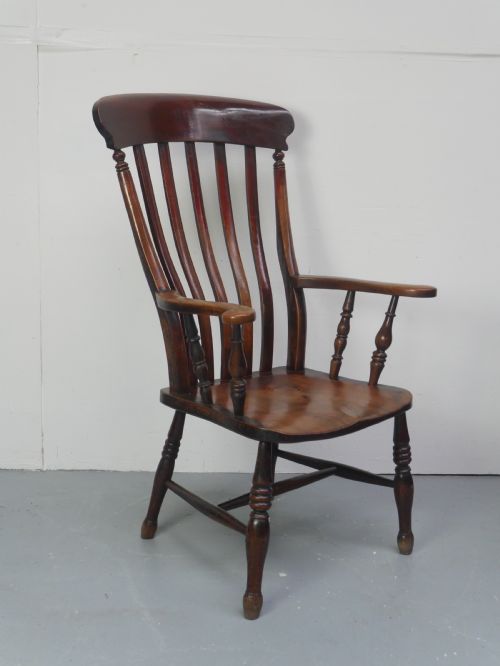
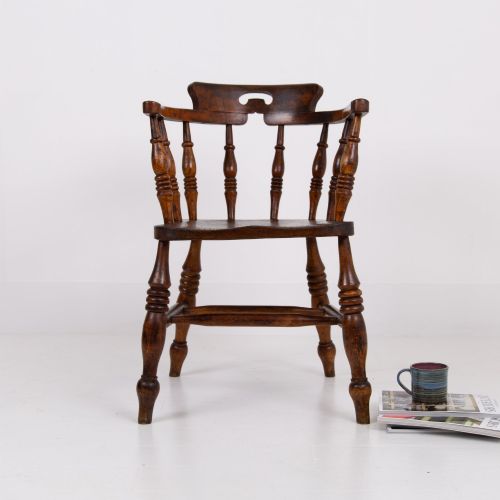
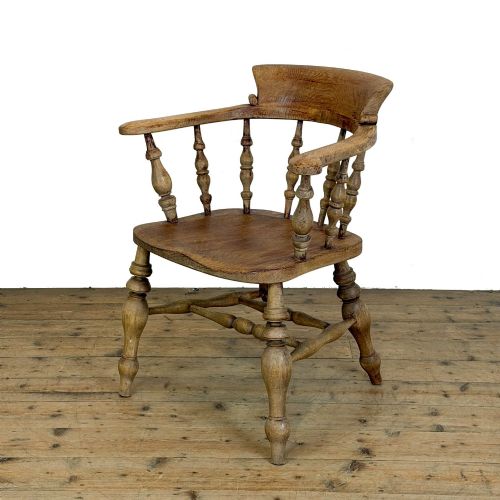
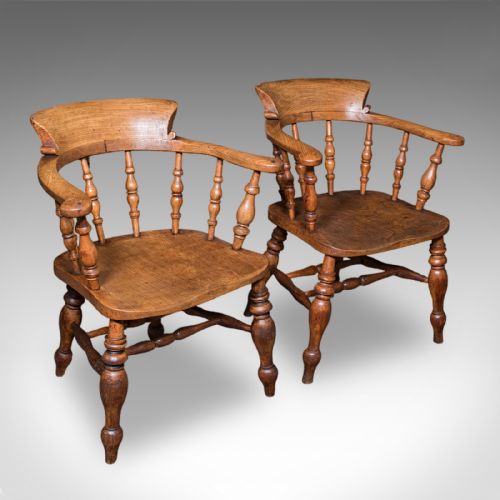
Elm Smokers Bow
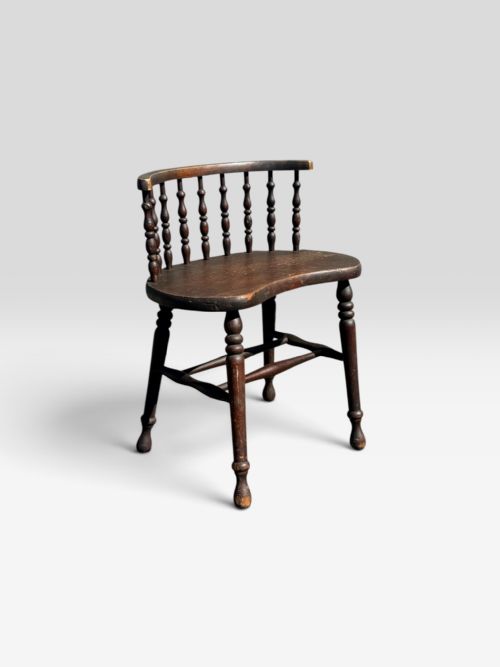
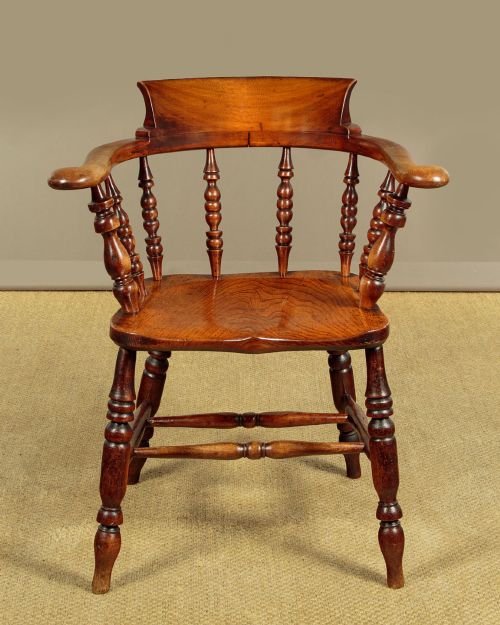
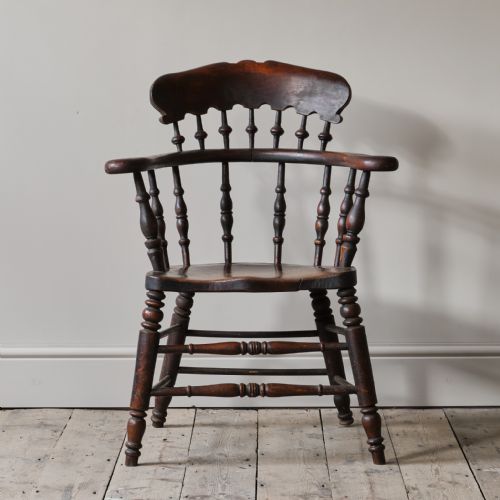
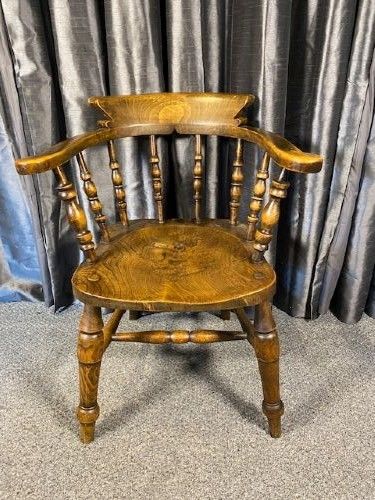
Elm smokers bow chairs combine country utilitarian strength with generous proportions, offering sturdy seating originally designed for domestic and commercial comfort.
Elm Smokers Bow
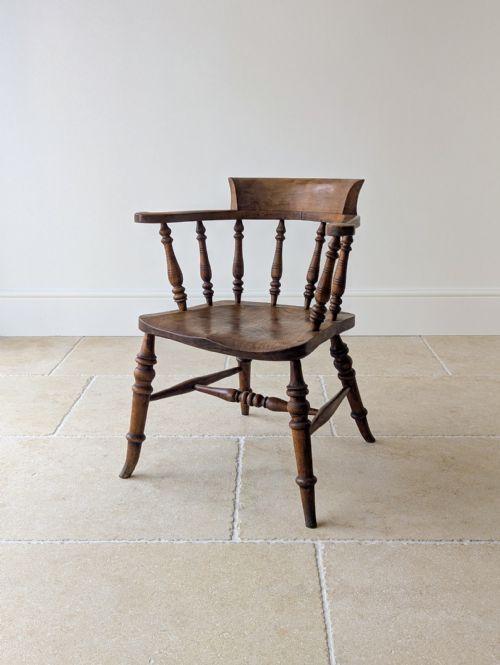
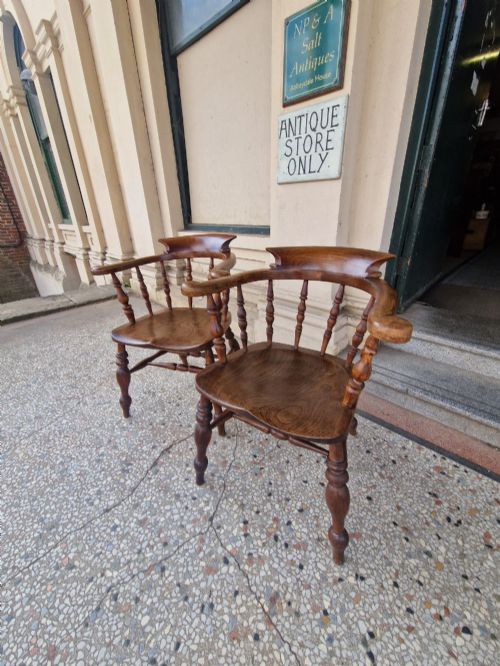
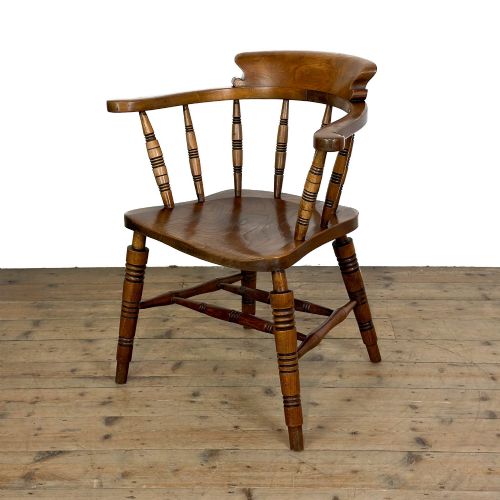
Elm smokers bow chairs are low-back Windsor derivatives featuring turned spindles and a continuous bentwood arm rail, commonly found in Victorian and Edwardian contexts.
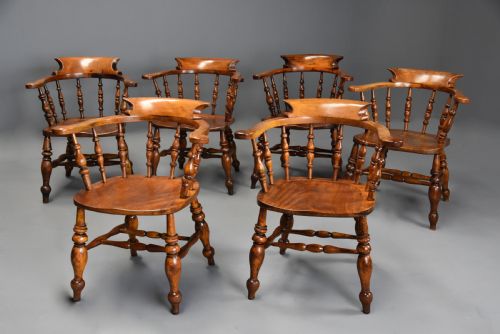
The selections available typically appear as individual armchairs or matched pairs, serving primarily as desk chairs, library seating, or farmhouse dining chairs.
Originating largely from 19th-century English country and Victorian workshops, these pieces bridge the gap between rustic utility and refined vernacular design.
How They Were Made
Construction relies heavily on a combination of native timbers, pairing a thick, sculpted solid elm seat with bentwood rails and turned spindle components.
Makers utilised contrasting woods such as beech or ash for the structural spindles, legs, and bow rails to provide the necessary tensile strength and rigidity.
Traditional joinery techniques involved wedge-tenoned legs and through-wedged spindles set directly into the saddle-shaped wooden seat base.
Elm Smokers Bow Retail Price Guide 2026
Typical asking prices for elm smokers bow among the pieces listed under this phrase on Sellingantiques today, from the lower quarter to the upper quarter. They describe what is for sale here now, not the wider market.
Materials recorded on this site include elm, beech, ash, oak, yew, and fruitwood.
What Varies in Quality
Variations in quality stem from the thickness and depth of the sculpted elm seat and the graceful sweep of the steam-bent back rail.
The balance of the turned spindles and the integrity of the original timber joints distinguish finer workshop output from more utilitarian examples.
Glenister High Wycombe
The Elm Smokers Bow Glossary
- Smokers bow
- A low-back Windsor armchair variant with a thick wooden seat and a curved arm rail, often associated with provincial pubs and captain's studies.
- Windsor chair
- A chair built with a solid wooden seat into which the legs and back spindles are direct-inserted, utilising various turned components.
- Steam bending
- A woodworking technique where timber is subjected to steam to make it pliable enough to curve into continuous arm rails.
- Saddle seat
- A wooden seat base hollowed out and shaped by hand for ergonomic comfort during extended periods of sitting.
- H-stretcher
- Horizontal timber bracing rods connecting the legs underneath the chair to provide structural rigidity and stability.
Elm Smokers Bow: Frequently Asked Questions
What is a smokers bow chair?
A smokers bow is a sturdy, low-back wooden armchair originating in the nineteenth century, closely related to the traditional Windsor chair family.
They were widely utilised in domestic studies, offices, and rural public houses for everyday seating.
How do I date an elm chair?
Dating relies on observing construction traits, timber ageing, tool marks, and specific stylistic shifts across the nineteenth and early twentieth centuries.
Earlier examples often feature deeper seat excavations and heavier under-framing compared to later Edwardian production.
Are these chairs comfortable for daily desk use?
The sculpted wooden seats and supportive curved arm rails provide a surprisingly ergonomic sit for working at a desk.
Many buyers pair them with a small pad or use them directly as office and library desk chairs.
Why are multiple woods used in one chair?
Country makers selected different native timbers for their specific physical properties, utilising dense elm for comfortable, stable seats.
Flexible ash or beech was chosen for the steam-bent rails and turned spindles to withstand daily tension and stress.