
Edwardian Captains Chair
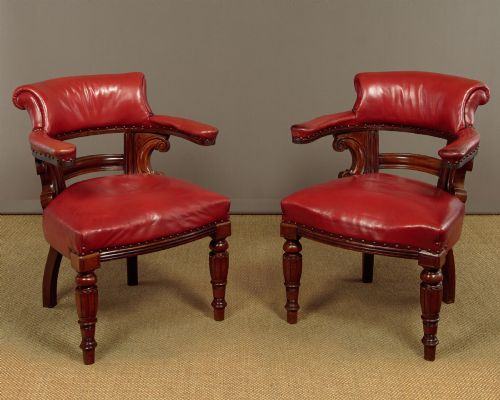
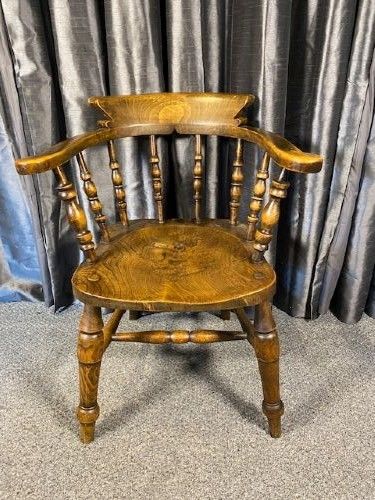
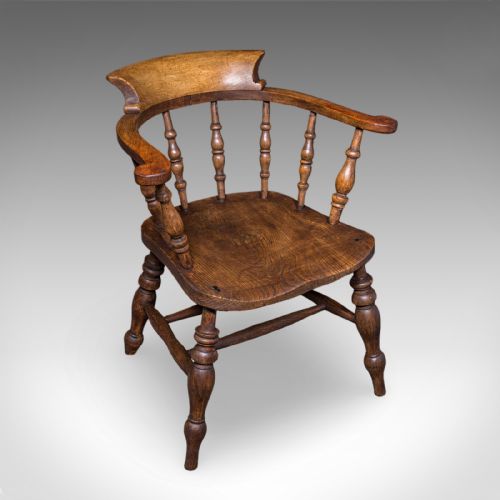
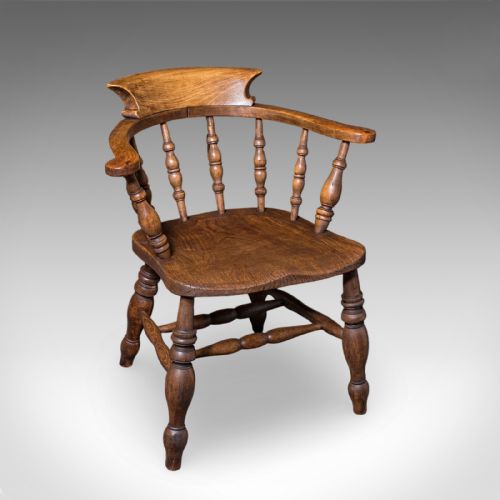
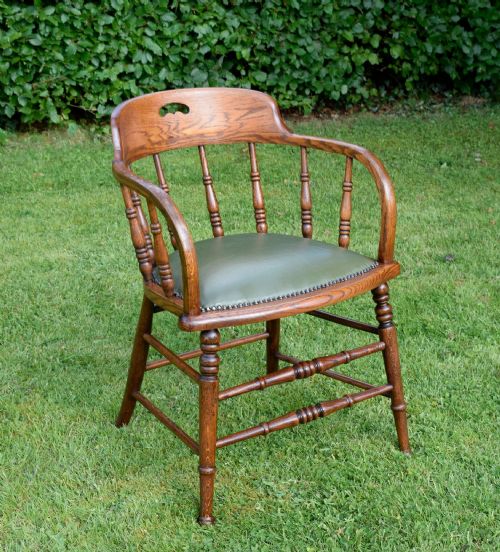
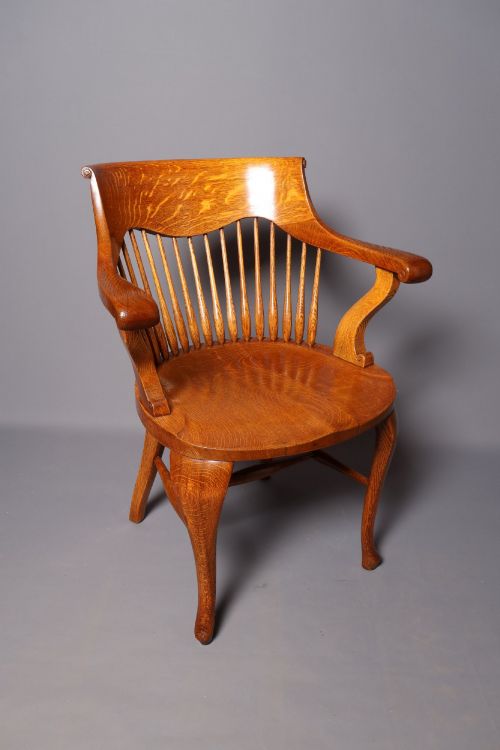
An edwardian captains chair combines sturdy working timber with a low, supportive elbow rest built for the office or study.
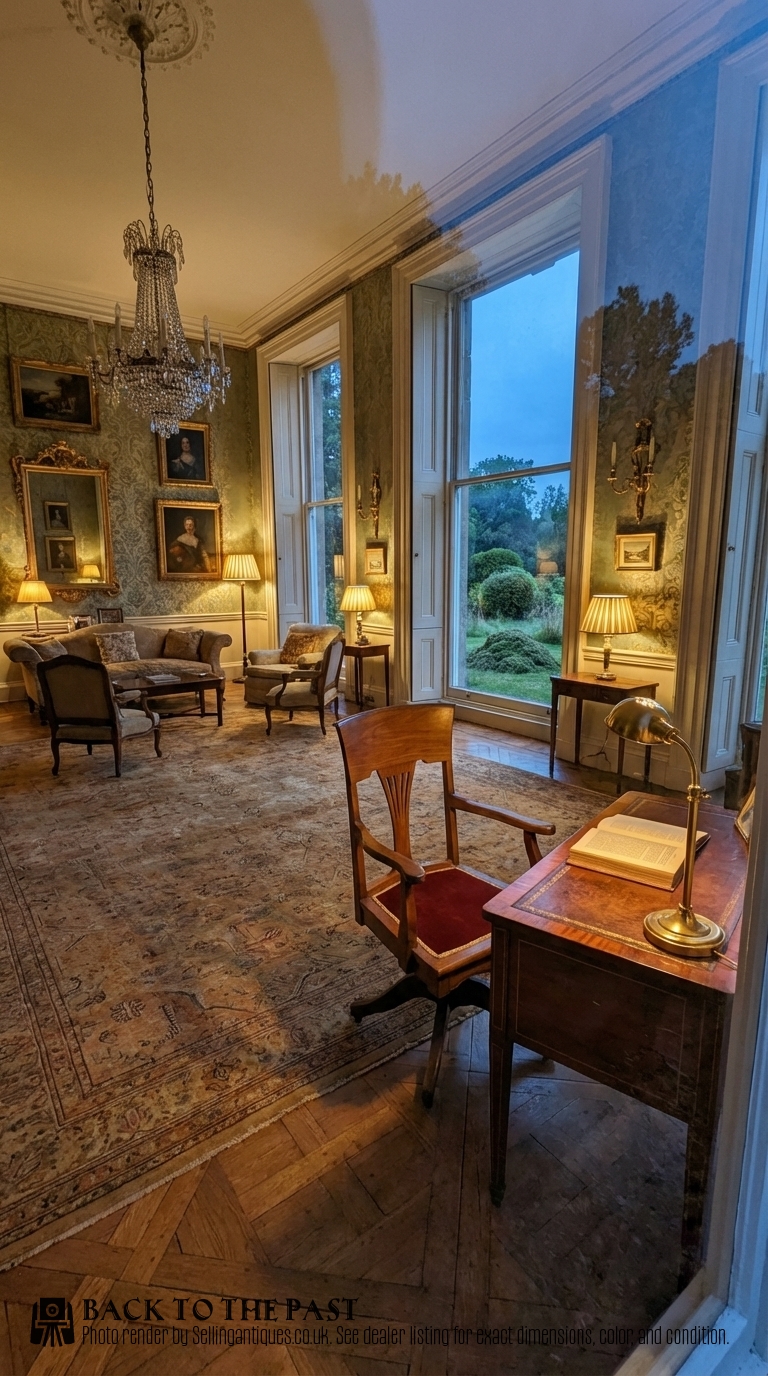
Edwardian Captains Chair
When you search for an edwardian captains chair, you encounter a robust form designed primarily for sitting at a desk or table. These seats bridge the gap between domestic comfort and functional workspace utility.
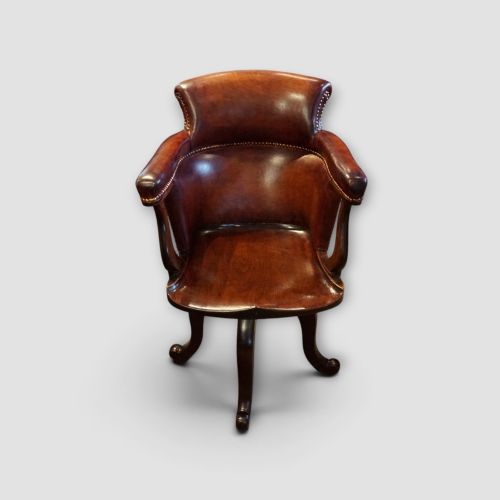
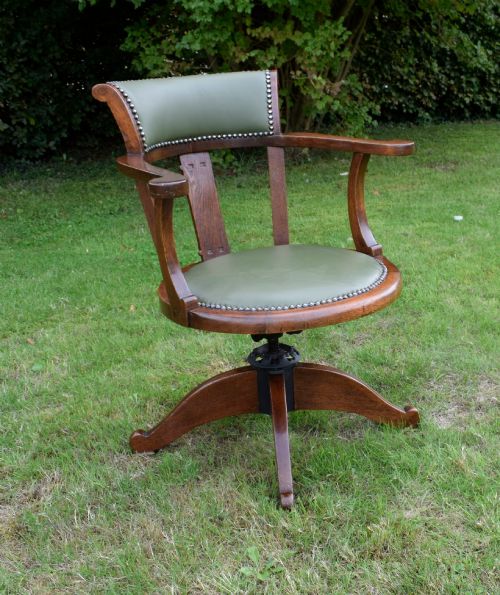
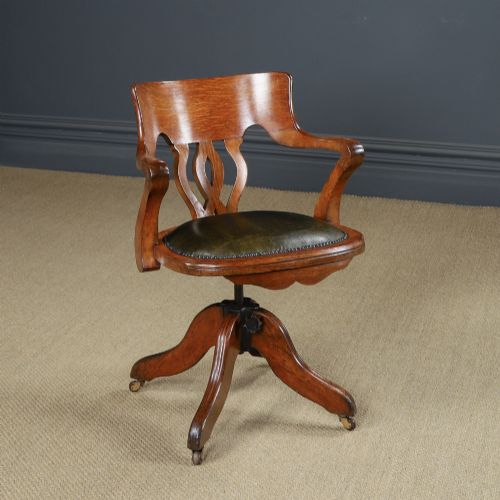
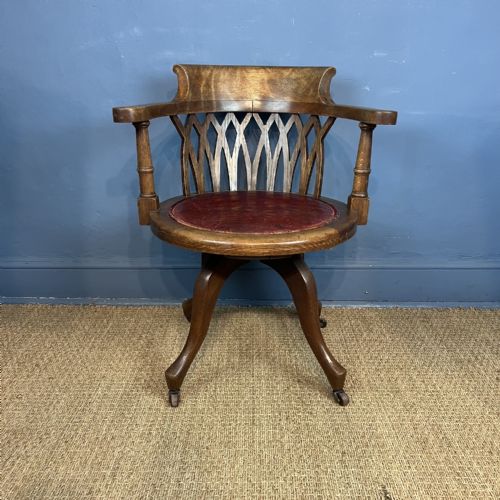
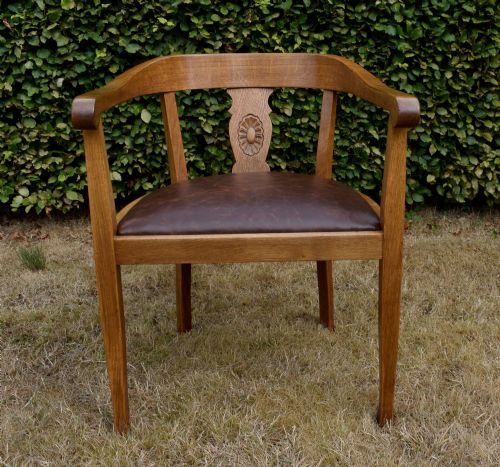
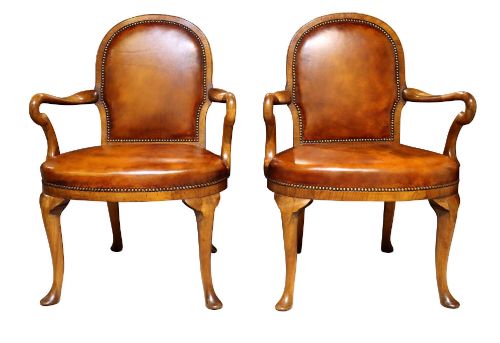
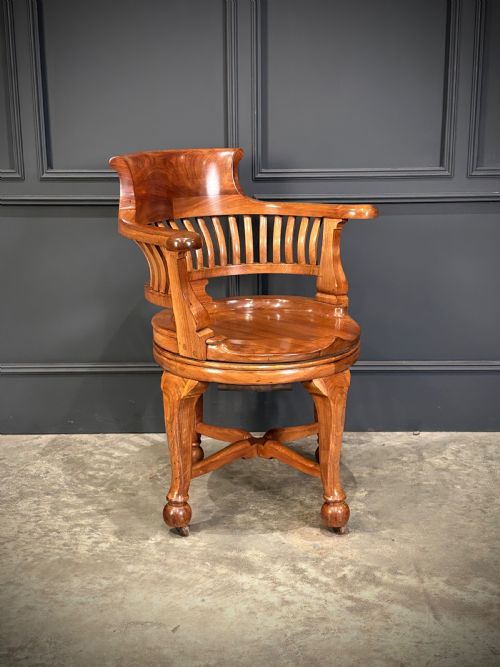
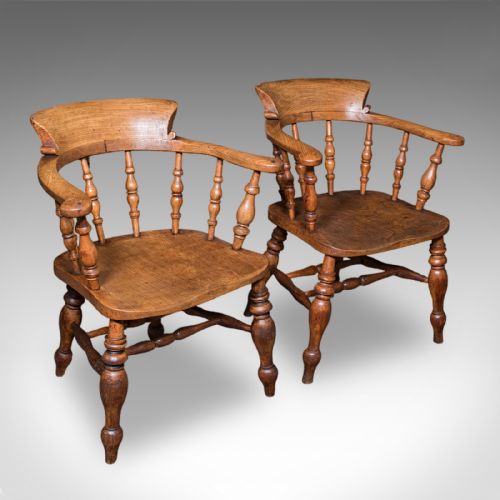
The versions most common on this page date from the Edwardian period and the surrounding early decades, often taking the form of a smoker's bow or a revolving desk chair with a low back. They appear in varieties ranging from simple timber elbow seats to padded leather desk chairs fitted with swivel and tilt actions.
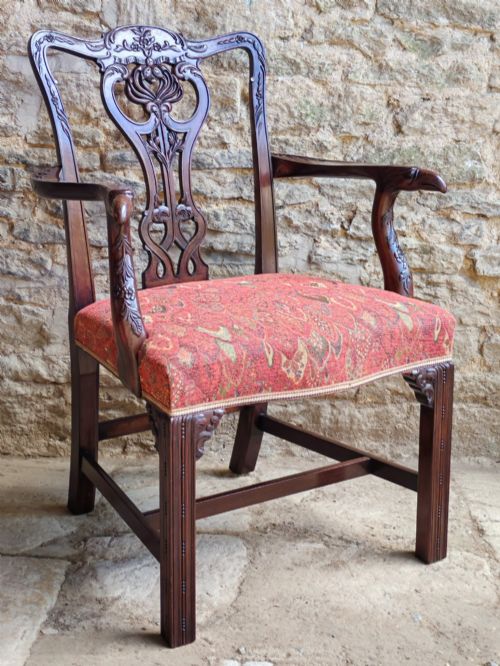
Makers of the era drew on earlier nineteenth-century precedents, producing versions in oak, mahogany, and walnut that suited both country house libraries and professional offices.
Materials and Construction
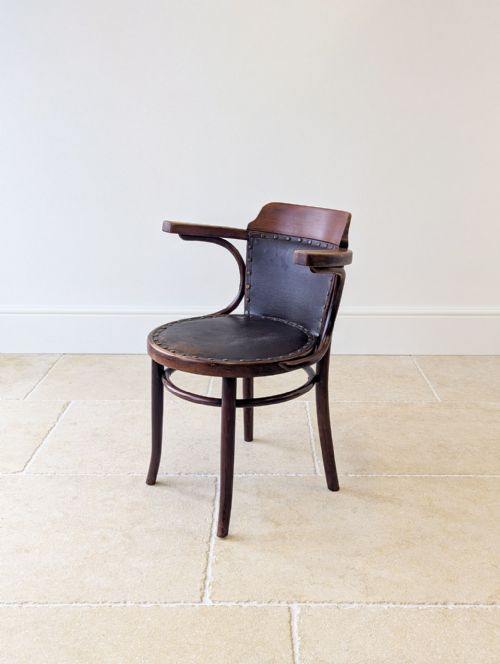
Construction relies heavily on durable hardwoods such as oak, mahogany, walnut, and beech, selected for their strength under daily stress. Many examples employ bentwood techniques or steam-curved staves to form the continuous rounded arm and back rail characteristic of the type.
Working mechanisms on swivel variants incorporate iron and brass spindles, allowing rotation and tilt adjustments for the seated user. Seats are either fashioned from solid shaped timber or upholstered in leather and velvet over supportive framing.
Edwardian Captains Chair Retail Price Guide 2026
Typical asking prices for edwardian captains chair among the pieces listed under this phrase on Sellingantiques today, from the lower quarter to the upper quarter. They describe what is for sale here now, not the wider market.
Some models originally spent their working lives aboard passenger liners or inside military campaign tents.
Assessing Quality and Build
Quality reveals itself in the weight of the timber and the integrity of the rotating mechanism. A superior swivel desk chair operates smoothly without excessive wobble in the iron spindle, maintaining structural firmness through the joints.
Finer examples show careful attention to the joinery of the arm bow and the quality of the hide or leather upholstery. The depth of the carved wood grain and the proportion of the spindle turnings also distinguish standard utility seating from finer workshop production.
Howard and Sons·J Elliott and Son
The Edwardian Captains Chair Glossary
- Smoker's Bow
- A sturdy wooden elbow chair with a rounded back rail, closely related to the Windsor tradition. It serves as a common foundational form for the captain's chair.
- Swivel Action
- A mechanical arrangement using a central iron or brass spindle that allows the seat to rotate. This mechanism frequently includes a tilt function on desk variants.
- Bentwood
- Wood softened by steam and bent into curved shapes, often used for the continuous back and arm rails of early twentieth-century office seating.
- Carver
- A traditional term for an armchair, often used interchangeably with elbow chair in listings for study and desk seating.
- Hide
- Animal skin used for upholstery on seats and desk pads, valued for durability and comfortable daily use in office environments.
Edwardian Captains Chair: Frequently Asked Questions
Are all captain's chairs swivel chairs?
Not all captain's chairs revolve on a central spindle. Many traditional smoker's bow styles feature fixed wooden legs designed for static placement around a table or desk.
Swivel actions appear more frequently on late nineteenth-century and early twentieth-century desk chairs intended for office work and study environments.
What is the difference between a captain's chair and a smoker's bow?
The terms are often used interchangeably in antique listings because both describe a low-backed wooden armchair with a continuous curved arm rail. A smoker's bow typically refers to the vernacular English country version with a simpler turned spindle back.
Captain's chairs often incorporate more formal office adaptations, including upholstered leather seats, mahogany frames, or mechanical swivel bases.
How do I identify an Edwardian example?
Edwardian seating from the opening decade of the twentieth century often displays lighter wood tones, cleaner lines, and a refinement of earlier Victorian proportions. Oak and mahogany remain prevalent, alongside early commercial swivel mechanisms.
Construction details and hardware fittings from this era reflect industrial improvements in furniture production while retaining traditional joinery.
Can I use these chairs at a modern desk?
These chairs function well at contemporary desks provided you check the height clearances underneath the work surface. The low elbow height of a captain's chair usually allows the arms to slide neatly beneath standard desk drawers.
Swivel and tilt variants offer ergonomic adjustment similar to modern office seating while retaining period character.