

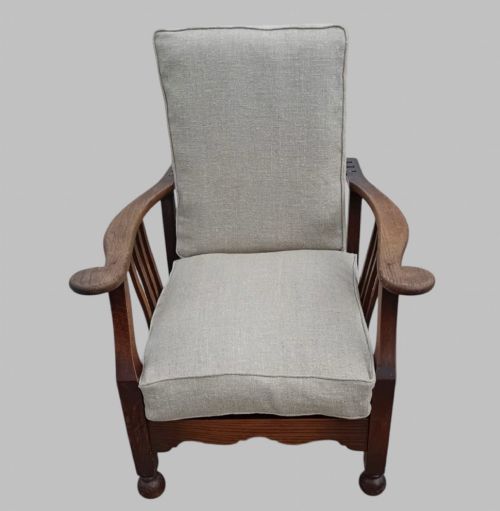
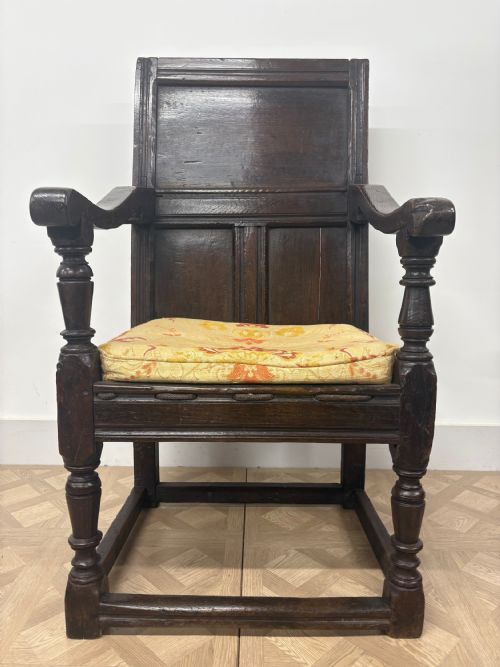
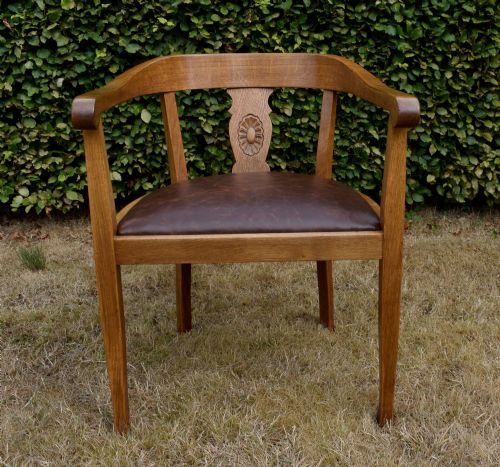
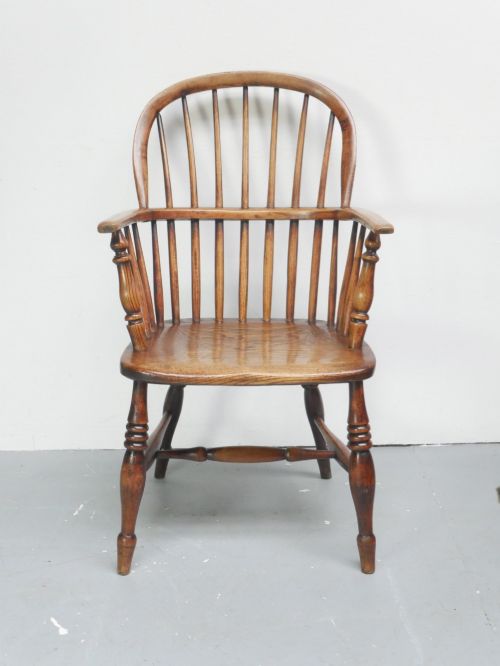



Solid Oak Armchair
A solid oak armchair brings centuries of sturdy British seating tradition straight into the modern room.
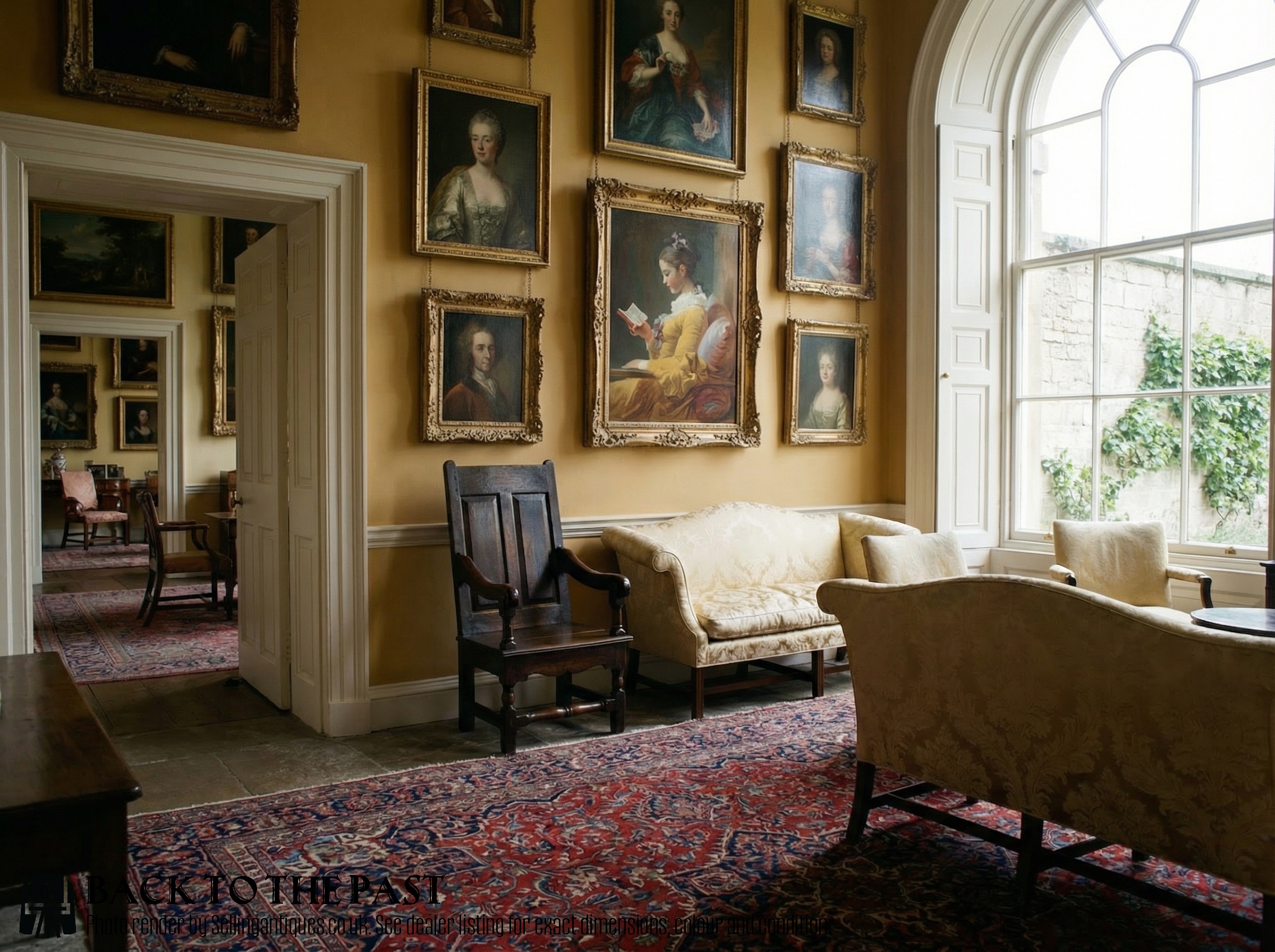
What these armchairs are
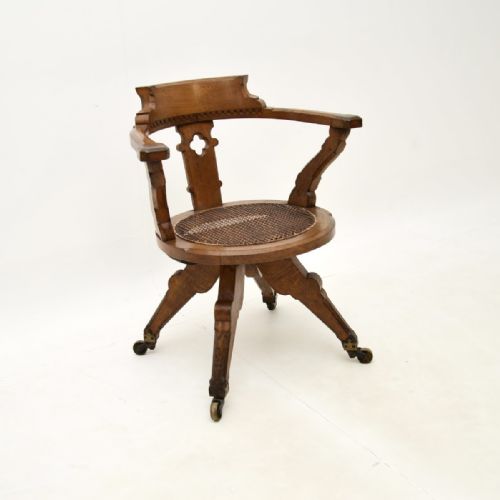
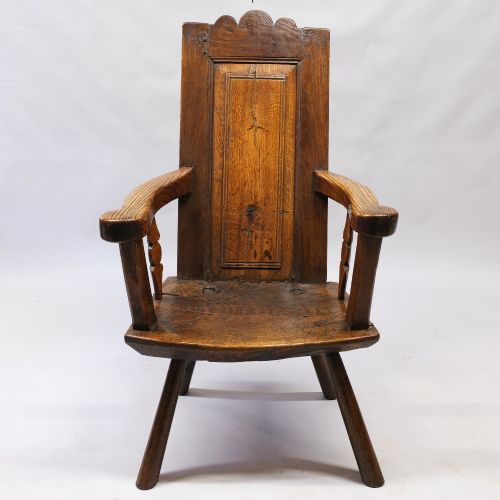
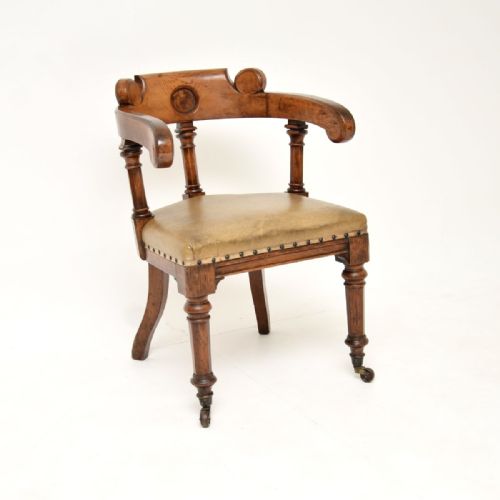
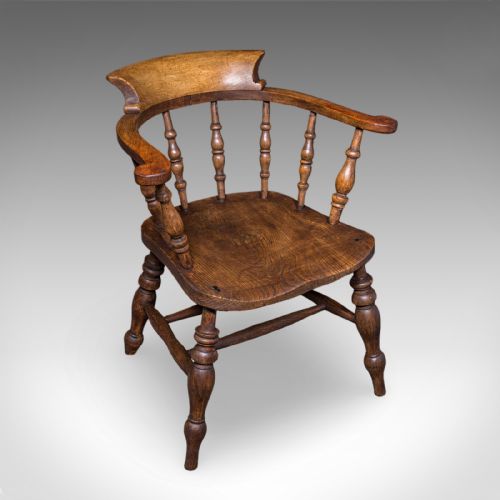
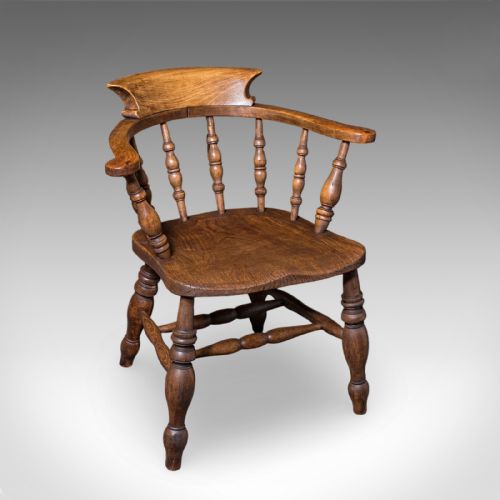
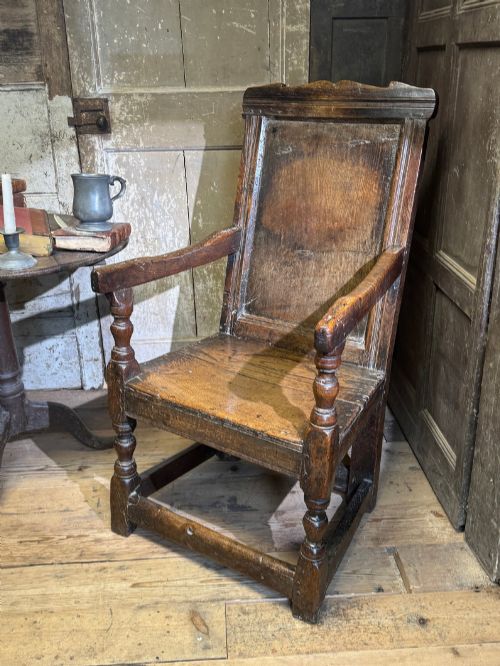
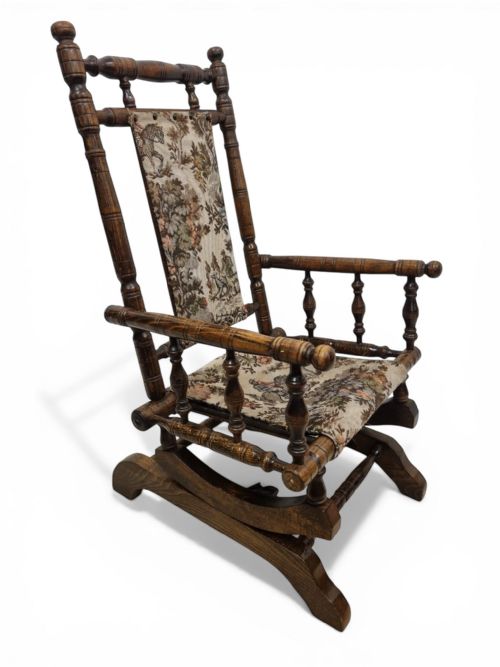
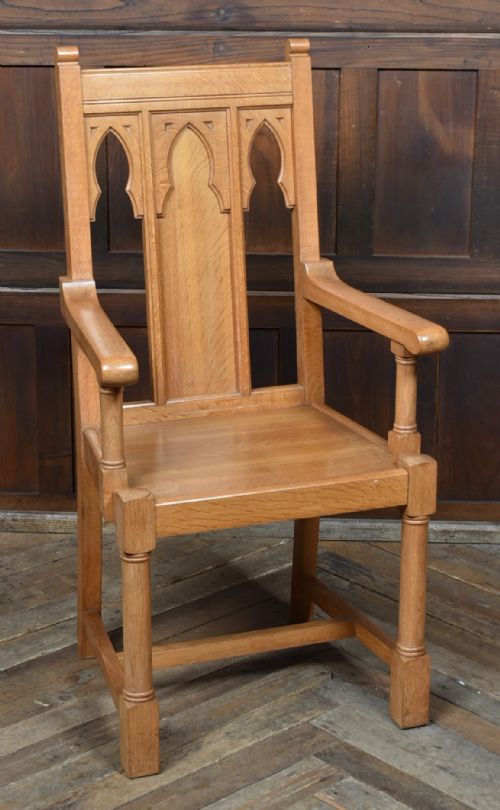
A solid oak armchair covers several distinct forms found across centuries of British and continental design. The pieces on this page range from heavy seventeenth-century frames to Edwardian smoker's bows and Arts and Crafts desk chairs.
Buyers will most frequently encounter nineteenth and early twentieth-century interpretations, including country house captain's chairs, reading seats, and office desk chairs. These utilitarian forms rely on robust timber construction for everyday use.
Earlier examples from the seventeenth and eighteenth centuries appear alongside revival styles such as Jacobean and Arts and Crafts. Each period brings distinct proportions and turning details to the solid oak framework.
How they were made
Construction relies entirely on sturdy oak timbers, joined with traditional methods like mortise and tenon. Frame components are shaped using hand tools, lathes, and occasionally hand carving.
Upholstery and cane seating appear across various periods, integrated directly into the wooden frames. Leather inserts and drop-in pads provide comfort on desk and reading chairs.
Retail Price Guide 2026
Typical UK retail prices for solid oak armchair, calculated from the Sellingantiques database of over a million retail prices indexed since 2003. This retail price guide relies exclusively on Sellingantiques data; no external sources or auction records are used, so the figures do not describe the wider market.
The listings span five distinct centuries, running from the seventeen hundreds through to the nineteen thirties.
What varies in quality
Quality rests in the weight and selection of the timber, alongside the crispness of any hand-carved detailing. Earlier or custom pieces display tighter joint integration and more substantial structural mass.
Design restraint and proportion separate standard utilitarian workshop pieces from exceptional Arts and Crafts or branded London productions. The integration of original upholstery or secondary materials also influences the piece's integrity.
Goodyers of London·Heals
The Solid Oak Armchair Glossary
- Smoker's bow
- A low-backed Windsor-style armchair with a continuous bentwood rail. These comfortable seats were common in country houses and smoking rooms.
- Captain's chair
- A sturdy wooden armchair designed for office or desk use, featuring a rounded spindle back. They offer robust support during prolonged sitting.
- X frame
- A structural chair design where the legs cross in an X shape beneath the seat. This form appears frequently in Arts and Crafts and revival pieces.
Frequently Asked Questions
How do I identify a seventeenth century chair?
Seventeenth century examples feature pegged mortise and tenon joints with heavy, hand-cleaved oak panels. The timber often shows deep patination and distinct tool marks from primitive working methods.
Proportions tend to be rigid and upright, lacking the ergonomic curves developed in later centuries. Turnings on the legs and stretchers are hand-chiselled rather than cleanly lathe-cut.
Are these chairs suitable for daily desk use?
Desk chairs from the Victorian and Edwardian periods were specifically built for prolonged daily sitting. Their solid wooden frames provide reliable structural support.
Adding a simple leather or wool cushion helps soften the firm wooden seats for modern comfort. The robust oak construction handles regular movement without loosening.
What is an Arts and Crafts oak armchair?
Arts and Crafts chairs emphasise honest construction and visible joinery over surface decoration. They celebrate the natural grain of the solid oak.
These pieces often feature clean vertical spindles, leather lacing, or supportive X-frame structures. They reflect a deliberate move away from mass-produced factory furniture.
How do I maintain solid oak furniture?
Maintain solid oak by keeping chairs away from direct heat sources and dramatic humidity swings. This prevents the heavy timber from splitting or warping.
Applying a traditional beeswax polish occasionally nourishes the dry wood and preserves its natural finish. Avoid modern chemical sprays that can damage historic patination.