



Curved Back Desk Chair
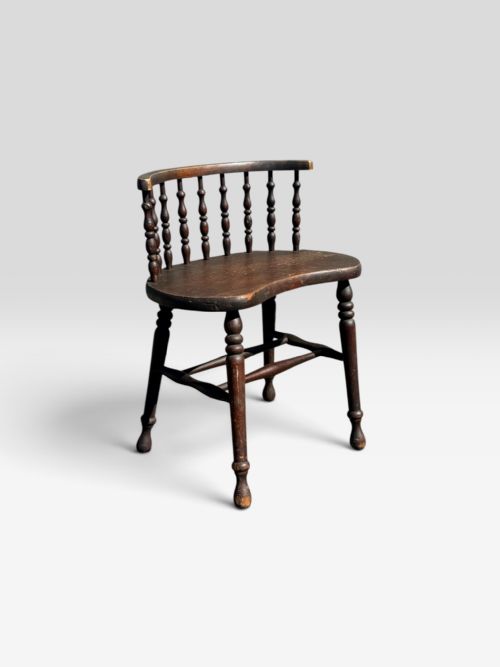
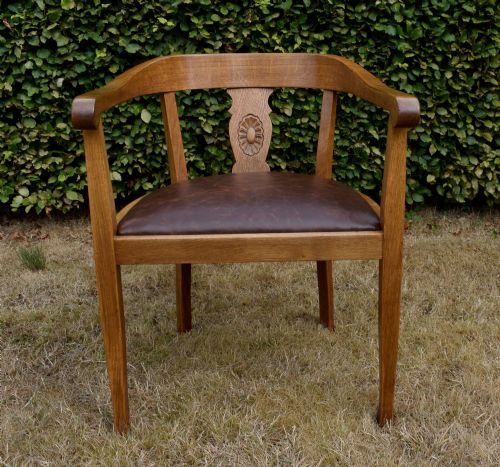
These curved back desk chair options offer solid timber construction and ergonomic support, making them a practical choice for any traditional study.
Curved Back Desk Chair
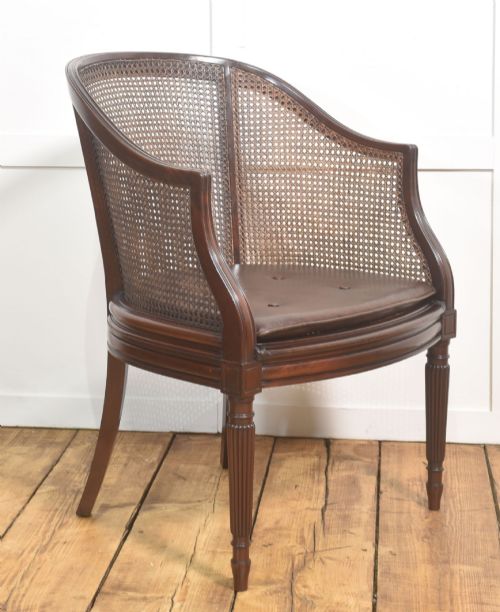
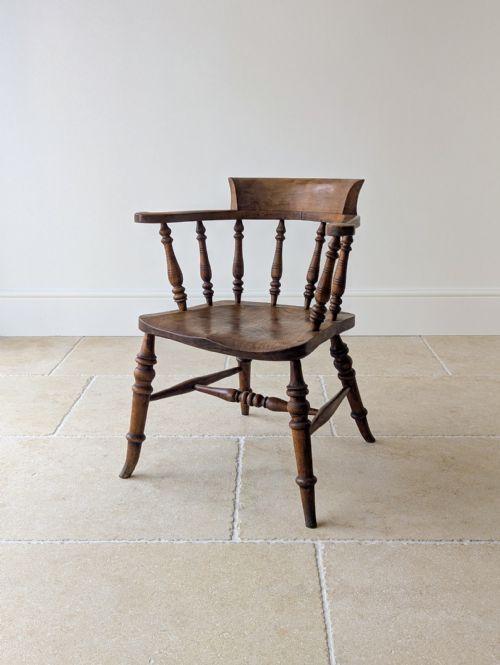
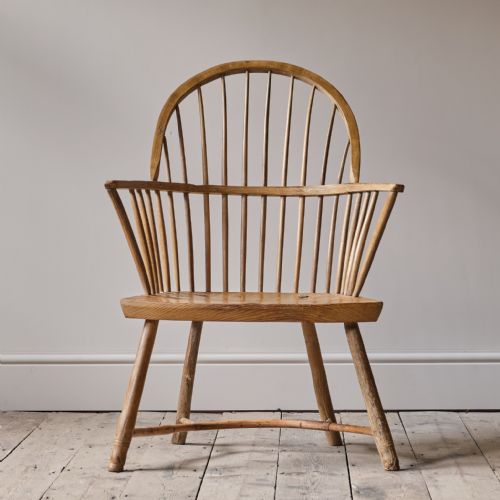
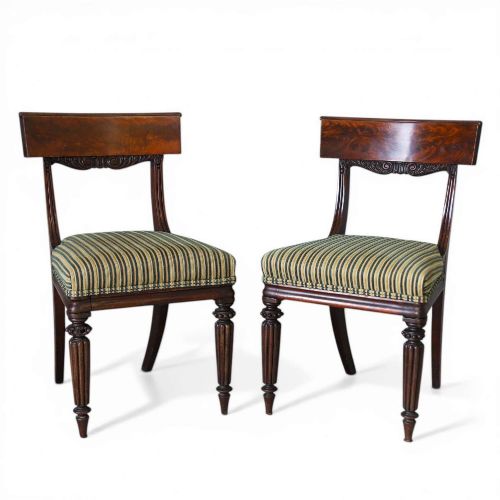
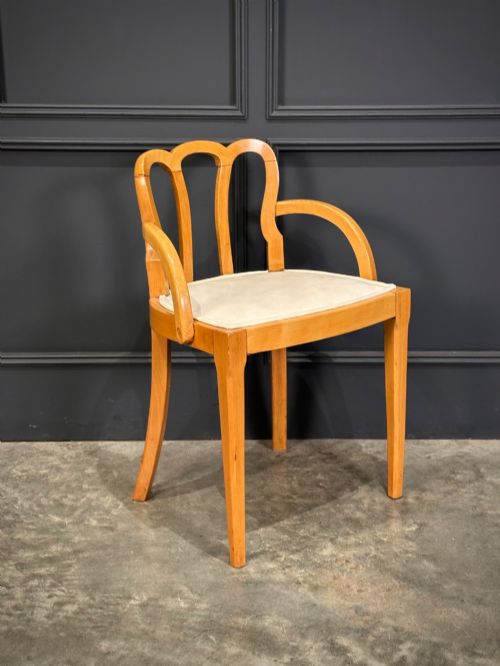
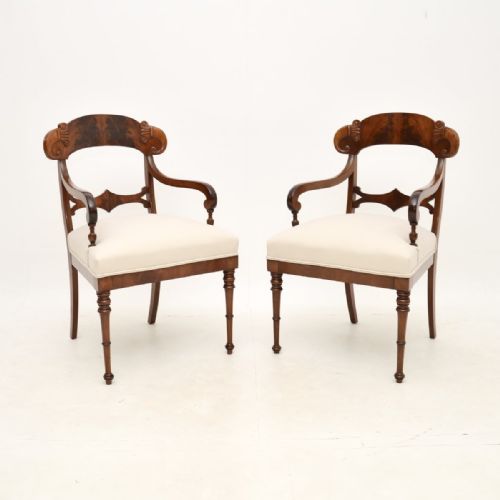
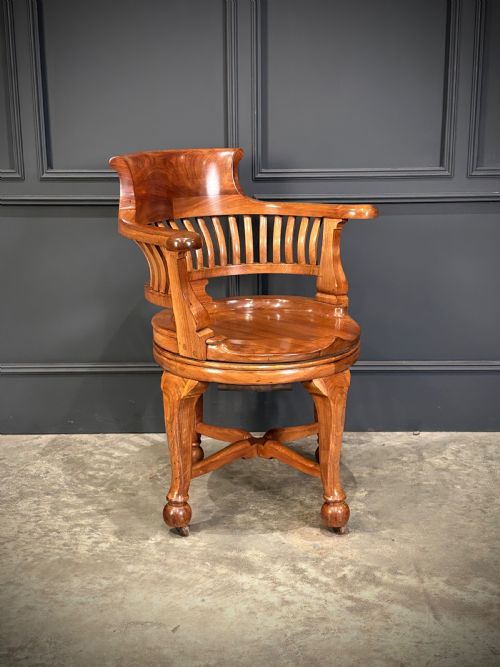
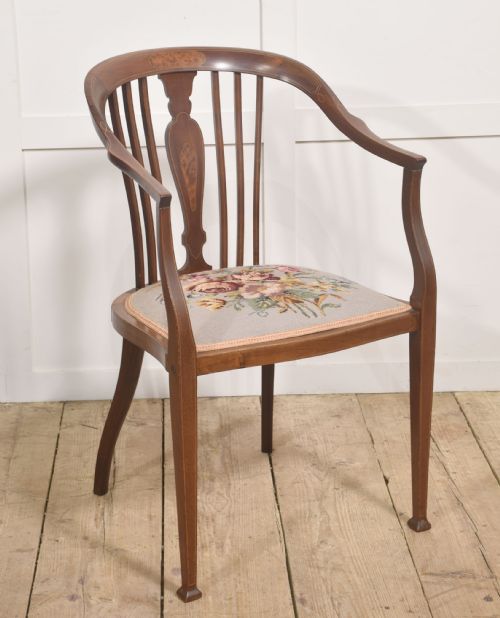
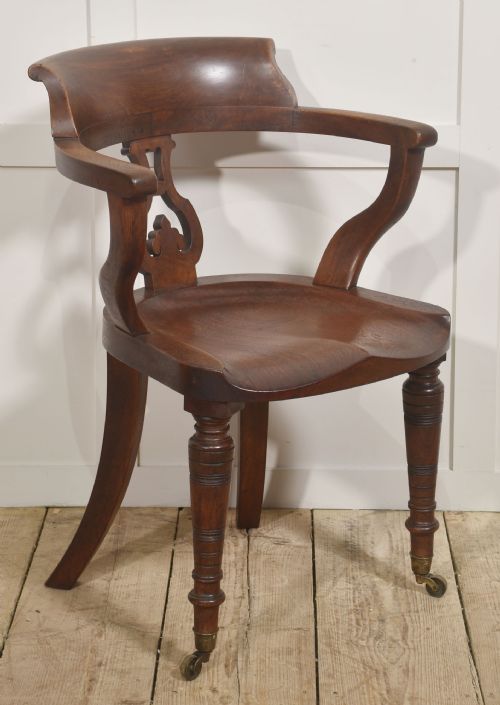
A curved back desk chair is a seating form designed for workspace utility, appearing frequently here in nineteenth-century and Edwardian interpretations. You will encounter forms styled as captain's chairs, tub armchairs, and swivel seats designed to fit neatly beneath a writing table. These pieces span periods from the Regency era through the early twentieth century, reflecting shifting tastes in domestic and office comfort.
The materials utilised in these pieces lean heavily towards durable timbers like mahogany, elm, and oak, often paired with leather or fabric upholstery. Many examples originate from English country workshops or standard Victorian cabinet makers, prioritising sturdy construction and supportive armrests. The selection ranges from simple low-back Windsor designs to inlaid satinwood tub chairs intended for lighter domestic use.
How they were made
Makers constructed these chairs primarily using solid hardwoods such as mahogany, oak, elm, and beech, often shaped with steam to achieve the characteristic rounded backrest. Timber selection dictated the structural integrity, with dense woods like walnut and yew utilised for weight-bearing components and swivel mechanisms. Joinery relied on traditional mortise and tenon joints, ensuring the frame endured daily movement and pressure.
Upholstery methods involved drop-in seats or fixed pads covered in leather, cane, or fabric, fixed securely to the wooden frame. Surface finishing typically comprised hand-applied polish or wax, which enhanced the natural grain of the mahogany, satinwood, or oak without obscuring the material.
Curved Back Desk Chair Retail Price Guide 2026
Typical asking prices for curved back desk chair among the pieces listed under this phrase on Sellingantiques today, from the lower quarter to the upper quarter. They describe what is for sale here now, not the wider market.
Several chairs include secret swivel mechanisms that let nineteenth-century clerks spin in circles while pretending to work hard.
What varies in quality
The selection of timber grade and grain figure heavily dictates the distinction between standard utility seating and finer workshop output. Chairs featuring high-figured burr elm, finely figured mahogany, or intricate satinwood inlay demonstrate a higher tier of craftsmanship than plain regional equivalents. Additionally, the subtlety of the steam-bending in the curved backrest reveals the maker's skill in handling resistant hardwoods.
The complexity of the mechanism and structural hardware further separates baseline examples from superior pieces. Swivel actions, brass fixings, and sophisticated hoop-back joinery require precise engineering that elevates the piece beyond a standard domestic side chair. The integration of upholstered elements, such as neatly fitted leather pads or tightly woven cane panels, also marks the distinction in overall execution.
Benjamin Gilling·Edward William Godwin
The Curved Back Desk Chair Glossary
- Tub armchair
- A comfortable seat featuring a continuous low curved back and arms forming a single enveloping enclosure. This form provides solid lateral support during long hours at a desk.
- Windsor chair
- A wooden seating form constructed with spindles inserted into a solid sculpted seat. These chairs often feature a bentwood bow back for ergonomic comfort.
- Captain's chair
- A sturdy wooden armchair with a low curved back designed to fit beneath a captain's cabin table or office desk. They frequently incorporate solid elm or mahogany timbers.
- Swivel chair
- A seat mounted upon a rotating spindle or mechanical base allowing lateral movement. This functional adaptation became popular in offices during the late nineteenth century.
- Inlay
- A decorative technique where contrasting woods like satinwood are inserted into recesses within the primary timber surface. This adds subtle visual detail to the chair back or frame.
Curved Back Desk Chair: Frequently Asked Questions
What defines a curved back desk chair?
These seats feature a rounded or horseshoe-shaped backrest designed to cradle the user while working at a table. They combine domestic comfort with functional support.
They appear in various timbers like mahogany, oak, and elm, spanning periods from the Regency era to the early twentieth century.
How do I identify an Edwardian desk chair?
Edwardian examples often utilise lighter mahogany or satinwood frames, occasionally featuring subtle inlay work. They reflect a refined aesthetic compared to heavier Victorian counterparts.
Look for slender proportions and refined turnings that distinguish the period from earlier nineteenth-century styles.
Were these chairs used in offices?
Many solid oak and mahogany versions served professional environments, sometimes incorporating swivel mechanisms for mobility. They were built for daily utility.
Sturdy timbers like elm and beech ensured these desk seats withstood heavy workplace use over decades.
What is a captain's chair?
A captain's chair is a robust wooden armchair featuring a low, continuous curved backrest supported by vertical spindles. The design prioritises sturdy construction and stable seating.
They frequently appear in elm or oak, designed originally for ship cabins and later adopted for domestic studies.