

Vintage Office Seating
These vintage office seating pieces bring working history straight to the desk, offering solid timber frames and worn leather seats built to last.

Vintage Office Seating
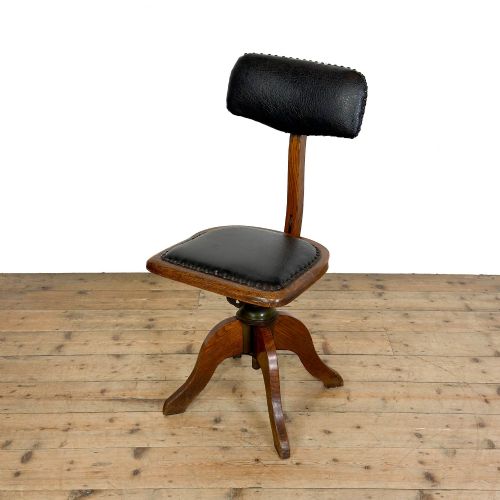
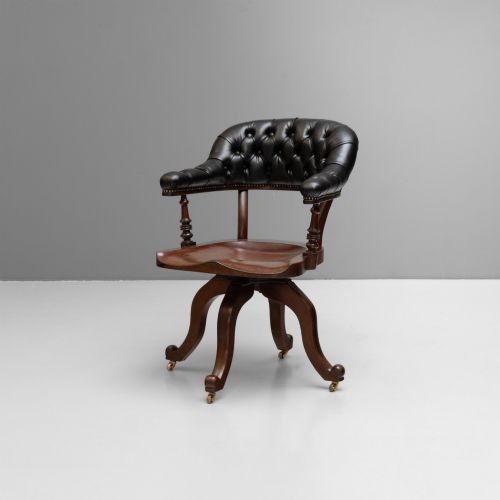
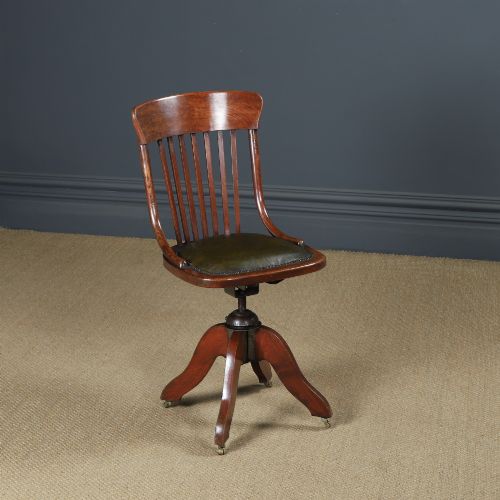
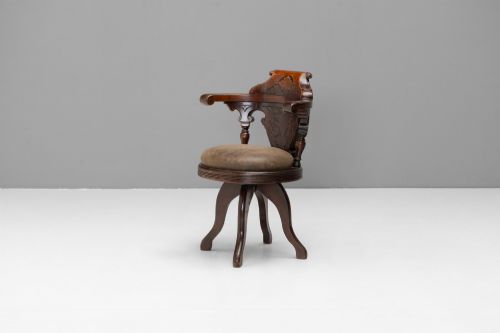
Vintage office seating covers timber desk chairs, revolving armchairs, and library seating designed for sustained daily work. You will frequently encounter oak and mahogany swivel chairs dating from the Victorian and Edwardian periods.
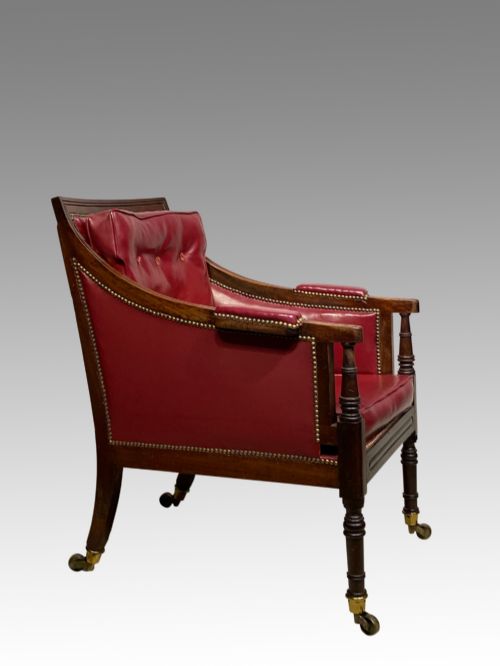
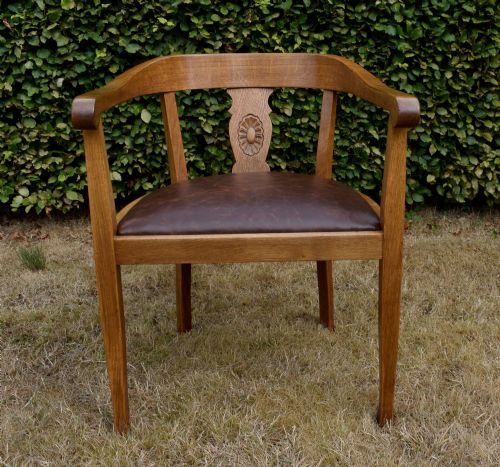
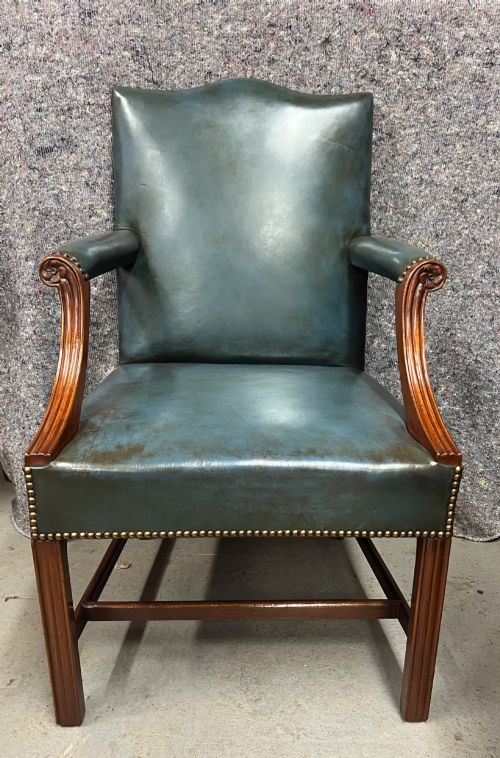
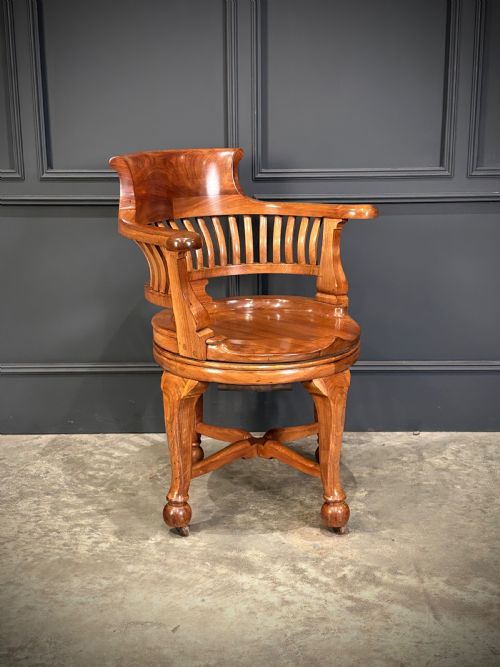
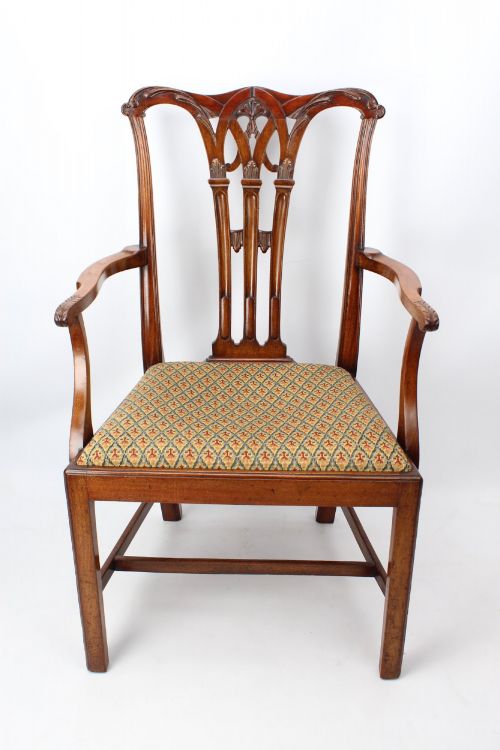
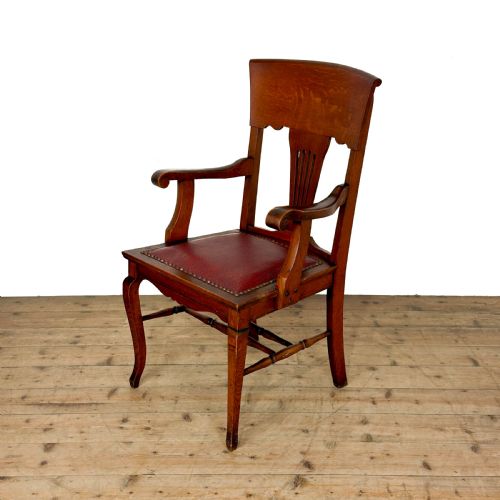
The selection ranges from captain chairs and solid walnut swivel models to Arts and Crafts armchairs and upholstered club elbow chairs. These pieces originated as functional furniture for studies, ships, and offices.
Most examples found here date from the late nineteenth century through to the 1920s, showing practical adaptations like adjustable heights and tilt mechanisms.
Materials and construction
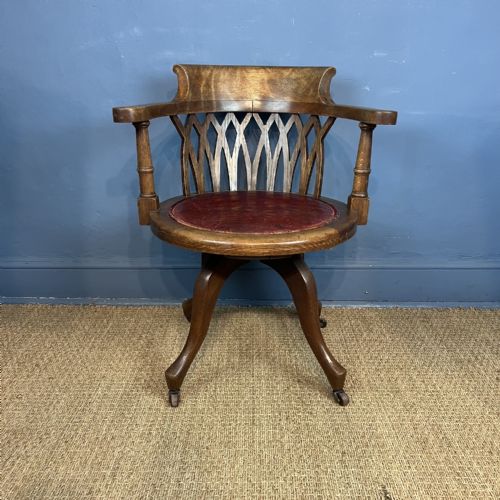
Frames rely primarily on solid oak, mahogany, and walnut, shaped into steam-bent rails and turned spindle supports. Beech and elm also appear frequently in structural elements and less visible secondary framing.
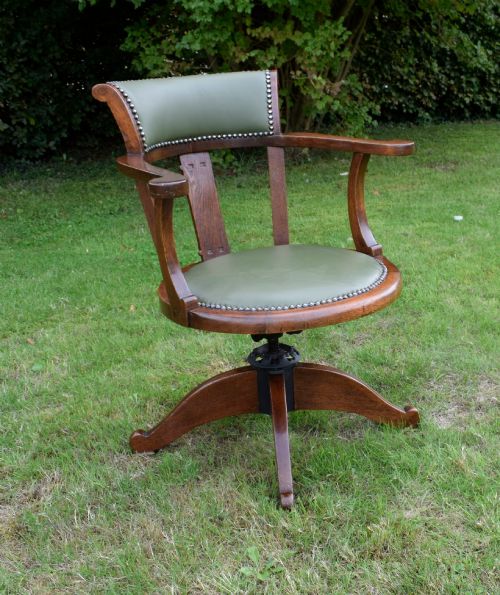
Working components incorporate cast iron and brass for swivel mechanisms, screw height adjustments, and supportive spider bases. Upholstery utilises genuine leather, hide, and studded trim secured directly to timber seat bases.
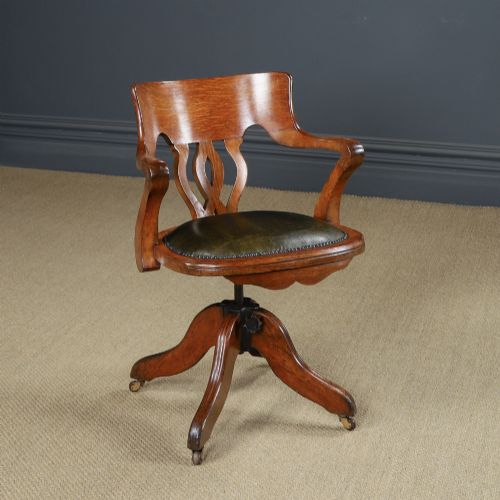
Several heavy oak swivel chairs retain the original brass castors that once saved nineteenth-century accountants from wearing out their floorboards.
Distinctions in quality
Quality rests in the integrity of the timber framing and the original mechanical swivel or tilt actions. Heavy oak frames with substantial brass and cast-iron underpinnings represent the sturdiest construction.
Refined carving, inlaid mahogany, and well-preserved original leather upholstery separate standard utilitarian models from finer library chairs designed for domestic studies.
P & O
The Vintage Office Seating Glossary
- Swivel desk chair
- A seat mounted on a central pivot allowing the user to rotate without moving the base. These often feature adjustable height screws.
- Captain's chair
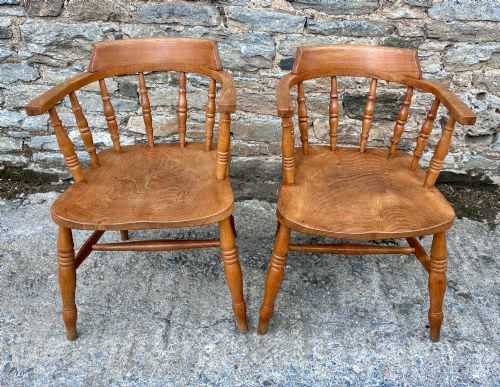
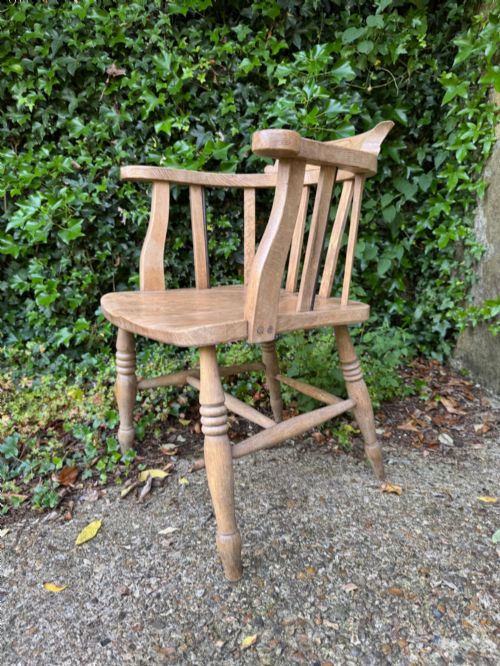
- A sturdy wooden armchair with a rounded low backrest supported by vertical spindles. They provide compact support for working at a desk.
- Smoker's bow
- A low-backed Windsor-style wooden armchair with a continuous curved armrail. They offer simple, robust seating suited to office use.
- Revolving mechanism
- The internal iron or brass assembly enabling a chair to turn. Quality versions operate smoothly without excessive wobble.
- Bergere
- A upholstered armchair featuring woven cane panels on the back or sides. They bring lighter decorative detailing to desk seating.
Vintage Office Seating: Frequently Asked Questions
Are these chairs comfortable for daily computer work?
Vintage office seating prioritises upright posture and solid lumbar support over thick modern cushioning. Many swivel models offer supportive curved wooden backrests and firm leather seats.
While they suit everyday desk tasks, their fixed tilt angles and lower back profiles differ significantly from modern ergonomic office chairs.
How do I care for the leather seats?
Original leather benefits from periodic cleaning with a damp cloth followed by a neutral leather wax or nourishing balm. This prevents the hide from drying and cracking over time.
Avoid placing vintage leather directly beside heat sources or in harsh sunlight, as this accelerates drying and fading in older animal skins.
How can I tell a Victorian chair from an Edwardian one?
Victorian office chairs tend to feature heavier dark oak or mahogany frames with deep mouldings and robust turned spindles. They often display utilitarian cast iron underframes built for heavy municipal or commercial use.
Edwardian examples frequently incorporate lighter mahogany frames, Arts and Crafts influences, or inlaid decorative details. They also show refined swivel mechanisms suited to more compact domestic studies.