
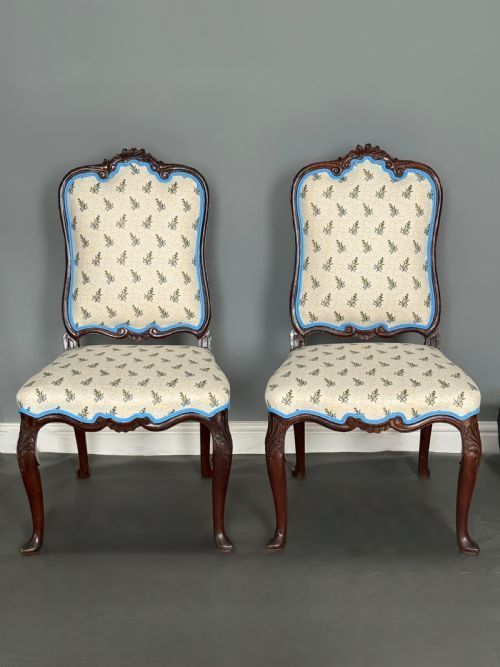
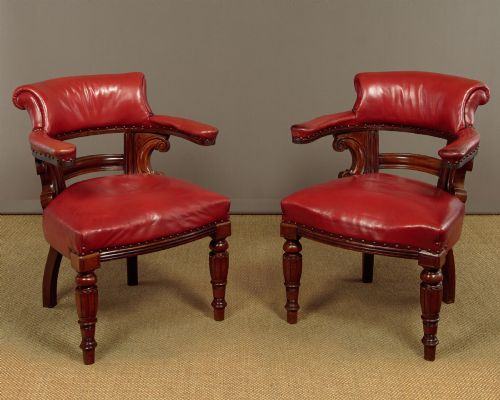

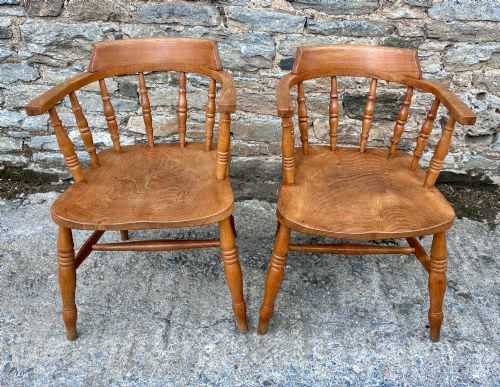
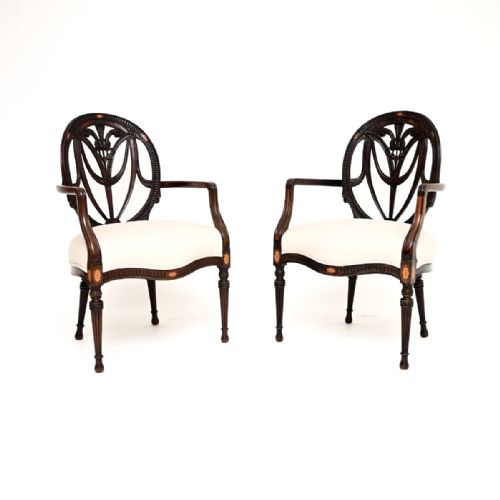
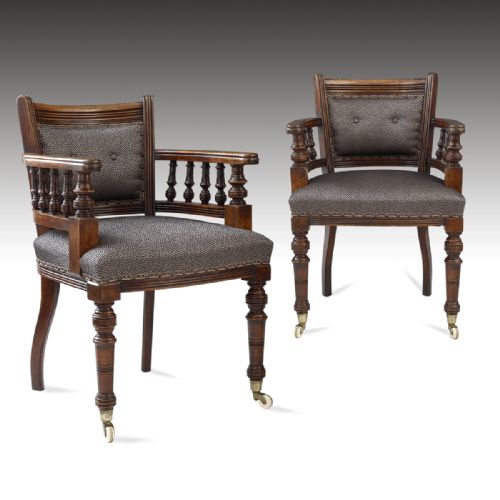
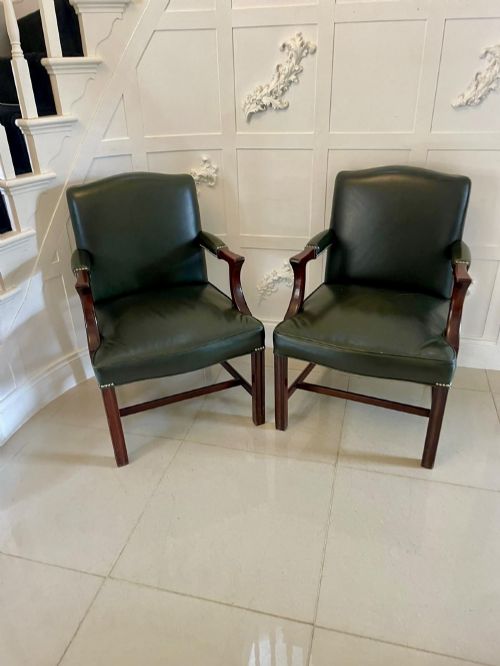
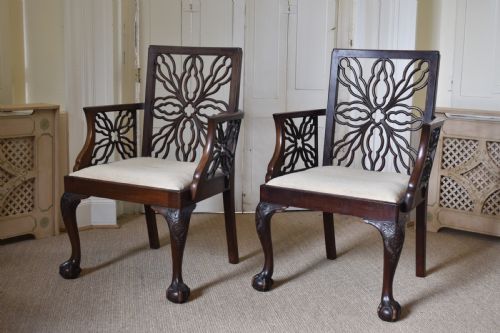
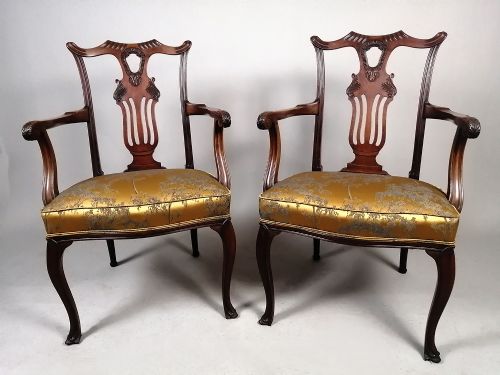
Pair of Desk Chairs
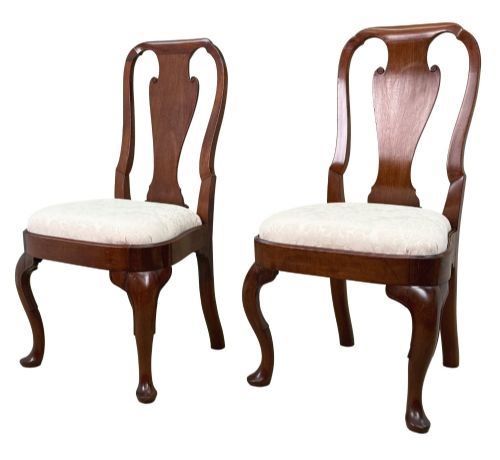
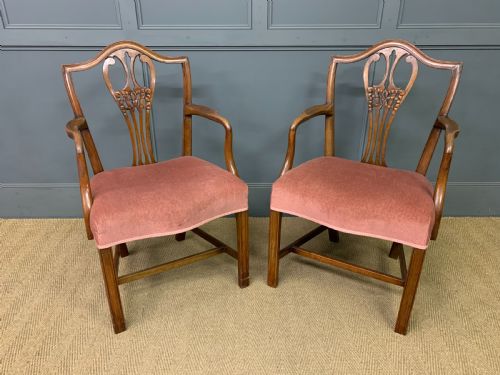
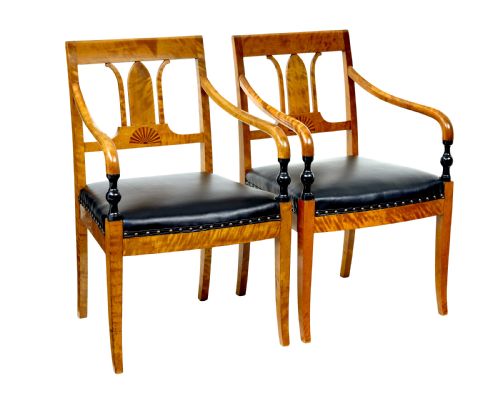
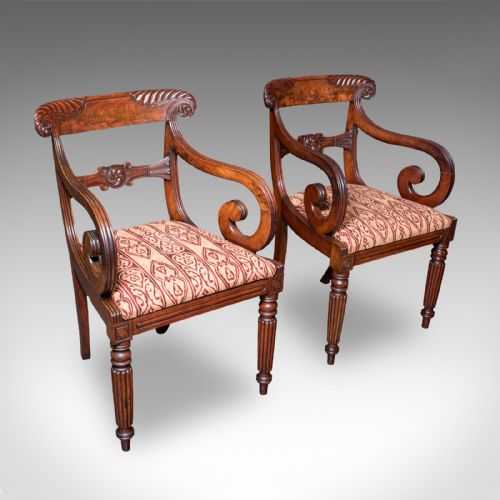
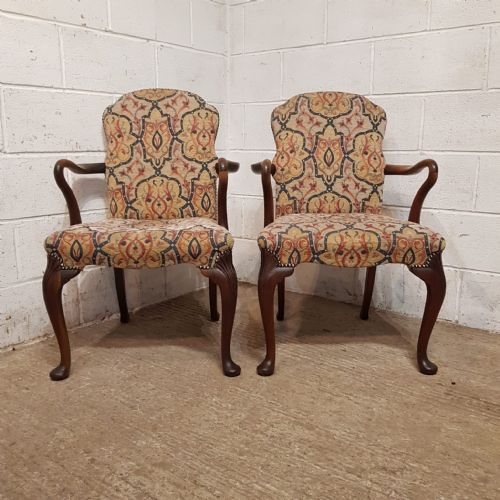
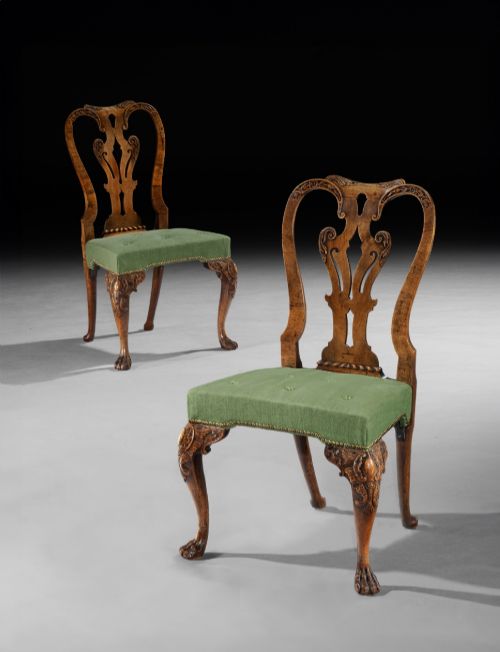
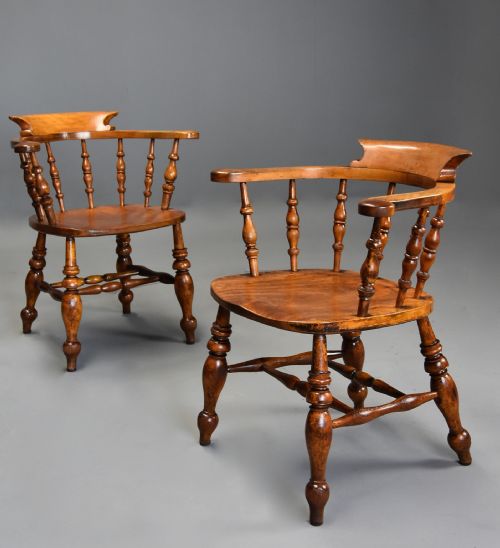
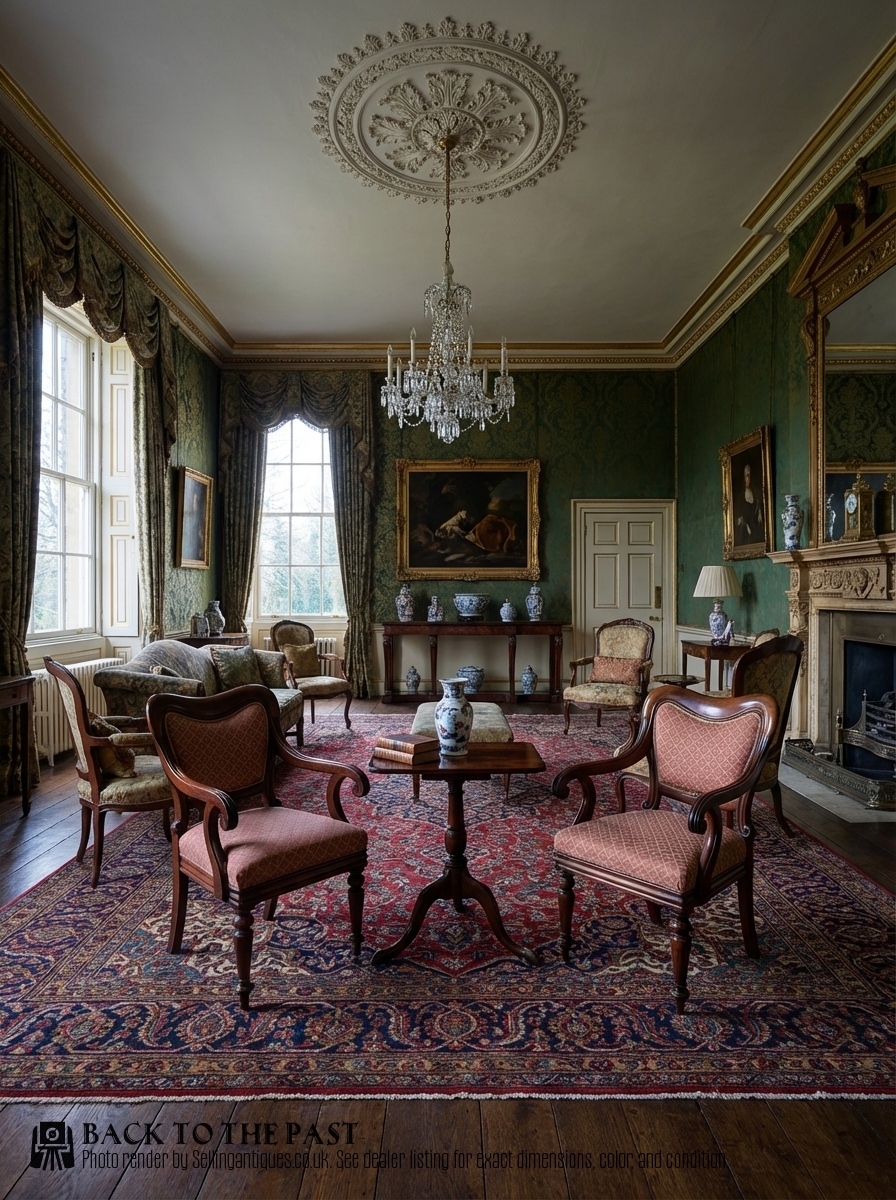
These pair of desk chairs are matched seats built for work, offering period character and sturdy timber construction for a study or library.
Period Forms and Styles
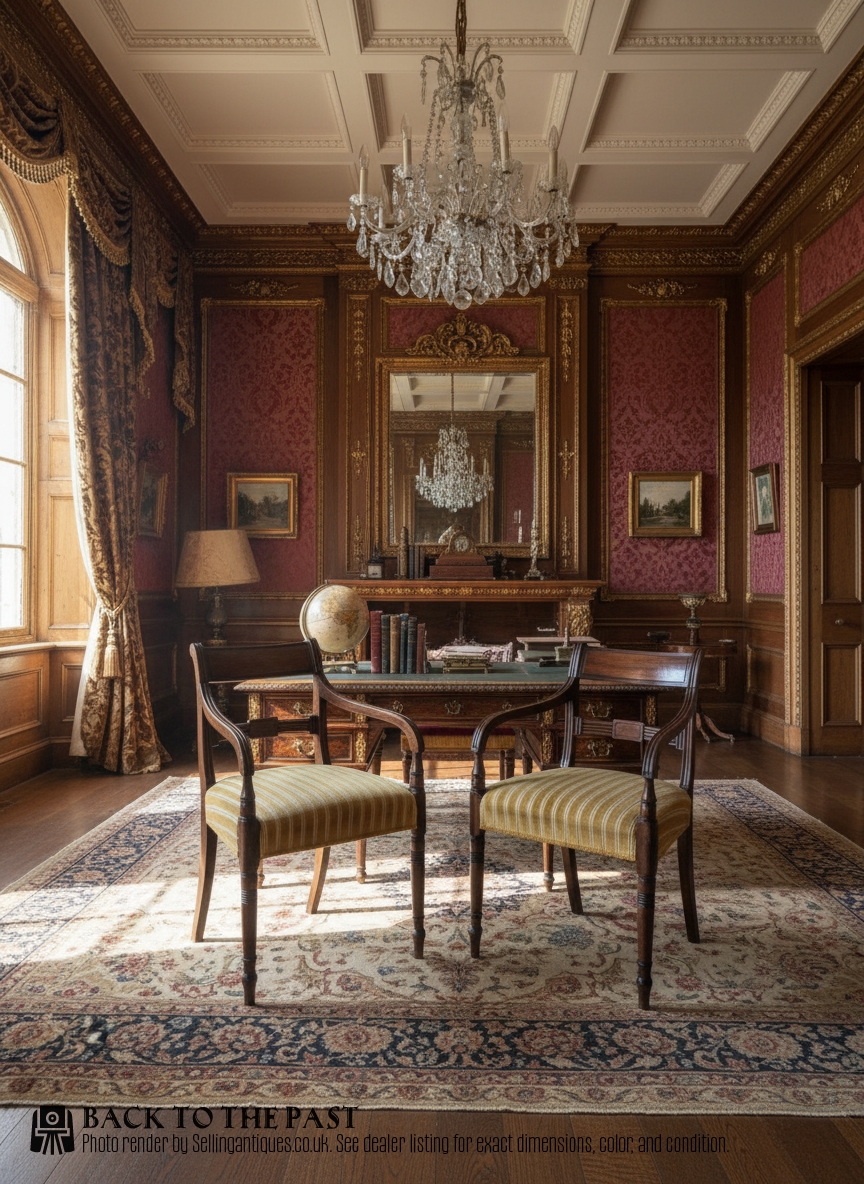
A pair of desk chairs brings matched seating into a study, library or office space, combining functional support with traditional design. When searching for a pair of desk chairs, buyers encounter forms ranging from low captain seats to carvers and library armchairs.
The materials span mahogany, oak, walnut, ash, elm and yew wood, often paired with leather, velvet or fabric upholstery. Surviving examples reflect periods from the eighteenth century through the Victorian era, Edwardian period and early twentieth century.
Stylistic influences include George III, Georgian, Regency, Victorian, Edwardian and Arts and Crafts Gothic Revival. Many incorporate pivoting or adjustable mechanisms suited to practical daily use.
Evaluating Construction and Timber
Quality rests in the selection of timber figures, such as figured mahogany or golden oak, and the crispness of carved details on the back splats and arms. Heavier, denser hardwoods provide better structural longevity for seating intended for constant movement.
The integrity of original swivel actions, where present, and the quality of leather hide upholstery separate standard examples from finer workshops. Matched pairs require consistent timber grain and uniform wear across both chairs.
Retail Price Guide 2026
Typical UK retail prices for pair of desk chairs, calculated from the Sellingantiques database of over a million retail prices indexed since 2003. This retail price guide relies exclusively on Sellingantiques data; no external sources or auction records are used, so the figures do not describe the wider market.
The listings show desk chairs spanning from the 1800 George III period through Victorian styles to early twentieth century oak designs.

George Bartholomew and Co.·Thonet·Thomas Chippendale·Simpoles of Manchester
The Pair of Desk Chairs Glossary
- Captain chair
- A sturdy timber armchair with a rounded enclosing back rail supported by turned spindles, designed for office or library seating. These often feature solid wooden seats or leather pads.
- Carver chair
- An armchair designed in a matching style to a set of dining or desk chairs, intended for the head of a table or desk. They feature open arms that match the side chairs.
- Bar back
- A chair back featuring a horizontal crossbar or slats shaped to fit the curve of the sitter's spine. This style appears frequently on Regency and nineteenth century desk chairs.
- Bentwood
- Wood softened by steam and bent into curved shapes under pressure, utilised in early twentieth century revolving designs. This technique created smooth, continuous lines without joints.
- Ball and castor
- A foot style incorporating a spherical wooden ball held within a metal claw gripping a small wheel. These permit smooth rolling movement on office carpets and floors.
Frequently Asked Questions
How were desk chairs used originally?
These seats served primarily in private libraries, counting houses and studies where correspondence and business took place. Their proportions suited long hours of writing at large partner desks or bureau bookcases.
Over time, revolving and adjustable versions developed to give clerks and scholars greater mobility while reaching for reference volumes stored on nearby shelves.
Are these chairs comfortable for daily work?
Most period examples offer firm support through solid wood seats or padded leather squabs. Their upright postures encourage productive alignment during desk tasks.
Buyers planning long hours at a modern computer should note that nineteenth century seat heights sit lower than contemporary office furniture.
How do I care for leather upholstery?
Leather surfaces benefit from periodic cleaning with a damp cloth followed by a neutral wax or leather conditioner. This maintains suppleness and prevents cracking across frequently touched armrests.
Keep wooden frames away from direct heat sources and strong sunlight to protect the polished finish and natural timber oils.
How can I tell Victorian from Georgian chairs?
Georgian pieces from the eighteenth century typically exhibit lighter proportions, refined mahogany carving and classic pierced splats in the Chippendale or Regency taste. Their lines prioritize elegance alongside function.
Victorian equivalents tend to be heavier in scale, often incorporating buttoned leather upholstery, darker walnut or mahogany timbers, and more robust turned supports.