

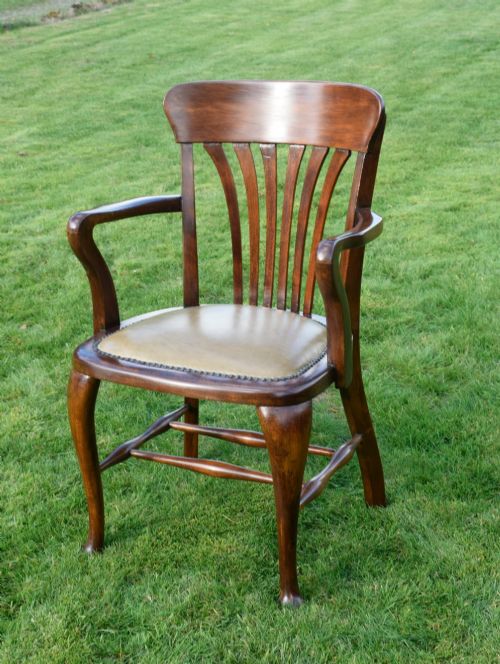
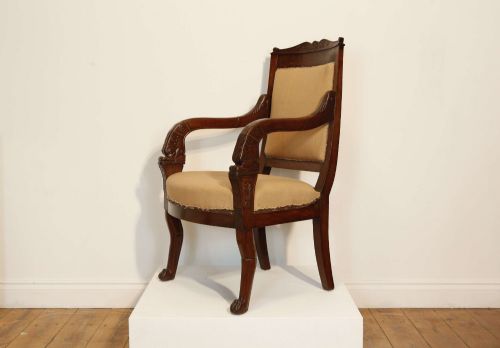
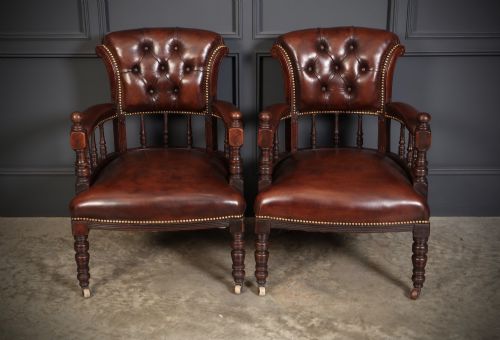
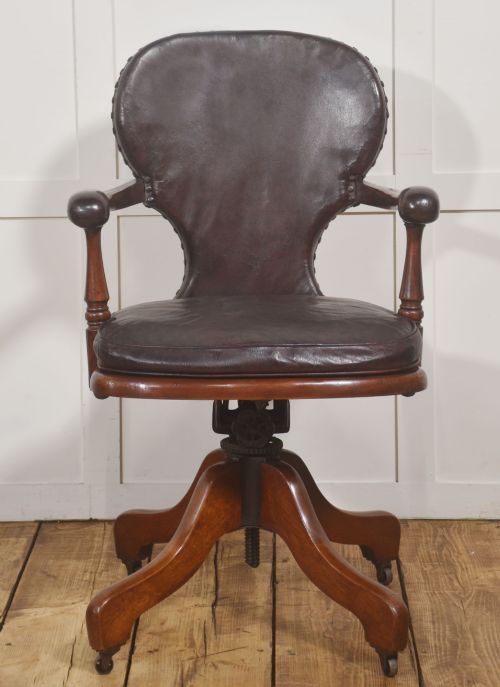
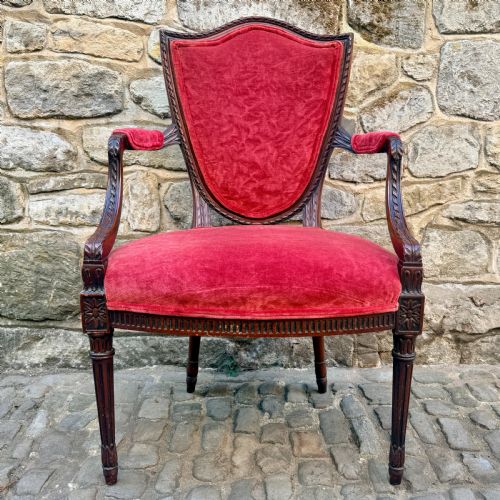
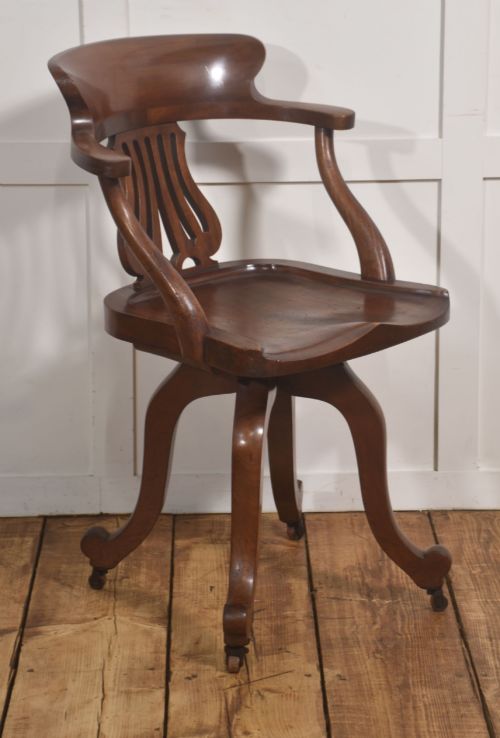
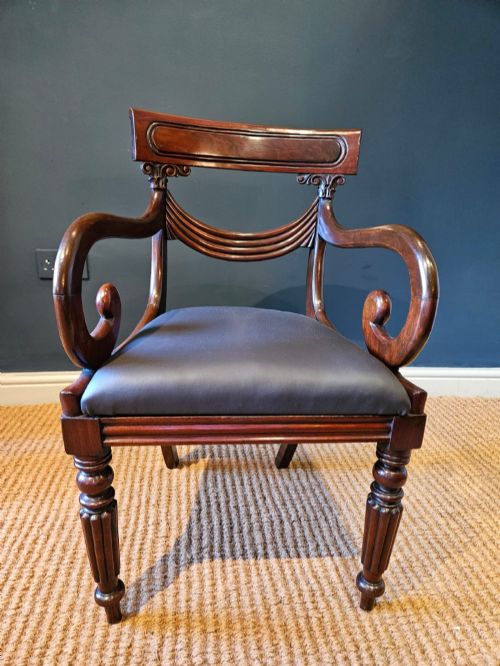
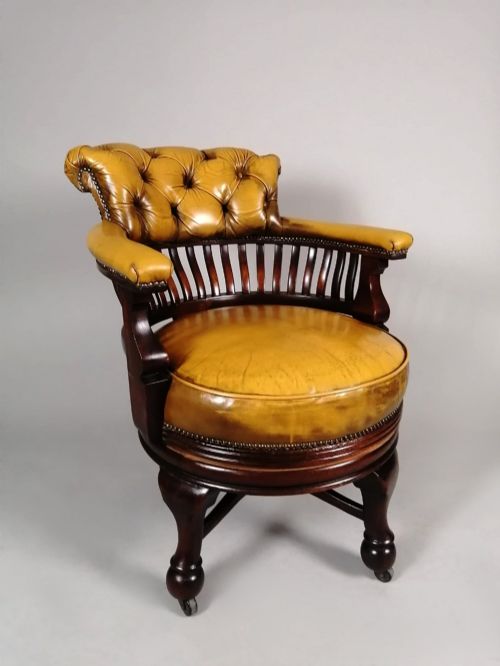

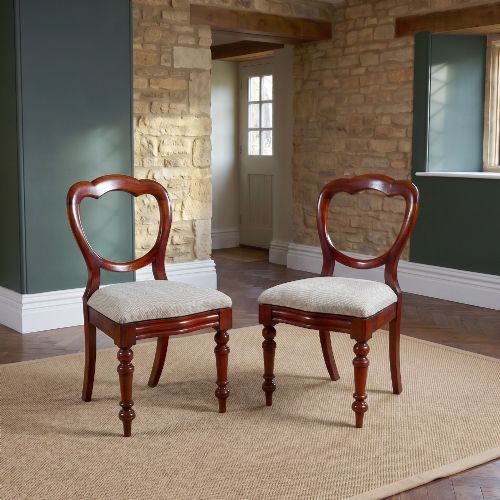

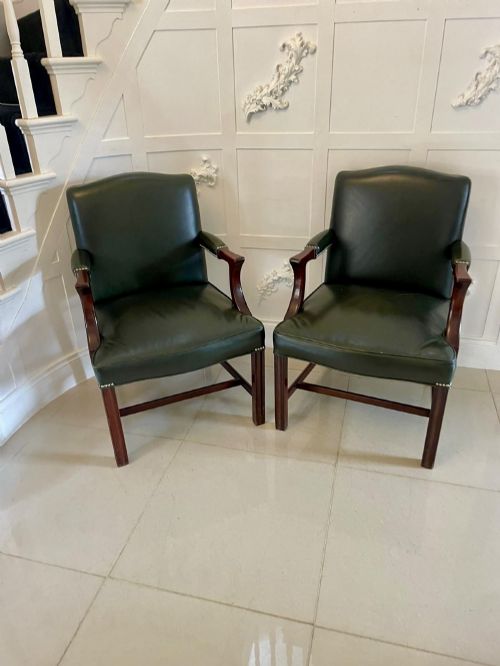
Mahogany Office Chair
When sourcing a mahogany office chair, you are choosing a sturdy seating companion designed for the study or library that blends rich wood tones with practical desk utility.
Mahogany Office Chair
A mahogany office chair brings together utilitarian desk furniture and the polished cabinet-making traditions of the eighteenth and nineteenth centuries. Buyers searching this phrase typically encounter robust swivel designs, fixed library armchairs, and captain-style seats adapted for prolonged writing or reading.
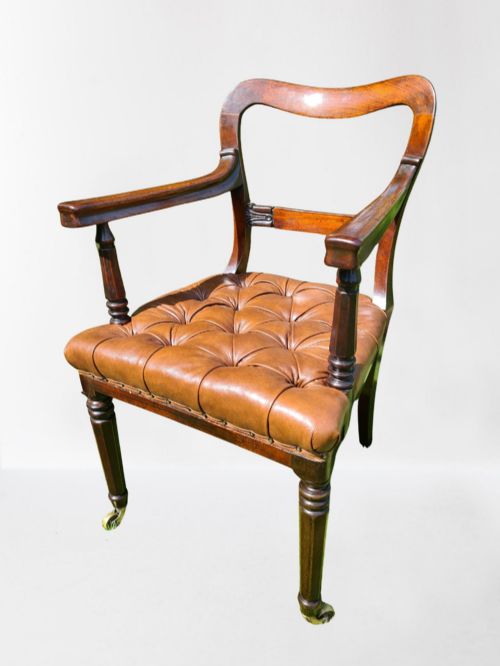
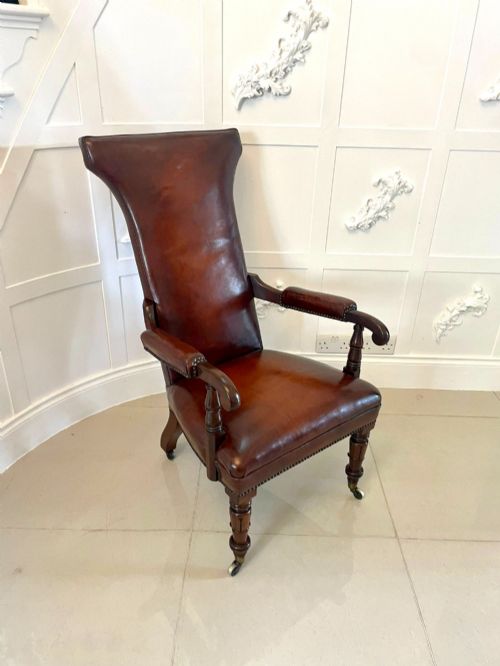
The versions most commonly met on this page date from the Victorian and Edwardian eras, alongside earlier Georgian and Regency iterations. These examples often feature upholstered leather seats or cane panels supported by solid frames.
Makers of the past adapted these forms to suit the changing demands of offices and studies, resulting in diverse configurations ranging from spider-web backs to high-backed revolving mechanisms.
Materials and Construction Methods
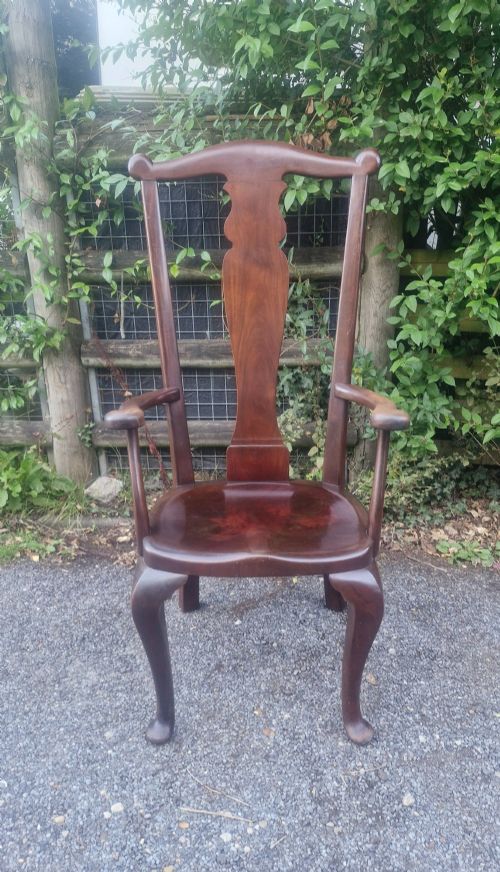
Craftsmen relied primarily on solid and veneered mahogany for the structural frames, valued for its deep colour and durability under daily use. Secondary materials such as brass fittings, iron swivel mechanisms, and cane inserts provided necessary functional support.
Upholstery played a central role in the comfort of these seats, utilising leather, fabric, and velvet fastened with traditional tacks over padded foundations. Carved details and turned wooden components were shaped by hand to define the prevailing styles.
Joinery techniques including mortise and tenon joints ensured that chairs subjected to the twisting motion of a revolving desk base remained stable over decades of service.
Mahogany Office Chair Retail Price Guide 2026
Typical asking prices for mahogany office chair among the pieces listed under this phrase on Sellingantiques today, from the lower quarter to the upper quarter. They describe what is for sale here now, not the wider market.
The inventory records pieces spanning the Georgian, Regency, Victorian, and Edwardian periods, constructed primarily in mahogany with leather and cane.
Distinctions in Standard and Execution
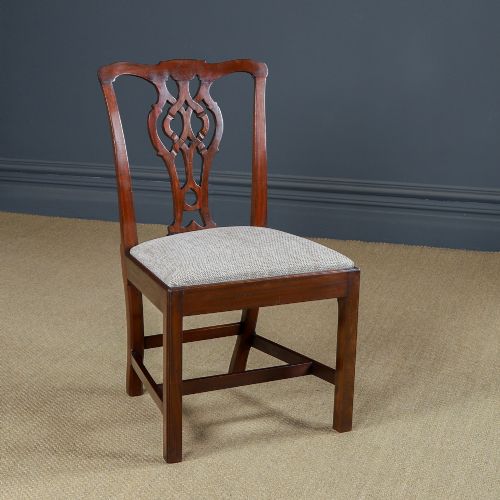
The division between standard commercial output and exceptional work lies in the crispness of the carving and the selection of the timber. Dense, figured mahogany grain and finely executed details such as spider-web or pierced splats elevate certain examples significantly.
The integrity of the internal swivel mechanism and the retention of original leather or cane surfaces heavily influence the standing of an individual piece. Retaining original castors and undisturbed joinery points to a higher grade of preservation.
Proportion and comfort also dictate worth, as master cabinetmakers balanced ergonomic requirements with the aesthetic demands of Regency, Chippendale, or Victorian revivals without making the frame feel cumbersome.
CV Smith·Morris and Co
The Mahogany Office Chair Glossary
- Mahogany
- A durable tropical hardwood prized for its reddish-brown colour and fine grain. It forms the primary structural material for the majority of these desk chairs.
- Revolving
- A swivel function mounted beneath the seat to allow rotation. This mechanism often incorporates iron or brass components concealed within the wooden base.
- Captain's Chair
- A sturdy armchair featuring a rounded enclosing backrest atop vertical spindles. These designs were adapted from ships and libraries for administrative utility.
- Cane
- Strips of woven rattan utilised for lightweight seat pads or back panels. This material offers flexible support while maintaining a visually open silhouette.
- Splat
- The vertical wooden strip down the centre of a chair back. Elaborate piercing and carving on this component often indicate the stylistic influence of Chippendale or Hepplewhite.
Mahogany Office Chair: Frequently Asked Questions
What defines a true office desk chair?
These seats are distinguished by their functional adaptations for working at a table, often incorporating revolving bases, sturdy armrests, and supportive upright backs.
Unlike standard dining furniture, they were engineered specifically to endure hours of administrative or literary labour.
How do I distinguish between Regency and Victorian periods?
Regency examples typically exhibit cleaner classical lines influenced by ancient Roman and Greek forms, often featuring restrained brass inlays and reeded legs.
Victorian pieces tend to be heavier in construction, embracing exuberant carvings, buttoned leather upholstery, and darker golden mahogany tones.
Can these chairs be used daily today?
The robust construction of solid mahogany frames makes them well-suited for everyday modern seating at a contemporary or antique desk.
Routine maintenance of the leather and checking the stability of the swivel mechanism will ensure they remain functional.
Why do some models feature cane seats?
Cane seating was utilised to provide a resilient, breathable surface that reduced the weight of the armchair.
This technique was particularly favoured in library and country house environments where comfort was balanced with refined aesthetics.