
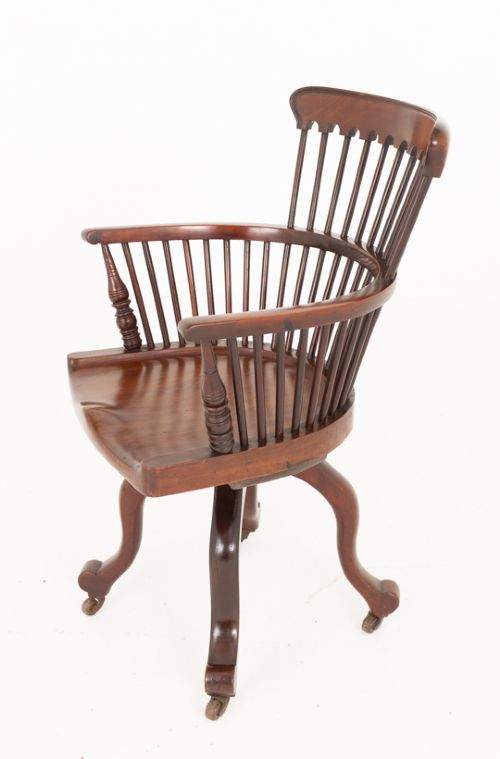
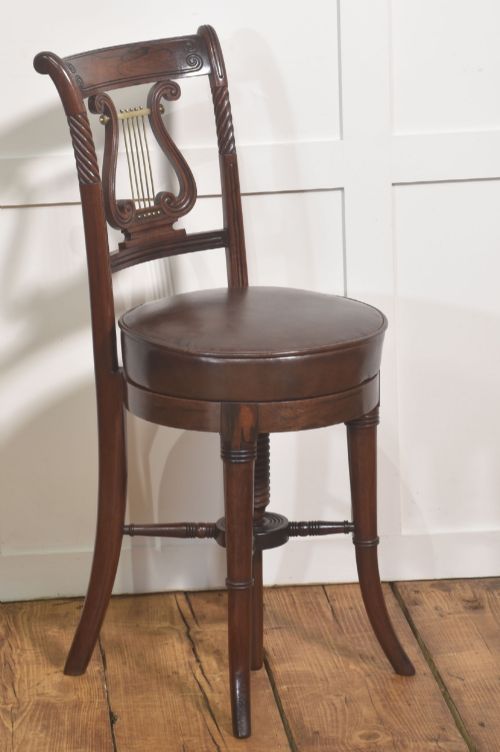
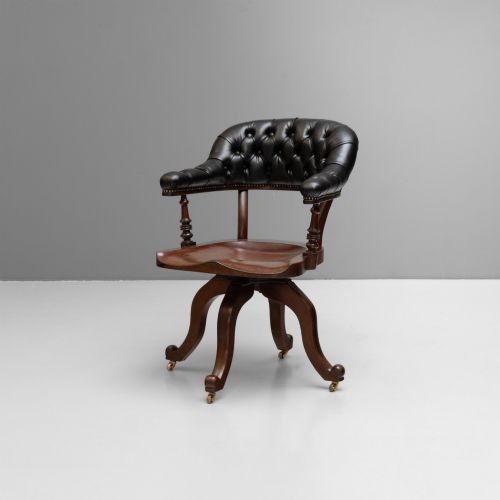
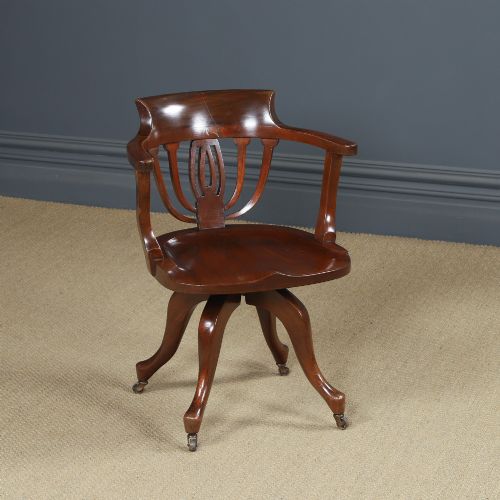
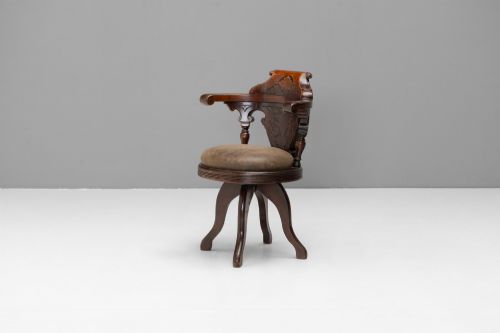


Mahogany Swivel Desk Chair
A mahogany swivel desk chair brings mechanical movement and solid timber together for the daily working desk.
What these chairs are
A mahogany swivel desk chair is a revolving office seat designed for the study or library, built around a pivoting mechanism that allows rotation and adjustment. Buyers seek these pieces for their combination of traditional timber framing and practical mechanical utility at a desk.
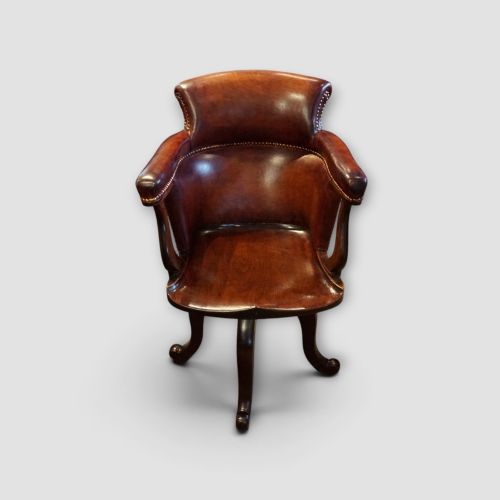
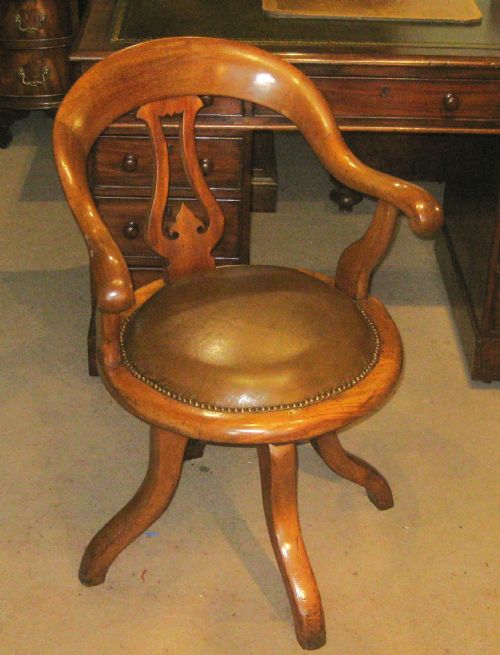
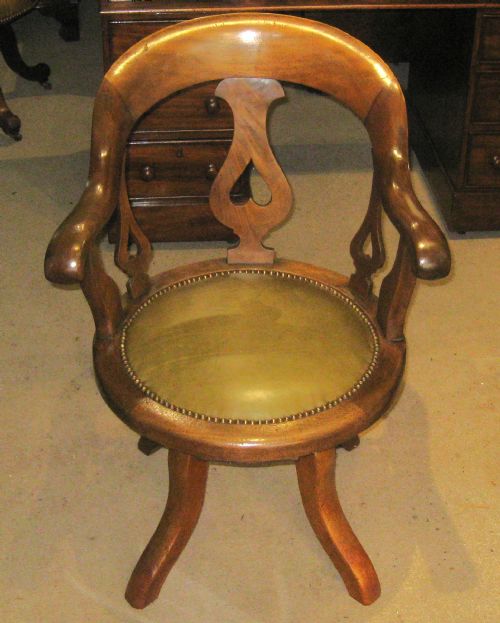
The most common version met on this page is the Victorian or Edwardian model, typically constructed with a mahogany frame and supported by a swivel mechanism incorporating brass and iron elements. These chairs frequently feature upholstered leather seats or backs to provide comfort during long periods of sitting.
How they were made
Makers built the primary frames using solid mahogany, occasionally combining secondary timbers such as beech in the structural underpinnings. Woodworking joints included traditional mortise and tenon construction to ensure stability under the twisting forces of a revolving seat.
The mechanical swivel action relied on iron and brass components fixed beneath the wooden seat, allowing rotation and height adjustment. Upholstery fabric, leather and metal tacks completed the seating element, secured over stuffing supported by webbing or springs.
Retail Price Guide 2026
Typical UK retail prices for mahogany swivel desk chair, calculated from the Sellingantiques database of over a million retail prices indexed since 2003. This retail price guide relies exclusively on Sellingantiques data; no external sources or auction records are used, so the figures do not describe the wider market.
Listings feature mahogany frames paired with brass, iron, leather, and beech elements across Victorian and Edwardian periods.
What varies in quality
The sophistication of the revolving mechanism sets the finer examples apart from standard office seating, particularly where rise and fall adjustments operate smoothly without excessive play in the column. Heavier iron and brass undergear indicates a sturdier build intended for heavy daily use.
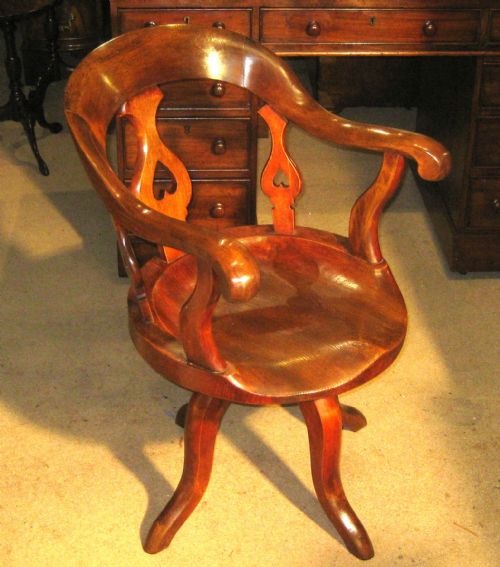
Timber selection and the depth of the mahogany grain influence the visual hierarchy of these chairs, alongside the quality of the leather upholstery and hand-finished details such as studwork. Finer specimens display more refined joinery and well-figured wood across the arms and back rail.
WM Heywood Chair Co·Maple & Co·E W Godwin
The Mahogany Swivel Desk Chair Glossary
- Swivel
- A mechanical pivot assembly beneath the seat that allows the chair to rotate through a full circle. This permits movement between different sections of a large partner desk.
- Rise and fall
- An adjustable height mechanism operated by a threaded spindle or screw action. It allows the seated user to alter the vertical position relative to the desk surface.
- Revolving
- An alternative descriptor for a chair that turns on a central vertical axis. It ensures easy access to surrounding filing cabinets and reference tables.
- Captains desk chair
- A traditional terminology often applied to low-backed revolving office chairs with curved wooden arms. They offer compact proportions suited to smaller studies.
Frequently Asked Questions
Are these chairs comfortable for daily use?
Many examples are designed with ergonomic curved backrests and upholstered leather seats that provide adequate support for working hours. The revolving action also assists movement around a large desk workspace.
Buyers often select these models to blend historical character with functional office seating. Regular conditioning of the leather helps maintain comfort over time.
How do I adjust the height on these chairs?
Height adjustment typically relies on a central screw mechanism beneath the seat, operated by spinning the chair to raise or lower the platform. Some Edwardian variants utilise specific rise and fall lever systems.
Care should be taken when turning the mechanism to avoid straining the threaded iron column. Lubrication of moving metal parts ensures smooth operation.
How do I tell Victorian from Edwardian models?
Victorian versions generally date from around 1880 to 1901 and often feature heavier mahogany frames, deeper carving, and rich red or burgundy leather upholstery. Gothic Revival influences occasionally appear in these earlier pieces.
Edwardian models, produced from 1901 onwards, tend to present lighter proportions, sometimes incorporating inlaid stringing or beech secondary woods alongside the mahogany. Both periods utilise robust iron and brass swivel hardware.
Do the swivel mechanisms still work properly?
Most surviving mechanisms continue to rotate fully on their original iron and brass pivots after a century of use. Minor play in the central column is common due to natural wear in the threads.
Restoration often involves tightening fittings and cleaning accumulated dust from the moving parts. The underlying metal construction remains durable across most surviving examples.